Imaginary interview with Florence Nightingale
by Charactorium · Florence Nightingale (1820 — 1910) · Sciences · Society · 6 min read
London, winter 1897. In a room at 10 South Street, Mayfair, a seventy-seven-year-old woman receives visitors from her bed, surrounded by piles of reports and mortality maps. The light falls faintly on the bedspread; she speaks in a clear voice, still capable of making a minister tremble.
—How do you remember your first nights at the Scutari hospital?
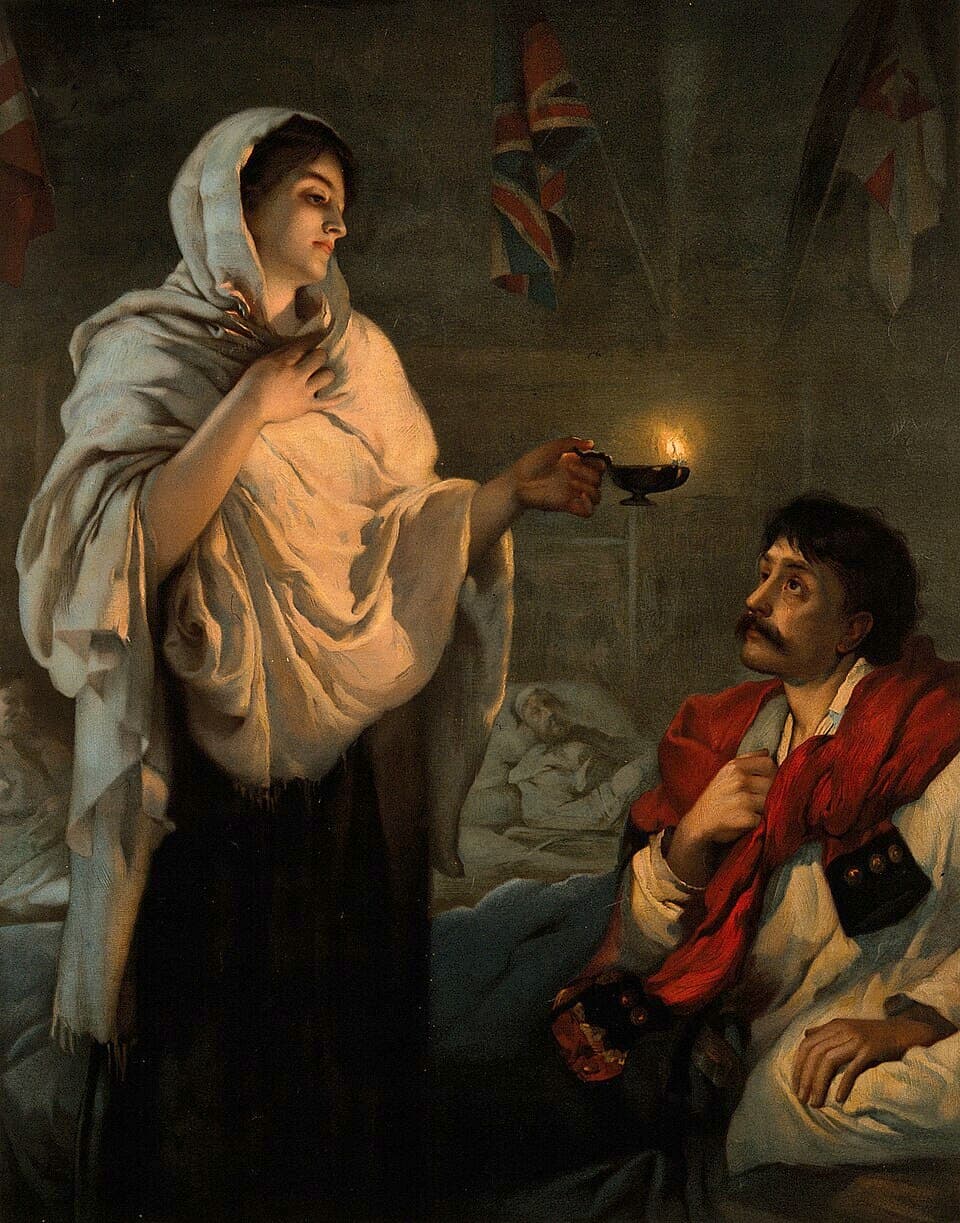
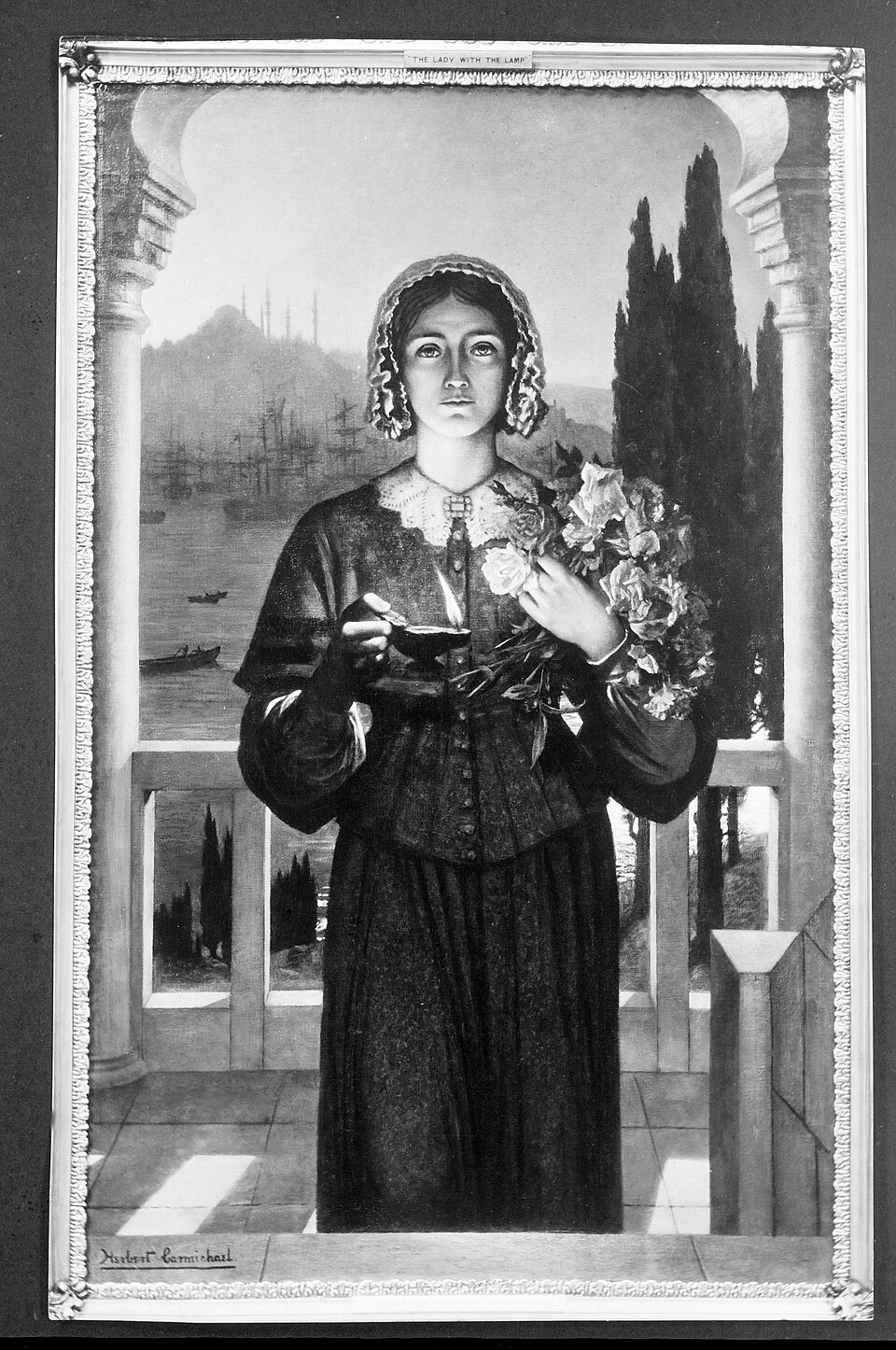
I was given a barracks, not a hospital. The tower of the Selimiye Barracks opened onto corridors where the beds almost touched—four miles of wounded lying on planks, barely eighteen inches between two men. When evening came and the doctors had gone to sleep, I would take my oil lantern and walk those corridors—six kilometers some nights. I would sit by the bedside of those about to die, not to cure them—it was too late—but so they would not leave alone in the dark. I was later told that soldiers kissed my shadow on the wall. I saw nothing saintly in it: only men who had nothing else left to hold on to.
I would sit by the bedside of those about to die, not to cure them, but so they would not leave alone in the dark.
—What did you actually find in those wards at dawn?
Filth, sir. Floors that no one washed, windows that were never opened, sheets changed only when they fell to rags. Supplies were lacking to an extent you cannot imagine: I ended up buying medicines, linens, surgical instruments out of my own pocket. I rose before dawn to supervise the preparation of broths and assign tasks to my thirty-eight nurses. In a letter to my mother, I wrote that we now had four thousand beds, not eighteen inches apart. That was war: not the roar of cannons, but the slow arithmetic of neglect.
—You believed in miasma back then; how did that theory guide your actions?
Yes, I believed that disease rose from stale air, from decomposing matter, from those emanations called miasma. Pasteur had not yet revealed his bacteria, and I would have scoffed at anyone speaking of invisible beasts. But see the irony: because I chased away stench, I ventilated, scrubbed, washed—and in doing so, unknowingly, I killed those germs I denied. I wrote in my Notes on Hospitals that the first requirement of a hospital is that it should do the sick no harm. The theory was wrong; the practice saved lives. I learned then that hygiene does not wait for scientists to agree.
The theory was wrong; the practice saved lives.
—Hospital gangrene haunted military hospitals back then. How did you fight it?
Hospital gangrene was our great invisible enemy—a rot that thrived in poorly dressed wounds and overcrowded wards. At Scutari, it carried off more men than Russian rifles. I had no scientific word for it, only eyes to see it win. So I imposed cleanliness as a military discipline: changed sheets, renewed dressings, fresh air, washed floors. What medicine would later call asepsis, I practiced by instinct, before we had the theory to justify it. In less than a year, the mortality in that barracks fell from forty-two to two percent. Numbers, at least, did not lie.
—You returned to England determined to convince. Why numbers rather than stories?
Because a story moves one evening and is forgotten the next, while a number remains. In my report to the Royal Commission on the Health of the Army, eight hundred and thirty pages, I wrote in black and white that our mortality in the Crimea from disease alone reached one thousand one hundred and seventy-three per thousand per year—in other words, the entire army would have died twice in one year, without a single bullet. Ministers nod at a weeping widow; they cannot answer a column of figures. Health statistics were my weapon, sharper than any plea. You do not reform an empire with pity: you reform it with proof.
You do not reform an empire with pity: you reform it with proof.
—In 1858, you presented a circular diagram that became famous. What did you want politicians to see?
I wanted them to see at a glance what they refused to read. I drew what I called my coxcomb chart—a circle divided into twelve months, where each blue petal showed deaths from preventable disease, and the red, much thinner, showed deaths in battle. A member of Parliament will not open an eight-hundred-page report; but he cannot look away from a drawing where blue crushes red. It was in 1858, before the Royal Commission. Color cried out what words whispered: our soldiers did not die from the enemy, they died from our barracks. To show is already to make admit.
Our soldiers did not die from the enemy, they died from our barracks.
—You founded a nursing school. What was new about that project?
Before me, a nurse was often an unemployed woman, sometimes a drunkard, to whom the sick were entrusted for lack of better—or else a dedicated sister of charity trained by prayer, not science. I wanted a secular nurse, educated, paid, respected. Thanks to the Nightingale Fund, the subscription raised after the Crimea, I opened in 1860 the school at St Thomas' Hospital, the first of its kind in the world. There they learned observation, hygiene, record-keeping. And I imposed a uniform—dark dress, white apron, cap—not for coquetry, but so that an entire nation would understand at a glance that a profession had been born.
—Why this book for ordinary women, these Notes on Nursing?
Because care does not begin at the hospital; it begins in every room where a mother keeps watch. My Notes on Nursing, published in 1859, I wrote for the general public, not for doctors. In it I mocked the received idea that a disappointment in love or an incapacity for everything else suffices to make a woman a good nurse, when we deem almost any man's trade worthy of apprenticeship. Care is an art that must be learned: ventilating a room, choosing food, observing a face. I wanted to put this science into everyone's hands, in simple language, later translated into many countries.
Care is an art that must be learned: ventilating a room, choosing food, observing a face.
—You directed these reforms from a bed, ill since the Crimea. How does one govern like that, immobile?
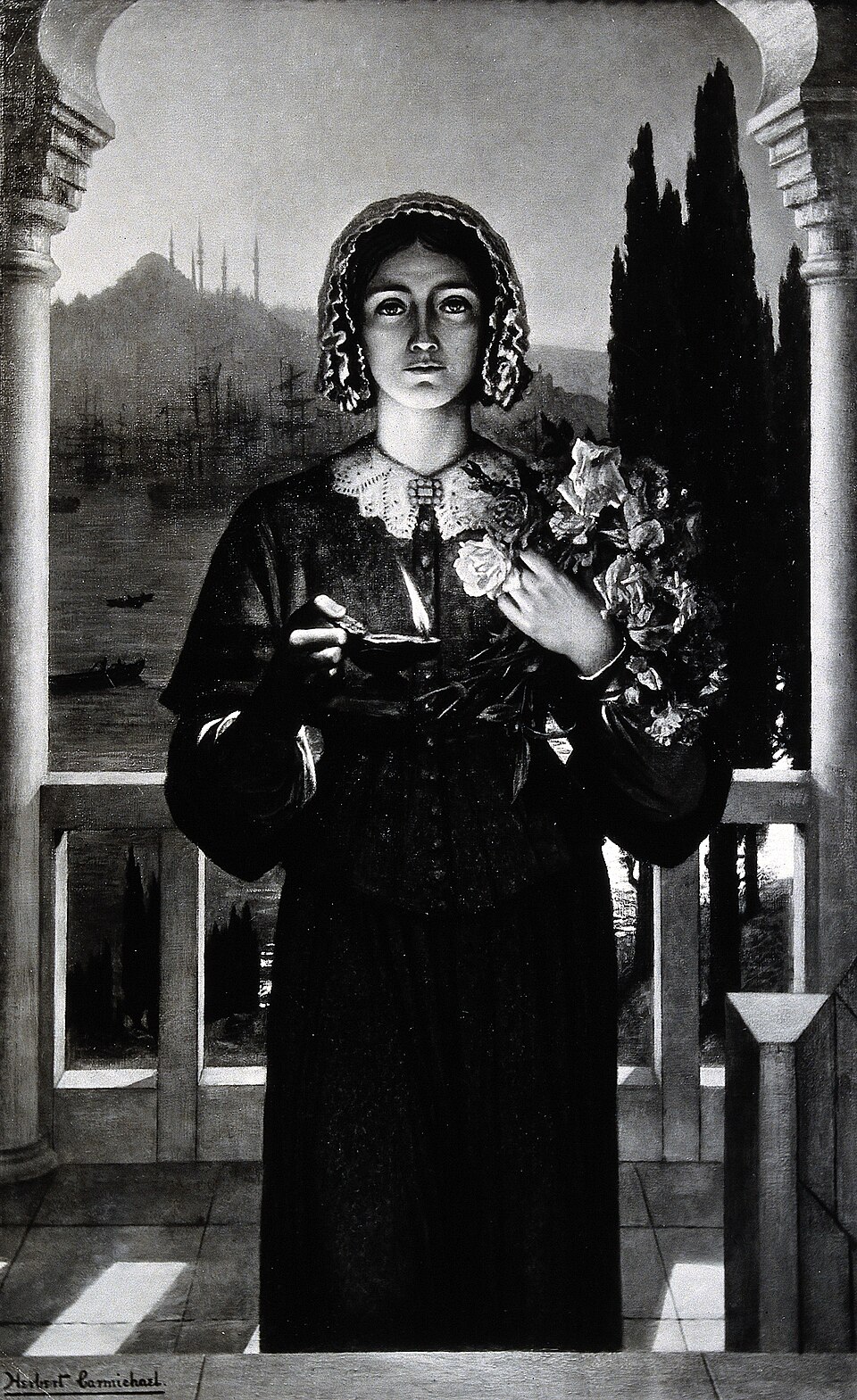
With pen and ink, sir, and a will that illness never laid low. I brought back from the Crimea a malady that has kept me bedridden for decades, in this room on South Street. But a bed does not prevent writing: my letters to ministers, doctors, viceroys number in the thousands—more than two hundred volumes, I am told. I have men of power come to my bedside; they leave with recommendations. People think me a recluse; in truth I am at the center of a web stretching from London to the barracks of India. The body may betray; the mind, however, continues to command.
People think me a recluse; in truth I am at the center of a web stretching from London to the barracks of India.
—Your work went beyond the British army to reach the colonies. What did you hope to change in India?
India was the natural extension of my fight. In 1863, I studied reports on the health of our soldiers there, and the picture was the same as in the Crimea, worse: fever, dysentery, polluted water mowed down entire regiments before they had seen a battlefield. I never set foot there, yet I scrutinized every barracks, every sanitation system, from my London bed. My recommendations reduced mortality from infectious diseases. What I had learned at Scutari held true under all climates: clean air, clean water, and drainage save more men than all the medicine.
—In 1907, the king awarded you the Order of Merit. What does this distinction mean to you?
King Edward VII had the Order of Merit brought to me in 1907, and I was told I was the first woman to receive it. At my age, these honors find me almost indifferent; I fled the celebrations when I returned from the Crimea, under an assumed name, to avoid greeting the crowds. What I wish, when my time comes, is a simple grave in the Hampshire countryside, not the pomp of Westminster. A medal has never disinfected a ward or saved a soldier. If you want to honor me, keep the hospitals clean and train nurses well: that is the only monument I ask for.
A medal has never disinfected a ward or saved a soldier.
This imaginary interview was generated by artificial intelligence from sources documented in Florence Nightingale's profile. It dramatises what the figure might have said based on what we know about them, but does not constitute attested historical testimony. For primary sources and factual documentation, refer to the full profile.