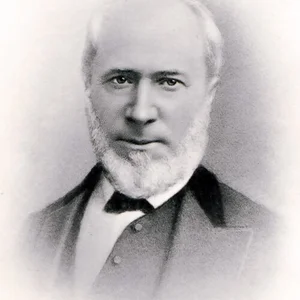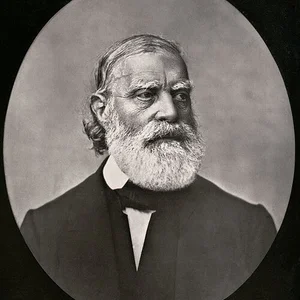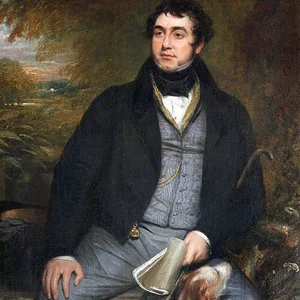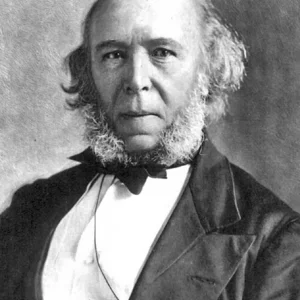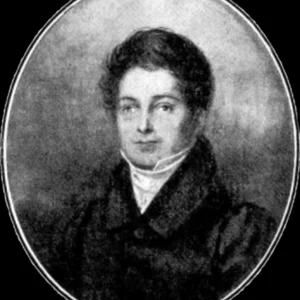

Esprit Blanche (1796-1852) was a French alienist physician, a pioneer of humane psychiatry. In Montmartre and later in Passy, he founded a nursing home renowned for the treatment of mental illness, where he welcomed many artists and writers.
Doctor Blanche(1796 — 1852)
Esprit Blanche
France
5 min read
Frequently asked questions
Key Facts
- Born in 1796, died in 1852
- Founded a nursing home for the mentally ill in Montmartre in 1821
- Moved his establishment to Passy in 1846, into the former Château de Lamballe
- Promoted a “moral” and humane treatment of the mentally ill, without brutal restraint
- His son Émile Blanche carried on his work and would notably welcome Gérard de Nerval and Guy de Maupassant there
Works & Achievements
Creation of a private institution for the mentally ill applying moral treatment, based on gentleness and social life rather than restraint.
Installation of the clinic in a vast and verdant setting, designed as a therapeutic instrument in its own right.
Blanche treated many figures from the literary world, making his clinic a renowned place where medicine and culture intersected.
Putting into practice the ideas of Pinel and Esquirol: rejection of bodily harshness, individualized attention, trust, and activities.
His son Émile Blanche took over the mental health clinic and treated notably Maupassant there, carrying on his father's work until the end of the century.
Anecdotes
Esprit Blanche practiced a gentle and, for his era, revolutionary form of medicine: instead of chaining up his patients, he housed them in a vast residence surrounded by gardens, and organized evening gatherings, balls, and walks. He believed that kindness and a social life healed better than restraint.
His private clinic took in the poet Gérard de Nerval, who was treated there several times for his episodes. Nerval wrote part of his work there and kept a genuine affection for the Blanche family, a testimony to the humane atmosphere that prevailed in the establishment.
Esprit Blanche first set up his clinic in Montmartre, then moved it to Passy, into the former mansion of the Princess of Lamballe. This elegant setting and the proximity of a park were, in his view, meant to soothe the minds of the sick.
His son Émile Blanche took over the clinic and in turn treated famous artists such as Guy de Maupassant. The Blanche dynasty thus became linked, for nearly a century, to the history of psychiatry and of French letters.
Esprit Blanche rejected the brutal methods still common in his day, such as punitive ice-cold showers or the routine use of the straitjacket. He preferred to know each patient individually, sometimes dining with them to win their trust.
Primary Sources
The alienist must win the patient's trust through gentleness, not subdue him through fear; restraint worsens the very delirium it claims to reduce.
I am in the house of Doctor Blanche, at Passy, where I am treated with great consideration and where I can work almost freely.
Doctor Blanche's mental health home is distinguished by the regime of supervised freedom granted to its residents, several of whom belong to the world of arts and letters.
Key Places
Esprit Blanche opened his clinic here in 1822, when Montmartre was still a rural village on the outskirts of Paris.
Former residence of the Princess de Lamballe where Blanche moved his asylum in 1846. The vast park was meant to soothe the patients.
Capital where Esprit Blanche studied medicine and practiced throughout his career, at the heart of the cradle of French alienism.
Parisian hospitals where Pinel and Esquirol developed the moral treatment that inspired Blanche's practice.
Typical Objects

A restraint garment used to immobilize agitated patients. Esprit Blanche specifically sought to limit its use in favor of gentler methods.

A notebook in which the alienist recorded, day after day, the condition, fits and progress of each resident. A key tool of the emerging clinical medicine.

A tub used for the prolonged baths meant to calm patients. Hydrotherapy was one of the main treatments of 19th-century alienism.

A watch with a seconds hand used to measure the pulse and pace the clinical examination. A symbol of the practitioner's medical rigor.

The instrument around which evenings and concerts for the residents were organized. Music was part of the moral treatment so dear to Blanche.

A book in which the physician prescribed calming potions, diets and remedies. A reflection of the still-rudimentary pharmacopoeia of the time.
School Curriculum
Vocabulary & Tags
Key Vocabulary
Daily Life
Morning
Doctor Blanche began his day by visiting the residents, going from room to room to observe their sleep and their mood. He spoke with each of them, noting their progress or relapses in his register.
Afternoon
The afternoon was devoted to treatments, baths and walks in the park, which he gladly joined. He also received families and new patients referred by other doctors.
Evening
In the evening, the house came alive with dinners, readings, music or small balls in which both doctors and residents took part. Blanche often shared his patients' table to maintain an atmosphere of trust.
Food
Healthy and regular meals were served, considered an integral part of the treatment: balanced meals, wine diluted with water and fixed schedules to give rhythm to the patients' lives. Sobriety and regularity were regarded as soothing.
Clothing
Esprit Blanche wore the black attire of the nineteenth-century bourgeois physician: a dark frock coat, waistcoat, cravat and top hat. This dignified outfit marked his status and inspired confidence in families.
Housing
He lived within his own mental health home, sharing the premises with his residents. The Passy residence, a vast private mansion surrounded by gardens, combined family home and care establishment.
Historical Timeline
Period Vocabulary
Liens externes & ressources
Références
Œuvres
Fondation de la maison de santé de Montmartre
1822
Transfert à l'hôtel de Lamballe (Passy)
1846
Accueil et soin d'artistes et écrivains
1822-1852
Promotion du traitement moral
années 1820-1840
Transmission d'une dynastie médicale
1852