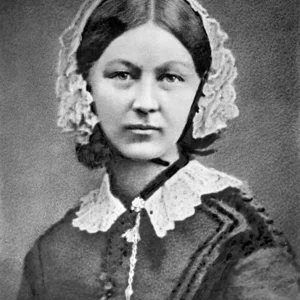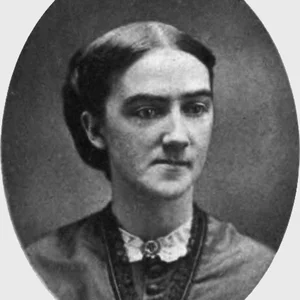

Pioneering American chemist, the first woman admitted to MIT, where she became an instructor. A specialist in sanitary chemistry, she analyzed water and air quality and founded scientific home economics.
Ellen Swallow Richards(1842 — 1911)
Ellen Richards
États-Unis
6 min read
Frequently asked questions
Key Facts
- Born in 1842 in Dunstable, Massachusetts, died in 1911.
- First woman admitted to the Massachusetts Institute of Technology (MIT) in 1870.
- First American woman to earn a degree in chemistry from a scientific school (1873).
- Carried out a vast study of Massachusetts water quality in the 1880s, the basis for the state's first sanitary standards.
- Founded the American Home Economics Association in 1908, institutionalizing home economics.
Works & Achievements
MIT's first laboratory open to women, which Ellen helped found and direct in order to train female students in chemistry.
A manual applying the principles of chemistry to household tasks; one of the founding texts of scientific home economics.
A study of common foods and the frauds that adulterate them, which contributed to the first food-safety laws.
An analysis of tens of thousands of samples resulting in the first mapping of a state's water pollution.
A popular Boston kitchen offering nutritious, affordable meals, conceived as an experiment in public health education.
A synthesizing work on the hygiene of air, water, and food, co-written with A. G. Woodman.
A book in which Ellen develops the theory of “euthenics”: improving human health by acting on the living environment rather than on heredity.
Anecdotes
When Ellen Swallow entered MIT in 1870, she was the very first woman admitted to the institute. The administration enrolled her as a "special student" and charged her no fees: this was presented to her as an honor, but it was mainly a way to be able to deny that a woman was officially enrolled there in case of scandal.
To disarm the suspicion of her male professors and classmates, Ellen made a point of being useful "in the feminine way
: she tidied up the laboratory
sewed on buttons
and brought tea. She hoped in this way to prove that a woman could be a real scientist without ceasing to be
in their eyes
a
real woman".
In 1875, Ellen married Robert Richards, a professor of mining engineering at MIT. Their honeymoon resembled a scientific expedition: they visited mines in Nova Scotia, where she carried out chemical analyses on the ores.
Between 1887 and 1890, Ellen and her team analyzed tens of thousands of water samples from Massachusetts. From this she produced the first "normal chlorine map
which made it possible to spot at a glance the polluted rivers and lakes across an entire state.
At the 1893 World's Fair in Chicago, she opened the "Rumford Kitchen
a model kitchen serving inexpensive meals while displaying their composition: calories
protein
fat. It was an unprecedented way of putting science directly onto the public
s plate."
Primary Sources
I hope in a quiet way I am winning a way which others will keep open. Perhaps the fact that I am not a Radical and that I do not scorn womanly duties — I even claim it as a privilege to tidy up the laboratory and to sew — is winning me stronger allies than anything else.
Euthenics comes before eugenics: it is about shaping better human beings right now, by consciously improving the conditions of life, and so building a healthier humanity for the future.
This work examines everyday foods and the frauds that corrupt them, so that everyone may learn to tell what is pure from what is adulterated in the things they consume.
The systematic analysis of the state's waterways makes it possible to set a “normal” chloride level for each region; any departure from it betrays the presence of pollution of human origin.
Key Places
Small rural town in northern Massachusetts where Ellen Swallow was born in 1842 and spent her childhood in a family of farmers and teachers.
Women's college where Ellen studied chemistry and astronomy before graduating in 1870.
The Massachusetts Institute of Technology, then located in the Back Bay neighborhood, where Ellen studied and went on to become the first woman to teach sanitary chemistry.
Boston neighborhood where Ellen lived and died in 1911. She turned her home into a true laboratory for healthy living (ventilation, water, gas).
Site of the 1893 World's Fair where Ellen presented the “Rumford Kitchen,” a model scientific kitchen.
Adirondacks resort where, starting in 1899, the founding conferences on scientific home economics led by Ellen were held.
Typical Objects

A graduated glass tube fitted with a stopcock that releases a reagent drop by drop. Ellen used it to precisely measure the substances dissolved in water.
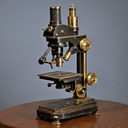
An optical instrument that magnifies the invisible. It made it possible to examine the micro-organisms and impurities present in water samples.

An analytical balance capable of weighing very small quantities of matter. Essential for measuring the exact components of a food item or a sample.

A gas burner with an adjustable flame developed around 1855. It heated test tubes and solutions in every chemistry laboratory of the era.

Numbered glass bottles used to collect and transport water drawn from rivers and lakes. The Massachusetts survey filled tens of thousands of them.

A map of Massachusetts showing the natural chloride level of its waters. Any excess signaled pollution: it was a pioneering public-health tool.
School Curriculum
Vocabulary & Tags
Key Vocabulary
Tags
Daily Life
Morning
Ellen rises early in her Jamaica Plain home, which she has turned into a laboratory of healthy living. After a simple breakfast, she heads to MIT, in Boston, by streetcar or train.
Afternoon
In the laboratory, she mentors her women students, measures out water samples with a burette, and hunts for adulteration in food. She also corresponds with the Massachusetts Board of Health.
Evening
Back home, she welcomes students and colleagues, writes books and articles, and prepares the Lake Placid conferences while reading scientific journals.
Food
She advocates a balanced diet measured scientifically, mindful of calories and proteins. She favors simple, healthy dishes, and regularly tests foods to detect adulteration.
Clothing
She wears the respectable Victorian dress of the women of her time — a long skirt, a high-collared bodice — over which she slips an apron in the laboratory. This “feminine” elegance is also a strategy to disarm prejudice.
Housing
Her house on Eliot Street, in Jamaica Plain, is a showcase of applied sanitary science: studied ventilation, filtered water, gas heating. She uses it to demonstrate concretely what a healthy home is.
Historical Timeline
Period Vocabulary
Liens externes & ressources
Références
Œuvres
Woman's Laboratory au MIT
1876
The Chemistry of Cooking and Cleaning
1882
Food Materials and Their Adulterations
1885
Enquête sur les eaux du Massachusetts et carte du chlore normal
1887-1890
New England Kitchen
1890
Air, Water, and Food from a Sanitary Standpoint
1900
Euthenics: The Science of Controllable Environment
1910