Imaginary interview with Fulvia
by Charactorium · Fulvia (76 av. J.-C. — 39 av. J.-C.) · Politics · Military · Society · 6 min read
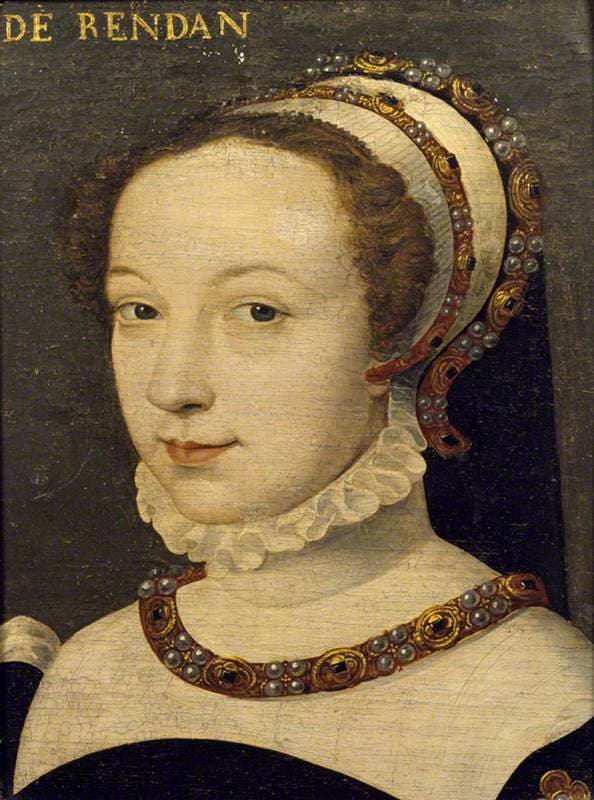
Sicyon, in the Peloponnese, summer of 40 BC. A woman exhausted by fever receives visitors under a portico battered by the sea wind. She has fled Perusia, waits in vain for news of Mark Antony, and yet consents to speak — in a voice still firm, the voice of one who has raised armies.
—Do you remember the day your first husband's body was brought back to you?
It was winter, in 52 BC, on the Appian Way. They returned Clodius to me riddled with blows, his toga stiff with dried blood. I neither washed him nor veiled him. I had him carried into the atrium of our domus, displayed under the impluvium, offered to the eyes of all who came for the morning salutatio. A matron weeps behind her stola, they say; I opened my doors. The crowd came, saw the wound, understood. They carried the corpse to the Forum and burned it inside the Curia — the Senate itself went up in smoke. I was blamed for that fire. I reply that I only exposed a truth: a man of the people murdered by Milo's men. The rest was Rome's doing.
A matron weeps behind her stola; I opened my doors.
—Many thought a woman had no business in a public trial. What were you doing at Milo's court?
I went to testify, I, the widow. They expected silence and wool to spin; I came to say what I had seen with my own eyes on the Appian Way. The men of the Forum were in turmoil, Cicero pleading for the murderer with his beautiful voice — that same voice that would later crush me in his Philippics. No matter. I learned that day that a woman's word, if laden with grief and facts, stirs the plebs as much as a magistrate's harangue. They called me shameless. I preferred that to the mute dignity offered to dead women. The murder of Clodius was not only my grief: it was my first political act, and I was not yet thirty.
I learned that day that a woman's word, if laden with grief and facts, stirs the plebs as much as a magistrate's harangue.
—How does a Roman aristocrat come to gird on a sword before soldiers?
Out of necessity, not love of iron. Antony had gone East, Octavian was distributing the lands of Italian cities to veterans like plunder, and there was no one to stand against him. So I stood. At Perusia, alongside Lucius Antonius, I raised troops and gave the watchword. Cassius Dio wrote without flattery: Fulvia girded on a sword, gave the watchword to the soldiers, and on many occasions harangued them herself. I did not claim to be an imperator — I never led a charge. But when men hesitate and the res publica is torn apart, a firm voice is worth a legion. The soldiers listened to me. That, no decree of the Senate could grant me; I took it.
I did not claim to be an imperator; but a firm voice is worth a legion.
—At Perusia, sling bullets were found bearing your name covered with insults. What do those insults inspire in you?
Those glandes of lead, Octavian's slingers engraved them before hurling them over our walls, the winter of the siege. Several named me, Fulvia, with words a matron does not repeat. They targeted my body, my mouth, my audacity. And do you know what I read in them? An admission. You do not insult a shadow; you do not write a woman's name on the lead you will throw in her face if that woman is nothing. They treated me as an enemy commander because I was one. Velleius will write that I had only the body of a woman — let him say it. The contempt they put so much zeal into engraving in metal is already a form of fear.
You do not write a woman's name on the lead you will throw in her face if that woman is nothing.
—You managed Antony's affairs in Rome during his absence. What did that involve, day after day?
Letters, visits, patience. In the morning, I received Antony's supporters at the salutatio, as others receive clients for bread. In the afternoon, I sealed with my signet ring the correspondence heading East, weighing my words on wax tablets before entrusting to the stylus what no messenger must betray. I negotiated with senators, defended our friends, held the fort. Plutarch said of me that I cared neither for spinning wool nor keeping house, that I wanted to govern the governor and command the commander. He thought to blame me. I, absent from Antony, was his hand at Rome: without that hand, his cause would have collapsed while he courted Egypt.
Absent from Antony, I was his hand at Rome.
—Cicero depicted you as a greedy woman leading Antony like a mistress. What do you reply to that image?
Cicero's pen was dipped in venom. In his Philippics, he wrote that Antony let himself be governed by that greedy woman to whom he had to account. A skilled orator turns a wife's firmness into vice, intelligence into greed — that is his art. But what should I have done? Let our supporters be despoiled, abandon our friends to the proscriptions, spin my wool while Rome was being divided? I kept the accounts, yes, because whoever keeps the accounts holds power. Cicero knew that better than anyone, he who once governed by word alone. He hated me because I used his weapons without being a man. That he never forgave me.
A skilled orator turns a wife's firmness into greed — that is his art.
—Your face appeared on coins, an unheard-of thing for a living Roman woman. How did you feel the first time?
They placed in my hands a small silver quinarius, barely wider than a fingernail. On it, a winged profile of Victory — and that profile, they said, was mine. No Roman woman before me, a real woman and not a goddess, had seen her features struck into the metal that passes from hand to hand, from the Forum to the camps. They even renamed a Phrygian city Fulvia, after my name. Some saw it as hubris, almost a blasphemy against the order of matrons. I saw a simple thing: a woman can circulate, be seen, be counted. A coin goes wherever gold has currency; holding it, a soldier in Gaul or Syria held my name without knowing it. That is a way of governing without a magistracy.
A woman can circulate, be seen, be counted.
—Cruel things are told about your conduct after Cicero's death. What should we think of them?
They say, yes. That when Cicero's severed head was displayed at the Forum, during the proscriptions of 43 BC, I supposedly pulled the golden hairpins from my coiffure to pierce that tongue — the tongue that had torn me apart in his speeches. The story circulates, it is embellished, I do not entirely deny it. Understand: that man had used his word like a knife against me and Antony for years. When the knife fell silent, the temptation was great to make him feel it. Was it I, or was it rumor that attributes the worst to women? It matters little now. They wanted a monster to point at; the victors of tomorrow would need one.
—The siege of Perusia ended in surrender. How did you experience that defeat?
Appian summed it up coldly: Fulvia, wife of Antony, and Lucius, his brother, raised an army against Octavian and shut themselves in Perusia, which was immediately besieged. Immediately — as if one could sum up a winter of hunger in one word. We held out as long as the grain lasted, under the glandes that rained down. Then Perusia capitulated, and the city burned. I fled to Greece, ill, seeking Antony. A defeat is not only walls falling; it is the silence of those for whom one fought. I had stirred Italy in his name, and he was slow to come. I carry that siege like a wound that does not close: not the shame of losing, but the bitterness of having fought alone.
A defeat is not only walls falling; it is the silence of those for whom one fought.
—If you could imagine that people would still speak of you in a century, what would you fear they would remember?
That they reduce me to a pretext. I sense, here in Sicyon, the fever whispers it to me, what will happen: Antony and Octavian need peace, and nothing reconciles two rivals like a common scapegoat. They will say that the civil war was my doing, that a jealous woman plunged Italy into blood, and they will seal their accord — at Brundisium perhaps — on my still-fresh grave. That is what I fear: not oblivion, but the convenient lie. That in a hundred years they will repeat, from Velleius or others, that I threw everything into confusion with arms and discord, without saying why I took up arms. If I am to be read, let me be read whole: matron, yes, but also she who refused to spin her wool while the Republic was being dismembered.
Nothing reconciles two rivals like a common scapegoat.
Read further

This imaginary interview was generated by artificial intelligence from sources documented in Fulvia's profile. It dramatises what the figure might have said based on what we know about them, but does not constitute attested historical testimony. For primary sources and factual documentation, refer to the full profile.