Imaginary interview with Galina Ulanova
by Charactorium · Galina Ulanova (1910 — 1998) · Performing Arts · Culture · 5 min read
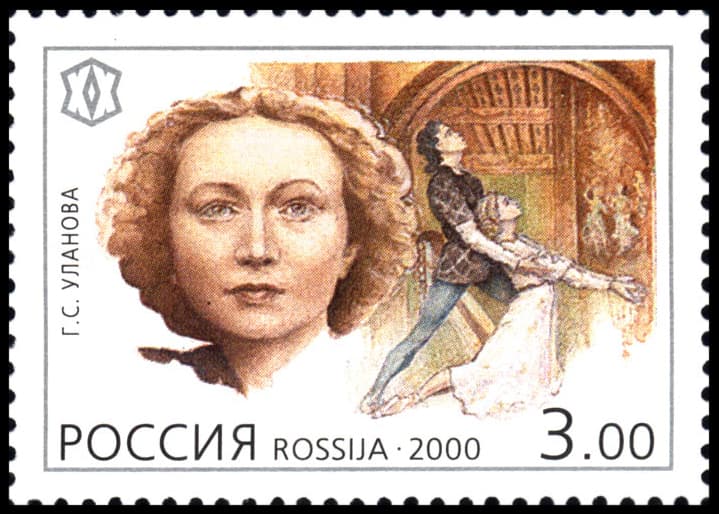
Moscow, a winter afternoon in the late 1970s. In a rehearsal room at the Bolshoi, where mirrors reflect the gray light from outside, a small woman watches two young dancers repeat a port de bras. She has put away her pointe shoes long ago, but her gaze has never left the stage. She agrees to speak, in a low voice, between two corrections.
—Do you remember the day you were told you would leave Leningrad?
It was in 1944. The city had just emerged from a siege of eight hundred and seventy-two days — you still walked through streets that had buried the starving. And then I was told I had to leave for the Bolshoi, in Moscow. I grew up at the Kirov, I had learned every plank of the floor, every draft in the wings; it was my home, my language. But the order came from Stalin himself, and such an order is not discussed, you go through it like crossing an icy river. I packed my suitcase without a word. You don't cry before a decree; you dance it later, in the role of a woman who loses everything.
You don't cry before a decree; you dance it later, in the role of a woman who loses everything.
—What remains of Leningrad in the dancer you became in Moscow?
Everything, really. That is where I was trained by Agrippina Vaganova, whose method did not begin with the legs but with the back, with the arms, with that way of holding the torso as if holding a secret. I carried that school all my life on the great stage of the Bolshoi, under those immense chandeliers that sometimes crush the body. My Maria in The Fountain of Bakhchisarai, that Polish woman abducted and broken, I first danced it at the Kirov in 1934; it was already Leningrad speaking through me. You don't exchange one city for another. You superimpose them.
—How did you work on a role like Juliet?
Not in front of the mirror, first. In front of a book. Before even putting a foot at the barre, I reread Shakespeare, just as I reread Goethe for other ballets — you have to know who this child is before you know how she walks. When I created Romeo and Juliet at the Kirov in 1940, Prokofiev came to rehearsals; his music did not accompany the dance, it commanded it from within. He once said something about me that I never forgot: 'Ulanova possesses what few dancers have: she does not dance the music, she lives it from within.' I could repeat a single gesture for two hours, not for it to be correct, but for it to become true.
You have to know who this child is before you know how she walks.
—You speak of truth rather than technique. Was virtuosity less important to you?
Virtuosity is a staircase, not a destination. You climb it to get somewhere else. I always preferred the romantic tutu, that long tulle skirt that follows the line, to those short skirts that display prowess. In Giselle, in the second act, when my character is nothing but a ghost, it is not about counting turns but about seeming to weigh nothing at all. My mother, who was my first teacher, never let me cheat at the barre — not a sloppy plié, not an approximate tendu. That rigor, learned as a child, I still look for in the eyes of these young people I correct today.
Virtuosity is a staircase, not a destination.
—Tell us about that evening in October 1956, in London.
Covent Garden, October 1956. I was forty-six years old — an age when you no longer expect a dancer to be Juliet, a fourteen-year-old child. The curtain fell, and the English audience remained standing, applauding for over twenty minutes; I did not understand their language, but you don't need words to recognize that silence before the ovation. I was later told what The Times had written: 'Ulanova's Juliet is one of the supreme achievements of the human spirit in our time.' I received those words as one receives something too big for oneself — with the desire to quickly return to work, so as not to deserve them by accident.
You don't need words to recognize that silence before the ovation.
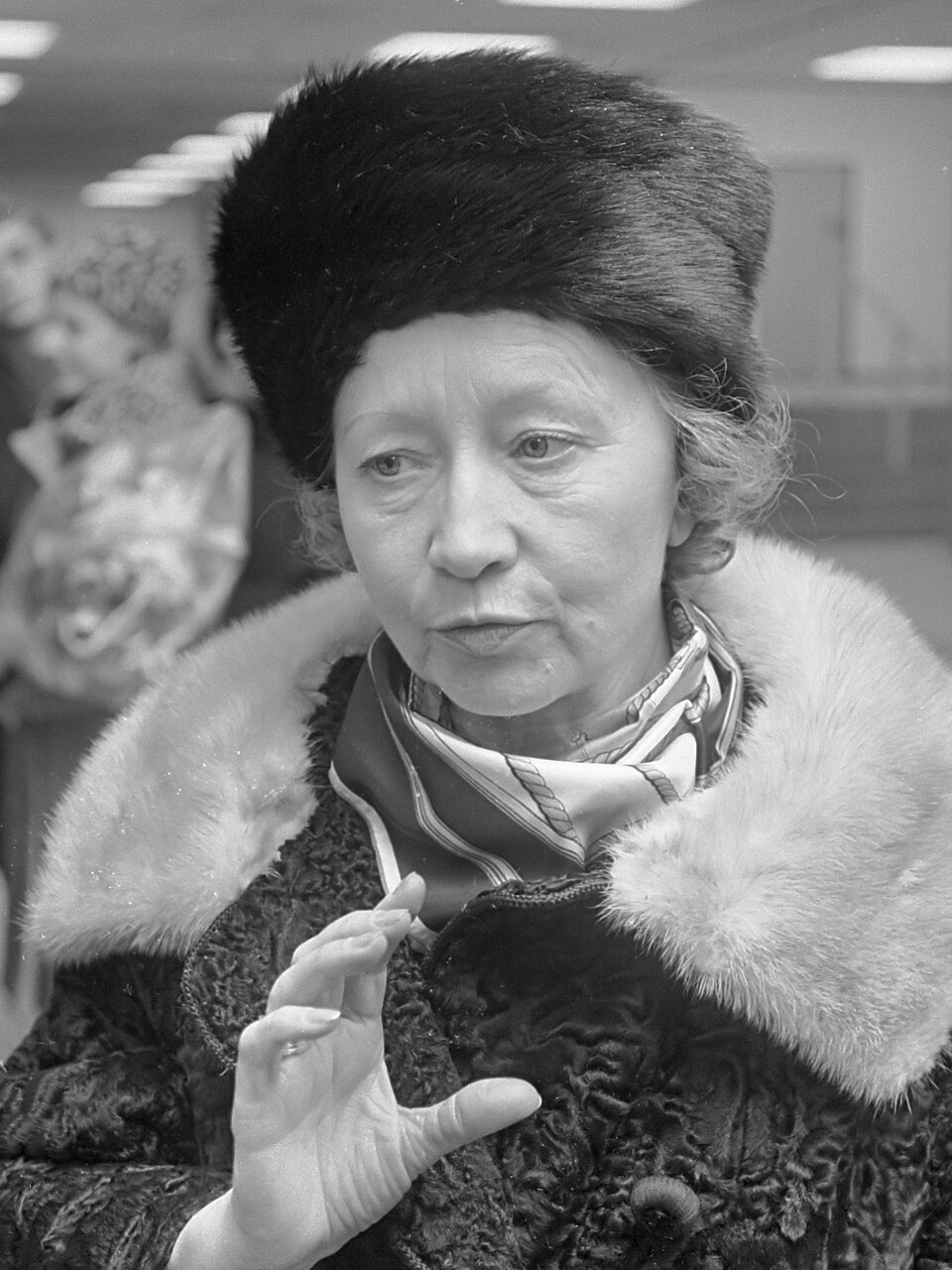
—What does it feel like to dance adolescent love when you are no longer twenty?
You don't cheat with the body, but you also don't cheat with what you have lived. At forty-six, I was no longer playing the ingénue: I remembered her. Five years earlier, in Florence, at the Teatro Comunale, the West was discovering us for the first time, and spectators had come on stage to offer me flowers after Romeo and Juliet. It was not my youth that moved them — I no longer had any. It was perhaps the opposite: a Juliet who already knows how the story ends, and loves him anyway. The old age of a dancer, if she works, can give a young role a depth that youth ignores.
A Juliet who already knows how the story ends, and loves him anyway.
—You were covered in titles and prizes. What weight did that represent?
Four Stalin Prizes between 1941 and 1950, then other distinctions still — we were decorated like cosmonauts or Olympic champions. Ballet, in our country, was not entertainment: it was a state affair, a way of telling the world that the Soviet Union produced beauty as well as steel. They called it cultural diplomacy; we were its ambassadors in pointe shoes. I deny nothing, but I confess that those medals sometimes weighed heavier than my rehearsal days. A title does not teach you a step. It watches you while you execute it.
We were the ambassadors in pointe shoes of the Soviet Union.
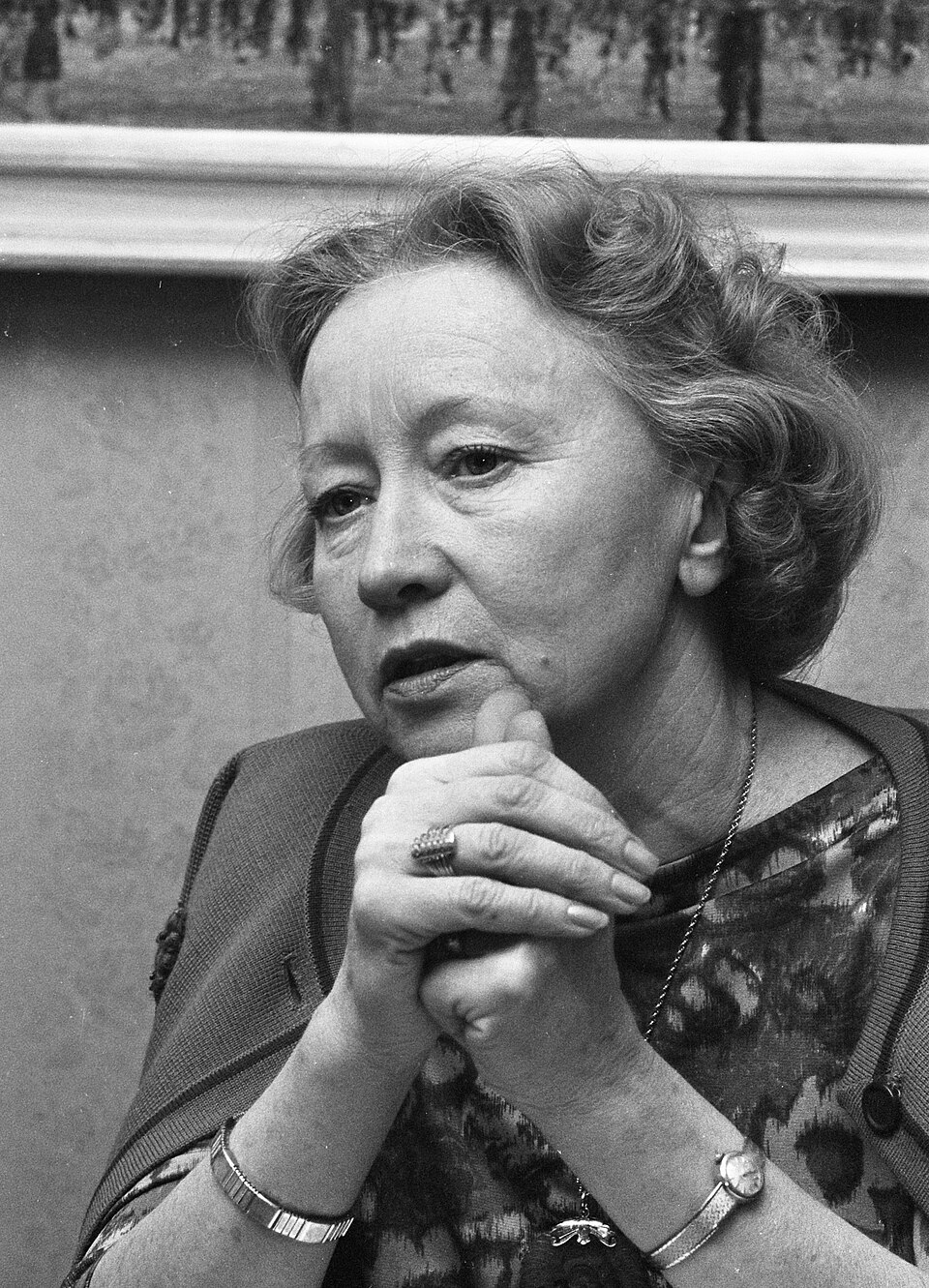
—Being transformed into a national symbol, what does that change in an artist's life?
It gives you a spacious apartment in Moscow when an entire people lacks housing — a privilege I never found comfortable. It also gives you a doctrine: socialist realism, which wanted art to speak to the people and exalt the regime. Classical ballet, inherited from the tsar's court, was reclaimed as a national heritage; we danced an imperial legacy in the name of the revolution. It is a paradox I did not have to resolve — I was not a theorist, I was a dancer. My duty, as I conceived it, was not to serve an idea but never to lie on stage.
—Far from the stages and honors, how did you spend your evenings?
Alone, most often, and that is how I liked them. On performance nights, I arrived two hours before the curtain and did not mingle with the backstage chatter; I needed that silence to enter a character. And afterward, I fled the official receptions that the regime nonetheless expected of its artists. I went home, where my books and my own canvases awaited me — for I painted, discreetly, a passion I kept to myself. Very strong black tea, a lamp, a page: that was my real Soviet decoration. They wanted me brilliant; I aspired above all to disappear.
They wanted me brilliant; I aspired above all to disappear.
—You left the stage in 1960, but not the theater. What did you become afterward?
Répétiteur. The word says it all: the one who makes you repeat, the one who stays when the spotlights turn away. I hung up my pointe shoes at fifty — rare longevity, I was told often enough — and I spent nearly forty years in those mirror rooms, correcting a wrist, a glance, the birth of a movement. I worked with Ekaterina Maximova, with Vladimir Vasiliev, and so many others. To dance is to speak a language that dies with the body if no one receives it. So I pass it on, from hand to shoulder, from breath to breath. As long as I can walk through that door in the morning, I will come to show them where the inside of a gesture hides.
To dance is to speak a language that dies with the body if no one receives it.
This imaginary interview was generated by artificial intelligence from sources documented in Galina Ulanova's profile. It dramatises what the figure might have said based on what we know about them, but does not constitute attested historical testimony. For primary sources and factual documentation, refer to the full profile.