Imaginary interview with Guangxu
by Charactorium · Guangxu (1871 — 1908) · Politics · Culture · 7 min read
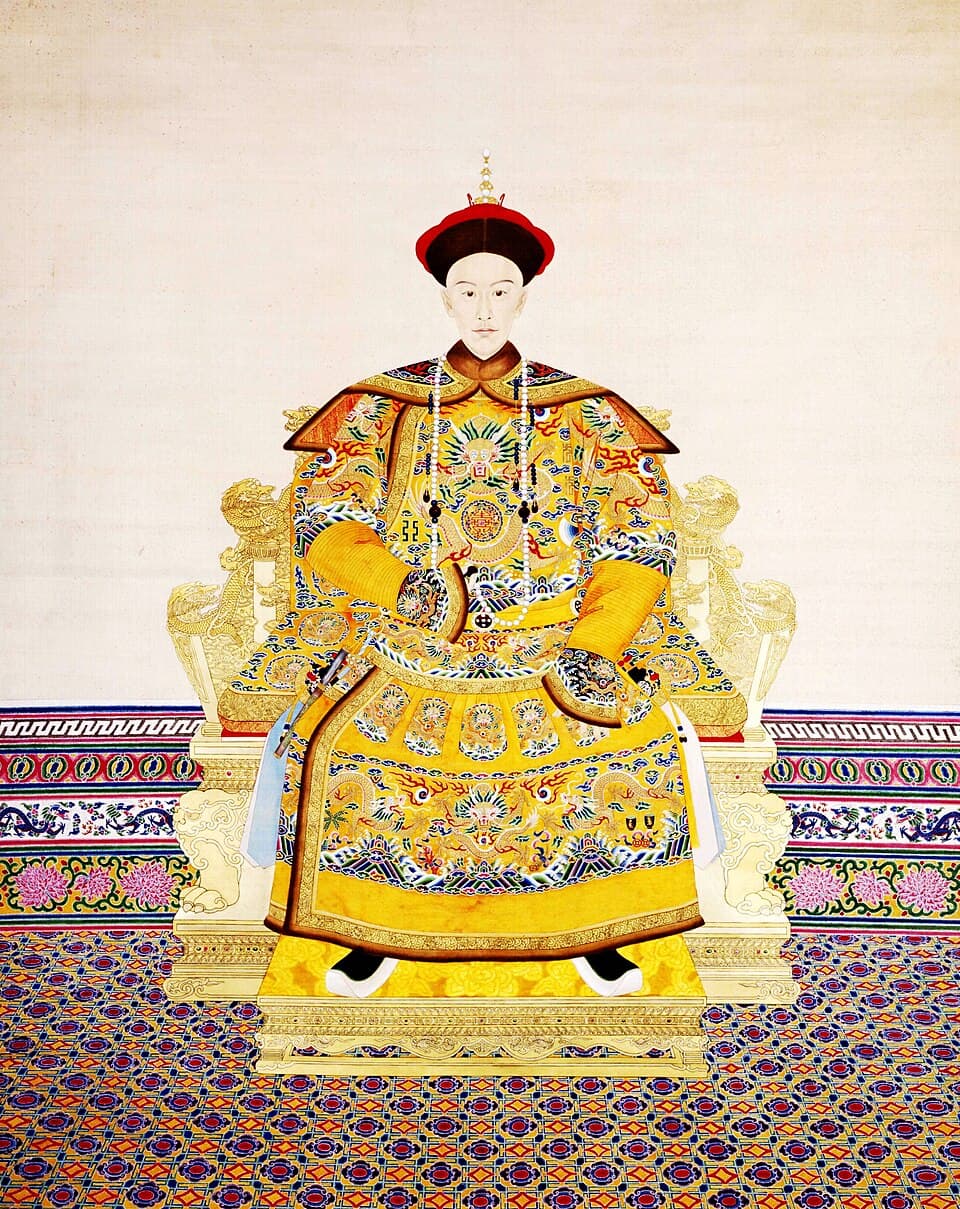
Winter 1908, on Yingtai Island, at the heart of Zhongnanhai. A palace surrounded by icy water, bridges guarded day and night, and a thirty-seven-year-old man who receives, in a room where a now-silent telephone stands, his interviewer. Guangxu, the eleventh emperor of the Qing, speaks softly, as if still afraid of being overheard.
—Do you remember the day they made you the Son of Heaven?
I remember nothing, and that is the whole tragedy. I was four years old. In 1875, Emperor Tongzhi had died without an heir, and my aunt by marriage, the Empress Dowager Cixi, chose me as one picks a piece of furniture to fill a gap in a room. I was torn from my mother's arms and placed on the Dragon Throne, in an oversized yellow silk robe embroidered with the five-clawed dragon that I did not yet understand. The people believed a child held the Mandate of Heaven; in truth, that mandate was kept by her, behind a screen, dictating the edicts that my child's hand was just learning to seal. I reigned my whole life over an empire whose key I never possessed.
I was torn from my mother's arms and placed on the Dragon Throne.
—How did you experience Cixi's return to power in September 1898?
On the morning of September 21, 1898, I knew it was all over before I was told. The guards had changed faces. An edict was circulated claiming that I had begged her to resume the regency, on the pretext of a serious illness — a lie that my own hand was supposed to have written. I was brought here, to Yingtai, this small island where water serves as a wall. I learned to know every bridge, not to cross it, but to count the guards who barred my access. In the evenings, I played xiangqi alone, moving pieces on a chessboard while I was moved like the most powerless of them. An emperor imprisoned in his own palace: that is the fate the Dowager reserved for me for ten years.
—What, in 1898, drove you to try to transform everything so quickly?
Shame, sir. Three years earlier, in 1895, little Japan had crushed us and taken Taiwan by the Treaty of Shimonoseki. An empire millennia old, humiliated by an island we despised! So when Kang Youwei sent me his memorials, warning that China would be devoured like India and Annam if it did not reform on the model of Meiji Japan, I felt the ground give way. On June 11, 1898, I launched what has since been called the Hundred Days' Reform: over a hundred edicts in one hundred and three days, to remake the schools, the army, the administration. They blamed me for haste. But when a man is drowning, do you blame him for swimming too fast?
When a man is drowning, do you blame him for swimming too fast?
—Among all these reforms, which one did you hope would survive?
Cannons rust, armies scatter, but a school endures. That is why I founded, in the tumult of those months, the Imperial University of Peking — the Jingshi Daxuetang. There, at last, they would teach mathematics, sciences, foreign languages, and not just the Confucian classics memorized since childhood. I also wanted our venerable imperial examinations, those thousand-year-old competitions that turned a scholar into a mandarin, to open up to modern knowledge and practical studies. I was stopped before the seed could sprout. Yet, if I were to wager a single piece of jade on what will outlive me, it would be that university. An emperor can disappear into a well of oblivion; but a house of knowledge trains generations who do not ask your permission to exist.
—You also wanted to overhaul the army. What did you criticize about the one you inherited?
A parade army, sir, good for marching but incapable of holding a line of fire. Shimonoseki had proved that in blood. I ordered it reorganized along European lines, that military academies be opened, that their tactics and new weapons be adopted. There was a bitter irony in this: the Summer Palace, which my aunt had rebuilt for her pleasure, had swallowed funds meant for our navy. They built marble pavilions while our ships lacked shells. How to defend an empire when the fleet's gold turns into pleasure gardens? I wanted to reverse that course. But reforming an army takes years, and I was given only one hundred and three days before the door of Yingtai closed on me.
—They say you developed a passion for Western inventions. Where did that curiosity come from?
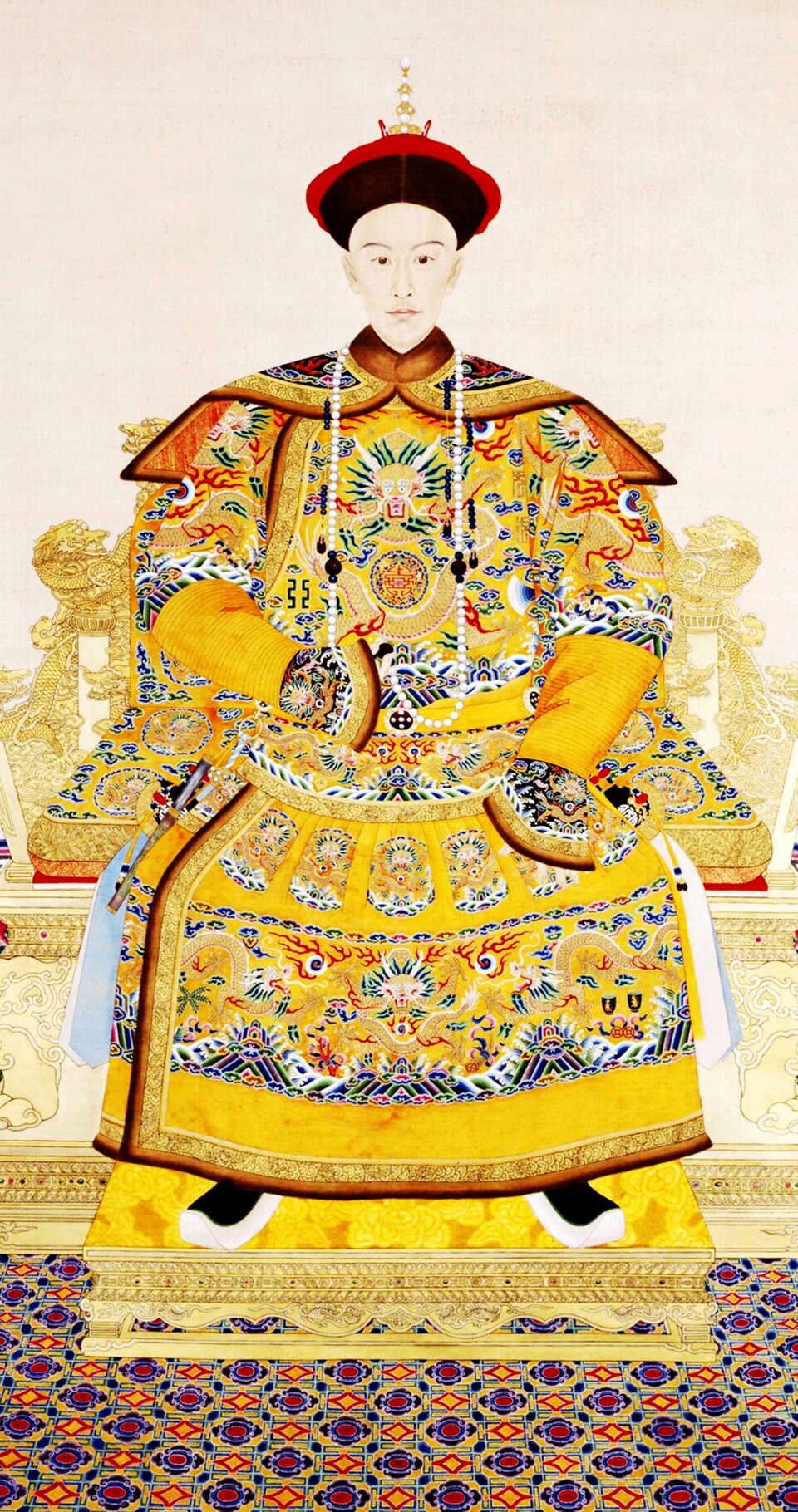
From a hunger, no doubt, to understand this world that was knocking at our doors with gunboats. I learned to decipher French and English, alone, with dictionaries that my advisors brought me. I had a telephone installed in the Forbidden City — imagine the scandal, a voice crossing the vermilion walls where only eunuchs dared whisper! I read European treatises on constitutional law, books where they dared write that a sovereign could govern with laws rather than above them. Cixi saw in all this a contagion, a threat to the old order. I saw the only medicine. We no longer spoke the same language, she and I, long before she silenced me for good.
A telephone in the Forbidden City: a voice crossing the vermilion walls where only eunuchs dared whisper.
—Is there one object among all those you collected that resembled you?
Pocket watches, without hesitation. I had brought several from Europe, and I would open them to observe the tiny gears, those cogwheels that drove each other without ever faltering. An empire, I told myself, should work like that: every province, every ministry, every school interlocked. Ours, alas, was more like a clock with its mainspring removed. I also kept Chinese translations of Western works on constitutional government, the pages dog-eared from nightly rereading. These books gave me a vision; the watches, a method. But a man who has the blueprint of a machine and is not allowed to touch it is only a watchmaker locked away from his bench. That is what I was, for ten years.
—You were not alone in your taste for the new world. Tell us about the Pearl Concubine.
Zhen Fei. She laughed at the same things as I did, marveled at the same machines. She shared, like me, a passion for photography — that art of stopping an instant, so new at our court that some thought it sorcery. We had our portraits taken, and I believe those images were the only freedom we were allowed: to freeze on a plate a happiness that the palace denied us in life. She also shared my reformist ideas, which in the Dowager's eyes was a far graver crime than mere favor. In a harem regulated like a clock, where every Pínfēi knew her rank, she dared to think. That, I believe, is what was never forgiven her.
—What happened to her during the Boxer Rebellion in 1900?
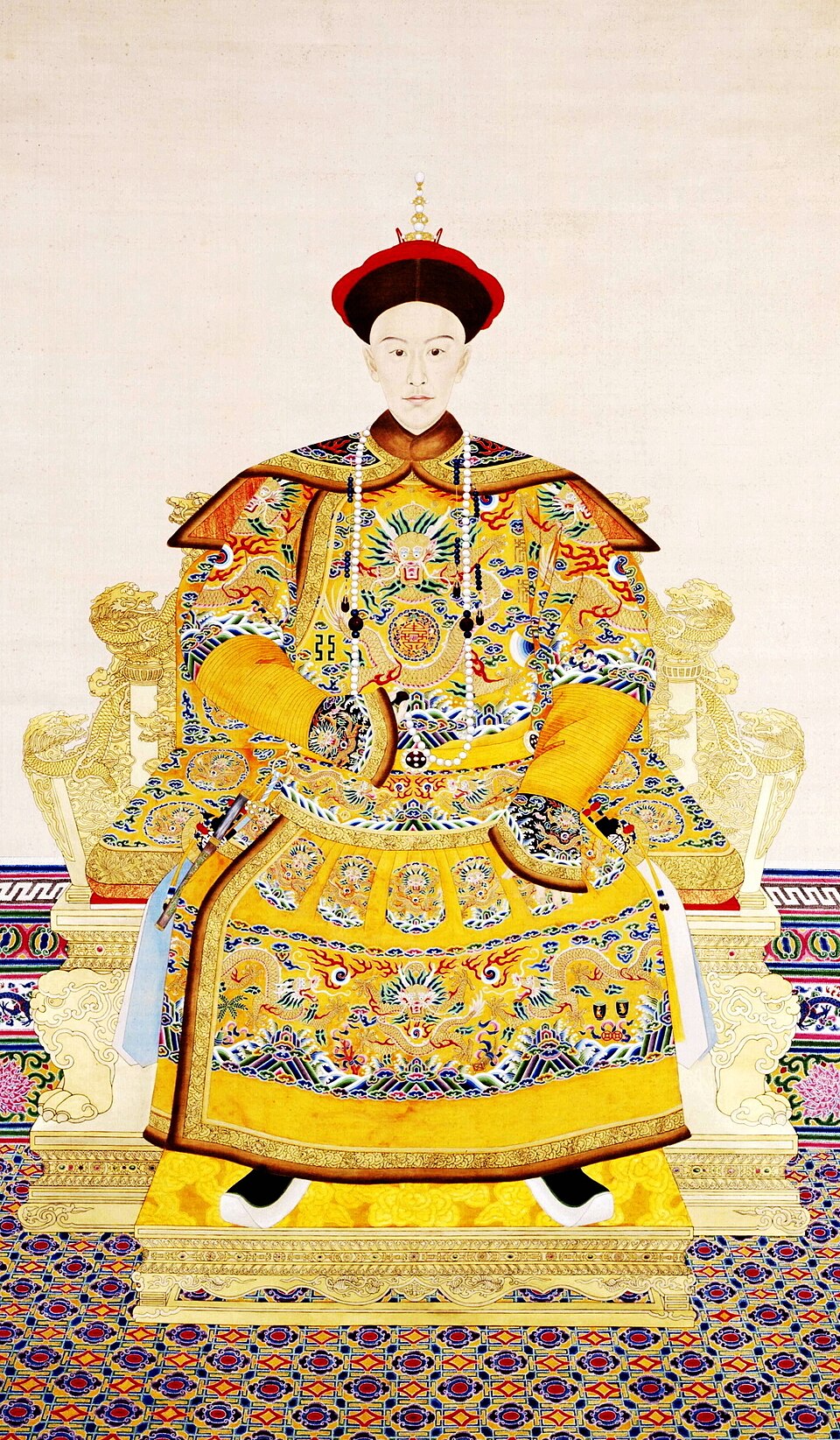
The year 1900 was a descent into hell. The Yìhétuán, the Boxers, had stirred up the country against foreigners, and eight nations had responded with arms. Their troops were marching on Peking. Cixi decided to flee to Xi'an, dragging me behind her like luggage. Before the departure — I was told, for I was kept away — she had Zhen Fei thrown into a well in the Forbidden City, on the pretext that an emperor's favorite must not fall into the hands of the invaders. A well! She who loved the light of photographs, swallowed into the dark of a water hole. I could not prevent it. I was left with neither voice, nor arms, nor even the right to weep before a witness. The modernity we had dreamed of together died that day, twice.
She who loved the light of photographs, swallowed into the dark of a water hole.
—Imprisoned, watched even over your food: do you fear the manner of your death?
Every dish presented to me, I stare at it long before touching it. They always said I had a small appetite; they do not know that my sobriety is also fear. Dozens of dishes come out of the imperial kitchens each day, and I wonder which one will bring, one morning, my end. The Dowager is aging, and I know: the day she feels death coming, she will not let me survive her to undo her work. A freed emperor would be a vengeful emperor — she understands that better than anyone. So I live on my island of Yingtai like a man listening to his executioner approach without knowing his step. My death will not be an accident of nature. Of that, I am as certain as the cold rising from the water around this palace.
—If you imagined being read a century later, what would you want people to finally understand?
That I was not merely the pale shadow painted behind Cixi's throne. If, in a hundred years, a man were to examine my remains and seek the truth of my end, I would like him to discover what I suspect: that I was not allowed to die of my own accord. Perhaps then they would understand that my Hundred Days' Reform was not the whim of a dreamer, but the last chance of an empire from which the Mandate of Heaven was already slipping. Dynasties fall when they cease to serve the people; I wanted, myself, to hold onto that mandate through reforms rather than let it slip away. I was prevented. Let the future at least know that I tried — and that the University of Peking, if it still exists, remembers the trembling hand that founded it.
I wanted to hold onto the Mandate of Heaven through reforms rather than let it slip away.
This imaginary interview was generated by artificial intelligence from sources documented in Guangxu's profile. It dramatises what the figure might have said based on what we know about them, but does not constitute attested historical testimony. For primary sources and factual documentation, refer to the full profile.