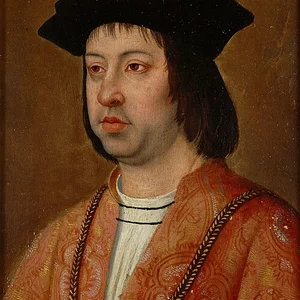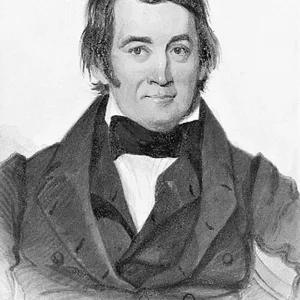

American pioneer, hunter, and politician, elected several times to Congress for the state of Tennessee. Having become a legendary figure of the conquest of the West, he died defending Fort Alamo during the Texas Revolution in 1836.
Davy Crockett(1786 — 1836)
Davy Crockett
États-Unis
5 min read
Frequently asked questions
Famous Quotes
« Be sure you're right, then go ahead.»
Key Facts
- Born in 1786 in Tennessee, he became a hunter and pioneer of the American frontier
- Served under Andrew Jackson during the Creek War (1813-1814)
- Elected as Tennessee's representative to the United States House of Representatives (terms during the 1820s-1830s)
- Opposed the Indian Removal Act of 1830 promoted by Andrew Jackson
- Died on March 6, 1836, at the Battle of Fort Alamo, during the Texas Revolution
Works & Achievements
A lively, popular-toned autobiography, written to correct the exaggerated portraits circulating about him. It is one of the main sources on his life.
Votes and speeches against the deportation of Native American peoples, a courageous and minority political stand that cost him his career.
A parliamentary battle on behalf of the small settlers and squatters of West Tennessee, so they could keep the land they were farming.
Enlistment as a scout under the command of Andrew Jackson, which forged his reputation as a frontiersman.
Participation in the siege alongside the Texan revolutionaries; his death made him a hero and a martyr of Texas independence.
Anecdotes
Davy Crockett's motto was “Be sure you're right, then go ahead.” This phrase, which he often repeated, captures the image he cultivated of a frank and upright man, halfway between the rugged pioneer and the popular politician.
In Congress, Crockett courageously opposed the Indian Removal Act of 1830, President Andrew Jackson's law that drove Native American peoples from their lands. This stance cost him his reelection: it was a rare act for an elected official from Tennessee at the time.
Defeated in the 1835 elections, he is said to have flung a now-famous retort at his voters: “You may all go to hell, and I will go to Texas.” He kept his word and joined the Texas Revolution, where he met his death a few months later.
In his autobiography, Crockett claimed to have killed 105 bears in a single hunting season in the forests of Tennessee. Whether true or exaggerated, these hunting tales forged his reputation as a hero of the wilderness.
Even during his lifetime, “Crockett almanacs” peddled far-fetched tales in which he rode lightning bolts or thawed out the frozen sun. Annoyed by these caricatures, he published his own autobiography in 1834 to set the record straight.
Primary Sources
I let this volume circulate as it may, with no aim other than to make myself known as I am, and not as others have portrayed me.
Be sure you are right, then go ahead.
He declared that he would rather be beaten and remain an honest man than be elected by voting for a measure he believed unjust toward the Indians.
You may all go to hell, and I will go to Texas.
Key Places
Crockett's birthplace, near the Nolichucky River, at the edge of the American frontier.
The region where Crockett grew up, hunted, and worked as a farmer before entering politics.
Seat of the House of Representatives, where Crockett served as a congressman for Tennessee.
A former fortified mission where Crockett died on March 6, 1836, defending the post during the Texas Revolution.
Typical Objects

A long flintlock rifle with a rifled barrel, accurate over great distances, indispensable to the hunter and the scout. Tradition holds that Crockett owned a rifle nicknamed “Old Betsy.”

A fur cap often decorated with the animal's striped tail, which became the visual symbol of Crockett and the frontier trappers. Whether Crockett actually wore one is partly a legend popularized later.

A container made from a cow's horn, used to carry and measure out the rifle's black powder. The hunter wore it slung across the shoulder, alongside his cartridge pouch.

A large, sturdy knife used to skin game, carve wood, and fight at close quarters. An essential survival tool in the forests of the frontier.

A shirt, trousers, and moccasins cut from soft deer leather, resistant to brambles and easy to repair. The characteristic outfit of pioneers and trappers.

Popular little books printed from the 1830s onward, blending a calendar, advice, and tall tales featuring a superhuman Crockett. They spread his legend far and wide.
School Curriculum
Vocabulary & Tags
Key Vocabulary
Tags
Daily Life
Morning
On the frontier, Crockett rose with the sun to tend his farm and his livestock. Many mornings began with hunting, rifle on his shoulder, to bring back game and feed the family.
Afternoon
The afternoon might be spent clearing land, repairing the cabin, or tracking a bear for several miles. During his political years, this time was taken up by travel, meetings, and speeches before the voters.
Evening
In the evening, people gathered around the fire to share a meal and tell hunting stories. Crockett was famous for his talent as a storyteller, making his audience laugh and leaving them impressed.
Food
Their diet relied on game (bear, deer, wild turkey), corn, and produce from the vegetable garden. Cornbread, salt pork, and corn whiskey were part of the pioneers' everyday fare.
Clothing
Crockett wore the buckskin clothing of the trappers, tough and well suited to the forest. Legend added the coonskin cap, which became his emblem.
Housing
He lived in log cabins built by the settlers themselves, often starting out as a single room. These rustic homes, without comfort, were built in the middle of land that had only just been cleared.
Historical Timeline
Period Vocabulary
Liens externes & ressources
Références
Œuvres
A Narrative of the Life of David Crockett of the State of Tennessee
1834
Opposition à l'Indian Removal Act
1830
Défense du « Tennessee Land Bill »
vers 1828-1830
Service dans la guerre Creek
1813-1814
Défense de Fort Alamo
1836