Imaginary interview with Hakuin
by Charactorium · Hakuin (1685 — 1768) · Spirituality · 6 min read
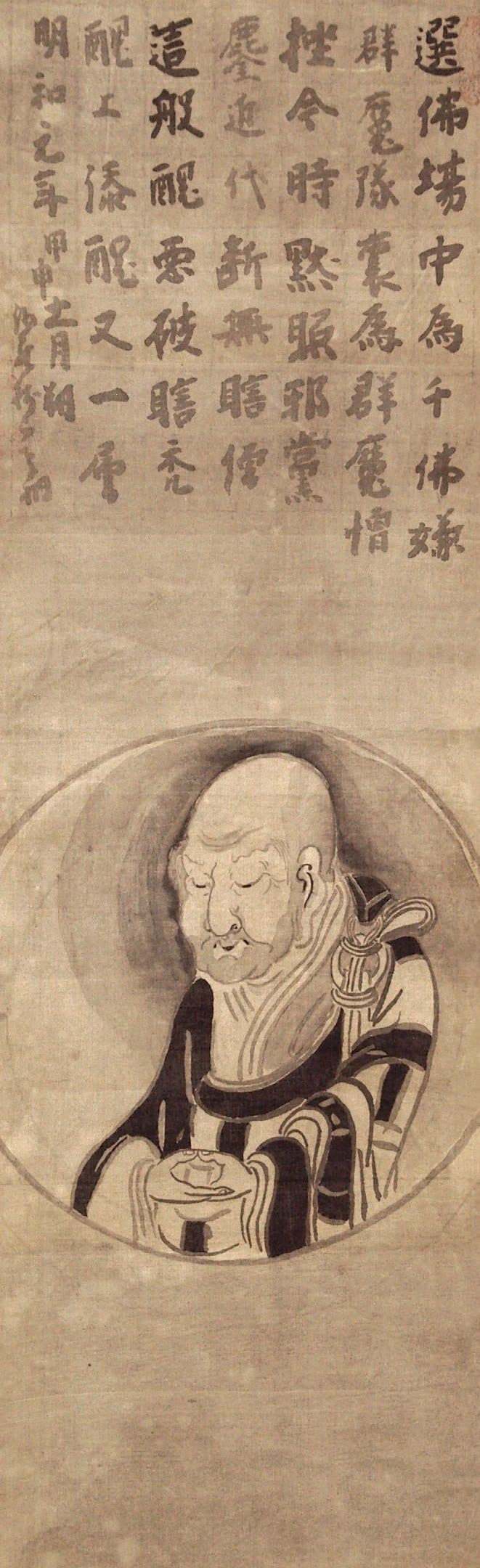
Hara, a winter morning at the foot of Mount Fuji. In the temple Shōin-ji, where paper screens let the cold through, an old monk in patched robes sets down his brush still wet with ink. He has just finished a Daruma with fierce eyebrows and agrees to speak, between two meditation sessions.
—What first drove you onto this path as a child?
Fear, plainly. I was a very young boy in Hara, that post station on the Tōkaidō road, when a sermon on the eight burning hells seized my belly like an icy hand. They described lakes of fire, demons, screams — and I, frail, already saw myself falling in. That terror never let me go. It became my goad: around fifteen, I asked for ordination at the Shōin-ji in my village, not out of wisdom, but to flee the damnation that haunted my sleep. Much later I understood that this childhood fire had kindled my entire quest. Without it, I might have remained a quiet farmer at the foot of Fuji.
That terror never let me go. It became my goad.
—Tell us about that first awakening at Eigan-ji temple.
I was twenty-four and grinding away at the kōan Mu — that "no" the master gives to one who asks if a dog has buddha-nature. I no longer ate, no longer slept; the whole world had shrunk to that single syllable. Then, at dawn, the bell rang. As I have written since, it was as if a bowl of ice shattered: the self, the universe, everything fell away at once. I thought I was finally a buddha, arrived at the end. Drunk with pride, I ran to proclaim it. That was my most precious mistake, for it would lead me to Iiyama, to an old man who would not be dazzled.
I thought I was finally a buddha. That was my most precious mistake.
—That old man, Shōju Rōjin — how did he receive you?
Roughly, thank heavens. I arrived at his hermitage swollen with my bell and my bowl of ice, certain he would bow. He listened, twisted my nose, called me a poor wretch stuck in a dark hole. Every time I presented my understanding of a kōan, he smashed it. I wept with rage and shame. But Shōju Rōjin saw clearly: my awakening was only a first glimmer, not the light. He taught me that kenshō is not a gate you cross once and for all, but a well you dig your whole life. I owe him having escaped the worst trap of a monk: being satisfied with a half-awakening.
—You forged a kōan that became famous among all. How was it born?
Watching my beginners exhaust themselves on Mu. That old Chinese kōan is a magnificent wall, but too high for young monks: many gave up before even touching it. I needed a lower door, closer. So I asked them this question: what is the sound of one hand? Two palms meeting clap, everyone knows that. But one alone? The mind breaks gently on it, without shattering. In my commentaries on the Sokkō-roku, I say it clearly: listen to the sound of one hand, that is the starting point. Not the arrival — the start. That was my gift to beginners.
Two palms meeting clap. But one alone?
—You also reorganized the entire training through kōans. Why this effort?
Because a master cannot throw his disciples haphazardly into an ocean of riddles. I saw too many monks spinning around, not knowing if they were progressing. So I graded the kōans like a mountain trail: the sound of one hand to open the first breach, then others, each digging a little deeper, all the way to the trickiest. Each disciple would come present his answer in a private interview, dokusan, where I corrected, pushed, refused. This ordered path, my own students transmitted, and it still structures the Rinzai school. My pride, if any remains, is that: having made awakening a road one can walk, not a stroke of luck.
—It is said that a village girl once accused you of being the father of her child. What happened?
They brought me the infant amid slander, her furious parents holding me guilty. Shame fell on the temple, the faithful turned away. What should I have done? Shout my innocence, plead, defend myself? I only said: "Oh, really?" — and I took the child. I fed him, begging for milk from door to door with my alms bowl, under contemptuous stares. Months later, the girl confessed the truth; the real father was named. They came back for the little one, all flustered with apologies. I answered the same: "Oh, really?" And I returned him. Praise or blame, both are just wind on the surface of a pond.
Praise or blame are just wind on the surface of a pond.
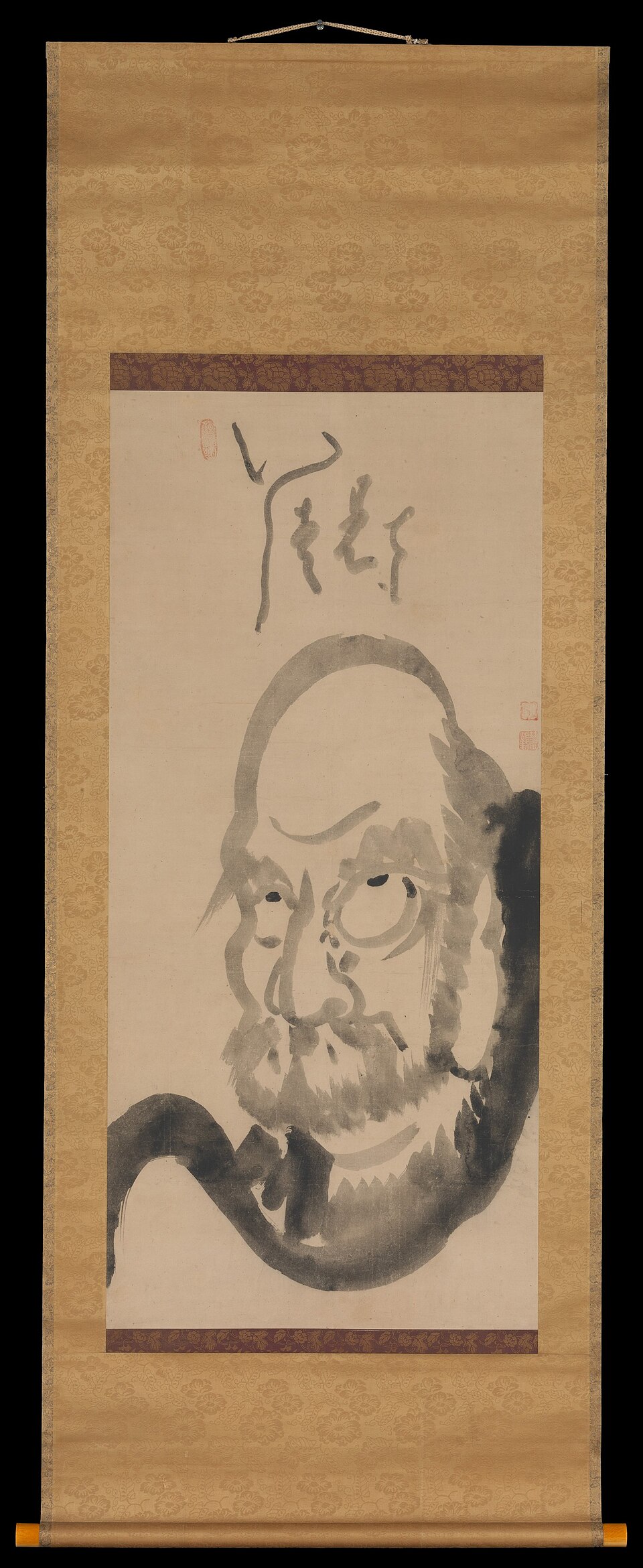
—How do you remain so imperturbable when the whole village condemns you?
One does not "remain" imperturbable; one stops manufacturing trouble. Slander hurts because you cling to your image, like a fine robe you don't want to see soiled. But a monk has only his patched robe, his kesa sewn from scraps, and nothing to defend. When I fed that child under spitting, my zazen did not stop: each begged-for breastfeed was my meditation. That is what I always taught in my letters, in the Orategama: meditation in the heart of action is worth a thousand times that of quiet retreat. A heart that clings to nothing has nothing for shame to grasp.
—You went through a severe crisis, what you call the "Zen sickness." Tell us about it.
I had pushed practice like a madman, staying awake whole nights, clenching my teeth on the kōans. My body took revenge: fire rose to my head, my feet were cold as snow, my ears rang, anxiety gnawed at me. No doctor's remedy did any good. I wandered until I found a mountain hermit, Hakuyū, who lived in a cave. He gave me no drug. He taught me to bring the vital energy, ki, from the feverish head down to the lower abdomen, through breath and visualization. Little by little, the heat descended, like water in a torrent finding its bed again. I recorded this cure in the Yasen Kanna.
—Why did you feel the need to transmit this method in writing, long after?
Because I was not the only one burned. Too many young monks, meaning well, ruin their health through excessive zeal, and some die or lose their minds from it. Zen is not a struggle against the body; a broken body carries no awakening. In the Yasen Kanna, that evening talk on a boat, I said it simply: when mind and heart are exhausted, stop meditation and first bring the ki down to the lower abdomen. People still read me for that, they say. Good: a treatise that keeps even one monk alive is worth a thousand sermons on emptiness.
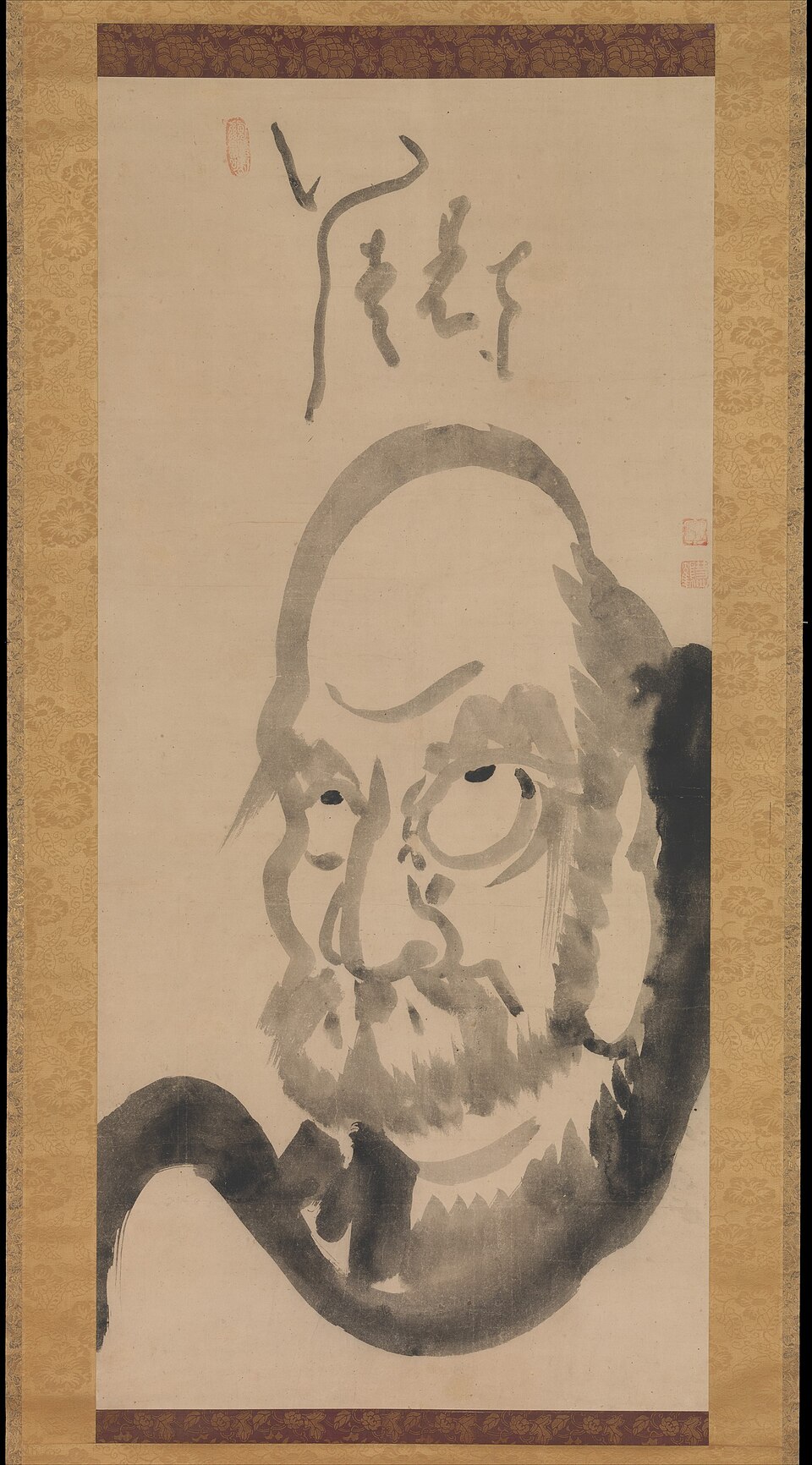
—You painted thousands of images, and Daruma hundreds of times. Why so much ink?
Because the peasant passing on the Tōkaidō will never read my commentaries on the Sokkō-roku. But he will stop before a Daruma with big eyes, that old monk from the West who stared at a wall for nine years. So I dip my brush into the ink I have ground from the stick on the stone, and with a single stroke I offer him Zen without a learned word. I painted Kannons, street scenes, mocking poems for ordinary people. These zenga are not ornaments: they are my sermons for those who cannot read. Awakening has never reserved itself for the great monasteries.
These paintings are my sermons for those who cannot read.
—Mount Fuji appears again and again under your brush. What does it represent for you?
It has dominated my village since my birth; as a child, I saw it every morning cut the sky. When I paint it, it is not a landscape. Its white mass does not move: clouds pass, seasons turn, people bustle at the foot of the Tōkaidō, and it remains, pure, unchanging. That is the mind as it is beneath our turmoil — the buddha-nature each one carries without knowing. It is also what I sing in my Zazen wasan: all beings are already buddhas, just as Fuji is already there, whole, before you lift your head to look at it. Painting its snow is pointing to what no one sees in themselves.
—If you imagined people still reading you a century from now, what would you wish to transmit?
That is a prideful thought I should chase away — but let us play along. If unknown monks, in a thousand temples I will never see, still sat on their zafu to listen to the sound of one hand, I would be fulfilled without knowing it. What would remain of me? Not my titles, not my pain, but a question posed to a beginner, a Daruma smeared with ink, a breath brought back to the belly so as not to burn. The rest — the slander, the sickness, my proud awakenings corrected by Shōju — was only the path. Let them keep the door open, and I will have lived usefully. The old fool of Shōin-ji asks no more.
Not my titles, but a question posed to a beginner, a breath brought back to the belly.
This imaginary interview was generated by artificial intelligence from sources documented in Hakuin's profile. It dramatises what the figure might have said based on what we know about them, but does not constitute attested historical testimony. For primary sources and factual documentation, refer to the full profile.