Imaginary interview with Han Kang
by Charactorium · Han Kang (1970 — ?) · Literature · 6 min read
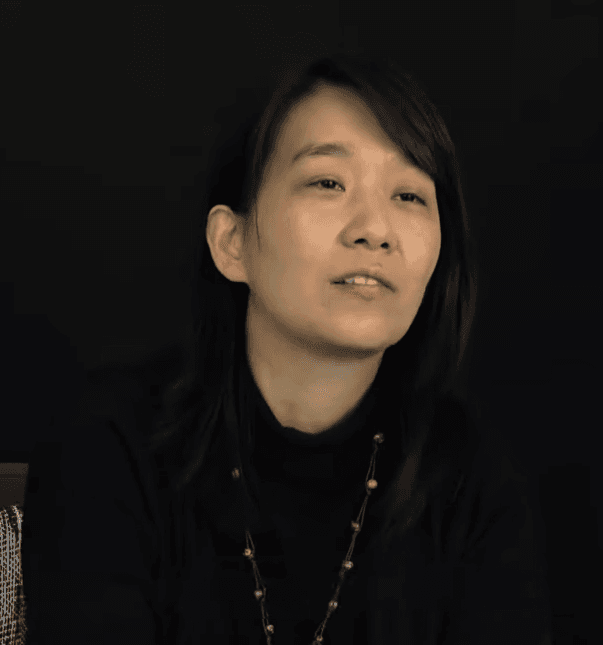
It is six in the morning in Seoul. In a sparse apartment where notebooks pile up near a still-steaming teapot, Han Kang receives us in a low voice, as if afraid to wake the silence. Outside, the city stirs; inside, we speak of the dead, of whiteness, and of what the body keeps when memory falters.
—Do you remember the moment the Gwangju massacre entered your life?
I had left Gwangju as a child; we lived in Seoul, and I believed my birthplace was just a name. One day, in my father's library, I opened a book I shouldn't have opened. Photographs. Bodies lined up, anonymous faces, ordinary people the army had crushed in May 1980. I was nine years old and didn't understand what I was seeing — but my body understood. Those images never left me; they slept inside me for over thirty years before becoming Human Acts. You don't choose what haunts you. You can only, one day, decide to look it in the face instead of turning away like the child I was.
I was nine years old and didn't understand what I was seeing — but my body understood.
—How do you write a book about real victims without betraying them?
With constant fear. For Human Acts, I spent months with survivors' testimonies and photographic archives of the uprising — I consulted them by day, and at night they came for me. I understood that I could not tell this story in a single voice: mine had no right. So I let the dead boy speak, the mother, the prisoner, each their own perspective, a polyphonic novel where no one possesses the whole truth. I wanted the reader to hold a candle before those bodies, like in the gymnasium turned morgue. Writing was a way to keep a dead person from being erased twice — first by bullets, then by the oblivion of a country that long censored this memory.
I could not tell this story in a single voice: mine had no right.
—Where did the idea come from for this woman who refuses meat and dreams of becoming a plant?
From a single line. The poet Yi Sang wrote somewhere that human beings should be plants, and that sentence planted itself in me like a seed. I thought about it for years: what if a human body denied itself, refused flesh, refused the violence of eating, until it wanted to turn back toward earth and light? The Vegetarian was born from that slow meditation. Yeong-hye is not on a diet; she is committing desertion — she is leaving the species. I read a great deal of Korean poetry, Yi Sang, Kim Hyesoon; that's where I find my most dangerous images. A novel can be born from a single line, provided you let it germinate in the dark long enough to become monstrous and true.
Yeong-hye is not on a diet; she is committing desertion — she is leaving the species.
—What does the Man Booker you received in 2016 for this novel mean to you?
A gentle strangeness. This book written in the silence of Seoul, so interior, so Korean, found itself read in English thanks to Deborah Smith's translation, then in more than forty languages. I felt gratitude, but also a slight vertigo: a text escapes you as soon as it leaves your language. Korean carries layers of meaning, borrowings from classical Chinese, a precision I work on with the dictionary word by word; all of that becomes something else elsewhere. The prize opened a door — suddenly the world looked at Korean literature. But I don't write for doors. I write for that woman who longs to become a tree, and if a single reader, in London or Buenos Aires, feels that same shiver of leafiness, then the translation has worked its miracle.
A text escapes you as soon as it leaves your language.
—Why do you insist on writing your first drafts by hand?
Because the hand knows things the keyboard ignores. Every morning, before sunrise, a green tea beside me, I open a notebook and trace sentences in ink. The gesture is slow, physical; it keeps me in touch with what my characters feel — the woman losing language, the dead boy wandering. Only afterward, in the afternoon, I transcribe onto the computer, like a second life of the text. But the first breath must pass through the wrist. All my work revolves around the body: subject, instrument, metaphor. It would be absurd to write about flesh and its pain by coldly tapping keys. I need to feel my own fatigue, my own hand, so as not to lie about others'.
The hand knows things the keyboard ignores.
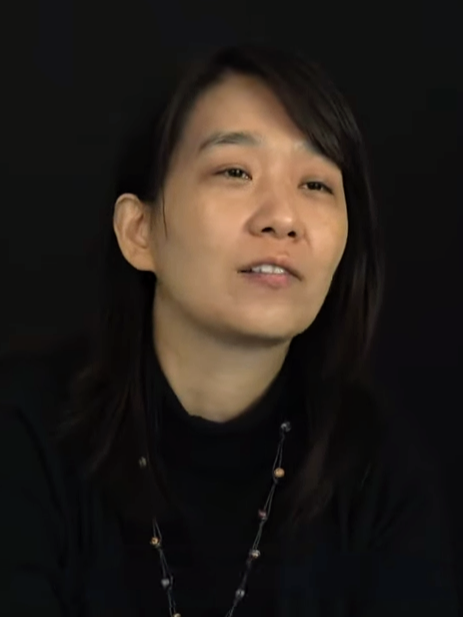
—The body seems to be at the center of everything you write. Why this obsession?
Because it is the only place where History truly inscribes itself. Ideologies pass, but a tortured body keeps its marks; a woman who refuses to eat says so with her thinness; two beings who lose one sight, the other speech, in Greek Lessons, meet in that shared vulnerability when words abandon them. I grew up in a house of words — my father, Han Seung-won, was a novelist — but I soon felt that language alone lies. The body does not lie. It trembles, it bleeds, it shuts down. When I write, I always start from a physical sensation before the idea: cold, hunger, the weight of a corpse being lifted. Thought comes after. The body first.
Ideologies pass, but a tortured body keeps its marks.
—What led you to Jeju Island and its forgotten massacre?
A snow that falls without end. I Do Not Bid Farewell began with an image: snow covering bodies, and the impossibility of saying goodbye. In 1948, tens of thousands of civilians were killed on Jeju, and that name was forbidden from memory for generations. I went to the island, I walked where silence had been imposed, searching for traces the power had wanted to erase. It is this transmitted pain, this haan that passes from grandmother to daughter without ever dying out, that interests me. How do you carry a grief that is not your own? How does a friend keep alive the memory of a friend? Writing this book was refusing to say farewell — refusing that oblivion be the final violence.
Writing this book was refusing that oblivion be the final violence.
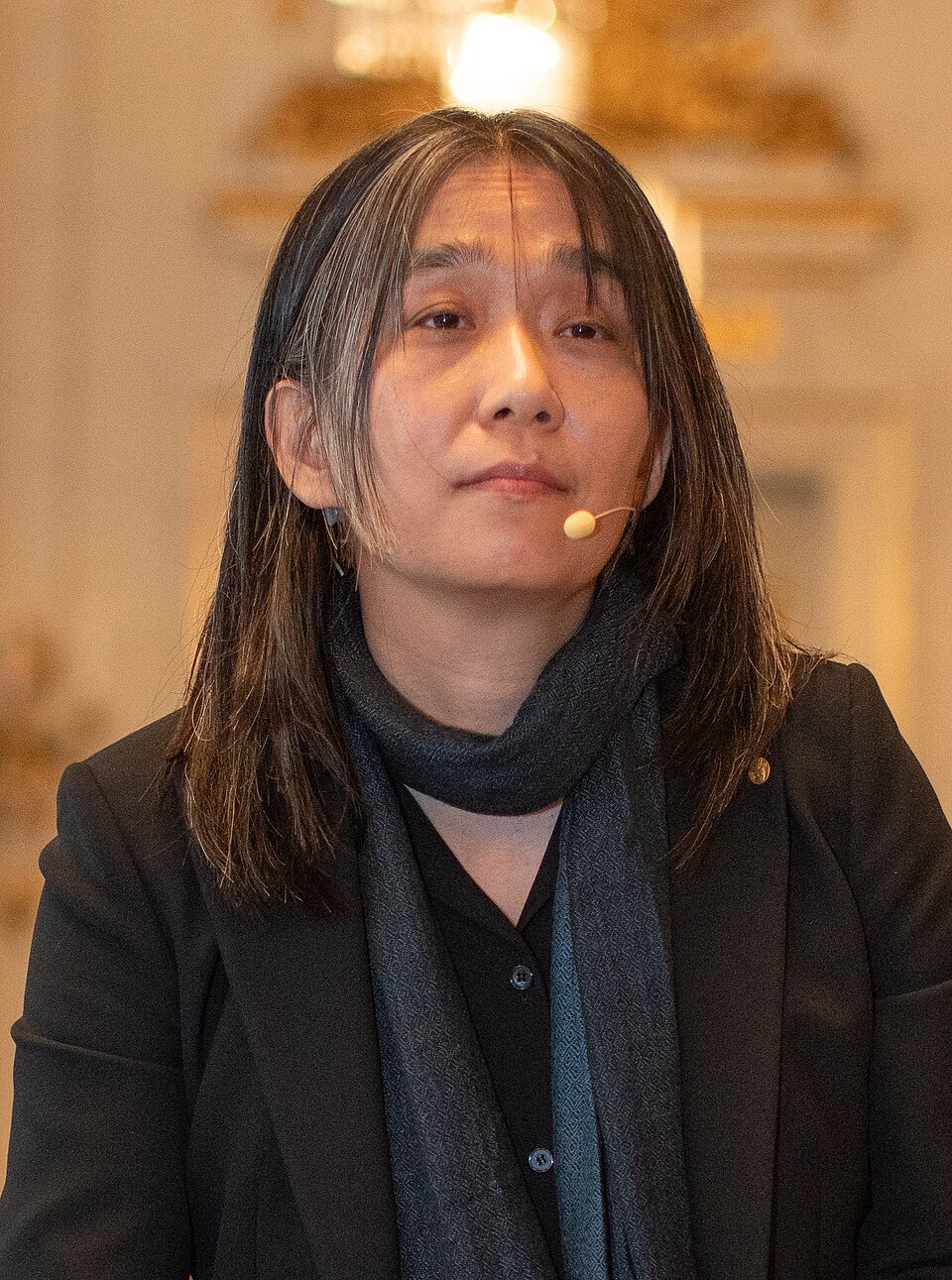
—What connects Human Acts, I Do Not Bid Farewell, and The White Book?
Grief, under three lights. Human Acts mourns Gwangju, I Do Not Bid Farewell mourns Jeju, and The White Book mourns an older sister who died two hours after birth, whom I never knew. In that last book, I listed everything white — the swaddling cloth, salt, snow, the blank page — because white is for us the color of mourning and of beginning. I realized I ultimately write only one thing: how the living carry the dead. Whether it is an entire nation or a nameless infant, the question is the same. Collective violence and intimate grief touch each other; all my work inhabits that fragile point of contact.
I ultimately write only one thing: how the living carry the dead.
—Where were you, and what happened, when the Nobel Prize announcement came?
At home, in October 2024, an ordinary day. I had just had dinner with my son when the phone rang, and that voice told me what one never expects to hear. First Asian female author, first Korean — the words seemed unreal. The Academy spoke of a poetic prose that confronts historical traumas and exposes the fragility of human life, and I thought of all those whose voices I had tried to carry: the victims of Gwangju, of Jeju, the little sister of The White Book. I felt no triumph, rather a gravity. A prize repairs nothing; it only illuminates, for a moment, what had been kept in shadow. I spent the evening with my son, and the next day I returned to my notebooks.
A prize repairs nothing; it only illuminates, for a moment, what had been kept in shadow.
—What would you say to those who see your Nobel as a triumph of Korean culture?
That it does not belong to me. People talk about hallyu, the Korean wave, from film to music, and now literature would be part of it; it is a joy to see the world turn its ear to our writers, our poets, our language so long confined. But I distrust triumphs. My books do not celebrate a nation; they question its dark side — the massacres it censored, the bodies it wanted to forget. If my work says anything, it is precisely the question that gave birth to all my books: how can human beings inflict such suffering on others, and whether that understanding is even possible. That is what I would like people to hear in this wave — not pride, but a tenacious, universal unease.
My books do not celebrate a nation; they question its dark side.
This imaginary interview was generated by artificial intelligence from sources documented in Han Kang's profile. It dramatises what the figure might have said based on what we know about them, but does not constitute attested historical testimony. For primary sources and factual documentation, refer to the full profile.