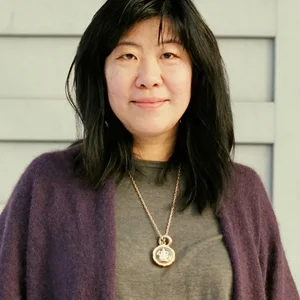

Japanese novelist born in 1964, Banana Yoshimoto is world-renowned for her novel Kitchen (1988). Her work sensitively explores solitude, grief, and inner healing.
Frequently asked questions
Key Facts
- Born on July 24, 1964 in Tokyo under the name Mahoko Yoshimoto
- Kitchen published in 1988, a worldwide bestseller translated into more than 30 languages
- Graduated from Nihon University with a degree in theatrical arts (1987)
- Daughter of philosopher and poet Takaaki Yoshimoto
- Has published more than twenty novels and short story collections since 1988
Works & Achievements
Yoshimoto's debut novel, written at age 23, tells the story of a young woman's healing after her grandmother's death, through the solace she finds in the kitchen. It has become a global classic, translated into more than thirty languages and adapted twice for the screen.
A novel about the friendship between two cousins — one healthy, the other gravely ill — in a seaside village. It tenderly explores impending death, childhood nostalgia, and the difficulty of growing up.
A collection of short stories by a dead author casts a deadly obsession over all who read it. The novel examines literary creation, transmission, and the troubled bonds between a work and its readers.
A short story collection blending realism and the fantastical, it showcases Yoshimoto's ability to slip imperceptibly from the everyday into mystery, without ever breaking the gentle, melancholic tone of her world.
An ambitious, full-length novel, Amrita follows a young woman grieving her actress sister in a disillusioned contemporary Japan. It marks a shift toward more complex narratives, weaving together spirituality and everyday life.
Two parallel novellas about grief and loss, narrated from within the night — a space of special significance in Yoshimoto's work. The style reaches its most pared-down here, each sentence carrying the full weight of separation and memory.
A young woman tries to rebuild her life after her father's suicide. Set in the Tokyo of the 2010s, the novel explores intergenerational transmission, resilience, and the slow work of mourning.
Anecdotes
Banana Yoshimoto chose her pen name because of a flower: she loved banana blossoms for their delicate yet androgynous quality. This unusual name allowed her to remain mysterious about her identity, and she adopted it long before becoming a novelist, at a time when she was still searching for her path.
Her first novel, *Kitchen*, was originally written as a graduation thesis at Nihon University in Tokyo in 1987. Published the following year, it was an instant sensation: it sold millions of copies in Japan, was translated into more than thirty languages, and turned this 24-year-old author into an international literary figure.
Her father, Takaaki Yoshimoto, was one of the most influential philosophers and literary critics in postwar Japan, sometimes called 'the giant of Japanese thought.' Despite this distinguished intellectual lineage, Banana Yoshimoto built a world entirely her own — more accessible and attuned to everyday emotions, far removed from her father's theoretical essays.
*Kitchen* was adapted for the screen twice: in 1989 by Hong Kong director Clara Law, and again in 1997 by Japanese director Yoshimitsu Morita. These two adaptations reflect the novel's reach well beyond Japan, and its ability to resonate across very different cultures.
Banana Yoshimoto is known for writing mainly at night, in an atmosphere of quiet and solitude that mirrors the mood she creates in her novels. She travels regularly to Italy, a country she has loved for years, and these stays feed her creative inspiration by offering a welcome distance from Tokyo.
Primary Sources
The kitchen is the place I love most in the entire world. Any kitchen — small, large, brand new, or worn with age — if it's a kitchen, if it's a place where food is made, I feel at home there.
It was four years ago. My mother and I were still living in that small seaside town, at my Aunt Masako's.
My sister Mayu died last summer. Since then, I haven't been quite the same person.
That night, I was walking alone in the mountains. The forest had a strange smell, as if something important was about to change.
Key Places
Banana Yoshimoto's hometown and primary place of residence, Tokyo is the central setting of nearly all her novels. Its cramped apartments, late-night convenience stores, and silent streets are characters in their own right.
It was at this university that Yoshimoto studied literature and wrote *Kitchen* as her graduation thesis in 1987. The manuscript won a literary prize even before its official publication.
A coastal town south of Tokyo, known for its temples and the sea, Kamakura is one of Yoshimoto's places of living and writing. The sea, the forests, and the quiet offer a soothing counterpoint to the bustle of Tokyo.
Banana Yoshimoto regularly stays in Italy, a country she deeply loves. The Mediterranean light, the culture of the table, and the country's relationship with time have inspired several of her works.
Typical Objects

The central object of the novel Kitchen, the refrigerator is for Yoshimoto a symbol of domestic warmth and refuge against loneliness. The heroine falls asleep beside it, seeking comfort in its steady hum as she faces grief and nocturnal anxiety.
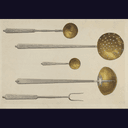
Knives, pots, chopsticks, and cutting boards are omnipresent in Yoshimoto's world. Preparing a meal is an act of deep care, a ritual that allows her characters to work through pain and reconnect with the living world.
📷 CC0 · Wikimedia Commons ↗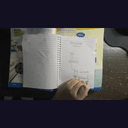
Banana Yoshimoto records her everyday observations in notebooks before transforming them into prose. This attentive practice of the moment — a gesture, a quality of light, a scent — feeds the sensory precision that is characteristic of her writing.
📷 Domaine public · Wikimedia Commons ↗
Hot drinks punctuate Yoshimoto's novels like rituals of connection between people. A cup shared in the middle of the night represents one of the most intimate bonds her characters can forge despite their solitude.

Yoshimoto writes her texts on a computer, often late at night, in the privacy of her apartment. This contemporary tool is part of a literary approach firmly rooted in the present and in modern urban life.
📷 CC BY-SA 4.0 · Wikimedia Commons ↗
A voracious reader, Yoshimoto has drawn from both classic Japanese and Western literature and from popular culture (manga, cinema). These stacks reflect the openly embraced permeability between high culture and mass culture throughout her work.
School Curriculum
Vocabulary & Tags
Key Vocabulary
Daily Life
Morning
Banana Yoshimoto starts her day late, in keeping with her late-night writing sessions. She has a simple breakfast — green tea or coffee, rice or toast — in the quiet of her apartment, before turning to the reading and correspondence that fill her mornings.
Afternoon
In the afternoon, Yoshimoto goes for walks through Tokyo's neighborhoods or settles into a café to watch passersby and jot down impressions. She meets up with friends, editors, or translators, drawing from these conversations the texture of her dialogue.
Evening
Evening marks the start of her creative time: she writes late into the night at her computer, reworking her sentences until they reach the precision she is looking for. The nighttime silence, which she often describes in her novels, is for her an essential condition for writing.
Food
Food is central to Yoshimoto's life as much as to her work. She enjoys simple Japanese cooking — miso soup, rice, seasonal vegetables — as well as Italian cuisine discovered during her many travels. Cooking is, for her, a meditative and restorative act.
Clothing
In public appearances, Yoshimoto favors a relaxed, contemporary style — simple and neat — that reflects the understated aesthetic of her novels. She avoids ostentation and prioritizes comfort, much like her characters, who wear ordinary clothes always described with careful attention.
Housing
Yoshimoto lives in an apartment in Tokyo, the kind of intimate urban space she portrays so well in her novels, where the kitchen holds a particular symbolic place. She also spends time at a house in Kamakura, closer to the sea and nature, where she retreats for a deeper quiet in which to write.
Historical Timeline
Period Vocabulary
Liens externes & ressources
Références
Œuvres
Au bout du monde et dans la nuit (Goodbye Tsugumi)
1989
Lézard (Tokage)
1993
Hardboiled & Hard Luck
2005
La Mer de miel (Moshi Moshi)
2010