Imaginary dialogue between Clark Gable and Hattie McDaniel
by Charactorium · Hattie McDaniel (1893 — 1952) · Performing Arts · Society · 5 min read
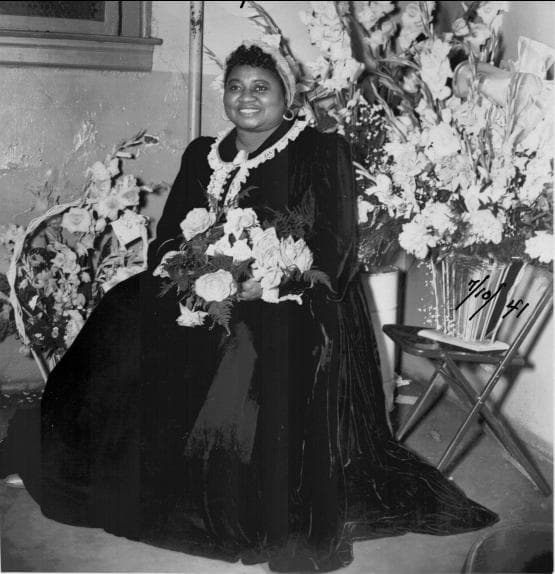
It is in the hushed living room of her Sugar Hill home, one afternoon in the fall of 1947, that Clark Gable comes to visit the woman he simply calls Hattie. On the piano lie blues sheet music and a framed photograph from the Oscar night; the smell of fried chicken drifts from the kitchen. They have known each other since the filming of Gone with the Wind, where he was one of the few who would sit beside her between takes. He arrives without a camera or press pad, only with the desire to hear the woman behind Mammy.
—Hattie, that night of February 29, 1940, they placed you at that table in the back, far from us. What did you feel when your name was called?
You who were a few feet away, Clark, you saw the table where they had relegated me, at the very back of the Coconut Grove. I walked to the stage like crossing a river: my heart was pounding in my throat and my white gardenias trembled on my dress. I had prepared a few words, but before that statuette I thought mainly of my father, a former slave, and what he would have said. I wanted to be a pride to my race and to the profession, not an exception pointed at. Joy and humiliation held hands that night. They applauded me for a maid's role, in a room where I could not dine at your table.
Joy and humiliation held hands that night.
—You keep that statuette in plain sight. What does it truly mean to you, beyond the gilded metal?
It is not only mine, Clark. Every morning when a little black girl learns that one of ours climbed those steps, that statuette belongs to her a little. They handed it to me under conditions that still told me my place, and yet the Academy had to speak my name before all of Hollywood. That is what matters: they were forced to recognize a talent they preferred to keep in the kitchens of scripts. I look at it and tell myself the door is ajar. Others, younger, will one day push it wide open. I will have been the first to get a foot in.
—The NAACP still reproaches you for your maid roles. You who made me laugh so much on set, how do you bear those criticisms?
They hurt me more than I show, you can imagine. They tell me I perpetuate the apron and submission, and there is truth to it. But tell me, Clark, what would I do, dragging around jobless, proud and hungry? I'd rather play maids in Hollywood than really be one. So I take those scripts and I negotiate a line, a look, a dignity the role never intended. My Mammy in our film is no mute servant: she scolds, she judges, she holds the house together. I slip soul into characters they wanted flat. It's my way of disobeying without getting fired.
I'd rather play maids in Hollywood than really be one.
—On set, you transformed every scene. How do you give flesh to a role they want to reduce to an apron?
An apron does not keep a woman from having a heart, Clark, and that is where I work. When they hand me a script where the maid is just a talking piece of furniture, I look for the human behind it. A sigh, a hand on the hip, a line I ask the director for so she can have her say. You improvised your charms; I had to improvise my dignity. On Gone with the Wind, I wanted Mammy to truly love those people while seeing them clearly, better than they saw themselves. The audience laughed, then stopped laughing. It is in that silence that I win my battle.
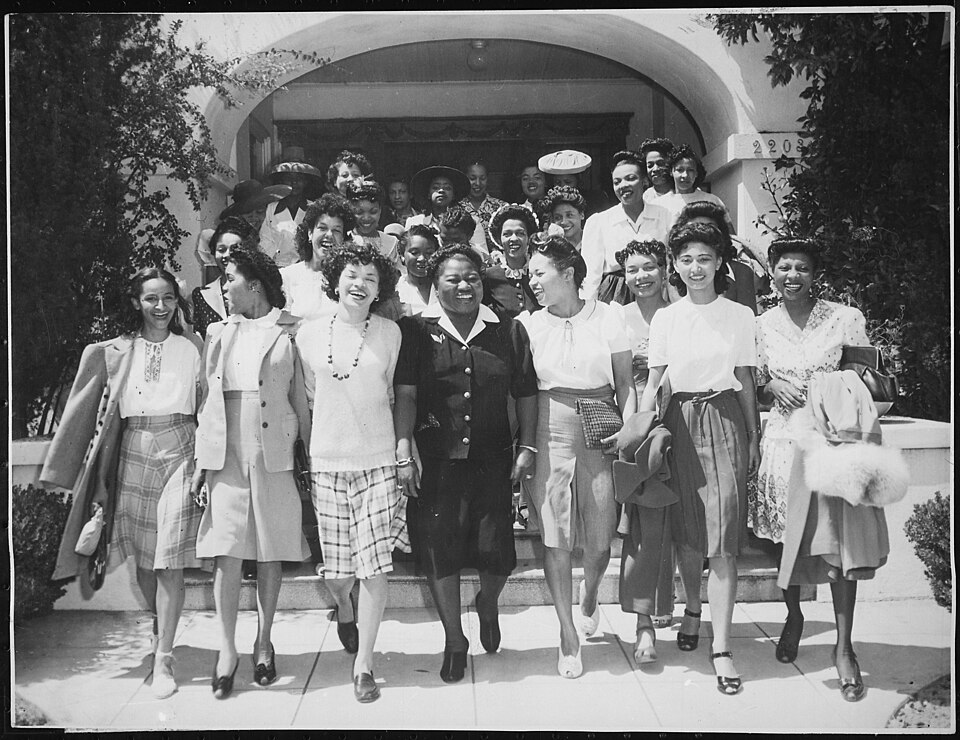
—Right here, in Sugar Hill, your neighbors tried to evict you through a lawsuit in 1945. Tell me about that fight you led.
You are sitting, right now, in the house they wanted to take from me. When we settled here, among successful people of color, the whites pulled out those shameful clauses written into deeds, which forbid selling to our kind. They went to court to evict us. Many advised me to keep quiet, to leave without a fuss. I did not. We pleaded, invoked the Fourteenth Amendment, and won our right to stay in our home. It was not just my house I was defending, Clark; it was the idea that a black actress can own her own door and shut it on those who despise her.
It was the idea that a black actress can own her own door and shut it on those who despise her.
—Before I met you on screen, you sang. I didn't know you had recorded records. Tell me about that Hattie.
Ah, that one, few in Hollywood know her! Before the spotlights, there was my mother in Wichita, a gospel singer, who put the stage in my blood. I sang blues on the road, in tents and small halls, and I was one of the first black women to record records in this country. The voice, Clark, was my first freedom: no one could pin an apron on a song. Even today, in the evening, I sometimes go down to Central Avenue, to the clubs where jazz reigns. There, I am not Mammy. I am a woman who sings, and the audience responds to me as one of their own.
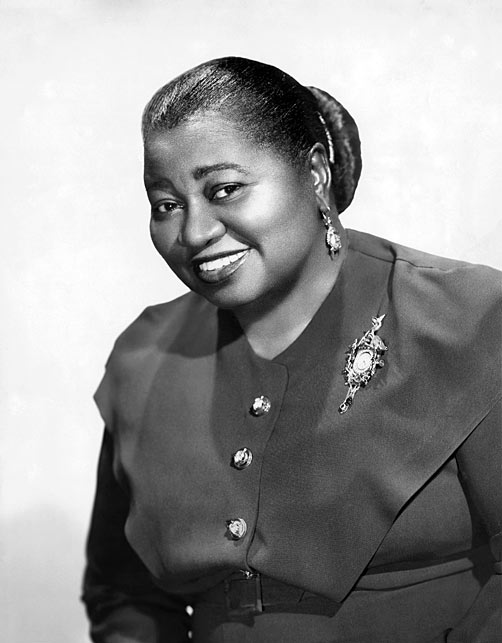
—In the evening, you sometimes disappear toward those clubs. What does Central Avenue give you that the studios don't?
Air, simply. At Hollywood receptions, I am often the only black face, and they look at me like a polite curiosity. On Central Avenue, they call it the Harlem of the West, and there I breathe among my own at last. Blues and jazz flow until dawn, and segregation has pushed us to make these streets our kingdom. I find the musicians from my early days, I hum, I laugh loud without watching my image. You, who are at home everywhere, may not measure what that is. This neighborhood reminds me who I was before cinema decided who I should be.
—In Atlanta, in December 1939, they banned me from our premiere. I wanted to boycott it all. Why did you stop me?
Because I know you, Clark, and I knew your gesture came from the heart. But boycotting that premiere would not have changed the laws of Georgia; they would only have said our film failed because of me. I did not want to carry that weight. Selznick sent me a telegram full of regrets, and I believed him sincere. I chose to stay in the background and let the film triumph, because every ticket sold affirmed that a story in which I played a major role could fill theaters. My revenge was not in an empty seat in Atlanta. It was in the millions of viewers who, elsewhere, would see Mammy and never forget her.
My revenge was not in an empty seat in Atlanta.
—That night, you held me back by the arm. In hindsight, do you sometimes regret that caution you always impose on yourself?
Some days, yes, I admit it to you and no one else. There is a fatigue in always calculating, smiling when you want to scream, choosing patience when anger would be fairer. But I learned young that those who slam the door too hard never come back into the room. So I move forward in my own way: a lawsuit won here, a line wrung out there, an Oscar they didn't expect. Perhaps others after me will be able to afford open revolt because I held the line. You offered me your solidarity, Clark, and that alone warmed me more than you will know. I do not regret caution. I only regret that it was necessary.
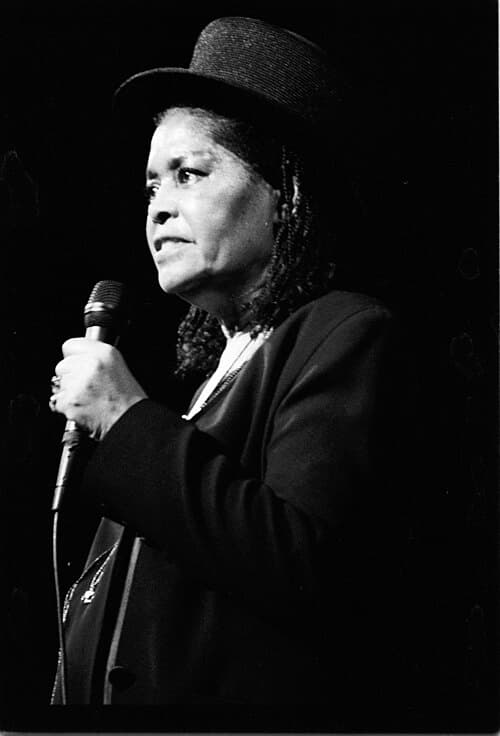

This imaginary interview was generated by artificial intelligence from sources documented in Hattie McDaniel's profile. It dramatises what the figure might have said based on what we know about them, but does not constitute attested historical testimony. For primary sources and factual documentation, refer to the full profile.