Imaginary dialogue between Qian Sanqiang and He Zehui
by Charactorium · He Zehui (1914 — 2011) · Sciences · 6 min read
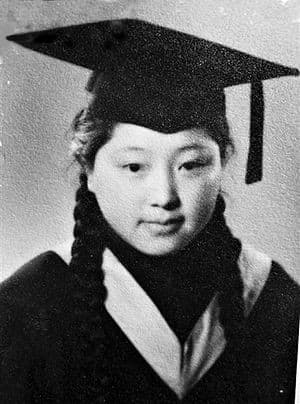
It is in their modest apartment in Beijing, one evening in the late 1980s, that Qian Sanqiang asks questions to the woman who has shared his life and his lab bench for forty years. On the table, an old teapot steams near a pile of dog-eared physics journals. They married in Paris, together observed uranium splitting, then built Chinese nuclear physics from scratch. Tonight, Qian wants her—who speaks so little of herself—to recount the journey from Suzhou.
—Zehui, even before I met you, you entered Tsinghua in 1932. They say the director didn't want girls in physics?
That's true, and I've never forgotten it. The department head thought physics was not a woman's domain; he subtly pushed female students to switch majors, as if our place were elsewhere. We were a handful of young women, and many eventually gave in. But the more they told me to leave, the more I clung to my desk. I told myself the only valid answer would be in results, not words. In 1936, I graduated top of my class. You know how much I hate boasting—but that day, I knew no prejudice could withstand the numbers. Physics was not forbidden to women: it was only waiting to be earned.
The more they told me to leave, the more I clung to my desk.
—In 1938, the Japanese were ravaging our country, and you left for Berlin to study ballistics. Why the science of shells?
Because I couldn't stay a spectator while our cities were burned. Ballistics is the science of trajectories, the one that decides whether a cannon protects or fails. I thought that a China capable of calculating its own fire would be a China less trampled upon. At the Berlin Institute of Technology, they looked at me as a curiosity: a young Chinese woman in a military specialty reserved for men. I became the first woman admitted to this field, and I defended my doctorate in 1940. It wasn't out of a love for weapons, understand me. It was the only language the times allowed me to say: my country must learn to defend itself.
A China capable of calculating its own fire would be a China less trampled upon.
—Do you remember our war letters, limited to twenty-five words? Tell me frankly: what did you think of my marriage proposal?
How could I forget! Twenty-five words, not one more—that's all the war allowed us to cross Europe. You in Paris, me in Berlin, separated by fronts and censorship. I received your letter and read it ten times, counting your words like precious grains of rice. You didn't have room for flowery phrases—you went straight to the point, and that was fine. I said yes in the same tight format. We married in Paris in 1946. Sometimes I think back to those tiny telegrams: two physicists who knew that a message is worth its density, not its length. Our marriage began like a beautiful equation—concise and true.
I counted your words like precious grains of rice.
—In the Joliot-Curie lab, in 1946, when we saw the nucleus break not into two but into three—what did you feel at that moment?
I see myself bent over the microscope, you right next to me. We knew that ordinary fission splits uranium into two fragments. And there, in our emulsions, appeared three tracks from the same point, then, even rarer, four. My heart stopped: it was ternary fission, quaternary fission, a fission mode almost no one had observed. We remeasured everything, track by track, afraid of being wrong. When Frédéric and Irène looked at our plates, they didn't hide their esteem. The press got excited and called me the “Marie Curie of China”—a compliment that made me a bit uncomfortable, you know. The important thing wasn't the nickname: it was having seen, with our own eyes, matter behaving differently than believed.
Three tracks from the same point, then, even rarer, four.
—Back home, you worked tirelessly to make our own nuclear emulsions. Why refuse to buy them from abroad?
Because a country dependent on others' plates is also dependent on their goodwill. Our emulsions—those sensitive gelatins where every particle leaves its trace—had to be ordered from the West, paid for dearly, waited months for. One diplomatic rift, and our labs would go blind. So I gathered a small team and we learned, trial after trial, to pour these emulsions ourselves. It seems humble next to a great discovery, but it was independence in its purest form. In the morning I prepared the plates and neutron sources; in the afternoon, I spent hours at the microscope measuring micron by micron. The day our own emulsions showed clear tracks, I knew China could now see alone, without begging for others' eyes.
China could now see alone, without begging for others' eyes.
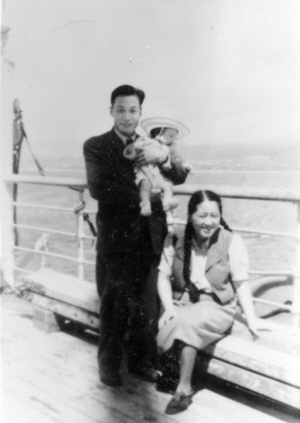
—The Joliot-Curies said our work was the most important to come out of their lab since the war. Did it go to your head?
Go to my head? No—rather, I was intimidated. Receiving such a judgment from scientists I had admired since my student years was almost too heavy to bear. I distrust praise: it lulls the researcher and makes them lazy. What mattered to me was that our measurements held up, that others could repeat them and find our multiple fission frequencies. A discovery is only valuable if it withstands verification, as you yourself have repeated enough. So I put the compliments in a corner and went back to my plates. The real honor was not being praised in Paris, but knowing that a still obscure phenomenon of uranium had been a little better illuminated thanks to the two of us.
A discovery is only valuable if it withstands verification.
—You spent whole afternoons bent over that microscope counting tracks. Where did that patience come from, tell me?
From the conviction that a single poorly measured track can ruin an entire conclusion. In nuclear physics, truth hides in the detail: the length of a path, the angle between two fragments, a micron more or less. You can't cheat the emulsion; it coldly records what happened. So yes, I stayed for hours bent over, eye glued to the lens, measuring one by one barely visible trails. Some found this work thankless; I saw it as a silent conversation with matter. I prepared my sources in the morning, bombarded the uranium, then patiently read what the particles had written. Patience is not a saintly virtue: it is simply the price of rigor.
The emulsion coldly records what happened; you can't cheat it.
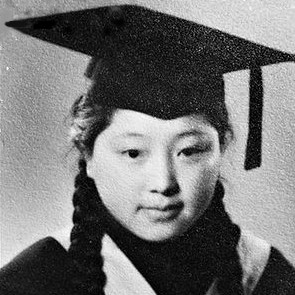
—In Berlin, you were a woman alone, a foreigner, in a German military specialty. Did you ever think of giving up?
Giving up would have cost me more than staying. I was far from everything, in a country sliding toward war, surrounded by men convinced a Chinese woman had no business there. The stares weighed, the silences too. But I had already known that at Tsinghua, and I had learned that you disarm contempt with work, not tears. I got up early, studied my trajectories, turned in impeccable calculations. Little by little, they stopped seeing me as an intruder and saw me as a colleague. The 1940 doctorate sealed that. I won't say it was easy—but every time I felt like going home, I thought of the bombed Chinese cities, and the feeling passed at once.
You disarm contempt with work, not tears.
—Today, young female students come to see you, hesitant to choose physics. What do you tell them, you who paved the way?
First, I tell them not to listen to me as an oracle, but to look at the facts. I was a young girl from Suzhou who was told physics was not for her, and I ended up valedictorian, then researcher, then member of the Academy. None of that was due to some mysterious gift: it came from stubbornness and nights of work. I explain that the lab never asks your gender, only your results. Prejudices fall away on their own before a well-conducted experiment. And I warn them: this profession is austere; you must love patience and truth more than glory. To those who love that, I simply say: come in—the door others wanted to close, we have already forced it open.
The lab never asks your gender, only your results.
—We live here very simply, even though you are among the country's great physicists. Where does this frugality come from?
From the idea that a scientist's life does not need luxury to be full. We went through war, the twenty-five-word limit, labs built with next to nothing: all that teaches the price of essential things. I wear my old clothes as long as they keep me warm, I take the bus like everyone else, and our apartment is enough for me. What matters is on this table: our journals, our calculations, our shared memories. Fame, I distrust as much as praise—it distracts from work. You and I have always lived the same way, and I believe that is what has kept us free. You can seek the secrets of the atom and have almost nothing: that is, I think, the best condition.
You can seek the secrets of the atom and have almost nothing.
This imaginary interview was generated by artificial intelligence from sources documented in He Zehui's profile. It dramatises what the figure might have said based on what we know about them, but does not constitute attested historical testimony. For primary sources and factual documentation, refer to the full profile.