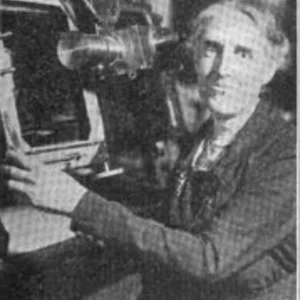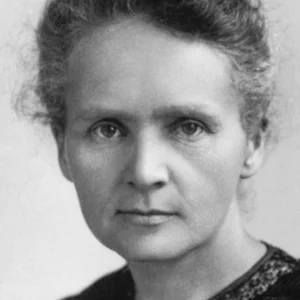

Polish-born French physicist and chemist (1867–1934). A pioneer in the study of radioactivity, she was the first woman to receive a Nobel Prize and the only person to receive two Nobel Prizes in different scientific fields. Her discoveries revolutionized modern physics and chemistry.
Marie Curie(1867 — 1934)
Marie Curie
France, Empire russe, Deuxième République de Pologne
8 min read
Frequently asked questions
Famous Quotes
« Life is not easy for any of us. But what of that? We must have perseverance and above all confidence in ourselves.»
« Nothing in life is to be feared, it is only to be understood.»
Key Facts
- 1898: Discovery of polonium and radium with Pierre Curie
- 1903: First Nobel Prize in Physics, shared with Pierre Curie and Henri Becquerel
- 1911: Second Nobel Prize, in Chemistry, for the discovery of radium
- 1934: Death from aplastic anemia caused by prolonged exposure to radiation
- 1995: Posthumous induction into the Panthéon in France
Works & Achievements
First radioactive element isolated by Marie and Pierre Curie from pitchblende. Marie named it after her homeland, Poland, which was then under foreign domination.
Radioactive element whose pure isolation required four years of processing several tons of pitchblende. Its discovery revolutionized physics and paved the way for nuclear medicine.
First science doctorate obtained by a woman in France. This foundational work laid the theoretical and experimental groundwork for the study of radioactivity, a term she herself coined.
Major two-volume scientific work in which Marie Curie synthesizes the full body of knowledge on radioactivity. An essential reference in physics from the early twentieth century.
Marie Curie organized and directed a network of around twenty mobile radiological vehicles during the First World War. It is estimated that they made it possible to X-ray more than one million wounded soldiers.
Research institution dedicated to the study of radioactivity and its medical applications, which became the Institut Curie. She served as its director until her death and made it a world reference center.
Anecdotes
During her studies at the University of Warsaw, women were not admitted. Marie Curie secretly attended the 'Flying University', a clandestine network of courses held in private apartments. This experience forged her determination to learn despite all obstacles.
Marie and Pierre Curie worked in a dilapidated shed, described by chemist Wilhelm Ostwald as a cross between a stable and a potato cellar. Yet it was in these precarious conditions, processing tons of pitchblende by hand, that they isolated radium and polonium between 1898 and 1902.
Marie Curie was the first woman to teach at the Sorbonne. At her first lecture in November 1906, following Pierre's death, a considerable crowd gathered to hear her. She resumed the course exactly where her husband had left off, without a single word of personal introduction.
Marie Curie received the Nobel Prize in Physics in 1903, then the Nobel Prize in Chemistry in 1911, becoming the only person to have received two Nobel Prizes in two different sciences. In 1911, at the time of the second award, the Swedish committee had advised her not to attend due to a media scandal — she refused to stay away.
During the First World War, Marie Curie developed mobile radiological units nicknamed 'little Curies'. She trained women to operate X-ray machines and herself traveled to the front lines to treat the wounded, helping to save thousands of lives.
Primary Sources
I shall call radio-active those substances which emit rays of this nature. Uranium and thorium are radio-active bodies. The radiation of uranium is an atomic property of this element.
The various reasons we have just enumerated lead us to believe that the new radio-active substance contains a new metal, close to bismuth in its chemical properties. If the existence of this metal is confirmed, we propose to call it polonium, after the name of the country of origin of one of us.
The various reasons we have just enumerated lead us to believe that the new substance contains a new element to which we propose to give the name radium.
Life is not easy for any of us. But what of that? We must have perseverance, and above all confidence in ourselves. We must believe that we are gifted for something, and that this thing, at whatever cost, must be attained.
Radium is not a source of enrichment for me. It is an element that belongs to the people. I discovered radium, I did not invent it. The discovery belongs to everyone.
Key Places
A dilapidated shed adjacent to the School of Industrial Physics and Chemistry (EPCI) where Marie and Pierre Curie isolated radium and polonium. Now converted into a museum, it remains a symbolic site of scientific research.
Founded in 1909 by Marie Curie, the Radium Institute (now the Curie Institute) remains to this day one of the world's leading cancer research centers. Marie worked there until the end of her life.
Marie Curie earned her degree in physics (1893) and then in mathematics (1894) there, and defended her doctoral thesis in 1903. She became the institution's first female full professor to hold a chair in 1906.
Marie Curie's birthplace, then under Russian occupation, where she received her first clandestine scientific education and where she founded a Radium Institute in 1932 as a tribute to her homeland.
A sanatorium in the French Alps where Marie Curie died on July 4, 1934, taken by aplastic anemia caused by decades of exposure to ionizing radiation.
Liens externes & ressources
Références
Œuvres
Découverte du polonium
Juillet 1898
Découverte du radium
Décembre 1898
Thèse de doctorat : Recherches sur les substances radioactives
1903
Traité de radioactivité
1910
Création du Service radiologique militaire (petites Curies)
1914-1918
Fondation de l'Institut du Radium de Paris
1914