Imaginary interview with Lois Weber
by Charactorium · Lois Weber (1879 — 1939) · Performing Arts · Visual Arts · 5 min read
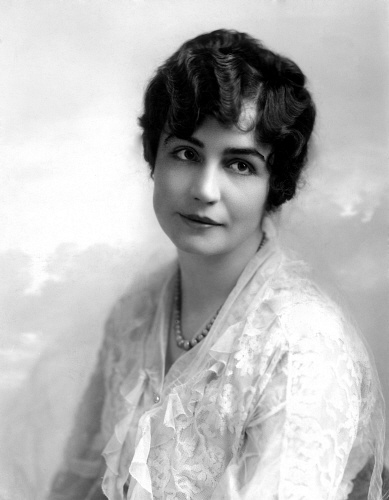
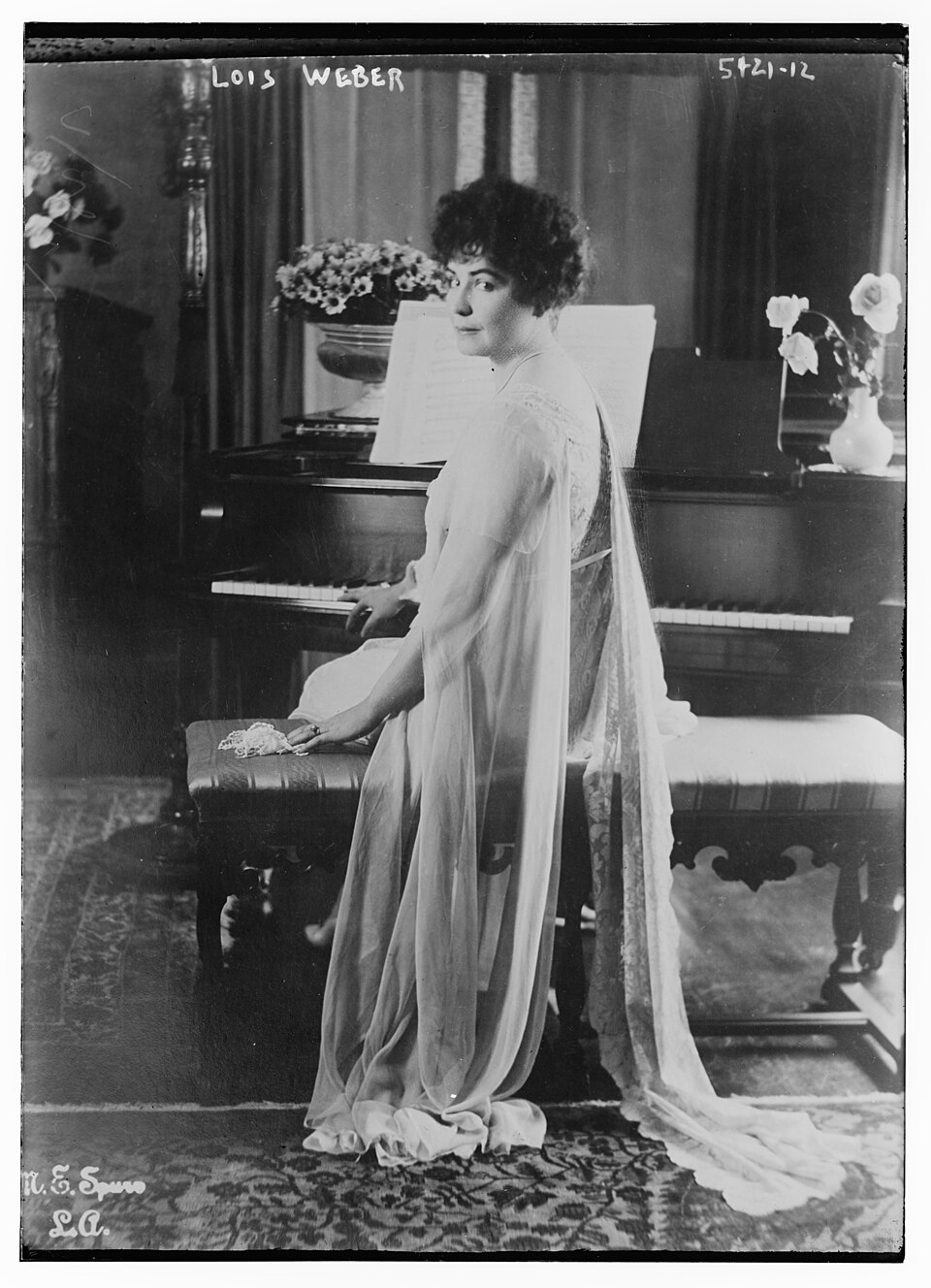
Universal City studios, an afternoon in 1921. Between takes, Lois Weber sets her megaphone on a crate and sits on a folding chair, a typed script still covered in handwritten notes on her lap. The California light falls obliquely; she agrees to talk about thirty years spent behind the camera.
—How did you come up with the idea of splitting the screen in 'Suspense'?
In 1913, I was looking for how to make fear felt, not just shown. A woman alone in a house, a prowler outside, a husband racing to save her: three places, three clocks beating together. So I split the image into three zones on the same film strip, so that one could see everything at once, as anxiety does in the mind. My male colleagues were still shooting their shots one after another when Suspense already showed that editing could think. I was told then that I was a true artist of mise-en-scène, not a curiosity — a woman turning the crank. I kept that word to myself like a talisman.
I split the image into three, so that one could see everything at once, as anxiety does in the mind.
—Why did you dare to address birth control in 'Where Are My Children?'?
Because in 1916 people were dying from that silence. Birth control — the term Margaret Sanger had just imposed — was still a word whispered, a subject banned by censorship in several states. I thought the dark theater was the only place where one could face it without looking away. The National Board of Review made me negotiate every reel, every intertitle, and yet the film was one of the most viewed of the year. Women wrote to me that they had finally seen their lives on a screen. I didn't claim to settle the debate; I only wanted people to stop being lied to about what kills them.
The dark theater was the only place where one could face it without looking away.
—You claim to film ordinary people. What do you seek in them?
Truth, simply. I always liked playing to the working man and his wife: they are the real audience, and they demand real stories about real people. In Shoes, in 1916, I followed a working girl so poor she ends up trading her dignity for a new pair of shoes — and I refused to judge her. I was criticized for the sobriety of those films, their lack of glamour. But glamour lies. A family counting coins under a lamp, that is a drama vaster than all of Hollywood's pasteboard palaces. I believe cinema can reach the dignity of a novel or a play; that is the goal I always keep in mind.
Glamour lies. A family counting coins under a lamp, that is a drama vaster than all of Hollywood's pasteboard palaces.
—'The Blot' tackles teachers' poverty. Where did that choice come from?
From what no one wanted to see. In 1921, prosperity was celebrated, automobiles, quick fortunes — and meanwhile a teacher, a pastor, a whole swath of the middle class wore themselves out hiding their misery under a shirt ironed a thousand times. It is that silent shame I wanted to film in The Blot: the blot is not poverty, it is the indifference of a society that lets its educated starve while smiling. I shot without melodrama, almost in whispers, because true distress does not cry out. It was one of my last great successes. Perhaps because, this time, everyone in the theater recognized a bit of their own home.
The blot is not poverty, it is the indifference of a society that lets its educated starve.
—You write, direct, and edit yourself. Why this total control?
Because a film has an author, just as a play has its playwright. I type the story on the machine, I direct it megaphone in hand, and in the evening I sit at the Moviola to cut the film myself. Many directors, even seasoned ones, left editing or script to others; I refuse to let a foreign hand betray what I saw in my head. Later, among the French, they would say a director must be the author of his work — I made it my rule long before it was given a name. Directing, for me, is not commanding actors: it is overseeing every step, from the first typed word to the last rush viewed in the lab.
I refuse to let a foreign hand betray what I saw in my head.
—What did founding your own production company mean to you?
Freedom, pure and simple. In 1917, I founded Lois Weber Productions to answer only to my own judgment. At Universal, I was already paid five thousand dollars a week — one of the highest in Hollywood, men included — and yet money was not the heart of the matter. The heart was choosing my subjects, even the most disturbing, without a studio director explaining to me what the public wanted. In the morning, I discussed budget and distribution; in the afternoon, I directed my takes; in the evening, I wrote. Owning one's production company is owning one's silence: no one can force you to silence what you must say.
Owning one's production company is owning one's silence.
—You often speak about technique. Which tools mattered most to you?
The hand-crank camera first — that Bell & Howell the operator turns by hand, steady as a heartbeat. I stood close to it to decide the frame and light, refusing to leave to chance what should mean something. And then intertitles: those cards slipped between images, which I crafted like poems, because a poorly chosen word can ruin a patiently built emotion. I also learned to be wary of nitrate film, so beautiful and so treacherous, which has already consumed so many films in its flames. I do not know how many of mine will survive it. One thinks one films for eternity; in truth, one writes on matter that dreams of burning.
One thinks one films for eternity; in truth, one writes on matter that dreams of burning.
—How did you experience the repeated battles with censorship?
As a war of attrition, fought card by card. The National Board of Review, founded in 1909, examined every film and cut what it deemed immoral; yet my subjects — abortion, poverty, women's bodies — naturally irritated it. I learned to argue, to move a scene, to veil an allegory without betraying its meaning, as in Hypocrites where naked Truth scandalized as much as it illuminated. I did not seek scandal for its own sake; I endured it because telling the truth always disturbs. Every compromise tore something from me, but yielding entirely would have meant giving up filming. A censor can cut a reel; he cannot cut the idea that gave birth to the film.
A censor can cut a reel; he cannot cut the idea that gave birth to the film.
—The arrival of sound film upended Hollywood. How did you experience it?
As a door closing without warning. When The Jazz Singer came out in 1927 and images began to speak, all the art I had patiently built — the play of faces, the music of the theater, the silence inhabited by intertitles — suddenly seemed a century old. No more films were entrusted to me. I attempted a comeback in 1934 with White Heat, but the reception was lukewarm, and I knew it even before the premiere. It is not sound I regret: it is the speed with which an industry forgets those who made it. I was called the most important woman in cinema; it took but one invention for people to look away.
It is not sound I regret: it is the speed with which an industry forgets those who made it.
—What would you say to those who, a century from now, rediscover your films?
If I could imagine being read a hundred years from now, I would tell them not to trust the silence in which I fear I will fade away. Born in Allegheny in a modest family, risen to the top of Los Angeles then fallen back into oblivion, I will have known both sides of this city that loves and discards with equal haste. What remains of a filmmaker's life when the film burns and fashions pass? Perhaps a handful of films where poor women, workers, ruined teachers have, for an hour, had a face and a voice. If one of them escapes the flames and still speaks to you, then I will not have completely disappeared. That is the only posterity I dare hope for.
What remains of a filmmaker's life when the film burns and fashions pass?

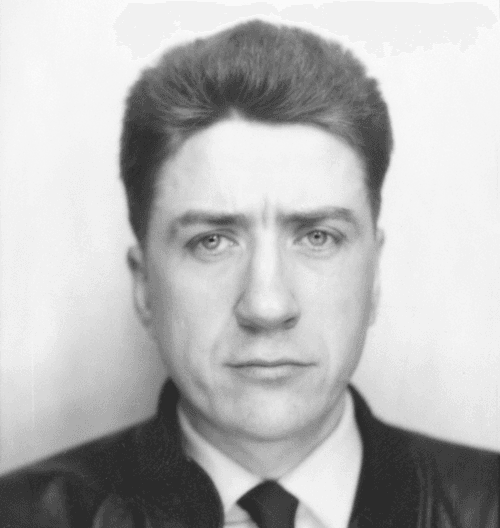
This imaginary interview was generated by artificial intelligence from sources documented in Lois Weber's profile. It dramatises what the figure might have said based on what we know about them, but does not constitute attested historical testimony. For primary sources and factual documentation, refer to the full profile.