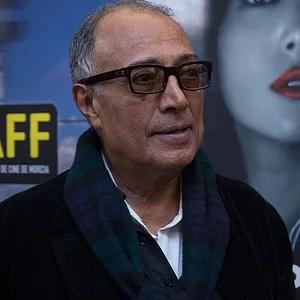

Abbas Kiarostami (1940-2016) was an Iranian filmmaker, screenwriter and photographer, a major figure in the renewal of Iranian cinema. His work, on the border between documentary and fiction, earned him worldwide recognition.
Frequently asked questions
Key Facts
- Born in 1940 in Tehran, he first studied painting and graphic design before turning to film
- In 1969 he co-founded the film department of Kanun (the Institute for the Intellectual Development of Children and Young Adults)
- Made the “Koker trilogy” in the 1980s and 1990s (Where Is the Friend's House?, And Life Goes On, Through the Olive Trees)
- Won the Palme d'Or at the Cannes Film Festival in 1997 for “Taste of Cherry”
- Died in Paris in 2016 at the age of 76
Works & Achievements
His very first short film, made for the Kanun. It already reveals his interest in children and everyday life.
A little boy tries to return a notebook to his classmate. This film introduced Kiarostami to international audiences.
A reenactment of a real news story in which everyone plays their own role. A dizzying meditation on cinema and truth.
After the 1990 earthquake, a director sets out to find the children from one of his films. Life triumphs over catastrophe.
The final chapter of the Koker trilogy, about a film shoot and a thwarted love story. The film unfolds partly behind the scenes of cinema itself.
A man searches for someone to help him die, and meets people who bring him back to life. The film won the Palme d'Or at Cannes.
A visitor waits for an old woman to die in a Kurdish village, and rediscovers the beauty of everyday life. Grand Jury Prize at Venice.
His first feature film shot outside Iran, in Italy, with Juliette Binoche. A meditation on authenticity and illusion in art and love.
Anecdotes
Abbas Kiarostami almost always wore dark tinted glasses, even indoors or at night. These glasses became his trademark: he was instantly recognizable on the red carpets of film festivals, and he explained that they helped him observe the world in his own way, as if through a lens.
Kiarostami loved filming inside cars, which he saw as little mobile studios. For his film “Ten” (2002), he mounted tiny digital cameras on the dashboard, then let the conversations unfold almost on their own, sometimes without even being present in the vehicle.
In June 1990, a terrible earthquake devastated northern Iran, near the village of Koker where he had shot a film three years earlier. Worried about the children who had acted in it, Kiarostami set off by road to find them. He then turned this real journey into a film, “And Life Goes On,” blurring the line between documentary and fiction.
His film “Close-Up” (1990) tells a true and astonishing story: a man had passed himself off as the famous filmmaker Mohsen Makhmalbaf in order to gain entry into a family. Kiarostami had the brilliant idea of having the events reenacted by the real people, each playing their own role, right down to the fake filmmaker and the real judge.
While many artists left Iran after the 1979 revolution, Kiarostami chose to stay. He compared his decision to a tree: “When you uproot a tree to transplant it elsewhere, it no longer bears fruit.” He continued to film in his country despite censorship.
Primary Sources
I believe in a cinema that gives more possibilities and more time to the viewer. A half-created, unfinished cinema that is completed only through the creative spirit of the viewer.
We can only approach the truth through lies.
I prefer films that put the audience to sleep in the theater. Some films have made me doze off, but those same films kept me awake all night.
When you take a tree that is rooted in the ground and transplant it from one place to another, the tree no longer bears fruit.
Key Places
Capital of Iran where Kiarostami was born, grew up, and worked his entire life. He often filmed its streets and the surrounding hills.
Where he trained, studying painting and graphic design. There he developed the sense of visual composition that would shape his films.
Village and countryside in northern Iran where he shot his famous “Koker trilogy.” The region was struck by the 1990 earthquake.
City in the south of France that hosts the Cannes Film Festival. Kiarostami won the Palme d'Or there in 1997 for “Taste of Cherry.”
Italian city whose Mostra awarded the Grand Jury Prize to “The Wind Will Carry Us” in 1999. One more accolade for the filmmaker.
French capital where Kiarostami died in July 2016 from cancer. He had come there for treatment.
Typical Objects
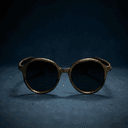
Kiarostami's permanent signature, which he wore day and night. They became inseparable from his public image.
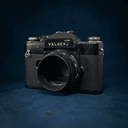
The central tool of his early feature films, used for long contemplative shots. Kiarostami favored static frames and pared-down landscapes.

A small, lightweight camera he mounted on a car's dashboard to capture natural conversations, as in “Ten.” It transformed the way he shot films.

His preferred filming location, a true mobile studio for Kiarostami. The car driving along winding roads is a recurring motif in his cinema.
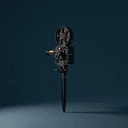
Kiarostami was also a renowned photographer, roaming the hills around Tehran to capture roads, snow, and solitary trees. His photographs have been exhibited around the world.
Kiarostami wrote short poems inspired by the haiku, attentive to the small things in nature. Several collections have been published and translated.
School Curriculum
Vocabulary & Tags
Key Vocabulary
Tags
Lieu
Daily Life
Morning
Kiarostami liked to get up very early and set off alone by car into the hills around **Tehran**. At dawn, he photographed roads, trees and snowy expanses, taking advantage of the low-angled light of early morning.
Afternoon
In the afternoon, he worked on his film projects: writing screenplays, scouting locations, editing. He liked to move slowly, letting his ideas mature rather than following a rigid plan.
Evening
In the evening, he welcomed friends and collaborators, discussing cinema and poetry, or edited his footage. He also wrote short poems inspired by the *haiku*.
Food
He shared the common Iranian diet: rice (often the golden, crispy *tahdig*), slow-simmered stews such as *khoresht*, flatbread, fresh herbs, yogurt and tea. Meals were moments of exchange and hospitality.
Clothing
Kiarostami dressed plainly, with one recognizable touch: simple shirts and jackets, and above all his inseparable dark tinted glasses, which almost never left him.
Housing
He lived in **Tehran**, a sprawling modern city surrounded by mountains. His living environment blended the urban bustle of the capital with the appeal of the rural landscapes he loved to film.
Historical Timeline
Period Vocabulary
Liens externes & ressources
Références
Œuvres
Le Pain et la rue
1970
Le vent nous emportera
1999