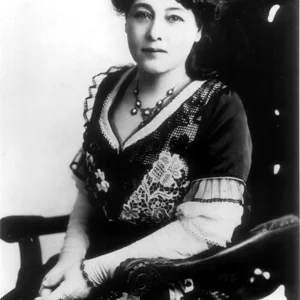
A pioneering French director of the silent film era, Abel Gance is celebrated for his epic film *Napoléon* (1927), which revolutionized cinema through his invention of Polyvision (triple screen). He helped elevate cinema to the status of a true art form.
Abel Gance(1889 — 1981)
Abel Gance
France
7 min read
Frequently asked questions
Famous Quotes
« Cinema is music made of light.»
Key Facts
- Born in 1889 in Paris, died in 1981
- Directed *J'accuse* (1919), a pacifist film about the First World War
- Directed *La Roue* (1923), celebrated for its editing innovations
- Created *Napoléon* (1927), a silent masterpiece filmed in Polyvision (triple screen)
- Appointed Commander of the Légion d'honneur for his contribution to cinema
Works & Achievements
A pacifist film shot during and after World War One using real soldiers. Considered one of the first great anti-war films in cinema history, it left a lasting impression on a French public traumatized by the war.
A monumental work, revolutionary for its ultra-rapid editing and visual effects. It profoundly influenced European and Soviet avant-garde filmmakers, including Eisenstein, who called it a revelation.
A masterpiece of silent cinema, celebrated for the invention of Polyvision (a triple-screen format) and its groundbreaking camera techniques. Regarded as one of the most ambitious and influential films in the entire history of cinema.
One of the first major French sound film productions, combining disaster spectacle with moral meditation on humanity. Gance also wrote the screenplay for this work of near-prophetic ambition.
A lavish historical costume production showcasing Gance's ability to adapt to different genres and formats, and his talent for attracting producers to large-scale spectacles.
Gance's final great Napoleonic epic, made when he was over 70 with an international cast. It embodies his lifelong devotion to glorifying the epic destiny of Napoleon Bonaparte.
Anecdotes
To film *Napoléon* (1927), Abel Gance strapped cameras to galloping horses, giant pendulums, and even a rugby ball hurled into the air. These unprecedented techniques allowed him to create entirely new moving shots at a time when cameras were almost always locked down on their tripods.
The premiere of *Napoléon* took place on **April 7, 1927** at the Paris Opéra, with an orchestra of 150 musicians. For the final sequence, Gance deployed three screens side by side — Polyvision — giving audiences a panoramic image unlike anything ever seen in a movie theater.
For *J'accuse* (1919), his pacifist film about the First World War, Gance recruited actual soldiers on leave from the front to perform in the scene of the dead rising from their graves. Several of these men were killed in combat in the weeks that followed, lending the sequence a shattering reality.
Abel Gance was convinced that cinema was the sixth art form, and he campaigned tirelessly for that idea. He wrote manifestos, gave lectures, and fought throughout his life to have cinema taken as seriously by French cultural institutions as painting or literature.
Although celebrated as a pioneer, Gance struggled his entire life with a lack of funding. His titanic project to film Napoleon's life across several feature-length installments was never completed in full; only the first part (1927) was finished, and even that was shown for many years in truncated versions.
Primary Sources
The music of light has been born. Cinema will be the sixth art, or it will be nothing. Moving images are capable of creating emotions that the other arts cannot produce.
You who live, have you deserved the sacrifice of those who died?
Polyvision is not a technical gimmick: it is the visual expression of an epic thought. Three screens, three dimensions of the human soul — glory, tragedy, destiny.
I do not shoot films, I build cathedrals. Cinema is the synthesis of all the arts — painting, music, literature, architecture — raised to its supreme power.
Key Places
Birthplace of Abel Gance on October 25, 1889, and the city where he spent most of his life and career. In the early 20th century, Paris was the world capital of the film industry.
Site of the world premiere of *Napoléon* on April 7, 1927, attended by the President of the Republic. The Polyvision projection across three screens produced a spectacular effect entirely unprecedented in the history of cinema.
Major film studios on the French Riviera where Gance shot important sequences, taking advantage of the ideal Mediterranean natural light for silent cinema.
Filming location for the mountain scenes in *Napoléon* (1927), most notably the episode depicting the crossing of the Alps. Conditions there were extremely harsh for the crew and the hundreds of extras mobilized.
The institution that preserved and helped restore part of Gance's body of work. The rediscovery of *Napoléon* through restoration efforts allowed later generations to appreciate the long-overlooked genius of this pioneering filmmaker.
Typical Objects

A lightweight and portable cinematographic camera widely used in French cinema during the 1920s. Gance strapped it to harnesses, galloping horses, or pendulums to create entirely unprecedented moving shots.

The recording and projection medium of silent cinema, made from highly flammable cellulose nitrate. Many silent film prints were lost in fires, making their restoration particularly precious.

A table used to view, cut, and manually splice together reels of film. Gance was a master of rapid editing — *La Roue* (1923) contained over 1,500 shots, a record for its time.

A metal or cardboard megaphone used by directors on silent film sets to guide actors and crew through the noise of a shoot, often taking place outdoors.

A three-screen side-by-side system invented by Abel Gance for the final sequence of *Napoléon* (1927), delivering a panoramic image through three simultaneous projections. It is the direct ancestor of Cinerama and CinemaScope.

A printed card inserted between shots in a silent film to convey dialogue or provide narrative information. Gance paid particular attention to his intertitles, treating them as genuine visual poems.
School Curriculum
Vocabulary & Tags
Key Vocabulary
Daily Life
Morning
Abel Gance began his days very early, at dawn, to make the most of natural light on outdoor film sets. The night before, he would meticulously prepare his shots in sketchbooks, annotating camera angles, movements, and desired effects.
Afternoon
Afternoons were devoted to filming: Gance directed his actors with a megaphone, personally demonstrating the gestures and expressions he wanted, and never hesitated to improvise to capture an unexpected beam of light or a spontaneous effect. Days on set often stretched to twelve hours or more.
Evening
In the evening, Gance would screen the rushes — the raw footage shot that day — in a small projection room, alone or with his collaborators. He would then move to the editing table, sometimes well into the night, assembling shots with an almost obsessive passion.
Food
Like many bohemian artists of the era, Gance led an irregular life, often so absorbed in his work that meals fell by the wayside. On location shoots, he made do with whatever the production provided — bread, cheese, cold cuts — sustaining himself more on enthusiasm than on gastronomy.
Clothing
On set, Gance typically wore the outfit of an expedition leader: a long coat, a cap or wide-brimmed hat, and leather gaiters during mountain shoots. He had the silhouette of an artist-adventurer, perfectly in keeping with his outsized cinematic ambitions.
Housing
Gance lived in Paris in apartments whose comfort varied with his fortunes at the time — he enjoyed periods of ease during his great successes and leaner years between projects. His domestic surroundings were invariably overrun with scripts, production photographs, and history books.
Historical Timeline
Period Vocabulary
Liens externes & ressources
Références
Œuvres
Lucrèce Borgia
1935