Imaginary interview with Lu Xun
by Charactorium · Lu Xun (1881 — 1936) · Literature · 5 min read
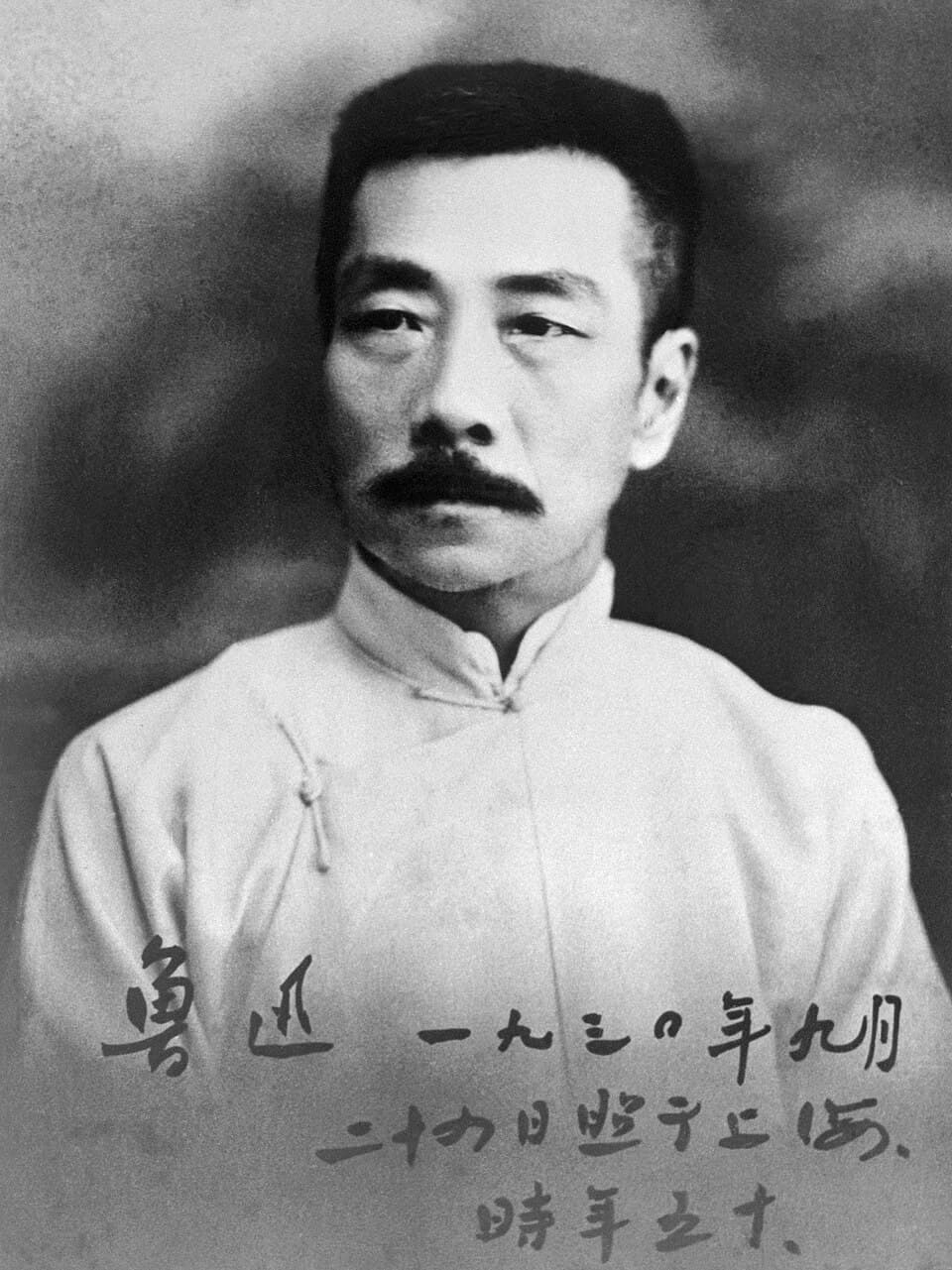
Shanghai, autumn 1936. In an apartment in the Hongkou district cluttered with books, stacked magazines, and prints drying against the wall, a thin man in a dark changshan coughs between cigarettes. Tuberculosis is eating him away, but his eye remains sharp, his irony intact.
—How did a future writer end up, at age twenty, bent over corpses in a Japanese medical school?
I had left for Sendai in 1902, convinced that Western medicine would lift up China, humiliated by the defeat of 1894. Then came that class period when they projected, between two anatomy lessons, the image of one of my compatriots kneeling, about to be beheaded as a spy — and all around, a crowd of other Chinese, sturdy and perfectly indifferent onlookers, come to enjoy the spectacle. That day I understood something absurd: what good is it to heal such vigorous bodies when the spirit that inhabits them is already dead? A people that watches its own execution as spectators does not need surgeons. I put away my scalpel. The real ill was elsewhere, deeper, and no prescription would cure it.
What good is it to heal such vigorous bodies when the spirit that inhabits them is already dead?
—Why believe that a short story, a few pages of fiction, could accomplish what medicine could not?
Don't make me say I believed it without trembling. I long doubted that one man, with his maobi and his lamp, could change anything. But healing the spirit is not done with a scalpel: it requires words that get under the skin, that disturb sleep. Literature does not cure like a potion; it awakens, which is sometimes crueler. Back at the Ministry of Education in Beijing, I spent years copying old inscriptions, keeping silent, discouraged. It took someone to come drag me out of that dusty silence for me to take up the pen again. The remedy, if it exists, is not healing: it is the cry that prevents one from dying peacefully.
—Your first story, in 1918, was also the first written in the spoken language. Why break so radically with literary tradition?
Wenyan, classical Chinese, was a magnificent prison. A language of scholars, sculpted for the keju exams, abolished in 1905, and perfectly closed to the peasant and the worker. Writing like that was speaking to the dead over the heads of the living. When the journal New Youth opened its pages to me, I chose baihua, the language a mother cries to her child, the one you hear in the alleys of my native Shaoxing. In baihua was born A Madman's Diary, signed for the first time with a name that was not mine — Zhou Shuren disappeared, Lu Xun was born, the 'Lu' borrowed from my mother's surname. A new language for a man remaking himself.
Writing in classical Chinese was speaking to the dead over the heads of the living.
—Was this battle for the vernacular truly separable from the great political upheaval of those years?
Not at all. Language is never innocent. The New Culture Movement, then May Fourth 1919, when students took to the streets against the Versailles treaty, all demanded the same thing under different guises: that China stop reciting the lessons of its ancestors. They wanted science, they wanted a people that thinks instead of bowing. Baihua was the weapon of that struggle, as surely as the banners. To undo wenyan was to undo the authority of the scholar, the mandarin, the all-powerful father — all that hierarchy that Confucianism draped in virtue. You don't just cut off the old Manchu queue at the nape; you must also cut it in the mind.
—In the preface to the collection Outcry, you speak of an iron house. What did you mean by that image?
Imagine an iron house without a single window, impossible to destroy, where people are sleeping deeply, soon to die of suffocation. That is the image I placed at the head of Outcry (Nahan), in 1922. And immediately the question that tormented me: if you shout loudly to wake the most lucid among them, do you not condemn them to suffer the agony in full consciousness, instead of passing away in sleep? A friend answered me that if a few awoke, then one could not swear the house would never be torn down. It is that hope, thin and stubborn, that made me write. Not out of certainty — I had none — but because one cannot deprive those who are still running of the right to hope.
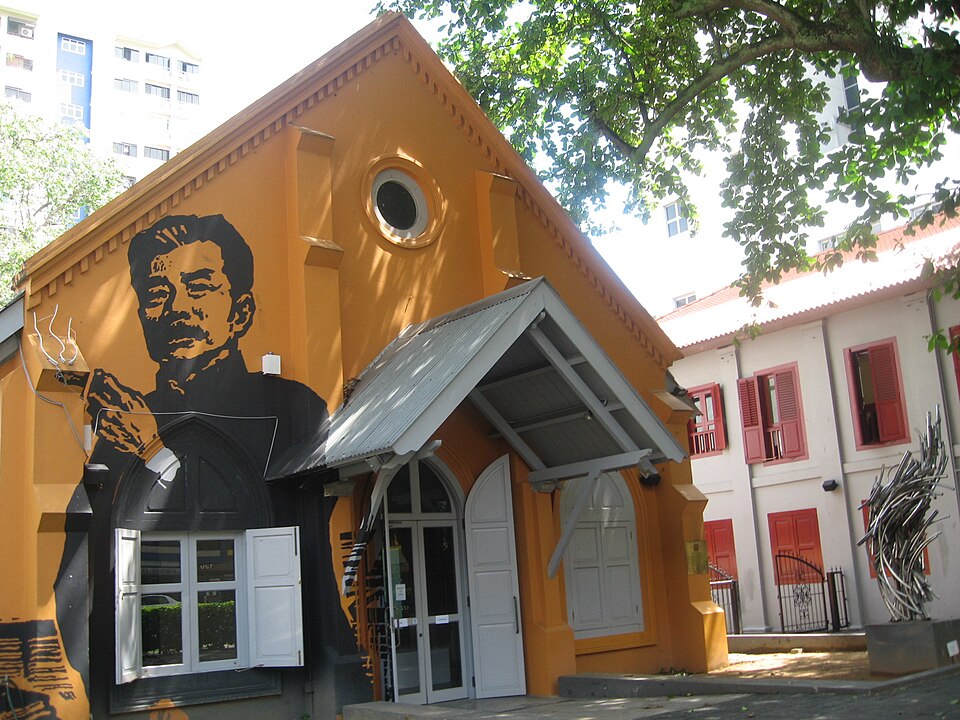
—The madman in your story ends up reading, between the lines of history books, a single repeated word: 'eat people.' Where did this obsession come from?
I had my madman leaf through the old history books, those without dates but scribbled all over with 'virtue' and 'morality.' And by reading in the night, he finally sees, between the lines, those other words that recur: 'eat people.' Chiren, that is my true accusation. The fine Confucian morality, filial piety, respect for rites — all that beautiful edifice slowly devours those it claims to elevate: the daughters-in-law, the younger sons, children especially. My madman is delirious, they say. But his delirium sees correctly. His last plea, I still carry it: perhaps there are still children who have not eaten people? Save the children. That is the only commandment I recognize.
The fine Confucian morality slowly devours those it claims to elevate.
—Your most famous character, Ah Q, turns every defeat into victory. How did this miserable day laborer come to you?
Ah Q was whispered to me by everything I saw around me. A nobody day laborer, despised, slapped, beaten — and each time, he goes back content. Beaten by a stronger man, he inwardly decrees that it's his son who just hit him, and behold, he is victorious, honor intact. I serialized him starting in 1921, the same year the Communist Party was founded, in a China dreaming of rising again. This 'spiritual victory' was our national disease: lose the war, lose face, lose the country, and tell yourself that deep down you triumph. People laugh at Ah Q. They are wrong. That poor devil is each of us before the mirror.
Lose the war, lose face, lose the country — and tell yourself that deep down you triumph.
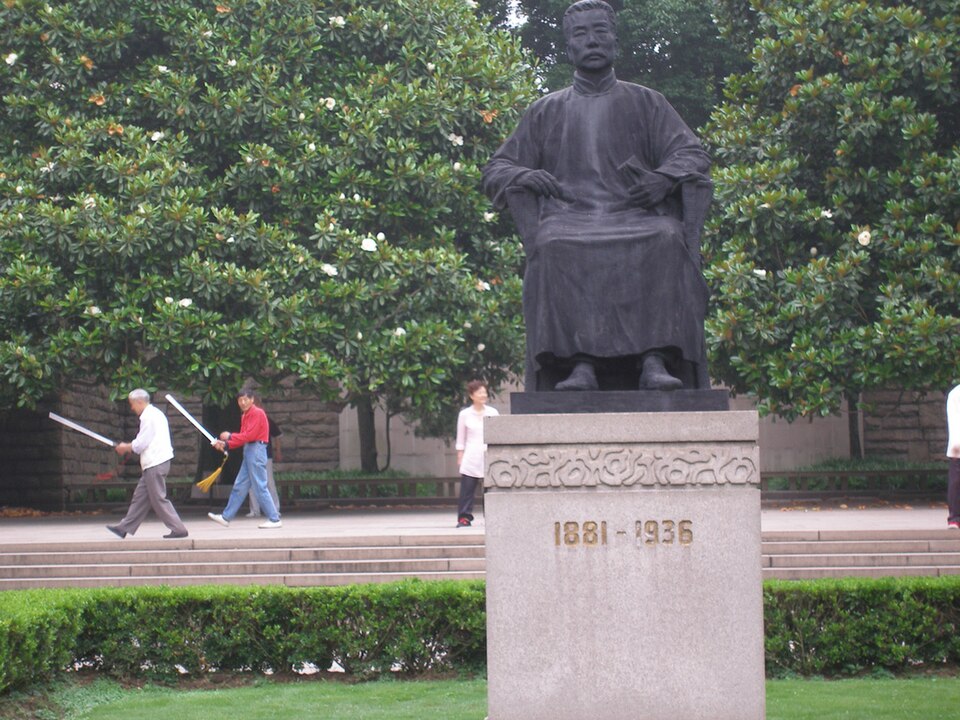
—They say that today in China, people commonly speak of the 'Ah Q spirit.' How does an author feel when his creature enters everyone's mouth?
A mixed feeling, I admit. I have been told that the 'Ah Q spirit' is now used everywhere, to mock those who disguise their defeat as success. That a word I coined serves to ridicule one's neighbor flatters the writer's pride. But let us be honest: everyone uses it to point at someone else, never at themselves. They point to the Ah Q of the next village and think themselves cured. Yet I did not paint an individual; I painted a mirror. If the expression had really bitten, everyone would blush when uttering it. Instead, it has become a convenient slap dealt to others. That, again, is a little spiritual victory.
—In your later years in Shanghai, you became passionate about woodcut. What were you seeking among the engravers?
Settled in Shanghai since 1927, leading the League of Left-Wing Writers, I discovered in woodcut an art to my measure. A block, a knife, a little black ink, and you print a hundred images cheaply: fast, robust, popular. What my prose attempted with words, the print did with lines — speak directly to the people, without the detour of the scholar. I organized exhibitions, compiled collections of foreign artists, trained young starving engravers who knew nothing yet of this modern technique. I saw them as brothers in arms. A woodcut is sometimes worth more than a pamphlet: it does not wait for people to know how to read.
A woodcut is sometimes worth more than a pamphlet: it does not wait for people to know how to read.
—People are sometimes surprised to see the scourge of old China fervently collecting rubbings of ancient inscriptions. Is there not a contradiction there?
I am often reproached for this contradiction. The iconoclast who inks millenary stelae to produce taben, those impressions of forgotten bronzes and stones! But I never hated China's past — I hated what had been made of it, a cage. My afternoons sorting these rubbings, preparing my Brief History of Chinese Fiction born from my lectures, were still a way of loving this country: knowing it enough to distinguish what deserves to live from what must die. You don't wake a sleeper by burning his house; you must first know what it contains. Destroying at random is the gesture of an ignorant man, not a free man.
This imaginary interview was generated by artificial intelligence from sources documented in Lu Xun's profile. It dramatises what the figure might have said based on what we know about them, but does not constitute attested historical testimony. For primary sources and factual documentation, refer to the full profile.