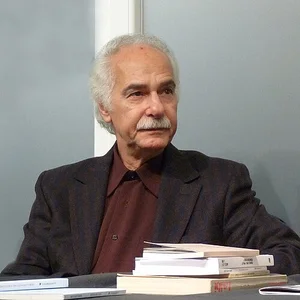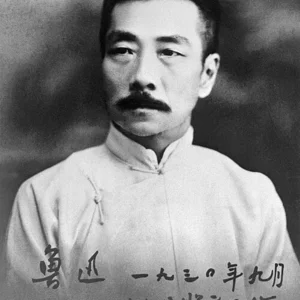

Lu Xun (1881-1936) was the Chinese writer and essayist regarded as the father of modern Chinese literature. Author of satirical short stories and pamphlets, he denounced the archaisms of traditional society and campaigned for a literary language in vernacular Chinese.
Lu Xun(1881 — 1936)
Lu Xun
dynastie Qing, république de Chine
7 min read
Frequently asked questions
Famous Quotes
« Hope is like a path in the countryside: there was never a path, but as more and more people walk along, a path comes into being.»
Key Facts
- Born in 1881 in Shaoxing into a declining family of scholars
- Studied medicine in Japan (1902-1909) before turning to literature
- Published *A Madman's Diary* in 1918, the first short story written in modern vernacular Chinese
- Wrote *The True Story of Ah Q* in 1921, a satire of the Chinese national character
- Died of tuberculosis in Shanghai in 1936
Works & Achievements
The first modern short story written in vernacular Chinese. Through the delirium of a man convinced that society “eats people,” Lu Xun denounces the symbolic cannibalism of the Confucian tradition.
A satirical tale of a wretched day laborer who consoles himself for his failures with imaginary “spiritual victories.” A famous critique of the failings of the Chinese mentality of the time.
Lu Xun's first collection of short stories, gathering together “A Madman's Diary” and “Ah Q.” Its preface contains the famous image of the “iron house.”
A second collection of short stories, more disillusioned in tone, depicting intellectuals and common people crushed by society.
A scholarly work drawn from his lectures, the first major critical history of Chinese fiction. It reveals Lu Xun's erudition as a researcher.
A collection of prose poems, dark and intimate, in which Lu Xun explores doubt, death, and hope in a highly crafted language.
A more serene collection of childhood and youth memories, evoking Shaoxing, his studies, and his teachers.
Mischievous reworkings of Chinese myths and legends, blending modern irony with ancient material.
Anecdotes
Sent to study medicine in Japan, Lu Xun one day, during a class, watched a slide projected showing a Chinese man about to be executed while his compatriots looked on without reacting. Shocked by this passivity, he decided to abandon medicine: in his view, it was more urgent to heal the spirit of the Chinese people than their bodies, and literature was the best remedy.
The name “Lu Xun” is a pen name: the writer was actually called Zhou Shuren. He used it for the first time in 1918 to sign “A Madman's Diary.” The “Lu” is said to be borrowed from his mother's maiden name, a woman he deeply admired.
His most famous character, Ah Q, is a poor day laborer who turns each of his humiliations into an imaginary “victory” in his own head. This “method of spiritual victory” struck such a chord that the expression “Ah Q spirit” entered everyday Chinese to mock self-satisfaction in the face of defeat.
A great collector of prints, Lu Xun launched a genuine modern woodcut movement in China during the 1930s, organizing exhibitions and training young artists. He saw it as a popular art form—fast and inexpensive—able to reach the common people the way his short stories did.
When he died in 1936 in Shanghai, thousands of people followed his funeral procession. His coffin was draped with a banner bearing three characters: “Soul of the Nation.” A heavy smoker all his life, he was carried off by tuberculosis.
Primary Sources
I leafed through the history books: they had no dates, but scrawled across every page were the words “virtue” and “morality.” Unable to sleep, I read them closely half the night, and at last, between the lines, I saw these words that appeared everywhere: “eat people.”
Imagine an iron house without a single window, impossible to break down, where people are sleeping soundly who will soon die of suffocation. If you cry out loudly to wake the more wakeful among them, are you not condemning them to suffer the agony of this inescapable end?
Perhaps there are still children who have not eaten men? Save the children…
In recent years, Ah Q was faring better and better in his mind, even though in fact his body was faring worse and worse. When he was beaten, he would tell himself it was his son who had struck him, and he would walk away satisfied, like a victor.
Key Places
Lu Xun's hometown, where he was born into a ruined family of scholars. Its alleyways, canals and inhabitants inspired much of his short fiction.
The city where Lu Xun studied medicine at the Sendai Medical School. It was here that the lantern-slide incident took place, turning him away from medicine.
Lu Xun worked at the Ministry of Education and taught at Peking University, at the heart of the New Culture Movement and the May Fourth Movement.
Lu Xun briefly taught Chinese literature here in 1926 after leaving Beijing to escape political repression.
Lu Xun settled here from 1927 and spent his final years writing, leading the League of Left-Wing Writers and promoting woodcut printmaking. He died here in 1936.
Typical Objects
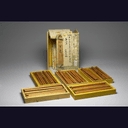
Traditional Chinese brush made of animal hair mounted on a bamboo handle. Lu Xun used it both for his drafts and for his calligraphy.
📷 CC BY 4.0 · Wikimedia Commons ↗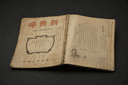
Flagship magazine of the New Culture Movement, which published “The Diary of a Madman.” It spread ideas of modernity and vernacular Chinese among the youth.
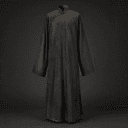
Long buttoned tunic worn by scholars and educated men of the Republic. Lu Xun almost always appears wearing this dark changshan in his portraits.
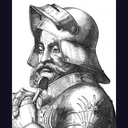
Engraved block used to print black-and-white images, cheap and reproducible. Lu Xun turned it into an engaged, popular art that he actively promoted.
📷 Domaine public · Wikimedia Commons ↗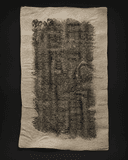
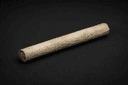
Paper impressions of antique steles and bronzes, made by rubbing with ink. Lu Xun gathered a vast collection of them, a testament to his erudition about China's past.
Lu Xun smoked heavily while writing, often all night long. This intense smoking contributed to the lung disease that killed him.
School Curriculum
Vocabulary & Tags
Key Vocabulary
Daily Life
Morning
Lu Xun, who often worked until dawn, woke up late. Once the morning was over, he went through his abundant mail and answered the many young writers who sought his advice.
Afternoon
In the afternoon, he received visitors, students, and friends in his lodgings, or went to the bookshop. He also devoted time to organizing his prints and his rubbings of ancient inscriptions.
Evening
It was at night that Lu Xun wrote best, bent over his table beneath the lamp, a cigarette between his lips. His incisive essays and short stories were often born during these long, silent vigils.
Food
He ate simply, in the Chinese manner: rice, vegetables, and dishes from his native Zhejiang region. A tea lover, he drank a great deal and snacked little, more occupied with writing than with feeding himself.
Clothing
Lu Xun almost always wore the *changshan*, the long dark robe of the scholars, over cloth shoes. His thick moustache and bristly, brush-cut hair became a famous image.
Housing
He lived in modest houses and apartments in Beijing and later in Shanghai, cluttered with books, journals, and prints. His study, plain but filled with papers, was the heart of his home.
Historical Timeline
Period Vocabulary
Liens externes & ressources
Références
Œuvres
Le Journal d'un fou (Kuangren riji)
1918
La Véritable Histoire de Ah Q (Ah Q zhengzhuan)
1921
Le Cri (Nahan)
1923
Errance (Panghuang)
1926
Brève histoire du roman chinois (Zhongguo xiaoshuo shilüe)
1924
Herbes folles (Yecao)
1927
Fleurs du matin cueillies le soir (Zhaohua xishi)
1928