Imaginary interview with Marguerite Porete
by Charactorium · Marguerite Porete (1250 — 1310) · Spirituality · Literature · 6 min read
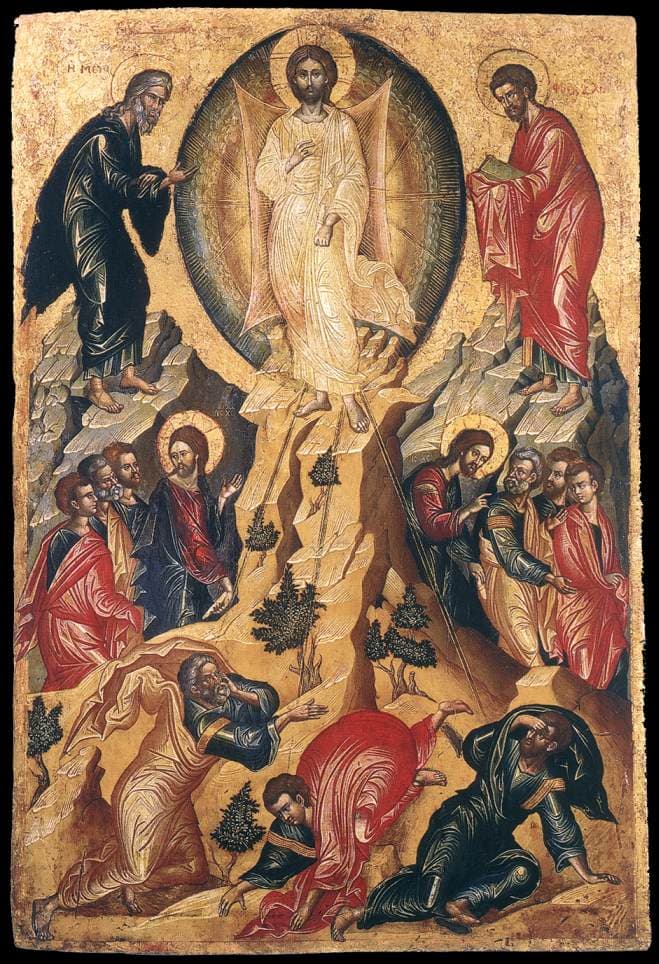
Paris, winter 1309. In a stone cell of the dungeon where the inquisitor William of Paris has held her for months, a beguine from Hainaut receives a visitor with a lamp and a writing desk. She is calm, her hands marked by the cold; it is she who speaks, in a low, unhurried voice.
—Before Paris, before all this, how did you live back there in Hainaut?
I was a beguine, which is neither a nun nor a woman of the world. We lived in Valenciennes in a walled enclosure, with a garden, a chapel, and our cells in a row. Mine was small: a straw bed, a chest for my sheets, a prie-dieu. We had taken no perpetual vows, and yet we rose before dawn for Matins, we spun wool, we tended the sick, and our work paid for our bread. It was a third way, you see: neither the velvet of ladies nor the cloister of nuns. Sometimes I am asked who gave me permission to live thus. No one. And that, I think, is what they do not forgive.
Neither the velvet of ladies nor the cloister of nuns: a third way, and no one had given me permission.
—What was a day like in that beguinage?
It was as regulated as an office and yet free. In the morning, psalms sung in common, then silence in my cell with whitewashed walls. In the afternoon, I would take the reed pen, copy texts, and seek words for what has none. Or I would join the others for sewing, caring for the bedridden—for a beguinage does not beg, it works. Our table was meager: brown bread, garden vegetables, a grain soup, fish on abstinence days. It was not endured misery, but chosen poverty, a way to keep the body light so that the soul might rise faster. In the evening, after Vespers, I would enter a contemplation I dare not describe, so far does it carry me from myself.
—Why did you write your book in the common tongue and not in the clerics' Latin?
Because Latin is the key to a door closed to women. We are denied school, we are denied the pulpit, we are denied even the right to comment on Scripture—and then they are surprised that we seek God by other paths. I wrote The Mirror of Simple Souls Annihilated in the people's language, the language that a laundress or a widow of Valenciennes can read by the fireside. What do I care for the beautiful Latin of the masters, if none of my sisters can drink from it? A treatise that cannot be read is merely an ornament for clerics. Mine I intended as a mirror held out: approach your face, simple soul, and see.
Latin is the key to a door closed to women.
—Writing thus, was it an audacity whose danger you measured?
I measured it, yes. A woman who writes about God, without a nun's habit, without a master to cover her, already smells of the faggot before the first line is read. But I saw beguines reciting psalms by heart and understanding nothing of their own fervor, for lack of a book in their language. So I took the parchment and the inkwell, and I had my Mirror circulated from hand to hand, copied in secret. They burned it once already, in Valenciennes, before my eyes. Did they think that fire undoes a book? Mine now lived in the memory of those who had read it. One does not burn what has already entered a soul.
One does not burn what has already entered a soul.
—At the heart of your book is this 'annihilated soul.' What do you mean by that?
Listen to what I say in the Mirror: 'The Annihilated Soul wills nothing, and wills not to will, for it no longer has its own will. It is free of all things, for it desires nothing that is below God.' That is annihilation. It is not destroying oneself; it is ceasing to will for oneself. As long as the soul says 'I want this, I fear that,' it remains captive to itself, more chained than I am in this dungeon. But let it melt its will into God's will like a taper consumed in its own flame, and it becomes free—not because it does what it wills, but because it wills nothing but Love.
It is not destroying oneself; it is ceasing to will for oneself.
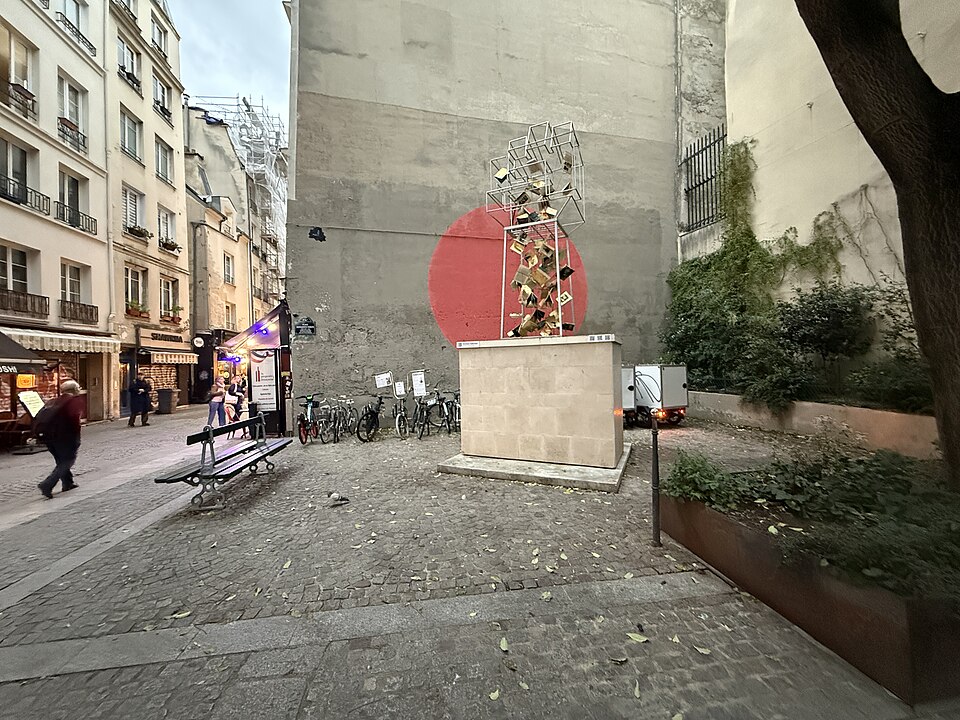
—Theologians have seen in it the doctrine of the Free Spirit, the idea that a perfect soul is freed from all law. What do you answer them?
They read with Reason, and Reason is precisely the character my book leaves behind. In my dialogue, Love, Soul, and Reason argue; and Reason always takes fright, is scandalized, demands rules. They hear that the annihilated soul 'no longer heeds virtues' and they cry Free Spirit, license, permitted vice. But I do not say it scorns the good: I say it no longer needs it as a crutch, for it has become the good itself. The soul that lives in Love no longer counts its fasts and prayers like a merchant his coins. That, a doctor of the Sorbonne can only read trembling, for he lives by such accounts.
They read with Reason, and Reason is precisely what my book leaves behind.
—Since your arrest, it is reported that you refuse to swear an oath and to answer. Why this silence?
Because answering would mean recognizing that they have the right to judge me on what God alone knows. They hold out the Gospel for me to swear; I do not touch it. They interrogate me; I am silent. It is now nearly eighteen months that I have been within these walls, and in all that time they have drawn from me not a single word that serves them. They call this contumacy, and I well understand that this word will ruin me. But my chain shackles only my limbs. Silence is the only place where they cannot follow me. What would you have a soul say that wills nothing for itself? It has no plea: it has nothing to defend.
My chain shackles only my limbs; silence is the only place where they cannot follow me.
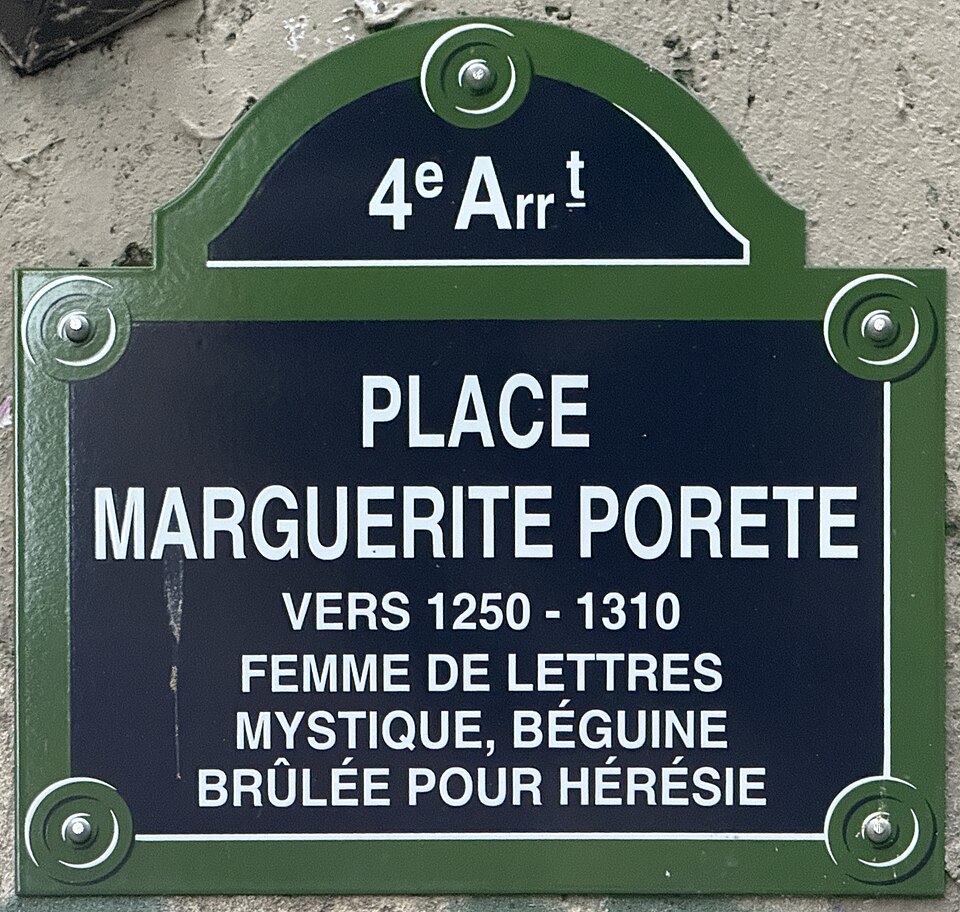
—Have you not thought that a word, a recantation, could save you?
A word, yes. They have hinted at it in a thousand ways: acknowledge your error, submit your book, and the secular arm will not touch you. But what word? To deny the Mirror would be to deny what Love wrote through my hand—and that I cannot do, not out of pride, but because I am no longer its master. Twenty-one masters of Paris extracted propositions from my book which they condemned; they tore them from the body of the text as one tears a limb, and cried out to see it bleed. I could give them my life; I will not give them my consent to this dismemberment. These are two very different things, and they confuse one with the other.
—They say you will be led to the Place de Grève. How do you envision that hour?
The Place de Grève, yes—where they erect the stakes, on the right bank, by the Seine, before the great gathered crowd. I have already seen my book burned in Valenciennes; I will see the one who wrote it burned, and that is as it should be. I do not say this out of bravado. But the annihilated soul has made, long before the fire, the only renunciation that matters: that of its own will. What remains to fear for one who wills nothing for oneself? Fire undoes a body of flesh; it can do nothing against what, in me, already belongs to Love. Only pray that I maintain before the crowd the same silence as before the judges.
Fire undoes a body of flesh; it can do nothing against what already belongs to Love.
—And your book, after you? Dare you imagine that people will still read you in a century?
I will not know, and I must not will it, or I would fall back into willing. But if I allow myself this dream for an instant: I see copies crossing borders, stripped of my name, lent to other hands more authorized than those of a beguine burned for heresy. Perhaps a cleric of the Rhineland mysticism, in the region of Strasbourg, will murmur my sentences without knowing who traced them. That is all the same to me. A mirror does not demand that the glassmaker's name be engraved on the back; it asks only that one look into it. May the simple soul who, in a hundred years, reads these pages find the door, and may it utterly forget the poor woman who, on this June morning, will stand upright before the fire.
A mirror does not demand that the glassmaker's name be engraved on the back; it asks that one look into it.
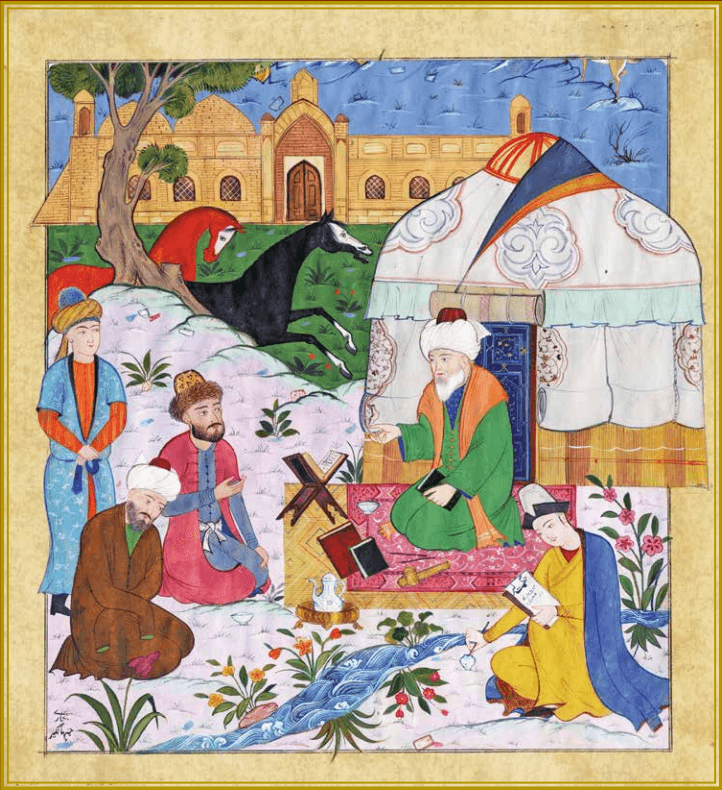

This imaginary interview was generated by artificial intelligence from sources documented in Marguerite Porete's profile. It dramatises what the figure might have said based on what we know about them, but does not constitute attested historical testimony. For primary sources and factual documentation, refer to the full profile.