Imaginary interview with Messalina
by Charactorium · Messalina (20 — 48) · Politics · Society · 5 min read
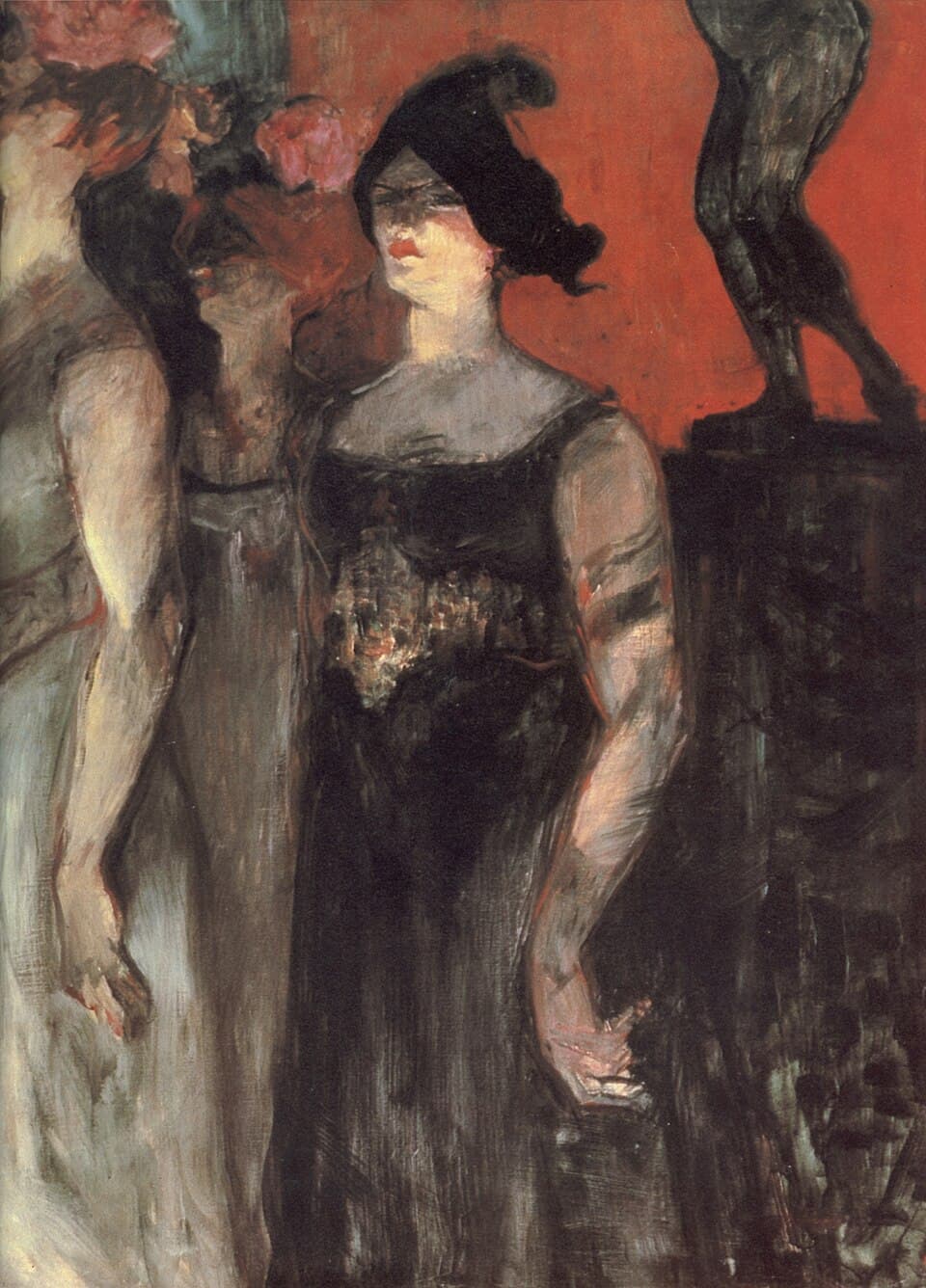
Rome, an evening in the year 48. Under the shade of the Horti Luculliani, those gardens she so coveted, the empress receives visitors at dusk, a cup of wine in hand. Her voice is calm, assured, a little weary — that of a woman who knows the court is already whispering behind her back.
—Do you remember the day Claudius was brought to power?
The dawn of January 24, 41 overturned everything. Caligula fell under the swords of his own officers, and my uncle Claudius was found trembling behind a curtain on the Palatine. The Praetorian Guard hoisted him to power before the Senate had even deliberated. I was then a young matron of twenty, wife of a man considered a stuttering scholar with no future. Three weeks later, I gave birth to Britannicus. Do you understand what that meant? The chance of a murder and the cry of a newborn had made me the first woman of Rome. One does not ascend the Palatine: one is thrown there by the gods, and then one must stand tall.
One does not ascend the Palatine: one is thrown there by the gods, and then one must stand tall.
—What did your children, Octavia and Britannicus, represent to you?
An empress does not reign: she gives birth to the future. I gave Claudius Octavia, then Britannicus, two blood pledges for the Julio-Claudian house. Look at the coins struck with my son's image: every piece passing from hand to hand, from the Rhine to Ostia, whispers that a legitimate heir awaits his time. During the triumph of 44, when Claudius paraded for his conquest of Britain, I appeared in the ceremonies not as an ornament but as the mother of the lineage. People think power is played out in the Senate; it is first played out in a cradle and on the metal of a denarius. I understood this better than the consuls.
—How does one go about eliminating a troublesome rival in Rome?
From the very first year, the court had to be cleansed. Seneca, that honey-tongued philosopher, had gotten too close to Julia Livilla, Claudius' niece. An accusation of adultery, a few wax tablets carried by my freedmen to the right ears, and the sage took the road to Corsica in 41. They call me cruel. But in Rome, the law is not a blind goddess: it is a knife, and it belongs to whoever knows how to wield it. I invented nothing; I used the courts as a general uses terrain. Livilla disappeared, Seneca meditated on his rocks, and no one dared sit too close to the emperor without my approval.
—Why did Valerius Asiaticus have to fall?
Valerius Asiaticus possessed twice what I desired: splendid gardens on the Pincian Hill, and the esteem of the senators. Too much for one man. In 47, I arranged for him to be accused, cornered, given the Roman choice of dying with dignity. Some whisper that I coveted above all his Horti Luculliani. They are not wrong — but a rival who owns such beautiful shade is already half guilty. At Claudius' court, one does not survive by being virtuous: one survives by being necessary, or by being nothing. Asiaticus chose to open his veins in a warm bath. His gardens, as for them, came to me.
—Those gardens on the Pincian Hill, what did you do with them once they were yours?
When the Horti Luculliani were finally mine, I did not merely enjoy them: I remade them. The terraces were enlarged, trees planted, pavilions worthy of an imperial residence erected. From the top of the Pincian Hill, one dominates Rome as a god dominates mortals — the Forum below, the smoke of sacrifices, the bustle of clients. These shades will outlive me, I know it already: the emperors who come after me will stroll there without even thinking of the woman who beautified them. I love this place with an almost guilty love. A garden, you see, is the only thing a powerful person possesses that never betrays them; men, on the other hand, always betray.
A garden is the only thing a powerful person possesses that never betrays them.
—You are reproached for your taste for luxury — what do you answer?
What is an Augusta without splendor? In the morning, my servants braid my hair into symmetrical curls; I put on the fine linen stola, the purple palla that no one outside the imperial house has the right to wear. In the afternoon, I cross Rome in a litter, surrounded by a retinue visible from afar. This is not vanity: to be seen is to exist. A marble bust bearing my likeness travels to the provinces; a coin bears my son. All this says one thing to the ambitious who dream of supplanting us: the house of Claudius holds firm. Luxury, for us, is not softness; it is an army without swords.
—What happened that summer of 48, when you married Gaius Silius?
The summer of 48. Yes, I married Gaius Silius, the handsomest of the consuls designate, in the middle of the city, contract signed, witnesses summoned, victims offered to the gods — a real marriage, while I was still the emperor's wife. Madness? So they said. But Silius pressed me: to remain a man's hidden mistress was to wait for a jealous freedman to undo us. Better to risk everything at once. I loved, yes — and I also loved the vertigo of audacity, that moment when one stops hiding. All Rome held its breath. I knew that Claudius, busy at Ostia, would learn the news. I did not yet know that his freedmen would be swifter than my love.
—How did you learn that all was lost?
When Narcissus threw the truth at Claudius' feet, everything rushed. I ran through Rome to reach him, to speak to him, to remind him of our children — but the freedmen barred my way. I was brought back to my beloved Horti Luculliani, those gardens won at such great cost. My mother came to urge me to die with dignity, by my own hand. My hand trembled, I confess. Then a tribune cut what I dared not cut. They say that Claudius, at table, did not even look up when my death was announced to him. That is the man I had made emperor: incapable of a word, even for my death. The gardens where I had reigned became the place where I fell.
—What will remain of you, do you think?
The Senate will erase my name from the marbles, break my portraits: the damnatio memoriae, that second death inflicted on the vanquished. And yet — I sense it — a few busts will escape the hammers, hidden in a province, forgotten at the back of a garden. My symmetrical curls, my matronly hairstyle will be recognized. Strange revenge: they want to annihilate me, and it is my stone face that will cross the centuries when my accusers are dust. If I could imagine being read in a hundred years, I would wager that my crimes will have been preserved and my reasons lost. The victors write, the dead women are silent: that is the only law Rome has never broken.
—And the poets, what do you fear they will do with your name?
The poets? I fear them more than the tribunes. A tribune kills me once; a poet kills me at every reading. I can already imagine the satirists of tomorrow: they will turn me into the Augusta who, at night, swapped her imperial coiffure for a hood to run through the slums. They will exaggerate everything, because an empress's vice makes the crowds laugh more than her virtues. They will forget that I managed the house of Claudius, chose who approached the emperor, watched over my son Britannicus. They will remember only the scandalous woman. What can I do? Rome loves its female monsters as much as it fears its powerful women — and it is often the same fear that invents both. Make me a fable: I prefer to be feared than pitied.
Rome loves its female monsters as much as it fears its powerful women.
Read further

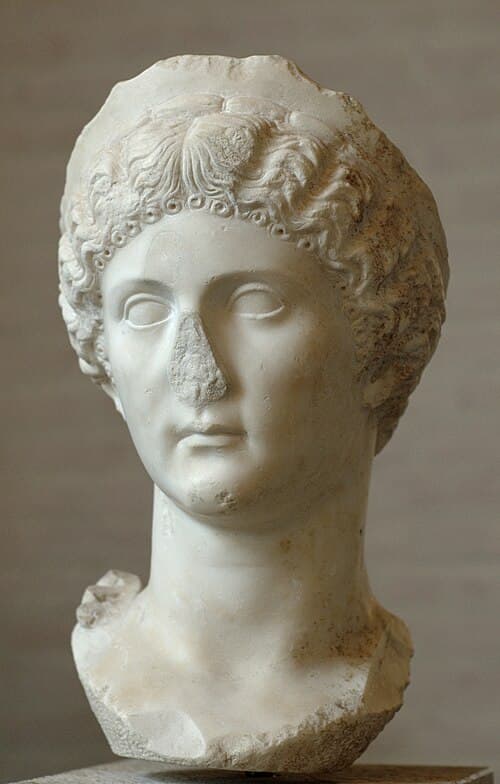

This imaginary interview was generated by artificial intelligence from sources documented in Messalina's profile. It dramatises what the figure might have said based on what we know about them, but does not constitute attested historical testimony. For primary sources and factual documentation, refer to the full profile.