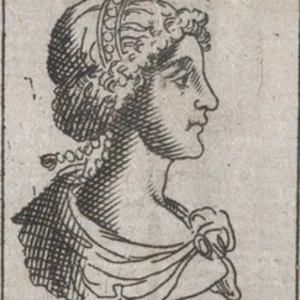

Empress then regent of Eastern Han China (1st–2nd century), she governed the empire for fifteen years with wisdom and firmness. She promoted education, reduced court expenditures, and effectively managed famines, earthquakes, and border tensions.
Deng Sui
Deng Sui (鄧綏)
8 min read
Frequently asked questions
Key Facts
- Born in 81 CE into an influential aristocratic family
- Became empress consort of Emperor He of Han in 96 CE
- Upon the death of Emperor He in 105 CE, she served as regent on behalf of two successive emperors (Shang and then An)
- Governed the empire for approximately fifteen years (106–121 CE), reducing taxes and promoting education
- Died in 121 CE; considered one of the most capable regents in Chinese history
Works & Achievements
Deng Sui established schools within the palace where both women and men of the court were educated together in the Confucian classics. This initiative, unprecedented under the Han dynasty, reflects her deep conviction that educating women is a prerequisite for sound governance.
From the very start of her regency, Deng Sui issued a series of decrees reducing tributes demanded from the provinces, cutting palace staff, and streamlining costly ceremonies. These measures eased the tax burden on the population during a period of economic and environmental crisis.
In response to the great famines of 108 and the earthquake of 114, Deng Sui organized the opening of imperial granaries, granted tax exemptions to disaster-stricken regions, and dispatched officials to oversee food distribution — a model of crisis management praised by historians.
During the major Qiang uprising of 107, Deng Sui skillfully combined military operations with diplomatic negotiations to stabilize the northwestern borders, avoiding a prolonged war that would have drained the empire's finances and destabilized its interior provinces.
Throughout her regency, Deng Sui closely monitored the appointment of provincial governors, fighting corruption and favoring competent administrators over court favorites, thereby strengthening the administrative cohesion of the empire.
Anecdotes
From the age of five, Deng Sui learned to read with the help of her grandmother. By twelve, she had already mastered the *Classic of Poetry* and several foundational Confucian texts. Her brothers affectionately called her "the little scholar" — a rare and remarkable distinction for a girl of her era.
When she entered the imperial palace as a consort, Deng Sui deliberately chose plain, unadorned robes so as not to overshadow the reigning empress and the other consorts. This calculated humility made a deep impression on Emperor He, who ultimately chose her as his principal empress in **102**.
In the midst of drought and famine, Deng Sui ordered the imperial court's meals cut in half and sent hundreds of servants back to their families to reduce state expenditure. In doing so, she set an example for all the senior officials of the empire.
Having become regent in **105** following the death of Emperor He, she personally received memorials from senior officials and made the key decisions herself — an exceptional role for a woman in imperial China. Chroniclers noted that she worked deep into the night reviewing state documents.
Deng Sui established schools within the palace itself and insisted that the court women receive the same education as the men. She personally supervised lessons for some of the young girls of the imperial family, firmly convinced that educating women was essential to good governance.
Primary Sources
Empress Deng, grand empress dowager, governed the affairs of the state with wisdom for sixteen years; she reduced tributes, aided disaster-stricken regions, and promoted the teaching of the classics. Historians consistently compared her to the great regents of Antiquity.
The grand empress dowager received memorials from the ministers and ruled on the affairs of the empire. She ordered the imperial granaries opened to relieve the populations stricken by famine in the eastern commanderies.
In the year of Emperor An's enthronement, the grand empress dowager firmly administered the northern frontiers, dispatched generals to repel the incursions of the Qiang, and negotiated peace agreements with the border tribes.
Key Places
A great metropolis in central China and the imperial capital under the Eastern Han dynasty. It was here that Deng Sui lived as empress and then ruled as regent for sixteen years, receiving foreign ambassadors and directing affairs of state from the Northern Palace.
A city in present-day Henan province and the birthplace of the powerful aristocratic Deng family. It was here that Deng Sui was born and received her first literary education, before being selected to enter the imperial palace at Luoyang.
The main residence of the Eastern Han court — a vast complex of ceremonial pavilions surrounded by gardens and covered walkways. Deng Sui presided over official audiences here, held regency councils, and established schools for women, an innovation without precedent.
The contact zone between the Han empire and the nomadic Qiang peoples, in present-day Gansu and Qinghai. Deng Sui dispatched military expeditions and negotiators there to stabilize the border during the major uprisings of 107–110, averting a costly open war.
Typical Objects

A large seal carved in white jade, symbol of the Mandate of Heaven and the supreme authority of the empire. As regent, Deng Sui used it to authenticate all imperial edicts and appointments of senior officials.

Essential writing instruments at the Han court, before paper came into widespread use. Deng Sui, who had been literate since childhood, used them daily to read officials' memorials and draft her government decisions.

A polished mirror made of copper alloy, often engraved on its reverse with cosmological motifs and auspicious inscriptions. An indispensable toiletry object at court, it also symbolized the ability to see the truth — a virtue that chroniclers consistently attributed to the regent.

Embroidered silk garments in colors and patterns codified according to imperial rank. Deng Sui deliberately chose more austere attire than her rank required, thereby displaying her frugality during a time of economic hardship.

A decorative bronze vessel used to burn fragrant herbs during ritual ceremonies and grand audiences. The smoke of incense accompanied the most important moments of court life, from the investiture of officials to ancestral rites.

Foundational texts of the Confucian canon (the Classic of Odes, the Rites, the History, and others) copied onto silk or bamboo. Deng Sui had studied them from childhood and had them taught in the schools she established within the palace.
School Curriculum
Vocabulary & Tags
Key Vocabulary
Daily Life
Morning
Deng Sui rose before dawn to receive the first reports from ministers and frontier officials. Dressed simply, she worked through memorials written on bamboo or silk, then presided over the court council, listening to senior dignitaries before issuing her official decisions, authenticated by the imperial seal.
Afternoon
Afternoons were devoted to audiences with foreign ambassadors, inspections of the imperial granaries and workshops, and supervision of the palace schools. The regent would sometimes attend lessons given to the ladies of the court herself, questioning students on the classics and encouraging the most diligent among them.
Evening
In the evenings, Deng Sui retired to her quarters to read Confucian texts and draft commentary on current affairs. Chroniclers record that she often worked by the light of oil lamps until late into the night, refusing the lavish banquets that characterized other imperial reigns.
Food
Deng Sui's table was renowned for its frugality: rice and millet, seasonal vegetables, small portions of meat — far removed from the extravagant feasts of certain emperors. During major famines, she imposed even plainer meals on the entire court to set an example, asserting that a ruler could not feast while her people suffered.
Clothing
Unlike empresses who wore silks embroidered with gold and silver, Deng Sui wore robes in muted colors with no excessive ornamentation. This deliberate sartorial restraint sent a strong political signal to officials and the great aristocratic families: in times of crisis, court luxury had to be curtailed.
Housing
Deng Sui resided in the Northern Palace of Luoyang, a vast complex of pavilions with glazed-tile roofs surrounded by gardens, ponds, and covered galleries. Her private apartments were furnished simply — woven straw mats, lacquered chests, and scroll stands — with her library forming the heart of her personal space.
Historical Timeline
Period Vocabulary
Liens externes & ressources
Références
Œuvres
Fondation d'écoles mixtes au palais impérial
Vers 106-121
Édits de réduction des dépenses impériales
105-106
Organisation des secours lors des famines et du séisme
108-114
Réforme de l'administration provinciale
106-121