Imaginary interview with Momoko Kōchi
by Charactorium · Momoko Kōchi (1932 — 1998) · Performing Arts · 6 min read
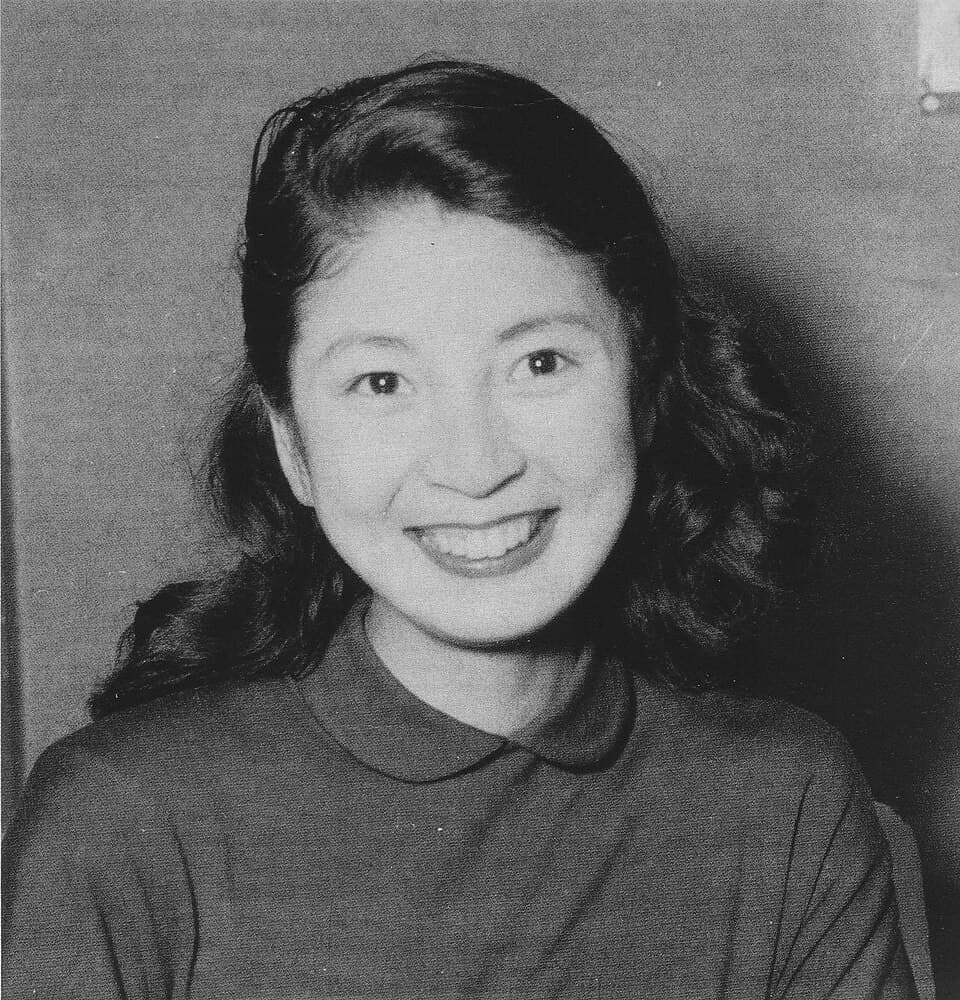
Autumn 1995. In a quiet living room not far from the Tōhō Studios in Setagaya, a sixty-three-year-old woman receives a visitor, a steaming cup of tea in her hands. Forty-one years after lending her face to Emiko Yamane, Momoko Kōchi agrees to look back on a career sealed by the roar of a monster. She speaks softly, with the precision of someone who has long rehearsed her lines aloud.
—How did the role of Emiko Yamane come to you?
I was twenty-two years old and barely knew the corridors of Tōhō when Ishirō Honda looked at me as one appraises raw material. Emiko was not a triumphant heroine: she was a torn young woman, promised to a man she no longer loved, bound to her paleontologist father by a duty she dared not break. Honda did not ask me to play a cinematic fear. He wanted the intimate tremor of a girl my age in a country that, too, no longer knew which oath to keep. I think he chose me not for what I could do, but for what I could not hide. That was my first great secret entrusted to a 35mm camera.
Honda chose me not for what I could do, but for what I could not hide.
—What do you think Emiko carried within her of Japanese society at the time?
Emiko moved between two duties as my country moved between two worlds. She held a terrible secret — that of the weapon devised by Serizawa — and she had to choose between loyalty to an oath and the salvation of the living. Every Japanese woman in 1954 knew that wrenching in another way: we had been taught to obey, then told that obedience had led us to ruin. In my sober Western-style dresses, I played that suspended generation, the sengo, the postwar, which had not yet decided what it would become. Honda knew: my character did not save the world with her fists, but by the courage to betray a silence.
Emiko moved between two duties as my country moved between two worlds.
—What were you really playing, behind the fictional creature?
We were not playing a monster. We were playing a memory. Nine years earlier, Hiroshima and Nagasaki had burned, and in the very year of filming, the trawler Daigo Fukuryū Maru had returned to port, its fishermen contaminated by the ash of an American test at Bikini. The whole country had atomic fear in its throat again. When my character looked at the piled wounded, the children near whom the Geiger counter was brought, I did not have to imagine: everyone on set had an uncle, a neighbor, a hibakusha in their memory. The newspaper Asahi Shimbun wrote that the film struck like a warning, that the destruction of the city recalled images of the war. They were not wrong. The monster was a pretext; the grief was real.
The monster was a pretext; the grief was real.
—Do you remember a scene that cost you personally?
The hospital scenes. Under the overheating arc lights, I had to walk through rows of extras playing victims, and cast upon them a look that did not lie. Honda repeated the take over and over, not out of cruelty, but because he wanted to erase all theatricality from my face. In the end, I was no longer composing anything: I thought of the razed cities, the bodies that no camera had filmed in 1945. They had asked for an actress; only a young Japanese woman remained, ashamed to cry on command for what, outside, had been real. I think that was the day I understood what tokusatsu meant: special effects fabricated the creature, but the emotion — that was not faked.
—Why did you reprise Emiko as early as the following year, in 1955?
No one imagined then that a genre had just been born. When I was called back for Godzilla Raids Again, under the direction of Motoyoshi Oda, it was still just a sequel to honor the success of the first film. But it was there, in April 1955, that two of these beasts fought for the first time on screen, and the public wanted more. We did not yet name it, but the kaijū eiga, the giant monster film, was taking shape under our feet. I had the strange feeling of having signed, without meaning to, the birth certificate of something larger than us. Emiko was no longer just my role: she became a guiding thread, the human memory connecting each rampage of the creature.
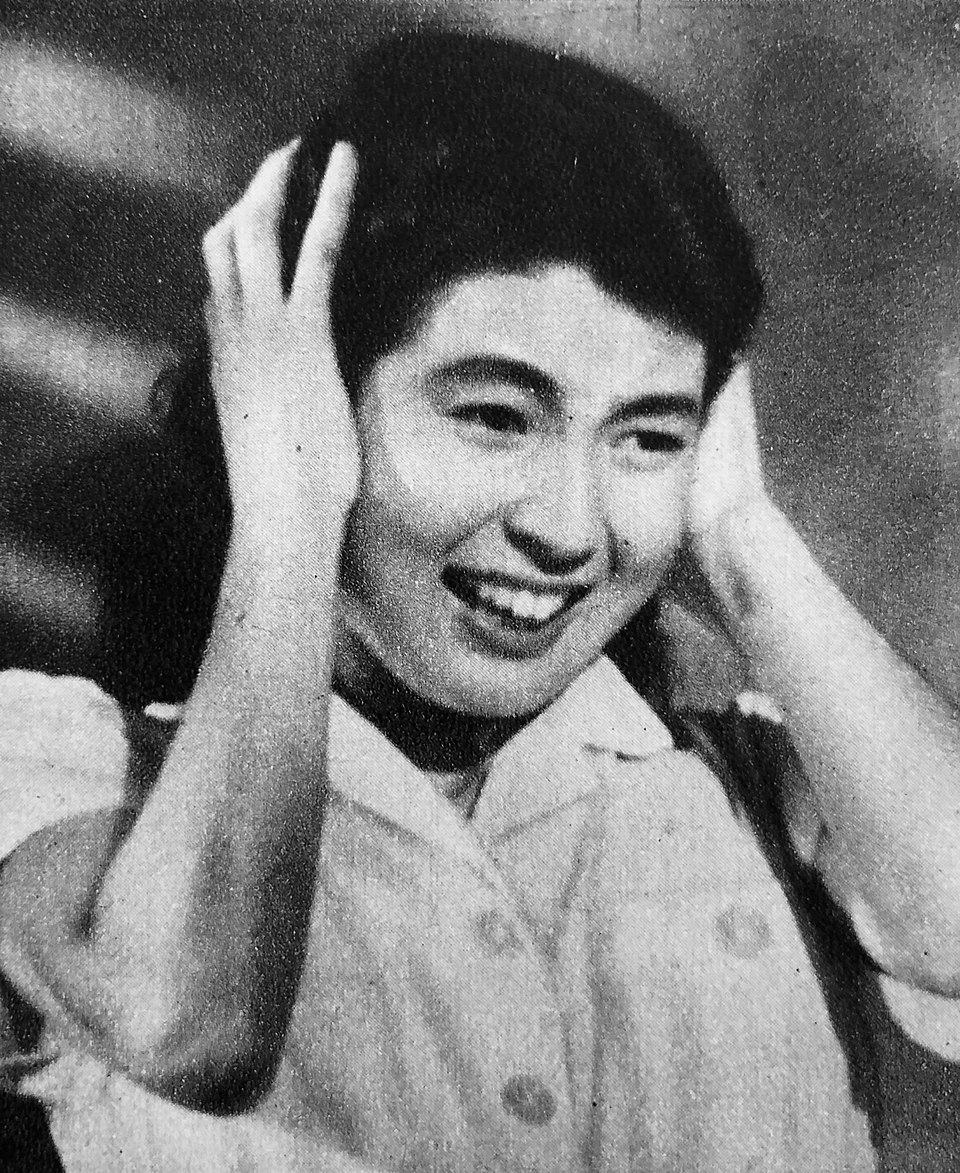
—Were you aware of taking part in something distinctly Japanese?
At the time, no — we shot, we went home to learn our daihon for the next day. But in hindsight, yes: what Tōhō was inventing in those years resembled no foreign cinema. The Americans filmed flying saucers, creatures from elsewhere; we filmed our own pain rising from the depths, a whale-god born from our own endured tests. The very word, Gojira, combined gorilla and whale, two living masses from our imaginations. The plywood models of Tokyo that the technicians built by hand were not toys: they were our cities, remade to be destroyed a second time, with a care that bordered on ritual. That was what was Japanese: destroying in miniature what we had been unable to prevent in reality.
We filmed our own pain rising from the depths.
—What was a day of shooting like at Tōhō Studios?
It began before dawn. I arrived at the Tōhō Studios in Setagaya when the technicians were already setting up the sets, and I hurried to the dressing rooms for an endless makeup session — black-and-white photography demanded faces almost sculpted in light and shadow. The afternoon stretched under the arc lights, in an oven-like heat, repeating until exhaustion the scenes that Honda still deemed too clean. In the evening, when the studio emptied, part of the crew lingered at a local izakaya, over skewers and warm sake. I often went home with my daihon clutched against me, my next day's lines already in my head. The actress's craft, in those days, was made of patience as much as talent.
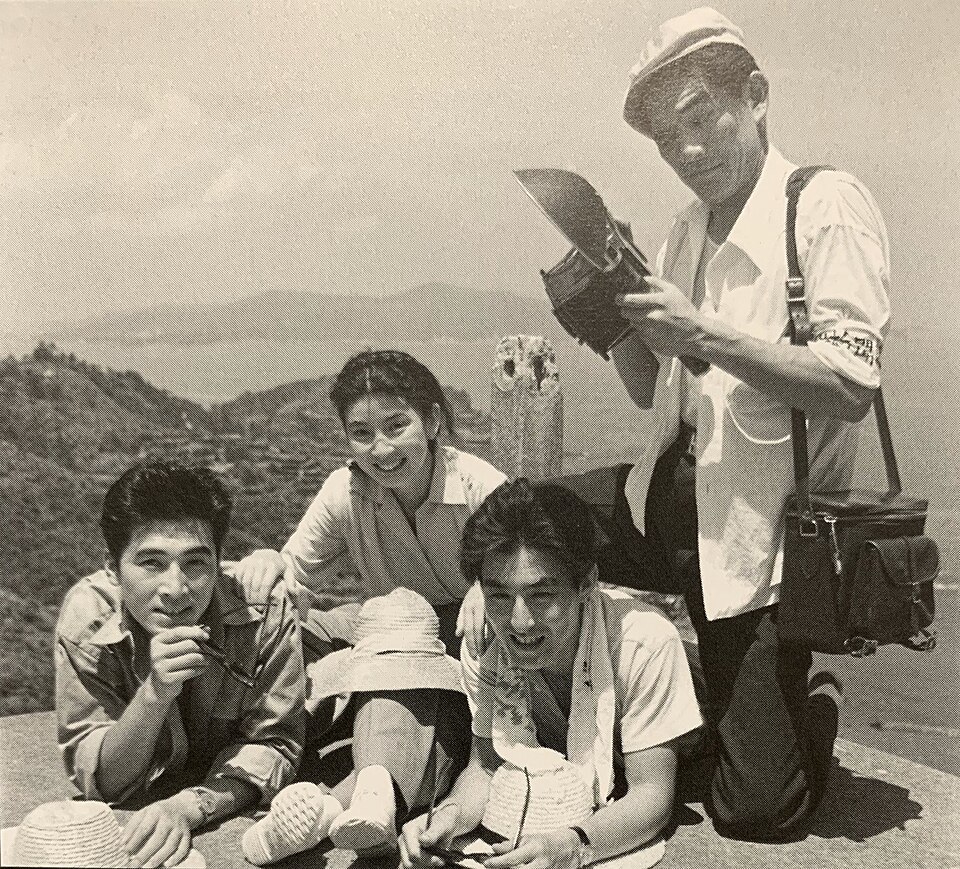
—What remains for you of Ishirō Honda's rigor?
A demand that, even today, keeps me upright. Honda never raised his voice, but he refused the false with a quiet obstinacy. In front of the 35mm camera, if I played Emiko even a notch too much, he would ask for another take without a word of reproach, just a slight nod. He taught me that the strongest emotion is the one you hold back, not the one you pour out. I have seen many directors since, but none shaped me as much. When I reread my old scripts, those yellowed daihon annotated in his hand, I find in the margins that lesson: cinema is not the art of showing, it is the art of knowing what to hide.
Cinema is not the art of showing, it is the art of knowing what to hide.
—What did you feel when you reprised Emiko forty-one years later?
A vertigo. In 1995, I was asked to become Emiko Yamane again for Godzilla vs. Destroyah, presented as the end of the saga. I had left that woman young, in 1954; I found her aged, like me. The studio wanted to reunite the faces from the original film, to weave a symbolic link between the two ends of the story — I read it that way in the production file. On set, uttering that name Yamane again, four decades folded up in an instant. It was no longer acting: it was visiting a part of me that had stayed there, in the plywood ruins of Tokyo. I understood that this character had waited for me my whole life for this final farewell.
This character had waited for me my whole life for this final farewell.
—What does this unbreakable bond between Emiko and you represent for you today?
It represents the thread of an entire life. You think you choose a role; sometimes, the role chooses you and never lets you go. Emiko crossed my twenties, my craft, and she accompanies me on the threshold of old age. When I think that viewers, in a century perhaps, will still see this young woman hesitate under the creature's roar, I tell myself that I have left, without knowing it, an imprint more lasting than myself. The hibakusha, the burned cities, the fear of 1954 — all of this, Emiko still carries for those who did not know the war. That, I believe, is the only legacy worth having for an actress: having lent her face to a memory that refuses to die.
This imaginary interview was generated by artificial intelligence from sources documented in Momoko Kōchi's profile. It dramatises what the figure might have said based on what we know about them, but does not constitute attested historical testimony. For primary sources and factual documentation, refer to the full profile.