Imaginary interview with Padmavati
by Charactorium · Padmavati (278 av. J.-C. — ?) · Politics · Spirituality · Society · 6 min read

Pataliputra, at the hour when the sun withdraws from the palace's irrigated gardens. In a room of the antahpura, draped with embroidered fabrics and perfumed with lotus flowers floating on water, a queen of Ashoka agrees to speak. She has the grave bearing of those who lived beside a man whom war transformed into a devotee.
—Where does a day begin in the apartments you inhabit at the heart of the palace of Pataliputra?
It begins in water and in the flower. Before the sun crosses the walls of the antahpura, my maids pour scented water for the ablutions, and I place in the offering bowl a lotus picked from the pools. It is not an ornament: the padma is born in mud and rises immaculate, and my morning prayer seeks to resemble that. They say the ambassador from the West, that Megasthenes sent by the Greeks, compared our palace to the dwellings of kings beyond the mountains. I know only these painted walls, these hangings, this women's quarter where power is murmured rather than proclaimed. The entire world, for me, would fit in the reflection of a polished bronze mirror.
The entire world, for me, would fit in the reflection of a polished bronze mirror.
—How does a queen distinguish herself among the many wives who populate the Mauryan court?
By rank, and rank is read in a thousand details. There is the rajamahishi, the consecrated queen, and there are the others, whose shadow lengthens or shortens according to the king's favor. We live separated in the antahpura, each with her maids, her guards, her intrigues. My fine cotton antariya, the gold belt at my waist, the necklace of pearls from the Bengal gulf — all this tells my place as much as it adorns me. People think the court women idle; they govern the weaving workshops, the kitchens, and sometimes, without any edict recording it, the sovereign's very mood. A queen who knows when to be silent weighs more than a talkative minister.
A queen who knows when to be silent weighs more than a talkative minister.
—Do you remember Ashoka's return after the Kalinga war?
How could I forget? He left to conquer Kalinga and returned conquered. They spoke of hundreds of thousands dead, of rivers swollen with blood, and he who had taken the throne after a war between brothers, now suddenly unable to bear the sound of a lament. The court changed face that year, around the 261st year before a certain reckoning of the Greeks. Animal sacrifices became rare, monks began to cross our corridors. He no longer spoke of victory but of dhamma, that moral law he wanted to engrave in stone so that even the illiterate might feel its weight. I saw a warrior learn to weep, and an entire court learn to fall silent before his grief.
He left to conquer Kalinga and returned conquered.
—What did it mean to live beside a sovereign who embraced ahimsa, non-violence, even in the habits of his table?
It meant learning to eat again. Our table once overflowed with rice, lentils, mangoes, and ghee, but also with meats offered to the gods. After his conversion, my husband had sacrifices limited, promoted vegetarianism, and ahimsa — the refusal to harm any breathing thing — descended from sermons to our plates. It is no small thing to renounce what one believes is due to one's rank. In the evening, between recitations of avadanas, the monks reminded us that the tiniest ant carries the same breath as we do. I long found that strange, then I understood that an empire that stops killing to pray perhaps begins to deserve the name of empire.
—Your name is associated with the great departure of Buddhism to the island of Ceylon. What do you remember of that event?
The memory of a son who goes to carry farther than armies ever went. Mahinda took to sea around 250 before your reckoning, not to conquer but to offer, and he placed the theravāda — the Way of the Elders — in the hands of King Devanampiya Tissa, at Anuradhapura. The women of our house supported this mission with all their hearts, for sending the dhamma across the waters was worth a thousand stone stupas. I am told a cutting from the tree under which the Blessed One attained Enlightenment was planted there, and that it still lives. Think of it: a branch from our gardens, taking root on an island, and greening perhaps when all our names are dust.
A branch from our gardens, taking root on an island, and greening when all our names are dust.
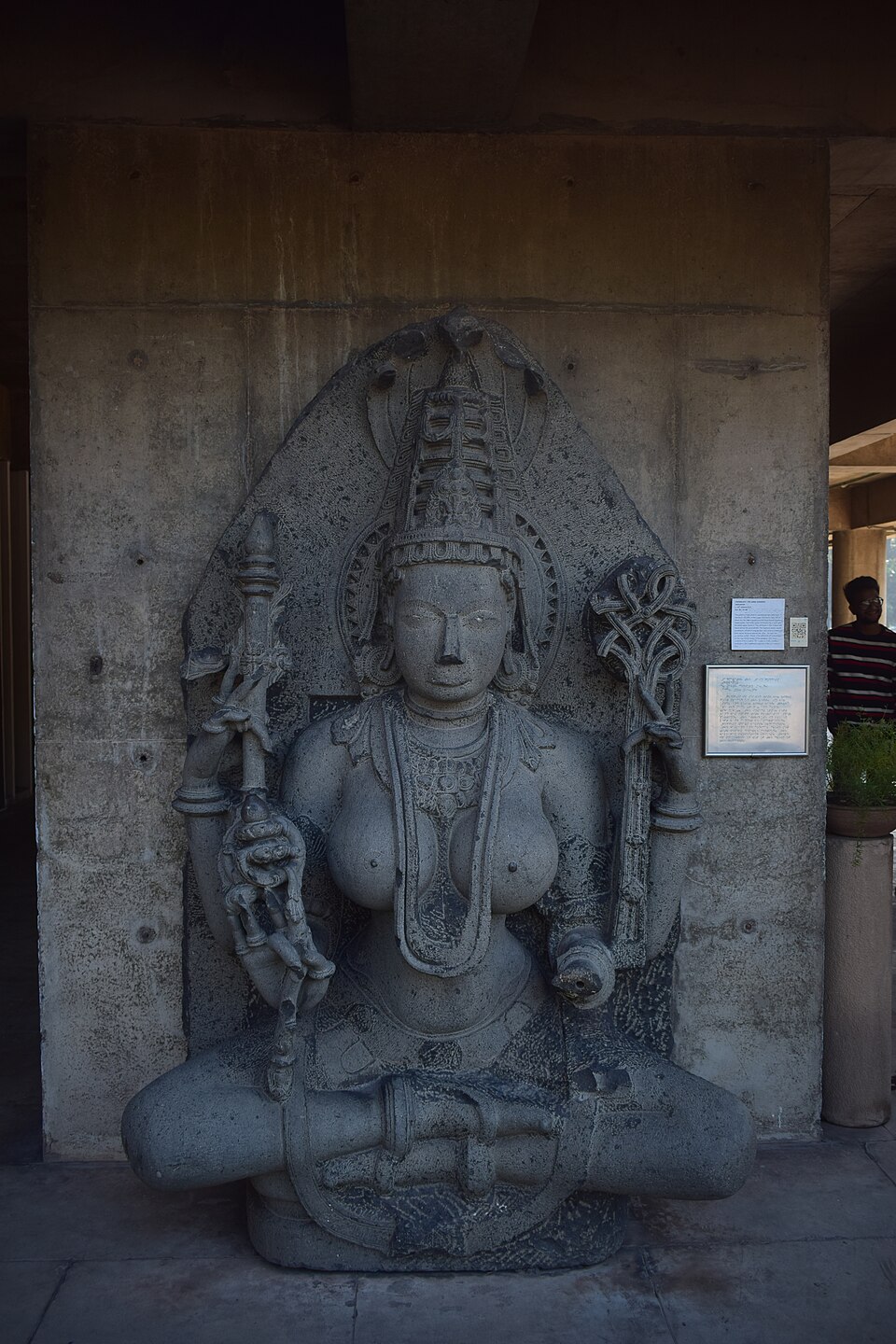
—Why send the dhamma so far, when so many lands of the empire remained to be converted?
Because the dhamma is not a territory, it is water: it seeks to flow wherever a heart opens. My husband erected his pillars and edicts from one end of the empire to the other, at Sanchi he raised the Great Stupa, at Bodh Gaya he honored the tree of Enlightenment — but stone stays where it is placed. A walking monk, however, crosses seas. Sending Mahinda to Ceylon was not neglecting our lands; it was understanding that a truth kept to oneself withers like a cut lotus. The third council convened here in Pataliputra had purified the teaching; it then needed to breathe in the open air, elsewhere, among others.
—Your name, Padmavati, carries the lotus. What does this flower, of which you have been made the emblem, represent to you?
My name says 'she who belongs to the lotus,' and I have spent my life trying to deserve it. The padma is the humblest and the highest of flowers: its roots plunge into the mud of ponds, yet its corolla opens without a stain, as if the mud were only a springboard to light. It is the very image of the soul according to the monks who recite in our house — born in impurity and rising from it. Each morning I offer one in my bowl, each evening I wear one in my hair with gold jewels. I believe I was given this name as one gives a task: be pure amidst what soils, even in a palace where power is never quite clean.
Be pure amidst what soils, even in a palace where power is never quite clean.
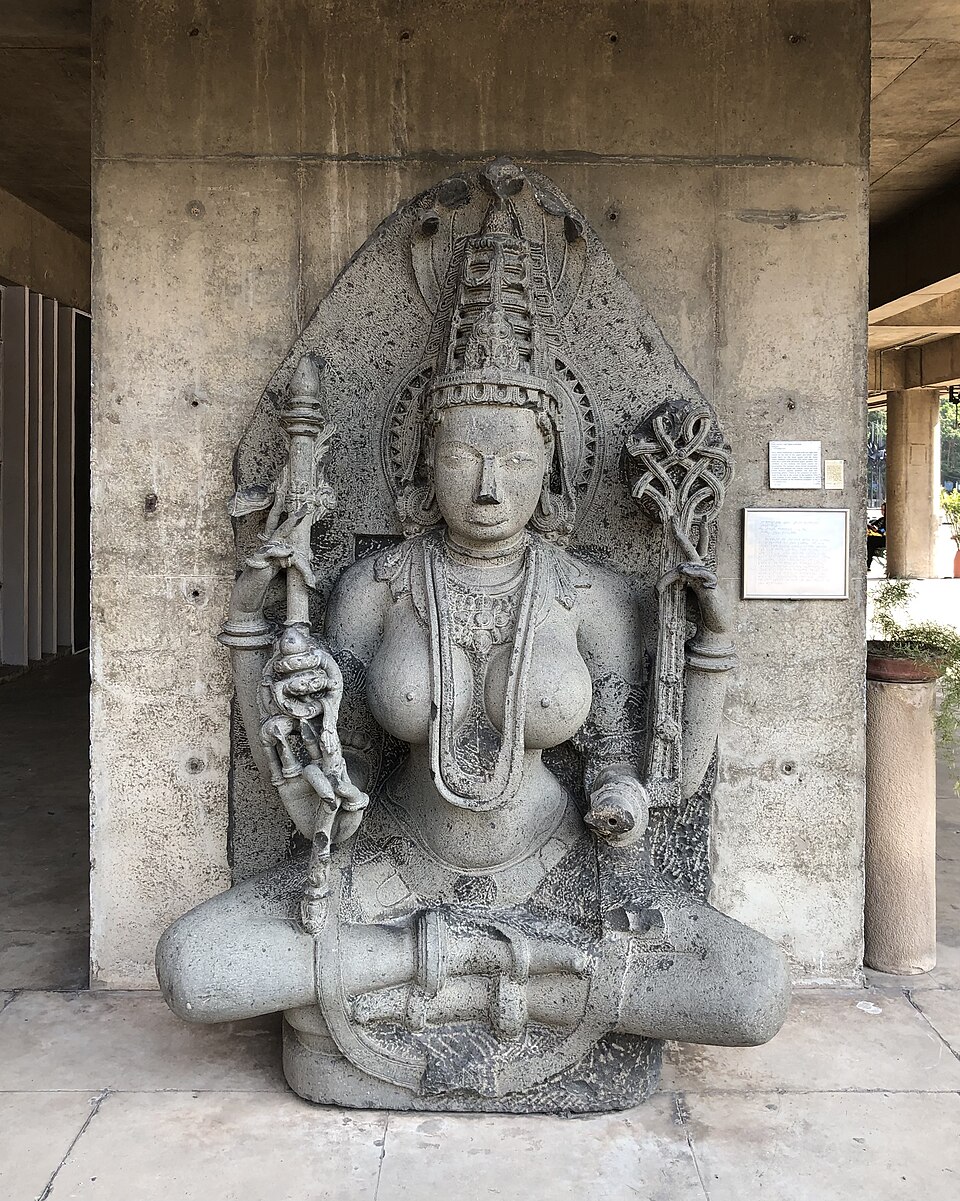
—It is said that other women, much later, will bear this name to the point that you will sometimes be confused with them. What do you think of that?
I am told my name will become an archetype, that of beauty and virtue united, and that countless heroines will bear it after me in the stories of this land. If I could imagine being read in a thousand years, I might see a queen of Rajputana, a certain Padmini of a future epic, whom memories will blend with mine until no one knows which came first. That does not hurt me. A name is like a branch of the Bodhi tree: cut from one side, it sprouts on the other. That I am confused with another lotus only proves that the flower itself has never ceased to bloom in the hearts of this country.
—How do you live with the fact that your memory survives only through the monks' sacred texts?
It is a strange existence, I grant you: I am almost nothing but what pious memory has deigned to retain. I am inscribed in the Ashokavadana, that Sanskrit narrative mixing my husband's great deeds with edifying legends, and in the great chronicle of Ceylon that the island's monks compose in Pali. These texts are not clerks; they do not record what I ate or what I feared, but what, of us, deserved to instruct the living. An avadana does not seek accuracy, it seeks example. I appear there as a silhouette among the court figures — and that silhouette, however thin, will have crossed more centuries than the teak of our palaces.
An avadana does not seek accuracy, it seeks example.
—If the monks had not written, what would remain of the queen you are?
Nothing, or almost a scent. My husband's edicts speak of dhamma, not of queens; the chronicles like the Dipavamsa and the great chronicle of Sri Lanka speak of the children, Mahinda and Sanghamitta, of their missions, and leave us, the wives of the antahpura, in a respectful shadow. That is our condition: we reigned in the secrecy of the inner apartments, and it is in secrecy that we remain. But I do not complain too much. The lotus does not need each of its petals named to be beautiful. That a breath of me subsists in a sacred text, a queen evoked in the turn of a legend — that suffices for a living being, one day, to wonder who I was.
Sources
This imaginary interview was generated by artificial intelligence from sources documented in Padmavati's profile. It dramatises what the figure might have said based on what we know about them, but does not constitute attested historical testimony. For primary sources and factual documentation, refer to the full profile.