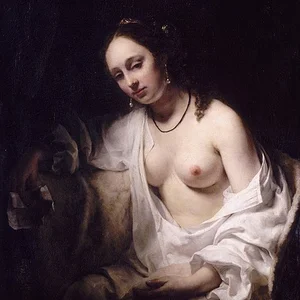

Wife of Emperor Ashoka (3rd century BCE), Padmavati is a figure of the Mauryan court in ancient India. She is mentioned in Buddhist sources as one of the queens of the great ruler who unified the Indian subcontinent and embraced Buddhism.
Padmavati(278 av. J.-C. — ?)
Padmavati
Empire Maurya
8 min read
Frequently asked questions
Key Facts
- Wife of Emperor Ashoka, who reigned around 268–232 BCE
- Mentioned in Buddhist chronicles as one of the queens of the Mauryan court
- Lived at a pivotal moment: Ashoka's conversion to Buddhism following the Battle of Kalinga (around 261 BCE)
- Her existence illustrates the place of women within the imperial courts of ancient India
Works & Achievements
According to Buddhist traditions preserved in the Mahavamsa, the women of Ashoka's royal family actively supported Mahinda's mission to Sri Lanka. This support contributed to one of the most significant geographical expansions of Buddhism in world history.
As a queen at the Mauryan court, Padmavati took part in the political and spiritual life of the palace at Pataliputra, helping to spread Buddhist values — *ahimsa* (non-violence), *dana* (generosity), *sila* (moral virtue) — throughout the royal entourage.
Padmavati is mentioned in major Buddhist texts (the Ashokavadana, the Mahavamsa) as a figure of Ashoka's court, earning her a place in the Theravāda Buddhist religious memory transmitted across South and Southeast Asia.
The name Padmavati ("she of the lotus") became an archetype of ideal femininity in classical Indian literature, combining beauty, purity, and spiritual virtue. Many heroines in later texts bear this name, reflecting the enduring influence of this figure in Indian culture.
Anecdotes
According to the Ashokavadana, a Sanskrit Buddhist text composed around the 2nd century CE, Padmavati was one of Ashoka's principal wives — the emperor who unified nearly the entire Indian subcontinent. Her presence at the court of Pataliputra bears witness to the central role that women of the royal family played in the political and spiritual life of the Maurya Empire.
Buddhist chronicles portray Padmavati as a figure close to Ashoka's inner circle at the time of his profound spiritual transformation. After the bloody Kalinga War (around 261 BCE), which caused hundreds of thousands of deaths, Ashoka embraced Buddhism: the court then became a center of religious thought where queens actively participated in rituals and teachings.
In some Buddhist traditions, Padmavati is associated with the birth of Mahinda, the monk who brought Buddhism to Sri Lanka (the island of Ceylon) around 250 BCE. Mahinda is said to have converted King Devanampiya Tissa, planting the first seeds of Theravāda Buddhism on an island where this tradition remains alive to this day.
The Mauryan court where Padmavati lived was one of the most sophisticated in the ancient world. The Greek ambassador Megasthenes, sent by Seleucus I around 300 BCE, describes a magnificent palace at Pataliputra with gardens, fountains, and a complex administration. Queens lived in separate quarters called antahpura, surrounded by attendants and guards.
Padmavati is sometimes confused, in Indian popular memory, with the legendary queen Padmini of Rajputana, heroine of the medieval epic Padmavat (14th century). These two figures — one from Mauryan antiquity, the other from the Rajput Middle Ages — illustrate how great names travel through the centuries, accumulating new legends along the way in India's oral and literary tradition.
Primary Sources
This Sanskrit text, included in the Divyavadana, recounts the life and deeds of Ashoka surrounded by edifying Buddhist legends. Padmavati appears among the figures of the Mauryan royal court, in a narrative that blends history and religious tradition.
This Pali Buddhist chronicle traces the history of the transmission of Buddhism from India to Ceylon. It mentions Ashoka's children, Mahinda and Sanghamitta, and their missionary mission to the court of King Devanampiya Tissa.
The oldest historical text of Sri Lanka describes in detail the arrival of Mahinda in Ceylon and his Buddhist mission. It provides information on Ashoka's royal family and offers context on the female figures who surrounded him.
The Greek ambassador Megasthenes, sent to the Mauryan court around 300 BCE, describes the splendor of Pataliputra, the organization of Indian society, and life in the imperial palace, providing valuable context on the living environment of the Mauryan queens.
The edicts carved on pillars and rocks throughout the empire proclaim the values of dhamma (Buddhist moral law): non-violence, respect for all life, and religious tolerance. They bear witness to the spiritual transformation of the court in which Padmavati lived.
Key Places
Capital of the Maurya Empire and Ashoka's principal residence. Padmavati lived in the *antahpura* (royal women's quarters) of the imperial palace, described by Megasthenes as one of the most beautiful cities of the ancient world, rivalling Persepolis.
An important city of the Maurya Empire, associated with Devi (also known as Vedisa-mahadevi), another of Ashoka's wives. This commercial and religious centre reflects the geographical diversity of the women who made up the plural Mauryan court.
The site of the Buddha's Enlightenment beneath the Bodhi tree. Ashoka had a temple and commemorative pillars built there; it became an essential place of pilgrimage for the entire Mauryan court following the emperor's conversion.
Capital of the kingdom of Ceylon, where Mahinda brought Buddhism according to the chronicles. The sapling of the Bodhi tree planted by Sanghamitta has been venerated there for 2,300 years, making Anuradhapura a living testament to the far-reaching influence of Ashoka's court.
A major centre of Ashokan Buddhism where the emperor had the Great Stupa (Stupa No. 1) built. This site embodies Ashoka's *dhamma* policy and the flourishing of Buddhism that pervaded the entire Mauryan court, including Padmavati.
Typical Objects

The name Padmavati literally means "she who possesses the lotus." In Buddhism and Hinduism, the lotus symbolizes spiritual purity: it grows in the mud yet rises immaculate toward the light, an image of the soul transcending the impure world.

Women of the high Maurya nobility wore garments of silk or very fine cotton, draped as an *antariya* (forerunner of the sari), often dyed with saffron or vermilion. These fabrics were imported from producing regions or woven in the royal workshops of Pataliputra.

Maurya queens were adorned with refined jewelry: pearl necklaces from the Bay of Bengal, gold bracelets, and earrings set with rubies or emeralds. These ornaments held symbolic as well as decorative value, marking royal rank.

Used for daily religious rites, the offering bowl allowed flowers, scented water, and food to be presented to deities or Buddhist relics. It was a central object of personal devotion at Ashoka's court.

After Ashoka's conversion, the sacred texts of the Tipitaka (the three 'baskets' of Buddhist teachings) circulated at the court of Pataliputra. Royal women close to the king played a part in the flourishing of this religious culture by listening to the recitations of monks.

Finely polished bronze mirrors were precious objects in ancient Indian courts. They appear in depictions of the daily life of noblewomen during the Maurya era, associated with beauty care and adornment rituals.
School Curriculum
Vocabulary & Tags
Key Vocabulary
Tags
Daily Life
Morning
Padmavati's day began with ritual ablutions and offerings at the private shrine of the antahpura (the royal women's apartments). Following the Buddhist practices adopted at Ashoka's court, prayers and recitations of sacred texts marked the sunrise, accompanied by offerings of lotus flowers and perfumed water.
Afternoon
The afternoon was devoted to private audiences, exchanges with the other noble women of the court, and oversight of the weaving workshops and royal kitchens. In a court converted to Buddhism, monks regularly came to teach or recite passages from the Tipitaka.
Evening
In the evenings, the court gathered for communal meals and recitations of poetry or religious texts. Royal women occupied separate spaces during official ceremonies but played an active part in religious life: sacred music concerts, readings of avadanas (edifying tales), and philosophical discussions.
Food
The diet at the Maurya court was rich in rice, lentils (dal), a variety of vegetables, tropical fruits (mangoes, tamarinds, figs), and dairy products (clarified ghee, milk, fresh cheese). After Ashoka's conversion, the court promoted vegetarianism and drastically reduced animal sacrifice — a profound shift in royal dietary customs.
Clothing
Padmavati wore garments of cotton or fine silk draped as an antariya (the forerunner of the sari), fastened with a gold-embroidered belt (mekhala). Jewellery — necklaces, bracelets, and gold diadems set with precious stones — along with fresh flowers woven into the hair, especially lotuses, were essential elements of a Maurya queen's adornment.
Housing
The palace of Pataliputra was a vast structure of teak wood and limestone, surrounded by irrigated gardens and fountains. The antahpura, reserved for the women of the court, was richly decorated with murals, sculptures, and embroidered hangings. Megasthenes compared its splendour to the great palaces of the Achaemenid Empire.
Historical Timeline
Period Vocabulary
Liens externes & ressources
Références
Œuvres
Soutien à la mission bouddhiste de Mahinda
c. 250 av. J.-C.
Rôle de reine dans la diffusion du dhamma
c. 268-232 av. J.-C.
Transmission dans les textes bouddhistes
IIe siècle av. J.-C. – Ve siècle apr. J.-C.
Archétype littéraire : Padmavati dans la tradition indienne
Du IIIe siècle av. J.-C. à l'époque contemporaine