Imaginary interview with Philippe Pétain
by Charactorium · Philippe Pétain (1856 — 1951) · Military · Politics · 5 min read

Two 12-year-old students visit a World War I museum with their school trip. In front of an old portrait in uniform, they stop, intrigued. And then, as if in a dream, the Marshal agrees to answer their questions, from the most glorious to the darkest.
—How old were you when you became famous at Verdun?
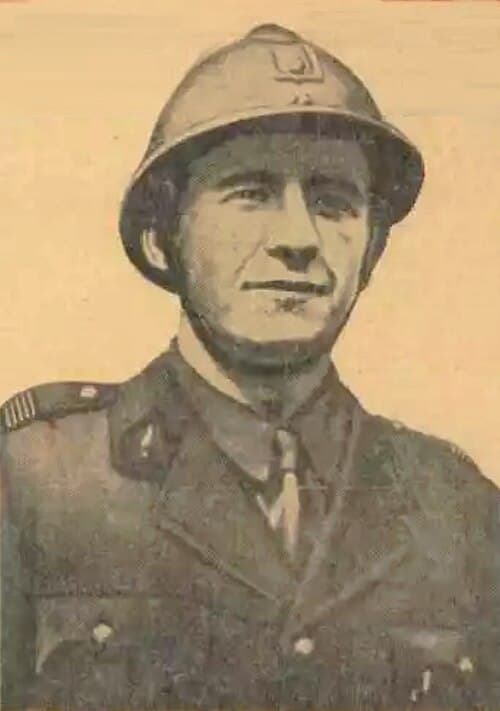
I was already almost sixty years old, my child. Can you imagine? An old soldier! I was born in 1856 in Cauchy-à-la-Tour, a small village in the North, into a family of peasants. We weren't rich. I learned very young to hold on and not to waste. In 1916, I was entrusted with the defense of Verdun. It was hell: shells everywhere, the earth trembling day and night. But there, faced with those children dead in the mud, I understood one thing. A leader must not only give orders. He must protect his men's lives like a treasure.
A leader must protect his men's lives like a treasure.
—How did you manage to supply all those soldiers at Verdun?
Ah, that is my pride! Imagine a single road, narrow, linking Bar-le-Duc to Verdun. Just one! If it gets blocked, my soldiers starve and run out of ammunition. So I kept the trucks rolling without ever stopping, day and night. Over six thousand vehicles, nose to tail, like a river of iron. They called it the Sacred Way. And I, in my post, held a brand-new device to my ear, the field telephone, to command minute by minute. That day, I understood: a battle is also won with trucks, not just with courage.
A battle is also won with trucks, not just with courage.
—What is a mutiny? Why did your soldiers refuse to fight?
A mutiny is when soldiers say, “No, enough, we won’t advance anymore.” In 1917, that happened. They had been sent to die for nothing, by the thousands, in a failed offensive. They were exhausted, dirty, desperate. You know, many commanders would have shot everyone to instill fear. Me, I was appointed commander-in-chief at that moment. I chose something else: I gave them leave to go see their families, better meals, rest. And I promised them not to throw them into the void again, to wait for tanks and American reinforcements. Little by little, they regained trust.
—What was life like for a soldier in the trenches?
Terrible, my child. Imagine a long ditch dug in the earth, where you live standing in freezing mud. It rains, your feet rot in your boots. Rats run over you at night. You eat hard bread and cold soup, and you wait, stomach tight, for the order to attack. Many were barely a few years older than you. That's why in 1917 I insisted on details: food, sleep, family mail. A man who has received a letter from his mother fights better. People often forget that, but the morale of an army is nourished like a body.
The morale of an army is nourished like a body.
—Why did you shake Hitler's hand in the photo?
That photo, my child, followed me all my life. It was at Montoire, on October 24, 1940. France was crushed, occupied by the German army. I believed, truly believed, that by talking to Hitler I could protect my country a little. So I shook his hand in front of the photographers. And afterwards, on the radio, I said I accepted the principle of collaboration, that is, working with the occupier. But here is the truth: you don't make an honest deal with someone who crushes you. That outstretched hand, millions of French saw it as a betrayal. And History proved them right.
You don't make an honest deal with someone who crushes you.

—What exactly did “collaborating” with Germany mean?
The word sounds nice, doesn't it? Collaborate means “work together.” But under the Occupation, it took on a bitter taste. France was divided in two: an occupied zone by the Germans in the north, and a so-called free zone in the south, which I governed from Vichy. Collaborating meant supplying Germany with wheat, factories, and even workers. Later, in 1943, hundreds of thousands of young French were forced to go work there: that was called the STO. Many fled to the woods to join the Resistance. You see, by “working together,” we were mostly working for the enemy.
—Why did you change France's motto?
You know our beautiful motto: “Liberty, Equality, Fraternity.” Well, I replaced it with three other words: Work, Family, Fatherland. I called it the National Revolution. I believed France had lost the war because it had become soft, and that we needed to return to working the land and obedience. I had received full powers on July 10, 1940: I could decide everything alone, I had ended the Republic. My portrait was plastered in every school. But abolishing freedom to supposedly save a country is a terrible mistake. You don't make a people strong by taking away their right to think.
You don't make a people strong by taking away their right to think.

—Is it true you signed laws against the Jews?
Yes. And that is the heaviest thing in my life, I won't lie to you. As early as October 1940, my government published the Jewish Statute. This law expelled Jews from their jobs: they could no longer be teachers, soldiers, civil servants. French families, children like you, excluded simply because of their birth. And the worst: the Germans hadn't even asked us. Vichy decided it all on its own. Later, in 1942, French police arrested thousands of Jews during the Vél d'Hiv roundup. I claimed to be a shield. But a shield does not sign laws that deliver the innocent.
A shield does not sign laws that deliver the innocent.
—Why did you return to France in 1945 when you risked prison?
Many told me to flee, to hide in Germany. I was almost ninety years old, I could have disappeared. But I came back, in 1945, to be judged by my country. Before the judges of the High Court of Justice, I repeated that I had played the role of a shield to protect the French. That was my defense. But the court did not believe me. I was sentenced to death. You know, defending oneself is not justifying oneself. I could say I meant well, but the acts remained, written in black and white in the laws. A man must answer for what he did, not just for what he thought he did.
A man must answer for what he did, not just for what he thought he did.
—And after the trial, what happened to you?
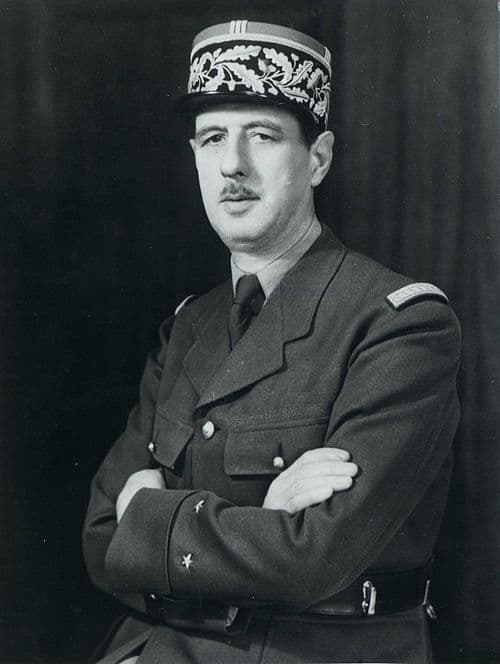
General de Gaulle, my former officer, commuted my death sentence to life imprisonment. He didn't want to have the old victor of Verdun shot; it seemed too harsh for France's memory. So I was locked away far from everything, on a small island battered by the ocean, the fortress of Île d'Yeu. I stayed there six years, and I died there in 1951. That is my lesson for you, my child: you can be a hero one day, and do immense harm afterwards. Glorious past never erases faults. That's why you must, every day, choose the right side.
Glorious past never erases faults.
This imaginary interview was generated by artificial intelligence from sources documented in Philippe Pétain's profile. It dramatises what the figure might have said based on what we know about them, but does not constitute attested historical testimony. For primary sources and factual documentation, refer to the full profile.