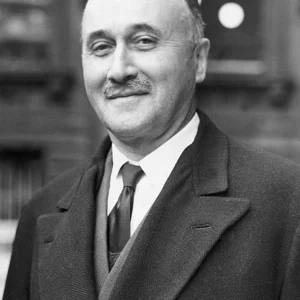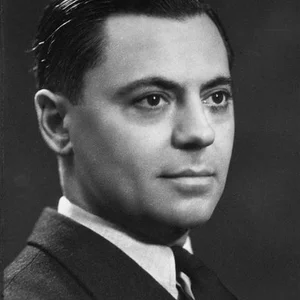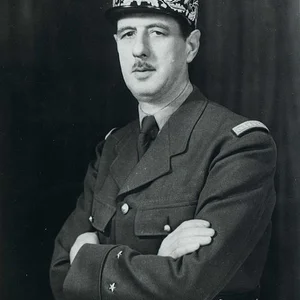

French military officer and statesman (1890–1970), leader of the French Resistance during World War II and founder of the Fifth Republic. A defining figure of the 20th century, he shaped French history through his unwavering commitment to national independence and the greatness of France.
Charles de Gaulle(1890 — 1970)
Charles de Gaulle
France
8 min read
Frequently asked questions
Famous Quotes
« France has lost a battle, but France has not lost the war.»
« I have understood you.»
« Greatness cannot be divided.»
Key Facts
- Appeal of June 18, 1940: launched his call to resistance from London in response to Pétain's armistice
- Leader of Free France (1940–1944): commanded the French forces in exile
- President of the Provisional Government (1944–1946): oversaw liberation and reconstruction
- Founder of the Fifth Republic (1958): established a new constitution strengthening executive power
- Algerian independence (1962): ended the Algerian War despite fierce opposition
Works & Achievements
De Gaulle's first work, analyzing the weaknesses of German command during the First World War. It reflects his early thinking on military strategy.
A visionary essay advocating a professional army equipped with armored divisions. Largely ignored in France, it was studied closely by German strategists.
A reflection on military leadership and the qualities of a commander. De Gaulle develops his vision of command grounded in character and decisiveness.
A masterful account of the 1940–1946 period, regarded as a major literary work. De Gaulle recounts Free France, the Liberation, and reconstruction in a powerful style.
Unfinished memoirs covering the return to power in 1958 and the early years of the Fifth Republic. The second volume was published posthumously.
Drafted under de Gaulle's impetus with Michel Debré, it establishes a strong executive and a president as guarantor of the institutions. It continues to structure French political life.
Under de Gaulle's presidency, France conducted its first nuclear test at Reggane in 1960, becoming the world's fourth nuclear power and asserting its strategic independence.
Anecdotes
On June 18, 1940, Charles de Gaulle delivered his famous appeal from London on the BBC airwaves, refusing the armistice signed by Pétain. Very few French people heard it live, but the text was republished in the press and became the founding symbol of the French Resistance.
During the liberation of Paris in August 1944, de Gaulle walked down the Champs-Élysées before an enormous crowd. Shots suddenly rang out, causing panic, but de Gaulle continued his march without flinching, impressing all witnesses with his composure.
A prisoner of war in Germany during the First World War, de Gaulle attempted to escape five times. Each time he was recaptured and transferred to increasingly secure fortresses, including the fortress of Ingolstadt, where he was held alongside the future Soviet marshal Tukhachevsky.
De Gaulle stood 1.96 metres tall, which made him instantly recognizable. He played on it with humor, once declaring: “I am a man who belongs to no one and who belongs to everyone.” His lanky silhouette and his képi became iconic symbols.
On August 22, 1962, de Gaulle escaped an assassination attempt at Petit-Clamart organized by the OAS, which opposed Algerian independence. His car was riddled with bullets, but he emerged unharmed. He reportedly commented with cool composure: “Those people shoot like pigs.”
Primary Sources
France is not alone! She is not alone! She has a vast Empire behind her. She can align with the British Empire that holds the sea and continues the struggle. She can, like England, make unlimited use of the immense industry of the United States.
All my life, I have had a certain idea of France. The feeling inspires it in me as much as reason does. The emotional part of me naturally imagines France like the princess in fairy tales or the Madonna in the frescoes on the walls.
It is here that on the soil of our ancestors the State reappeared; the legitimate State, because it rested on the interest and the feeling of the nation. New institutions must compensate for the effects of our perpetual political turmoil.
I have understood you! I know what has happened here. I see what you wanted to do. I see that the road you have opened in Algeria is that of renewal and fraternity.
Being the holder of national and republican legitimacy, I have considered, over the past twenty-four hours, all eventualities, without exception, that would allow me to maintain it. I have made my decisions. I am dissolving the National Assembly today.
Key Places
Village in Haute-Marne where de Gaulle acquired the property of La Boisserie in 1934. It was here that he retreated after each departure from power and where he died in 1970.
It was from the BBC studios in London that de Gaulle delivered the Appeal of 18 June 1940, the founding act of Free France.
Official residence of the President of the French Republic, where de Gaulle held power from 1959 to 1969, shaping the institutions of the Fifth Republic.
Charles de Gaulle was born on 22 November 1890 at 9 rue Princesse in Lille, in the home of his maternal grandparents, today converted into a museum.
Capital of French Algeria where de Gaulle established the French Committee of National Liberation in 1943, and where he delivered his famous speech "Je vous ai compris" in 1958.
The first French town to be liberated, which de Gaulle visited on 14 June 1944, and where he delivered in 1946 a founding speech laying the groundwork for the Fifth Republic.
Typical Objects

The distinctive military cap worn by de Gaulle during the war, which became a symbol of Free France and the Resistance.

The instrument through which de Gaulle delivered his Appeal of June 18, 1940, which became the symbol of resistance against Nazi occupation.

The emblem chosen by de Gaulle for Free France, in opposition to the Nazi swastika. It remains associated with Gaullism and the Resistance.

The founding text drafted in 1958 under de Gaulle's impetus, establishing a strong presidential regime that still governs France today.

The official car of President de Gaulle, made famous by the Petit-Clamart assassination attempt in 1962, in which it was riddled with bullets.

The military dress worn by de Gaulle at official ceremonies, a reminder of the rank he obtained on a temporary basis in May 1940.
School Curriculum
Vocabulary & Tags
Key Vocabulary
Tags
Daily Life
Morning
De Gaulle rose early, around 7 a.m., and began his day with a careful reading of the press and dispatches. He had a simple breakfast before settling down to work in his office, whether at the Élysée or at La Boisserie. He devoted his mornings to drafting speeches and studying important files.
Afternoon
His afternoons were structured around audiences, cabinet meetings, and sessions with his advisors. De Gaulle received ambassadors, ministers, and military chiefs with strict punctuality. He placed great importance on one-on-one meetings, where he listened before making decisions.
Evening
In the evenings, de Gaulle dined with family when possible, particularly at Colombey with his wife Yvonne. He would sometimes watch television and read extensively — history, classical literature, memoirs. He went to bed relatively early, maintaining the strict personal discipline inherited from his military training.
Food
De Gaulle had simple tastes when it came to food. He appreciated traditional French bourgeois cuisine: pot-au-feu, blanquette de veau, cheeses. He drank wine in moderation with meals. At La Boisserie, Yvonne de Gaulle oversaw an unpretentious family table.
Clothing
On duty, de Gaulle wore his general's uniform with impeccable rigor, always topped with his képi. In civilian dress, he favored classic dark suits of French cut. At Colombey, he dressed more simply, though always maintaining a neat and understated appearance.
Housing
La Boisserie, in Colombey-les-Deux-Églises, had been the de Gaulle family home since 1934 — a large stone bourgeois house surrounded by meadows and forests. In Paris, he resided at the Élysée Palace during his presidency. The interior of La Boisserie reflected classical tastes, with a vast library and a study overlooking the Champagne countryside.
Historical Timeline
Period Vocabulary
Visual Style
Un style visuel empreint de grandeur républicaine, mêlant l'esthétique monumentale des institutions françaises aux contrastes dramatiques de la photographie de guerre, dans les couleurs du drapeau tricolore.
Sound Ambience
L'univers sonore de de Gaulle mêle les grésillements de la radio de guerre, les acclamations populaires des grands moments historiques et le calme solennel des bureaux du pouvoir républicain.
Liens externes & ressources
Références
Œuvres
La Discorde chez l'ennemi
1924
Vers l'armée de métier
1934
Le Fil de l'épée
1932
Mémoires de guerre (3 tomes)
1954-1959
Mémoires d'espoir (2 tomes)
1970-1971
Constitution de la Ve République
1958
Force de frappe nucléaire française
1960