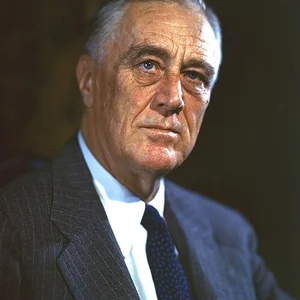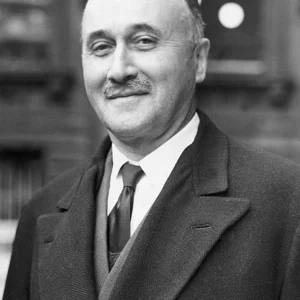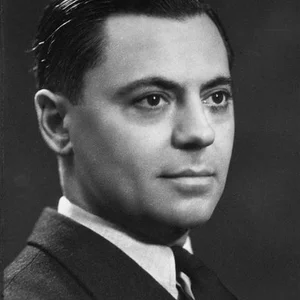

French senior civil servant (1899–1943), Jean Moulin is one of the most prominent figures of the French Resistance. He unified the resistance movements and created the National Council of the Resistance (CNR) before being arrested and tortured to death by the Nazis.
Jean Moulin(1899 — 1943)
Jean Moulin
France
9 min read
Frequently asked questions
Key Facts
- 1940–1941: Creates the first resistance movement 'Liberté' in the occupied zone
- 1942: Sent by de Gaulle to unify the French resistance movements
- May 27, 1943: Presides over the first plenary session of the National Council of the Resistance in Paris
- June 21, 1943: Arrested in Caluire-et-Cuire (Rhône) by the Gestapo
- July 8, 1943: Dies from torture inflicted by the Nazis
Works & Achievements
Jean Moulin succeeded in federating the three main resistance movements of the southern zone (Combat, Libération, Franc-Tireur) into a single structure, the United Resistance Movements, bringing organizational coherence to the clandestine struggle.
Jean Moulin's major political achievement, the CNR brought together for the first time all the forces of the interior resistance — movements, parties and unions — under the authority of General de Gaulle, legitimizing Free France in the eyes of the Allies.
An account written by Jean Moulin about the events of June 1940 in Chartres, a personal testimony of his refusal to yield to the Germans and his suicide attempt to avoid betraying his comrades. A founding document of his resistance legend.
Detailed reports sent to de Gaulle in London, providing a precise assessment of the resistance forces in occupied France and proposing a unification strategy. These documents formed the basis of the mission entrusted to Moulin.
Before the war, Jean Moulin contributed to satirical magazines such as 'Le Rire' as an illustrator under the pseudonym 'Romanin'. These works bear witness to a genuine artistic talent that he would later use as a cover during the Resistance.
Anecdotes
In June 1940, Jean Moulin was prefect of Eure-et-Loir in Chartres. Arrested by the Germans who wanted him to sign a document falsely accusing Senegalese soldiers of massacres, he categorically refused. To avoid yielding under torture and compromising his word, he attempted to cut his throat with a shard of glass. He survived, but would always wear scarves and high collars to conceal his scar.
To conceal his clandestine activities, Jean Moulin used an art gallery in Nice as cover, operating under the pseudonym 'Romanin'. A painting enthusiast and talented draughtsman, he had even contributed in his youth to magazines under the pseudonym 'Romanin'. His genuine love of art allowed him to play this role convincingly in the eyes of the Germans.
On 27 May 1943, Jean Moulin gathered in Paris, at 48 rue du Four, the representatives of the main resistance movements, political parties and trade unions to found the Conseil National de la Résistance (National Council of the Resistance). This was the first plenary meeting of the CNR — an unprecedented organisational feat conducted underground — which symbolically placed the entire domestic resistance under the authority of General de Gaulle.
On 21 June 1943, Jean Moulin was arrested during a meeting in Caluire-et-Cuire, near Lyon, at the surgery of Doctor Dugoujon. Handed over to Klaus Barbie, head of the Gestapo in Lyon nicknamed the 'Butcher of Lyon', he was savagely tortured but revealed nothing. He died on 8 July 1943 aboard a train transferring him to Germany, taking all his secrets with him.
On 19 December 1964, Jean Moulin's ashes were transferred to the Panthéon at the initiative of General de Gaulle. André Malraux, then Minister of Culture, delivered a speech that has since become famous, in which he evoked 'that face black with blows' and addressed Moulin directly: 'Enter here, Jean Moulin, with your terrible retinue.' This moment marked the entry of the Resistance into official national memory.
Primary Sources
I will not sign. Let them do with me as they will. I cannot cover with my signature a lie that would dishonor the French army.
The resistance movements, despite their political differences, are driven by the same spirit: to serve Free France and prepare the liberation of the territory. Their unification is possible and necessary.
In order to promote the reforms indispensable to the restoration of a true democracy, the CNR calls for the establishment of a genuine economic and social democracy, implying the removal of the great economic and financial feudal powers from the direction of the economy.
I know the risks I am taking. But how could I do otherwise? I cannot stand idle while France suffers. If I do not return, know that I died for something that was worth it.
Enter here, Jean Moulin, with your terrible cortege. With those who died in the cellars without having spoken, like you; and even, which is perhaps more atrocious, having spoken.
Key Places
Jean Moulin's birthplace, where he grew up in a republican and secular family. His father, a history teacher, instilled in him from an early age a love of France and republican values.
It was here, in June 1940, that Jean Moulin carried out his first act of resistance by refusing to sign a false German document, at the risk of his life.
Headquarters of General de Gaulle's Free France, where Jean Moulin travelled in late 1941 and received his historic mission: to unify the internal resistance movements under Gaullist authority.
Jean Moulin opened an art gallery here under the name 'Romanin' as a cover for his clandestine activities in the initially unoccupied zone.
In the surgery of Doctor Dugoujon, Jean Moulin was arrested on 21 June 1943 by the Gestapo led by Klaus Barbie, in what remains one of the greatest tragedies of the French Resistance.
Republican mausoleum where Jean Moulin's ashes were transferred on 19 December 1964, a symbol of his consecration as a major figure in French national memory.
Typical Objects

Under the aliases 'Rex', 'Max', or 'Monsieur Mercier', Jean Moulin used false identity cards crafted by resistance members to move covertly through occupied France without being recognized.

To conceal the scar left on his neck from his attempt to slash his own throat in 1940, Moulin permanently wore a scarf or high-collared shirts, which became one of his characteristic sartorial traits.

Resistance agents used small cameras to microfilm secret documents, plans, or information to be transmitted to London through clandestine networks.

Communications between the internal resistance and London passed through hidden radio sets, whose operators risked their lives with every transmission, detectable by German radio direction-finding.

Jean Moulin had been a talented draughtsman and watercolourist since his youth; this genuine passion served as a credible cover as an art gallery owner in Nice to conceal his clandestine activities.
Reports and messages destined for de Gaulle in London were condensed onto microfilms, hidden inside innocuous objects such as pens or matchboxes to pass through German checkpoints.
📷 CC BY-SA 4.0 · Wikimedia Commons ↗School Curriculum
Vocabulary & Tags
Key Vocabulary
Tags
Concept
Daily Life
Morning
During his clandestine life (1942-1943), Jean Moulin rises early in a temporary room or at the home of a resistance member sheltering him. He checks his forged papers and memorizes security instructions before going out, regularly changing his place of residence to avoid being detected by the Gestapo.
Afternoon
His afternoons are devoted to secret meetings with the leaders of resistance movements, often in discreet cafés or apartments. He drafts coded reports for London, coordinates fund transfers, and mediates disputes between the various political factions of the resistance.
Evening
In the evening, Jean Moulin clandestinely listens to BBC broadcasts, particularly the coded 'personal messages'. He reads, sometimes draws, and prepares the agendas for upcoming meetings, knowing that a single mistake could mean his arrest and death.
Food
Like all French people under the Occupation, Moulin lives under strict rationing: low-quality bread, vegetables, little meat or fat. His constant travel and permanent state of tension leave little room for regular meals; he often eats modestly at the homes of sympathizers who shelter him.
Clothing
Jean Moulin carefully maintains his appearance to pass as an ordinary bourgeois and go unnoticed. He wears a plain suit, a wool overcoat, and always a scarf or high collar to conceal the scar on his neck — a detail that could have betrayed him to officers aware of his true identity.
Housing
During his clandestine activities, Moulin has no fixed residence. He frequently changes lodgings, staying with resistance members or in borrowed apartments. As cover, he maintains the appearance of an established art gallery owner, with an official address in Nice and later in Paris to justify his movements.
Historical Timeline
Period Vocabulary
Visual Style
Esthétique du noir et blanc historique, entre photographie documentaire de l'Occupation et affiche de la Résistance : contrastes saisissants, sobriété et tension dramatique.
Sound Ambience
Ambiance de la France occupée : murmures de réunions clandestines, crachotements des radios de la BBC, pas des patrouilles allemandes sur les pavés, silence tendu de la clandestinité.
Liens externes & ressources
Références
Œuvres
Unification des mouvements de résistance (Mouvements Unis de la Résistance - MUR)
1943
Création du Conseil National de la Résistance (CNR)
27 mai 1943
Premier Combat (mémoires)
Écrit en 1940, publié posthumément
Rapport sur la situation de la Résistance intérieure
1941-1942
Dessins et aquarelles satiriques (sous le pseudonyme 'Romanin')
Années 1920-1930