The sufra
Among the Arabs of early Islam, meals are not eaten at a table but around the sufra: a large piece of leather or cloth spread directly on the ground, upon which communal dishes are placed. People sit in a circle, eat with the right hand from the shared dish, and begin and end in the name of God. There is no starter-main-dessert service: bread, dates, milk, and on feast days, meat, all arrive together. The sufra of the governor of Egypt, more abundantly filled, mingles the austerity of the Arabian desert with the abundance of the Nile.
Signature : The date (tamr) and clarified butter (samn)
The date is the beating heart of this cuisine: food, sweetness, currency, and campaign provision. Combined with samn (melted and clarified butter that keeps without refrigeration) and milk, it nourishes both the Bedouin and the sailor of the fleet. Where medieval Europe uses honey, Arabia uses the date.
Abdallah ibn Saad at the table
5 period recipes
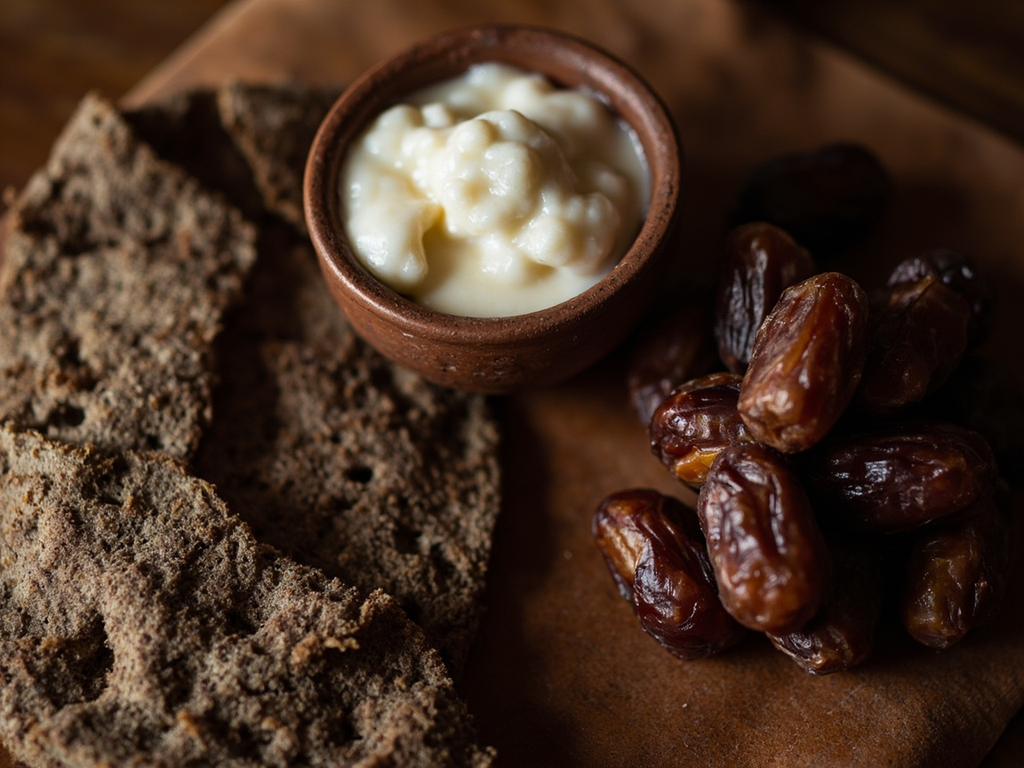 Everyday
Barley bread, dates, and curdled milk
Morning sufra — the daily staple
🍯 🧂· 40 min
View the recipe
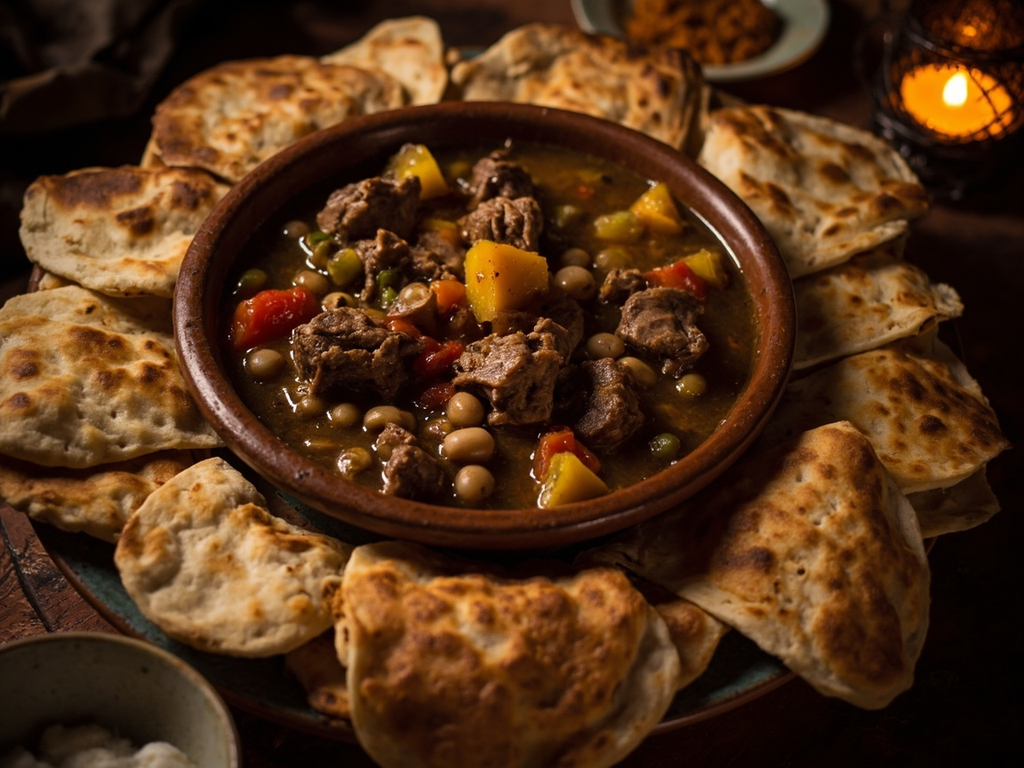 Festive
Tharid of mutton with soaked bread
Sufra of feast days — the shared dish of honor
🧂 🍄· 2 h 30
View the recipe
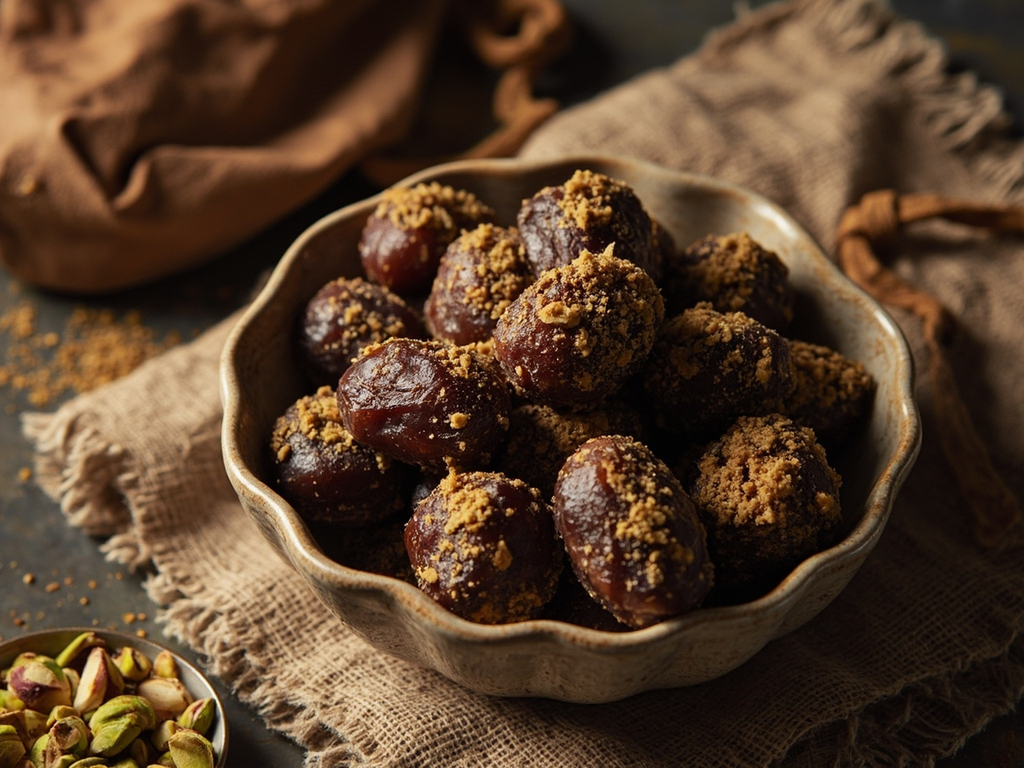 Travel
Date balls with samn and barley flour
Zad al-rahil — travel and sea provisions
🍯· 30 min
View the recipe
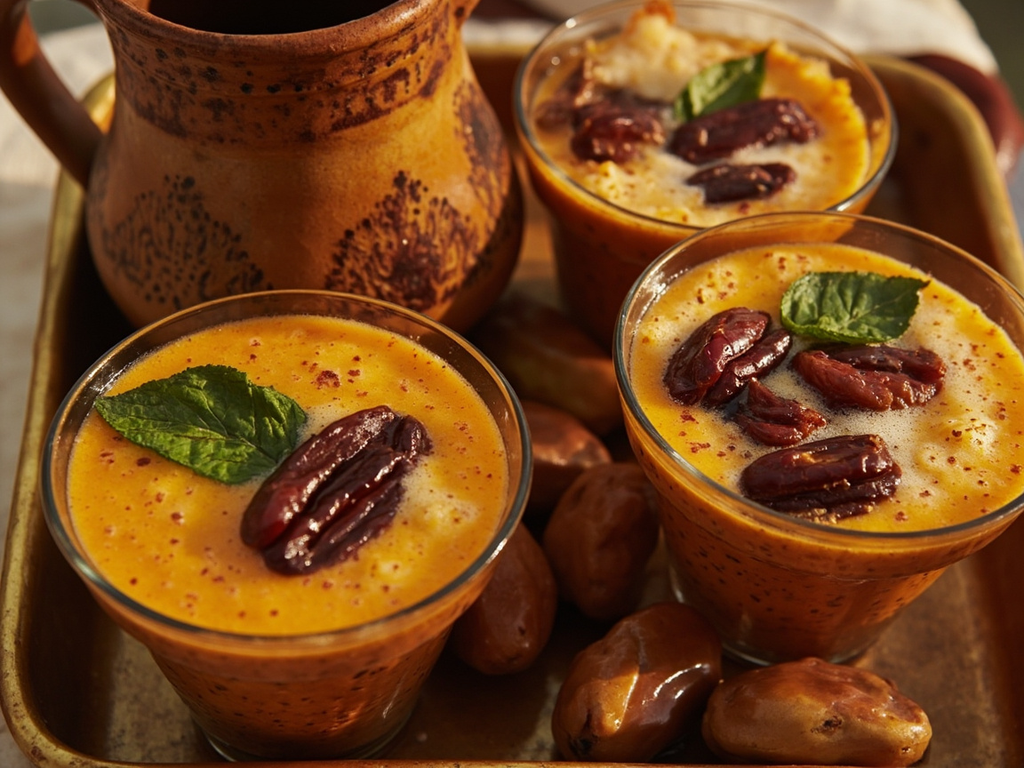 Drink
DrinkNabidh of dates (sweet non-fermented infusion)
Charbat — the sufra drink
🍯 🍋· 10 min (+ 4 to 8 h infusion)
View the recipe
 Preserving
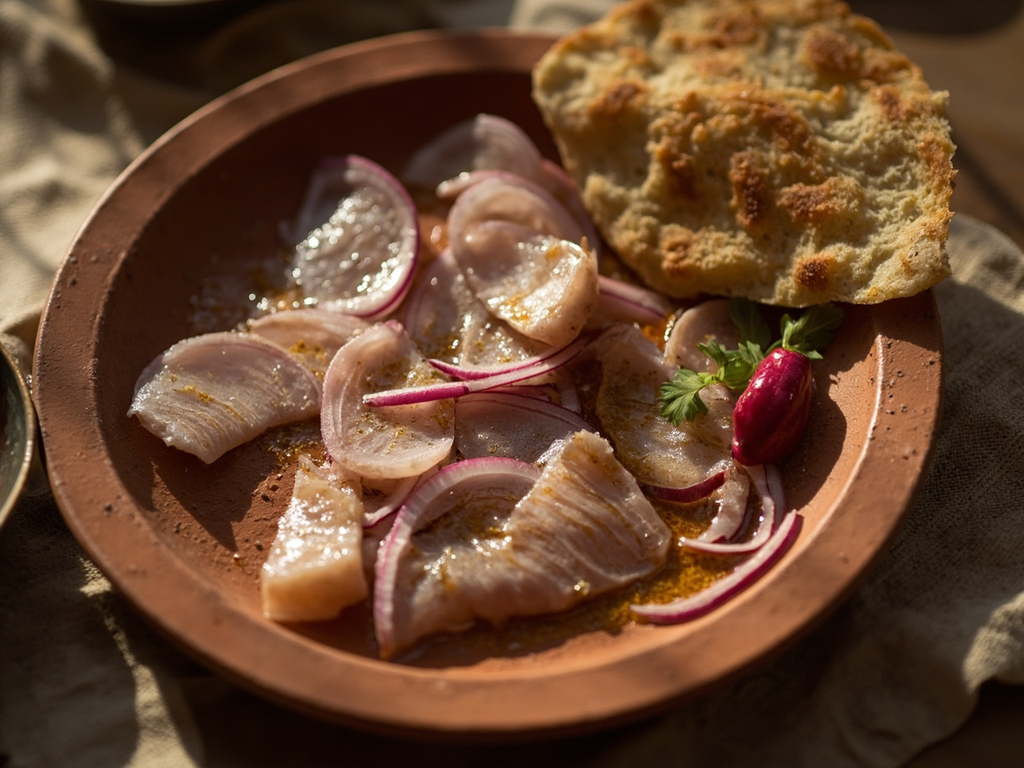
Salt-cured Nile fish, inspired by Egyptian salting traditions
Mâ'ida of Egypt — the table of the river, richer than the desert
🧂 🫙· 30 min (+ 24 to 36 h salting)
View the recipe