 flip
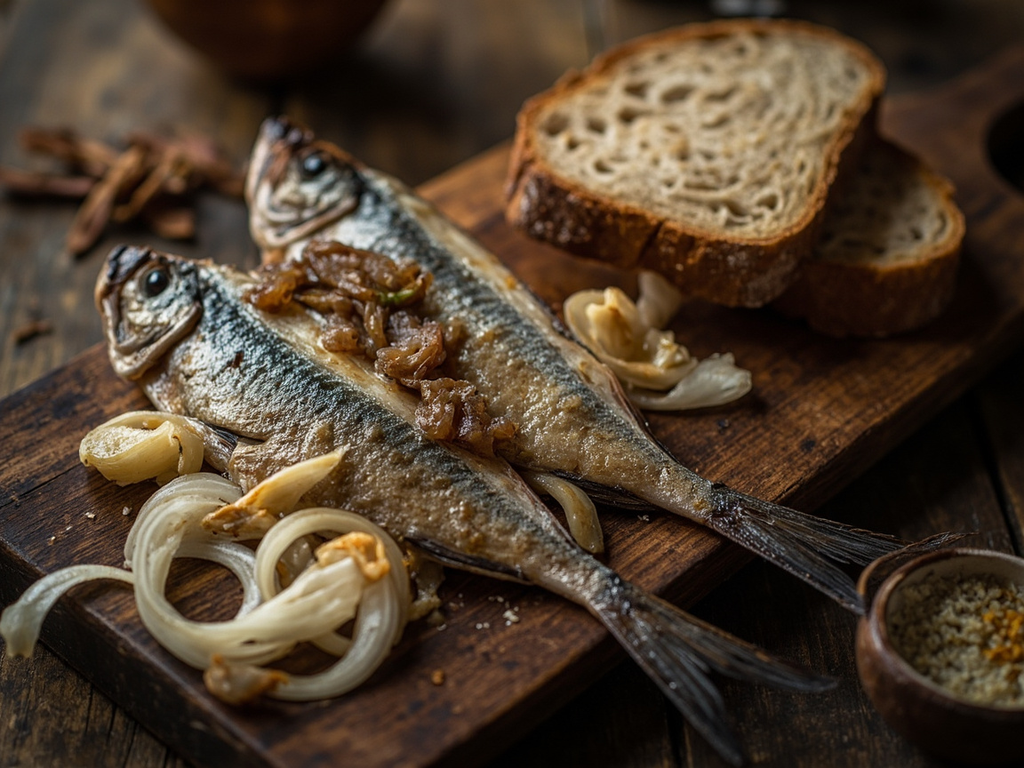
flipSalt-cured Nile fish, inspired by Egyptian salting traditions
Salt-cured Nile fish, inspired by Egyptian salting traditions
Why this dish? Having become governor of Egypt and settled in Fustat, Abdallah discovers a land far more generous than Arabia: the Nile, its fish, its broad beans, and its vegetables. Salted fish, a millennia-old technique along the Nile for preserving catches, symbolizes this table of conquered Egypt.
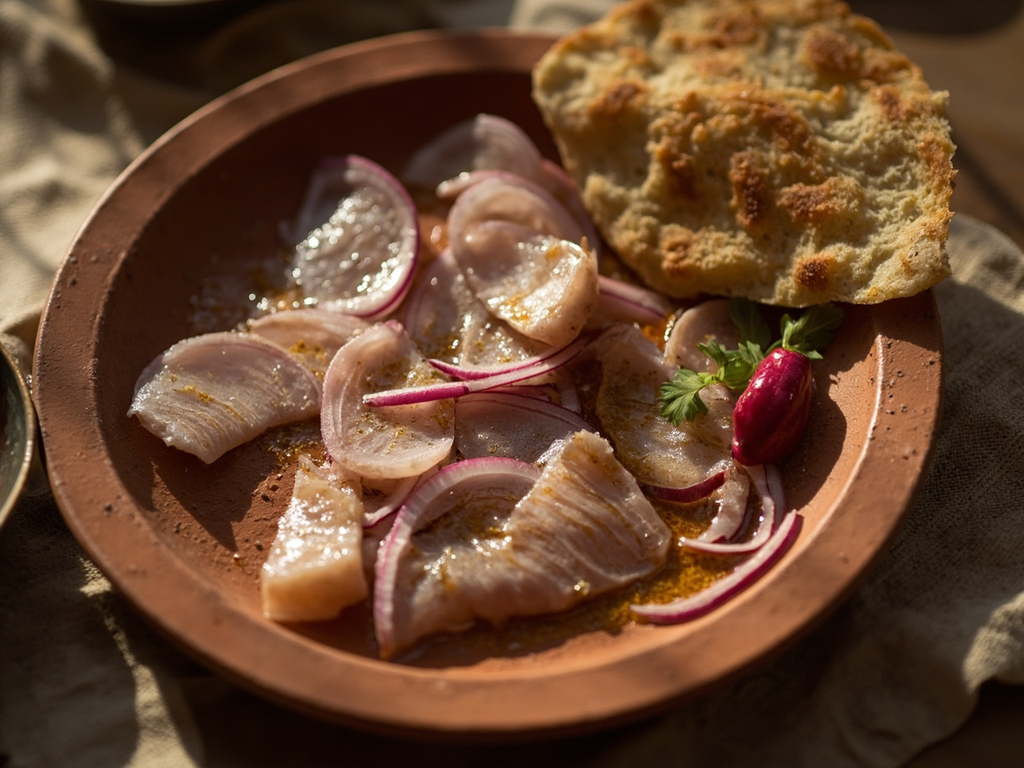
Inspired by ancient Nile fish salting: a fish cleaned, salted, and left to mature for long preservation, then served in thin slices with onion, oil, and bread. A powerful, salty, fermented taste to be tamed with sweetness.
I who first knew only the dried fish of the rare oases have found in Egypt a river so full of fish that the catch is salted to last for moons. The people of the Nile have known this art since the ancient kings: the fish is gutted, buried in salt, and time does the rest. The taste is strong, my friend — accompany it with bread, raw onion, and a drizzle of oil, and drink plenty of water afterward. This is the food of a rich land, far from the dry barley of my youth.
- •Nile fish (mullet, tilapia) — according to catch (base to preserve)
- •Salt in abundance — a lot (preservation and maturation)
- •Raw onion — separate (accompaniment)
- •Oil (olive or sesame) — a drizzle (seasoning)
- •Bread — as needed (support)
Salt-cured Nile fish, inspired by Egyptian salting traditions
Inspired by ancient Nile fish salting: a fish cleaned, salted, and left to mature for long preservation, then served in thin slices with onion, oil, and bread. A powerful, salty, fermented taste to be tamed with sweetness.
Why this dish? Having become governor of Egypt and settled in Fustat, Abdallah discovers a land far more generous than Arabia: the Nile, its fish, its broad beans, and its vegetables. Salted fish, a millennia-old technique along the Nile for preserving catches, symbolizes this table of conquered Egypt.
I who first knew only the dried fish of the rare oases have found in Egypt a river so full of fish that the catch is salted to last for moons. The people of the Nile have known this art since the ancient kings: the fish is gutted, buried in salt, and time does the rest. The taste is strong, my friend — accompany it with bread, raw onion, and a drizzle of oil, and drink plenty of water afterward. This is the food of a rich land, far from the dry barley of my youth.
Ingredients (period version)
- Nile fish (mullet, tilapia) — according to catch (base to preserve)
- Salt in abundance — a lot (preservation and maturation)
- Raw onion — separate (accompaniment)
- Oil (olive or sesame) — a drizzle (seasoning)
- Bread — as needed (support)
Ingredients
- Very fresh mullet, sea bream, or mackerel fillets — 400 g (base to salt)
- Coarse salt — 500 g (for burying) (salting)
- Thinly sliced red onion — 1 (accompaniment)
- Olive oil — 2 tbsp (seasoning)
- Lemon juice — 1/2 (softens and 'cooks' the fish)
- Cumin — a pinch (spice)
- Flatbread — as needed (support)
Method
- Safe and quick version (gravlax express, without extended fermentation): bury the very fresh fillets in coarse salt, refrigerated.
- Let salt for 24 to 36 hours; the fish releases water and firms up.
- Rinse thoroughly with cold water, dry, then slice thinly.
- Season with olive oil, lemon juice, a pinch of cumin, and serve with raw onion and bread.
- Important: to remain safe, do not attempt the long room-temperature fermentation of the ancient version — refrigerated salting recreates the taste without the risk.
How it was made : The banks of the Nile practiced fish salting since Pharaonic Egypt, and the tradition has continued (fesikh, salted and fermented mullet, is its living heir, associated with the Sham el-Nessim festival). In the 7th century, these salted fish were part of the daily fare of a riverine Egypt renowned for its abundance.
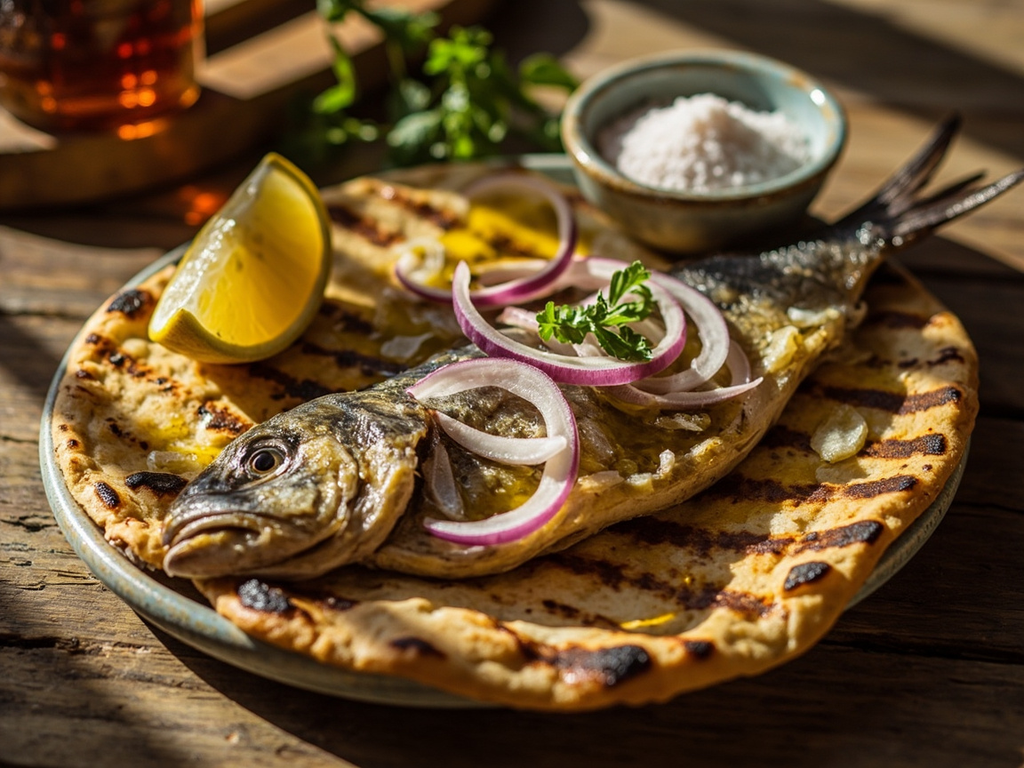
The contemporary twist : Presented in thin slices like 'Nile sashimi' on grilled bread, with pickled onion and a drizzle of oil — a respectful nod to a five-thousand-year-old craft.
Sources : Lilia Zaouali, L'Islam à table. Du Moyen Âge à nos jours, La Découverte, 2004
Abdallah ibn Saad · Charactorium