Agostino Tassi(1580 — 1644)
Agostino Tassi
États pontificaux
8 min read
Italian painter (c. 1578–1644), specialist in landscape and seascape painting. He was the master of Claude Lorrain and contributed to the development of atmospheric perspective in Roman Baroque painting.
Frequently asked questions
Key Facts
- Born c. 1578 in Perugia or Florence, died 1644 in Rome
- Specialized in landscapes, seascapes, and quadratura (architectural illusion in fresco)
- Master of Claude Lorrain, whom he trained in Rome c. 1613–1617
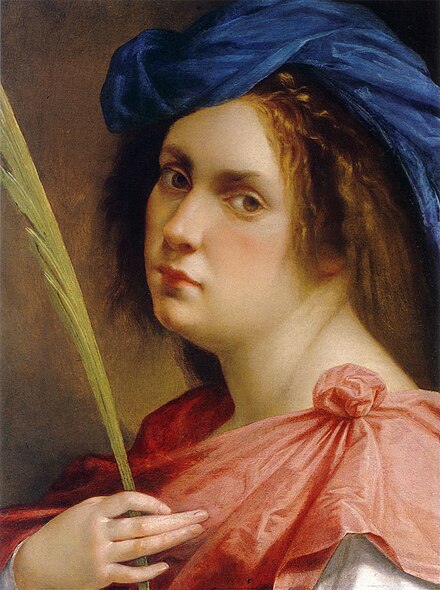
- Convicted of the rape of Artemisia Gentileschi at the 1612 trial, a celebrated case in art history
- Worked for Cardinal Scipione Borghese and painted frescoes in several Roman palaces
Works & Achievements
A masterpiece of Baroque quadratura: Tassi painted illusionistic architectural frescos on the walls of the grand hall of the pontifical palace, still visible today. This decoration exemplifies his absolute mastery of simulated perspective and imaginary space.
In collaboration with Guercino, Tassi created the trompe-l'œil architectural frames that showcase the celebrated Aurora on the ceiling. This collective work is one of the great monuments of Roman Baroque fresco painting.
Throughout his career, Tassi produced seascapes and coastal landscapes that had a lasting influence on Claude Lorrain. These paintings, scattered across several European museums, are distinguished by their atmospheric light and characteristically luminous skies.
One of Tassi's best-documented seascapes, it showcases his talent for capturing light reflected on water and the bustle of a Mediterranean port — a theme that would become the very signature of his pupil Claude Lorrain.
Tassi contributed to decorative works in the Vatican galleries as part of the major building campaigns of Paul V, applying his architectural perspective techniques alongside other renowned painters.
Anecdotes
In 1611, Agostino Tassi was accused of raping Artemisia Gentileschi, a talented young painter and the daughter of his colleague Orazio. The trial that followed in 1612 was one of the most sensational in the history of Baroque art: to test the credibility of her testimony, Artemisia was subjected to the rope torture (the sibille), which she endured with courage. Tassi was ultimately sentenced to banishment, a punishment that was rarely enforced.
Agostino Tassi was the most influential master of Claude Gellée, known as Claude Lorrain, who would become one of the greatest landscape painters in Western history. The young Lorrain, who arrived in Rome around 1612, learned from Tassi the art of golden light, maritime horizons, and atmospheric perspective — a transmission that revolutionized European landscape painting for generations.
A specialist in quadratura — the art of painting trompe-l'œil architectural illusions to visually expand a space — Tassi decorated several grand Roman palaces. For the Quirinal Palace, residence of the popes, he created architectural friezes of near-mathematical precision that astonished visitors, giving them the impression of looking through real windows opening onto an imaginary landscape.
Despite his immense talent, recognized by Rome's greatest patrons, Tassi had a sulfurous reputation in artistic circles. Involved in numerous brawls and lawsuits throughout his life, he embodied the Baroque paradox of the brilliant yet ungovernable artist — one whom his commissioners, cardinals and princes alike, had to simultaneously rein in and protect in order to benefit from his exceptional art.
Primary Sources
Agostino Tassi, pittore romano assai valente nelle marine e nelle prospettive, ha lavorato in molti luoghi di Roma con grande lode de' Signori e Principi che lo hanno adoperato.
Constitutus Augustinus Tassius pictor… negavit se cognovisse carnaliter dictam Artemisiam, et dixit se esse innocentem de omnibus sibi obiectis.
Agostino Tassi pittore di prospettive et paesi si obbliga di dipingere le facciate della sala grande del Palazzo di Monte Cavallo con prospettive et paesi a fresco.
Agostino Tassi, pittore, ha violato mia figlia Artemisia in casa mia, con grande disonore della nostra famiglia, e supplico Vostra Santità di fargli rendere giustizia.
Key Places
Around 1616–1617, Tassi created his most significant *quadratura* decorations here: trompe-l'œil architectural schemes that give the illusion of expanding the great hall of the pontifical palace. This decoration, still visible today, is his best-preserved masterpiece.
In 1621, Tassi collaborated with Guercino on the decoration of this casino for Cardinal Ludovico Ludovisi, nephew of Pope Gregory XV. He painted the trompe-l'œil architectural frames that set off Guercino's celebrated *Aurora* on the ceiling.
This Tuscan port city was frequented by Tassi and inspired his celebrated seascapes. There he observed the great merchant and military vessels that fueled his imagination of the sea, a vision he later passed on to his pupil Claude Lorrain.
Tassi lived in this working-class neighborhood of Rome, a hub for many artists and craftsmen. It was here that the Gentileschi affair unfolded in 1611, and where his pupil Claude Lorrain lodged during his apprenticeship.
Tassi contributed to the decoration of this Roman palazzo near the Quirinal, helping to embellish one of the city's most refined Baroque ensembles, commissioned by prominent prelates of the Roman Curia.