 flip
flipLork, the Seven Fruits of Creation
Lork, the Seven Fruits of Creation
Why this dish? Lork — a mix of dried fruits and nuts distributed during Zoroastrian ceremonies, especially for the commemoration of souls and festivals — is a characteristic offering of the worship of Ahura Mazda. The fruits, which keep for a long time, celebrate the abundance of the good material world created by the god.
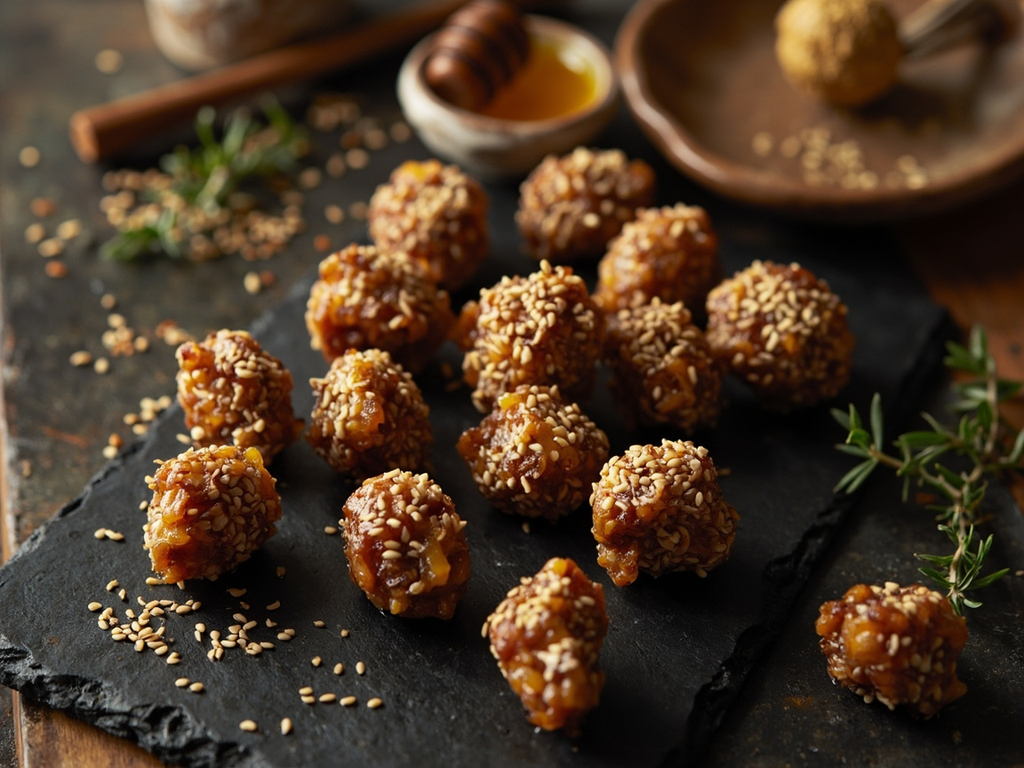
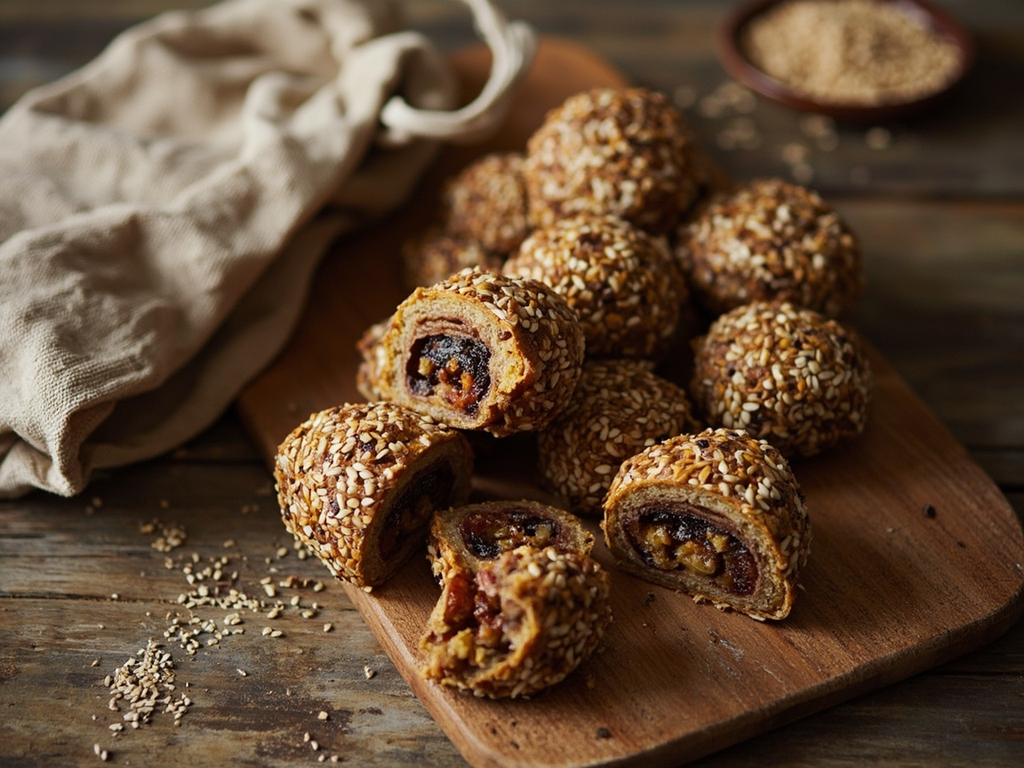
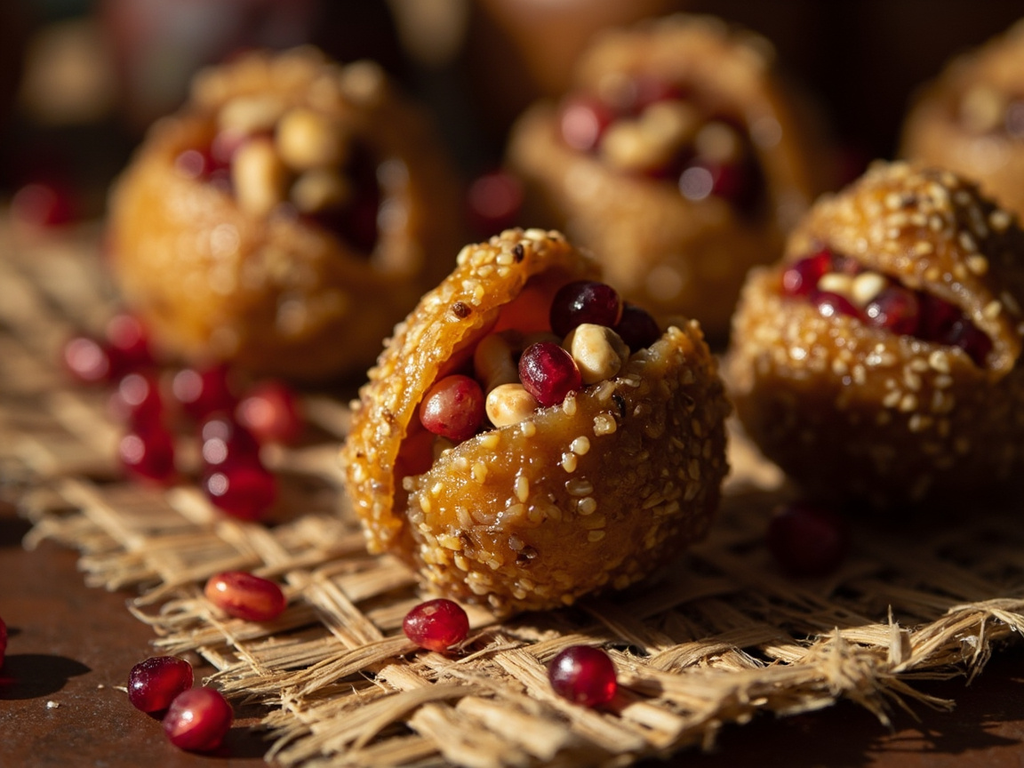
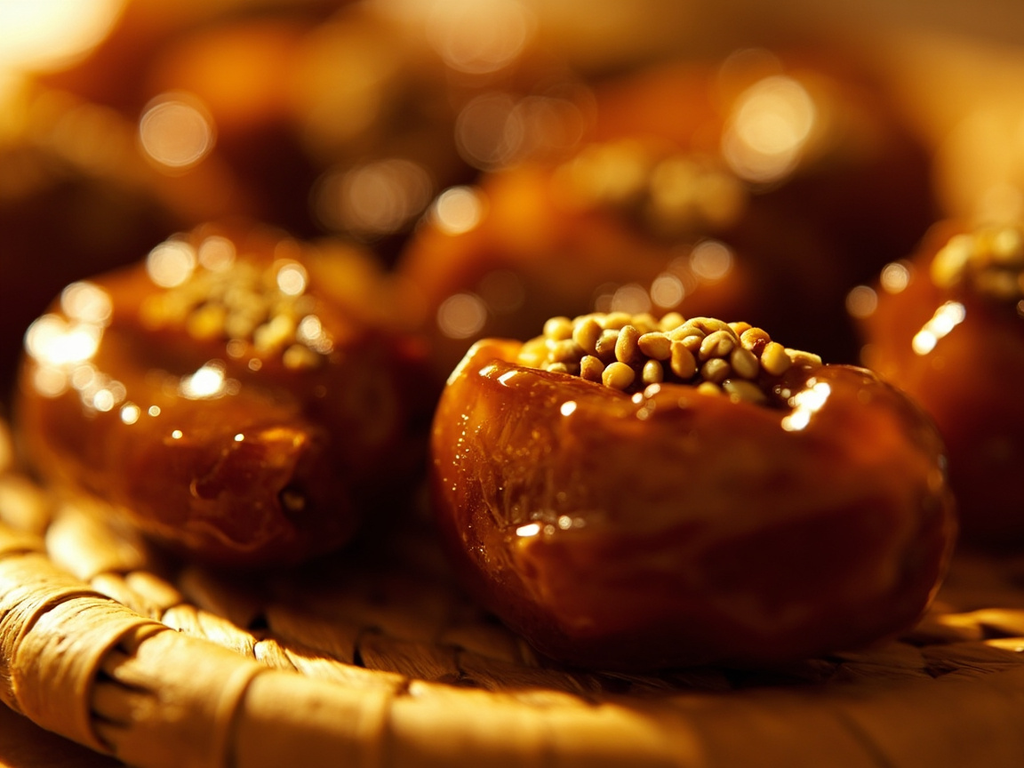
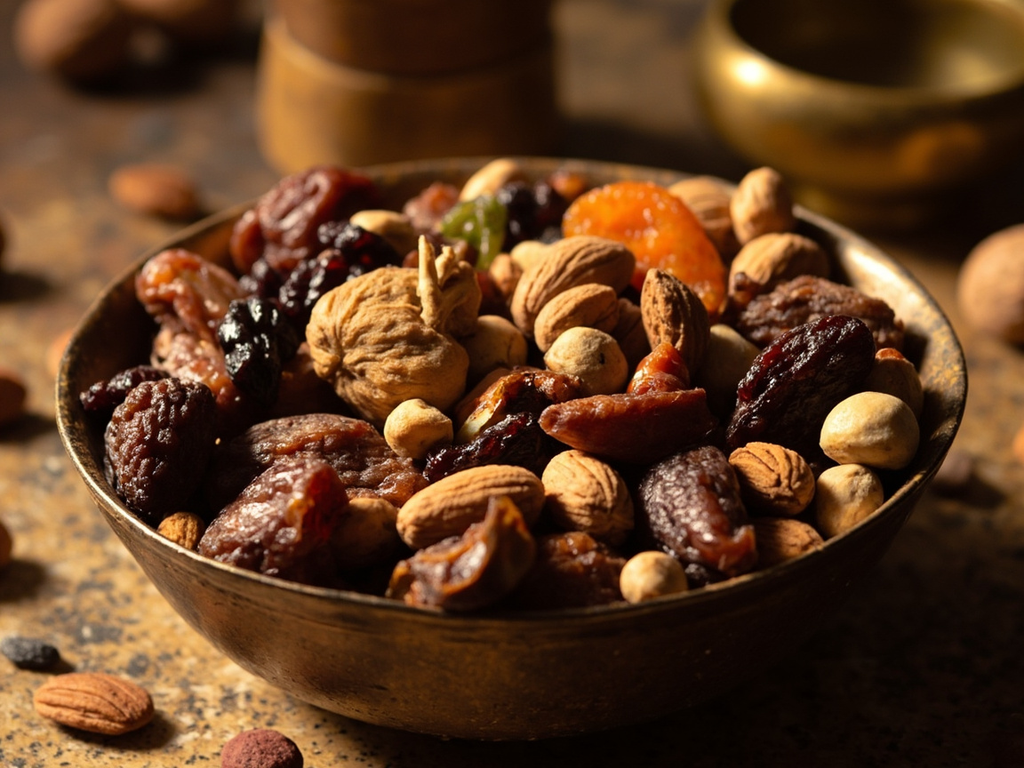
A fragrant mix of dried fruits and nuts — dates, figs, raisins, almonds, pistachios, walnuts, apricots — that is blessed, shared, and kept for a long time: the offering of creative generosity.
See how I have filled the world with sweets that do not perish quickly! When My followers gather to honor souls or celebrate a festival, they mix in a single dish seven fruits from My orchards, dried in the summer sun to last through winter. They are blessed before the flame, then each takes a handful and shares — for what I have given in abundance is never kept for oneself alone. Carry some in your pouch: they will tell you, on the road, that the good world follows you.
- •Dried dates — a handful (dense sweetness)
- •Dried figs — a handful (sweet softness)
- •Raisins — a handful (small sweet notes)
- •Almonds — a handful (crunch)
- •Pistachios — a handful (green nut)
- •Walnuts — a handful (richness)
- •Dried apricots — a handful (gentle acidity)
Lork, the Seven Fruits of Creation
A fragrant mix of dried fruits and nuts — dates, figs, raisins, almonds, pistachios, walnuts, apricots — that is blessed, shared, and kept for a long time: the offering of creative generosity.
Why this dish? Lork — a mix of dried fruits and nuts distributed during Zoroastrian ceremonies, especially for the commemoration of souls and festivals — is a characteristic offering of the worship of Ahura Mazda. The fruits, which keep for a long time, celebrate the abundance of the good material world created by the god.
See how I have filled the world with sweets that do not perish quickly! When My followers gather to honor souls or celebrate a festival, they mix in a single dish seven fruits from My orchards, dried in the summer sun to last through winter. They are blessed before the flame, then each takes a handful and shares — for what I have given in abundance is never kept for oneself alone. Carry some in your pouch: they will tell you, on the road, that the good world follows you.
Ingredients (period version)
- Dried dates — a handful (dense sweetness)
- Dried figs — a handful (sweet softness)
- Raisins — a handful (small sweet notes)
- Almonds — a handful (crunch)
- Pistachios — a handful (green nut)
- Walnuts — a handful (richness)
- Dried apricots — a handful (gentle acidity)
Ingredients
- Pitted dates — 60 g (sweet base)
- Dried figs — 50 g, quartered (softness)
- Raisins — 40 g (sweetness)
- Whole almonds — 50 g (crunch)
- Shelled pistachios — 40 g (color and crunch)
- Walnut halves — 40 g (roundness)
- Dried apricots — 50 g, in pieces (gentle acidity)
- Roasted chickpeas (nokhodchi) — 30 g (optional) (seventh element, crunchy and sweet-salty)
Method
- If desired, lightly toast the almonds and walnuts in a dry pan for a few minutes to revive their flavor, then let cool.
- Cut the figs and apricots into bite-sized pieces.
- Mix all the dried fruits and nuts in a large bowl, in roughly equal parts.
- Gently toss by hand to distribute the seven elements evenly.
- Present in a bowl for sharing, or divide into small portions to take away; keeps for several weeks in a dry, dark place.
How it was made : Lork (sometimes close to sirog) is a real Zoroastrian offering: an assortment of dried fruits and nuts, often in seven varieties, consecrated during ceremonies for the deceased (such as Frawardigan) and festivals. Easy to store and transport, these fruits embodied the goodness of the material world created by Ahura Mazda — and were always shared, never kept for oneself.
The contemporary twist : Slip the lork into small light-colored fabric pouches tied with a cord: a "travel offering" to distribute, faithful to the spirit of sharing of the ceremony.
Sources : Mary Boyce, A Persian Stronghold of Zoroastrianism, Oxford University Press, 1977 (offerings and soul festivals) · Jamsheed K. Choksy, Purity and Pollution in Zoroastrianism, University of Texas Press, 1989 · Jenny Rose, Zoroastrianism: An Introduction, I.B. Tauris, 2011
Ahura Mazda · Charactorium