 flip
flipIced Rose Sharbat with Sandalwood
Iced Rose Sharbat with Sandalwood
Why this dish? Akbar organized the transport of ice and snow from the northern mountains to his court in the burning plains of Agra and Fatehpur Sikri. An iced, perfumed drink was, in his time, a truly imperial luxury.
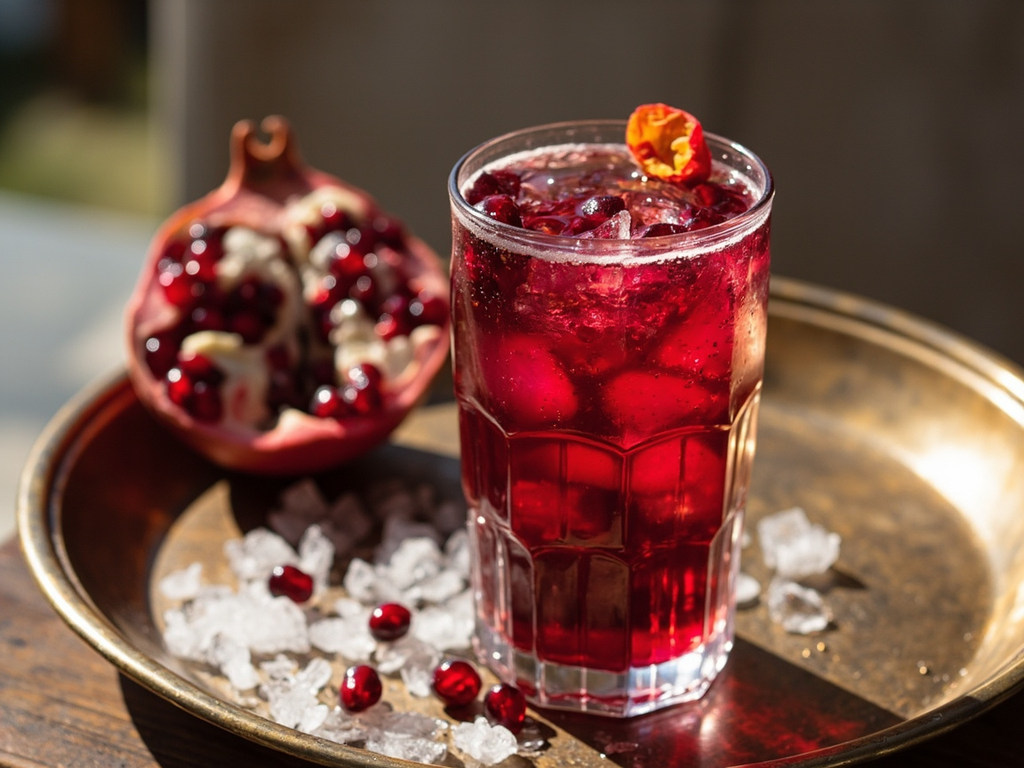
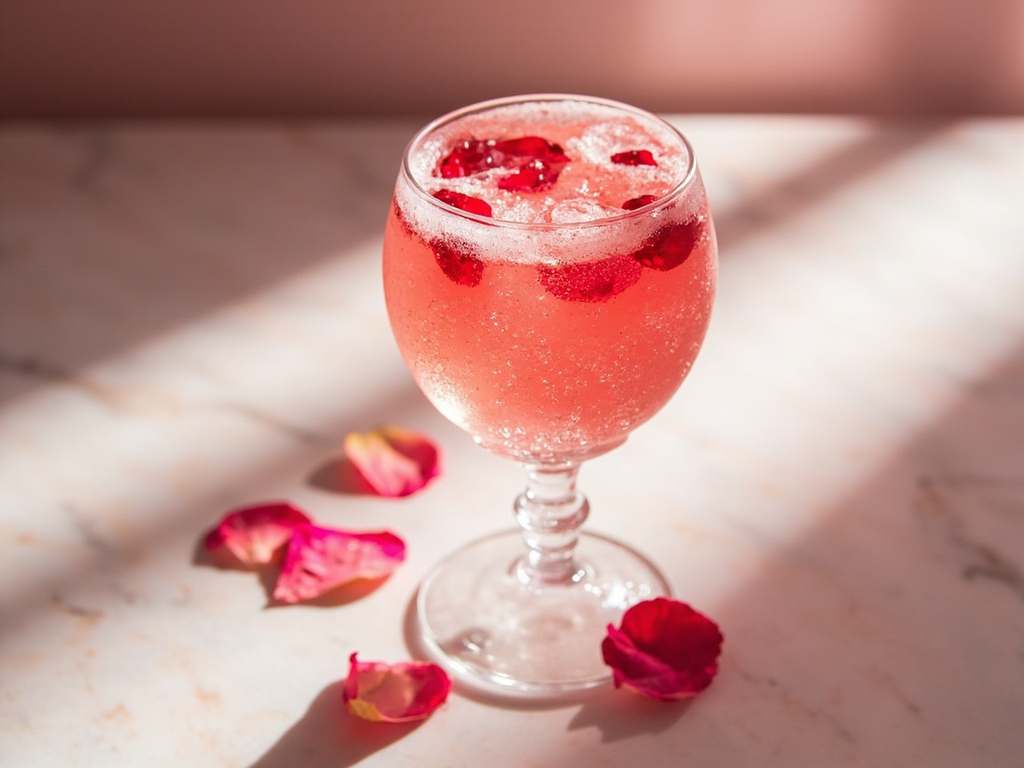
A syrup of roses and sugar diluted with fresh water, brightened with a squeeze of lime and a hint of sandalwood, served iced. The refined refreshment of Mughal summers.
Do you know which power I hold dearest? Bringing snow down from the mountains to my table, in the heart of Agra's summer. My cupbearers cool a rose syrup with it, squeeze in a little lime, breathe a scent of sandalwood, and present it to me in a misted, cold cup. Drink, friend: there is no wealth like being able to offer coolness when the whole world suffocates.
- •Fragrant rose petals — a good handful (aroma, syrup base)
- •Sugar — in proportion (sweetness, syrup preservation)
- •Rose water — a splash (aroma)
- •Lime — one, juiced (acidity)
- •Sandalwood (food-grade powder) or keora water — a hint (aromatic note)
- •Ice or mountain snow — as desired (coolness)
Iced Rose Sharbat with Sandalwood
A syrup of roses and sugar diluted with fresh water, brightened with a squeeze of lime and a hint of sandalwood, served iced. The refined refreshment of Mughal summers.
Why this dish? Akbar organized the transport of ice and snow from the northern mountains to his court in the burning plains of Agra and Fatehpur Sikri. An iced, perfumed drink was, in his time, a truly imperial luxury.
Do you know which power I hold dearest? Bringing snow down from the mountains to my table, in the heart of Agra's summer. My cupbearers cool a rose syrup with it, squeeze in a little lime, breathe a scent of sandalwood, and present it to me in a misted, cold cup. Drink, friend: there is no wealth like being able to offer coolness when the whole world suffocates.
Ingredients (period version)
- Fragrant rose petals — a good handful (aroma, syrup base)
- Sugar — in proportion (sweetness, syrup preservation)
- Rose water — a splash (aroma)
- Lime — one, juiced (acidity)
- Sandalwood (food-grade powder) or keora water — a hint (aromatic note)
- Ice or mountain snow — as desired (coolness)
Ingredients
- Rose syrup — 60 ml (or homemade rose+ sugar syrup) (sweet aromatic base)
- Sugar — if homemade syrup: 200 g for 200 ml water (sweetness)
- Dried edible rose petals — 1 handful (for homemade syrup) (aroma)
- Rose water — 1 tsp (aroma)
- Lime juice — 1 tbsp (acidity)
- Fresh water — 500 ml (dilution)
- Ice cubes — as needed (coolness)
- Pinch of food-grade sandalwood powder (optional) — 1 pinch (woody note)
Method
- For homemade syrup: gently simmer sugar, water, and rose petals for 10 minutes, strain, and let cool.
- In a pitcher, mix the rose syrup, rose water, and lime juice.
- Dilute with fresh water, taste, and adjust sweetness/sourness.
- Add a pinch of food-grade sandalwood powder if desired; stir well.
- Serve very cold, over plenty of ice, in chilled glasses.
How it was made : Sharbats (from which our word 'sorbet' derives) were syrups of fruits, flowers, or herbs diluted with water. The Mughal court, and Akbar in particular, had ice and snow transported from the northern mountains to cool them—a refinement recorded by chroniclers of his reign. In the absence of lime, pomegranate or tamarind juice was also used for acidity.
The contemporary twist : A few holy basil seeds (tukmaria) soaked at the bottom of the glass, as in today's falooda, for a pearly texture.
Sources : Abu'l-Fazl, Ain-i-Akbari (trans. H. Blochmann) · K. T. Achaya, Indian Food: A Historical Companion
Akbar · Charactorium