 flip
flipZard Birinj — Golden Rice with Saffron and Dried Fruits
Zard Birinj — Golden Rice with Saffron and Dried Fruits
Why this dish? Akbar conquered Kashmir and its red gold, saffron. During great receptions at Fatehpur Sikri, his city of pink sandstone, this golden rice sparkled on the dastarkhān as an emblem of imperial magnificence.
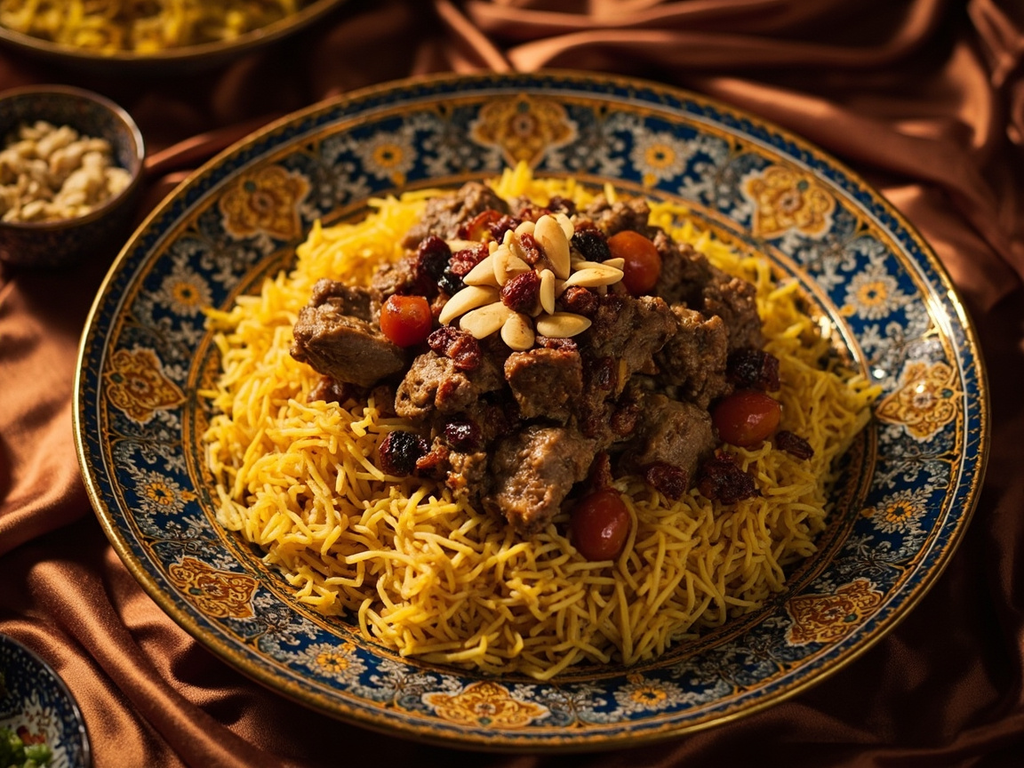
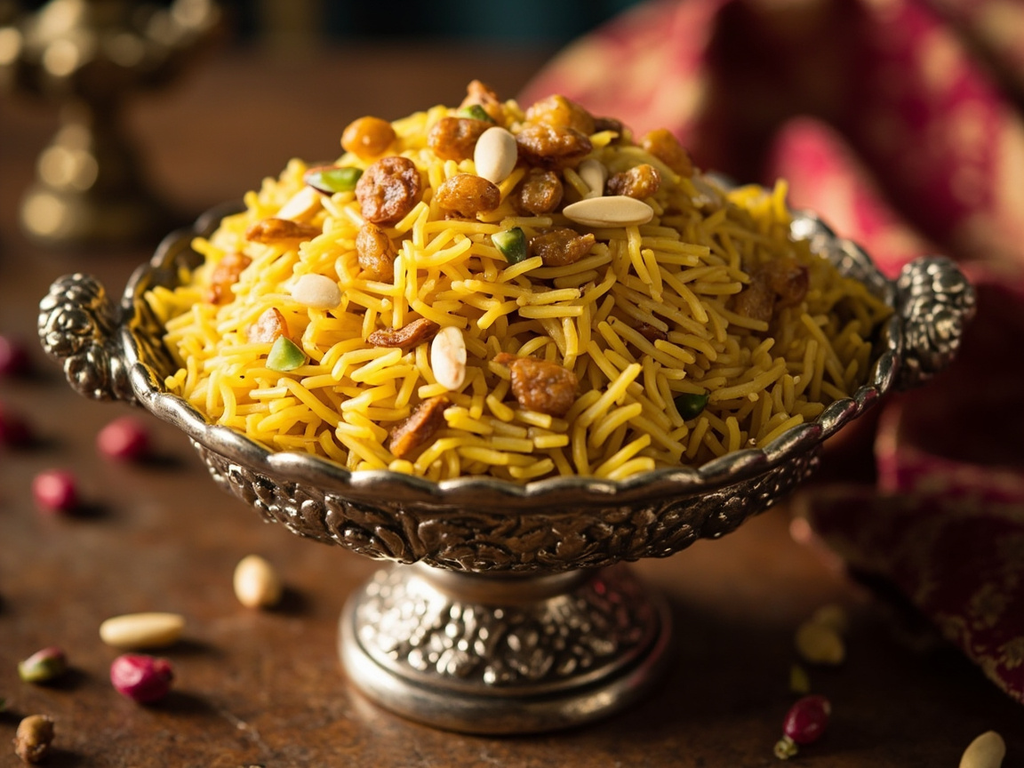
A rice dyed gold by saffron, sweet, perfumed with cardamom and rose water, studded with almonds, pistachios, and golden raisins fried in ghee. The jewel dish of festive days.
When my ambassadors and rajas sit at my table, I want them to see the empire's splendor even in their plates. My cooks let Kashmiri saffron bloom in a little warm water, dye the rice that is cooked in a syrup perfumed with cardamom and rose, then crown it with almonds and pistachios gilded in ghee. Taste this golden rice, stranger: it says, better than a long speech, that under my reign abundance knows no border.
- •Long-grain rice — one measure (base)
- •Kashmiri saffron — a few threads (color and aroma, signature)
- •Sugar (or rock candy) — in proportion to rice (sweetness)
- •Green cardamom — a few pods (spice)
- •Rose water — a splash (aroma)
- •Ghee — a ladleful (fat)
- •Almonds and pistachios — a handful (garnish)
- •Raisins — a handful (sweet garnish)
Zard Birinj — Golden Rice with Saffron and Dried Fruits
A rice dyed gold by saffron, sweet, perfumed with cardamom and rose water, studded with almonds, pistachios, and golden raisins fried in ghee. The jewel dish of festive days.
Why this dish? Akbar conquered Kashmir and its red gold, saffron. During great receptions at Fatehpur Sikri, his city of pink sandstone, this golden rice sparkled on the dastarkhān as an emblem of imperial magnificence.
When my ambassadors and rajas sit at my table, I want them to see the empire's splendor even in their plates. My cooks let Kashmiri saffron bloom in a little warm water, dye the rice that is cooked in a syrup perfumed with cardamom and rose, then crown it with almonds and pistachios gilded in ghee. Taste this golden rice, stranger: it says, better than a long speech, that under my reign abundance knows no border.
Ingredients (period version)
- Long-grain rice — one measure (base)
- Kashmiri saffron — a few threads (color and aroma, signature)
- Sugar (or rock candy) — in proportion to rice (sweetness)
- Green cardamom — a few pods (spice)
- Rose water — a splash (aroma)
- Ghee — a ladleful (fat)
- Almonds and pistachios — a handful (garnish)
- Raisins — a handful (sweet garnish)
Ingredients
- Basmati rice — 250 g (base)
- Saffron — 1 good pinch (about 20 threads) (color and aroma)
- Sugar — 150 g (sweetness)
- Green cardamom — 4 pods, crushed (spice)
- Rose water — 1 tsp (aroma)
- Ghee — 3 tbsp (fat)
- Slivered almonds and pistachios — 50 g (garnish)
- Golden raisins — 40 g (garnish)
Method
- Soak the saffron in 2 tbsp warm water to release its color.
- Rinse the rice, cook it in plenty of salted water until three-quarters done (still firm), then drain.
- Prepare a light syrup: dissolve the sugar in a little water with the cardamom.
- In a pot, heat the ghee, briefly fry almonds, pistachios, and raisins, then set aside.
- Add the rice to the pot, pour in the syrup, saffron water, and rose water; mix gently.
- Cover and finish cooking on low heat (dum) for 10–12 minutes, until the liquid is absorbed.
- Sprinkle with the fried dried fruits and serve.
How it was made : Saffron sweet rice dishes (zard birinj, zarda) appear among the sweets of the Ain-i-Akbari. They were cooked dum-style, pot sealed with dough over coals, to concentrate the aromas of saffron, rose, and cardamom brought from Persia and Kashmir.
The contemporary twist : A sheet of edible silver leaf (vark) placed at the last moment makes the rice shimmer as in Mughal banquets—a nod still found in Indian festive pastries.
Sources : Abu'l-Fazl, Ain-i-Akbari (trans. H. Blochmann) · Salma Husain, The Emperor's Table: The Art of Mughal Cuisine
Akbar · Charactorium