 flip
flipMulukhiyya with garlic and rabbit
Mulukhiyya with garlic and rabbit
Why this dish? Mulukhiyya — a soup of jute mallow leaves bound into a silky velouté — is THE popular dish of Fatimid Egypt. Chroniclers report that Al-Hakim formally forbade it to his subjects, among other foods he deemed linked to his dynasty's adversaries. No dish better speaks to his reign: what the people loved, the caliph could erase with a decree.
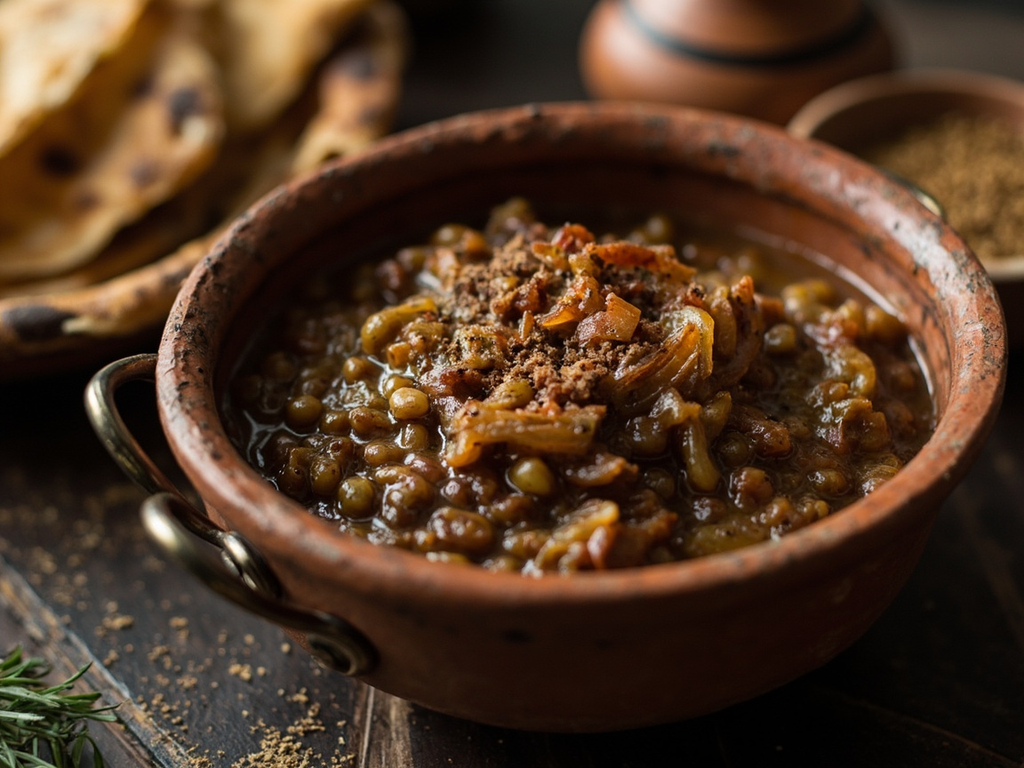
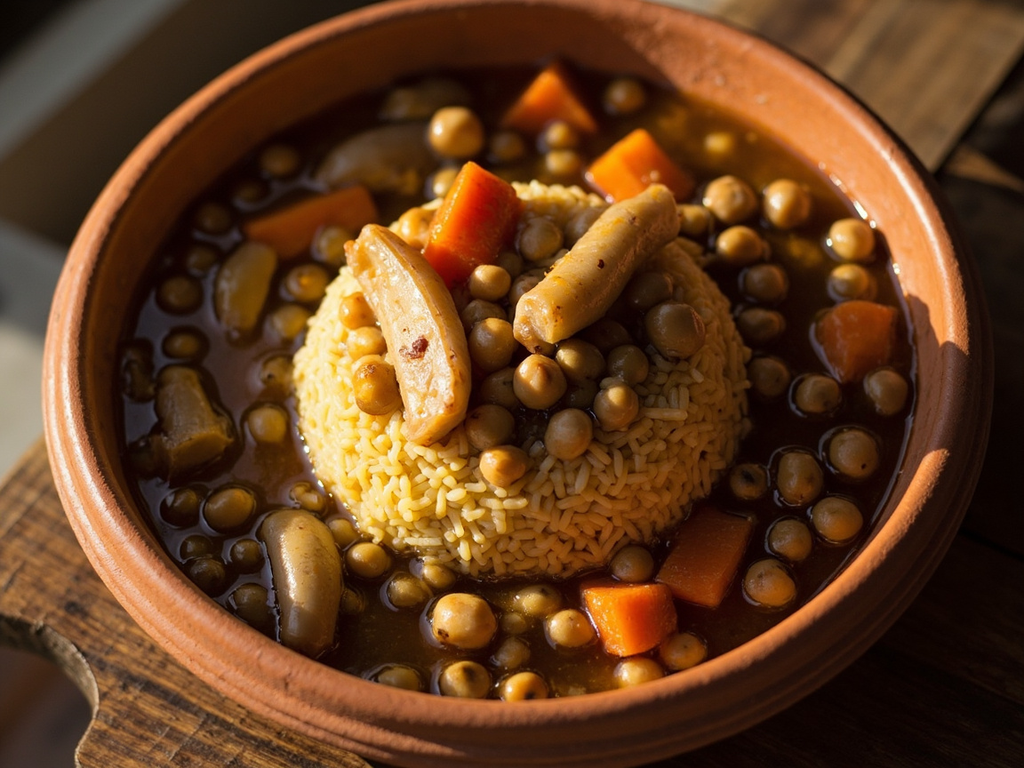
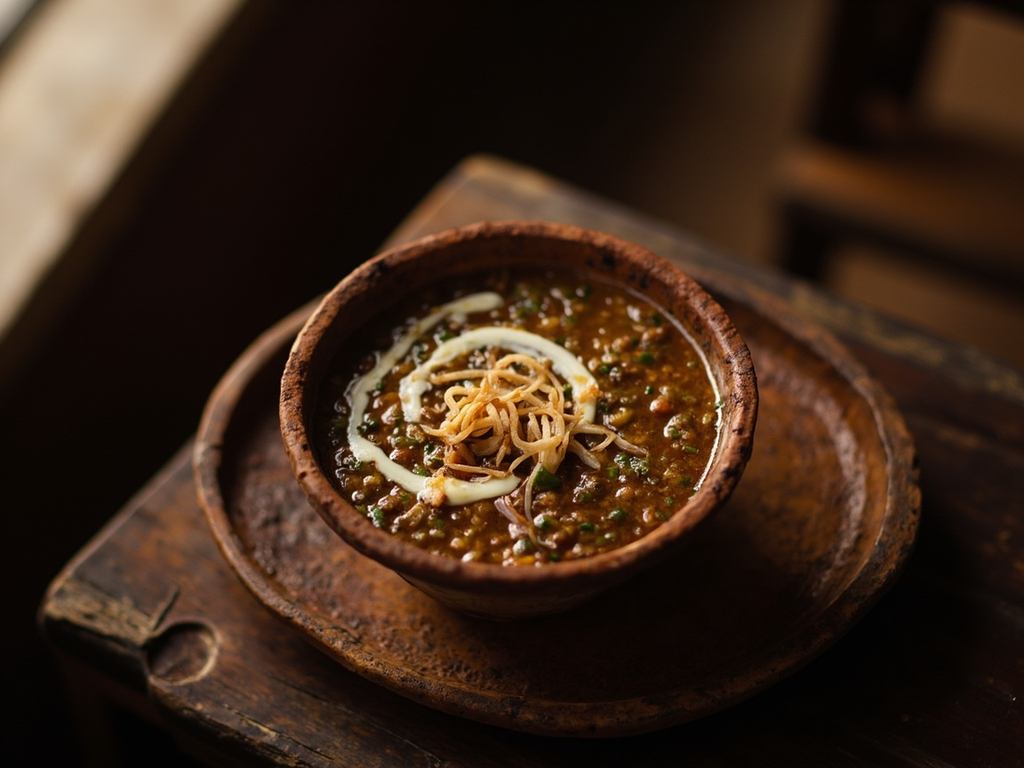
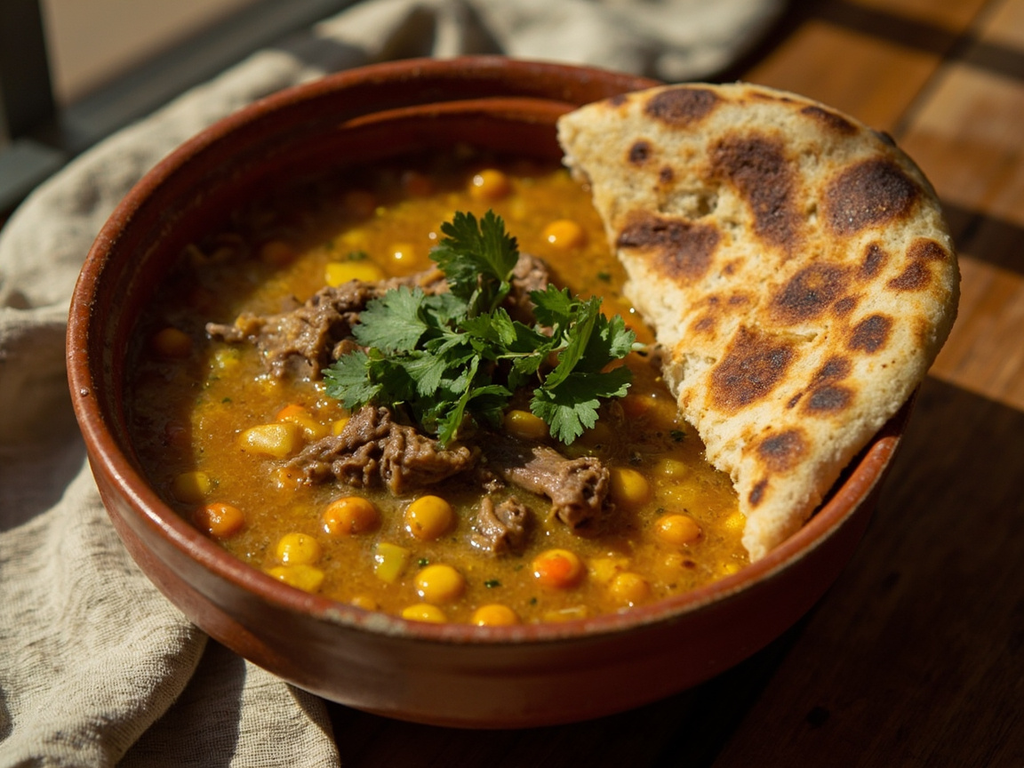
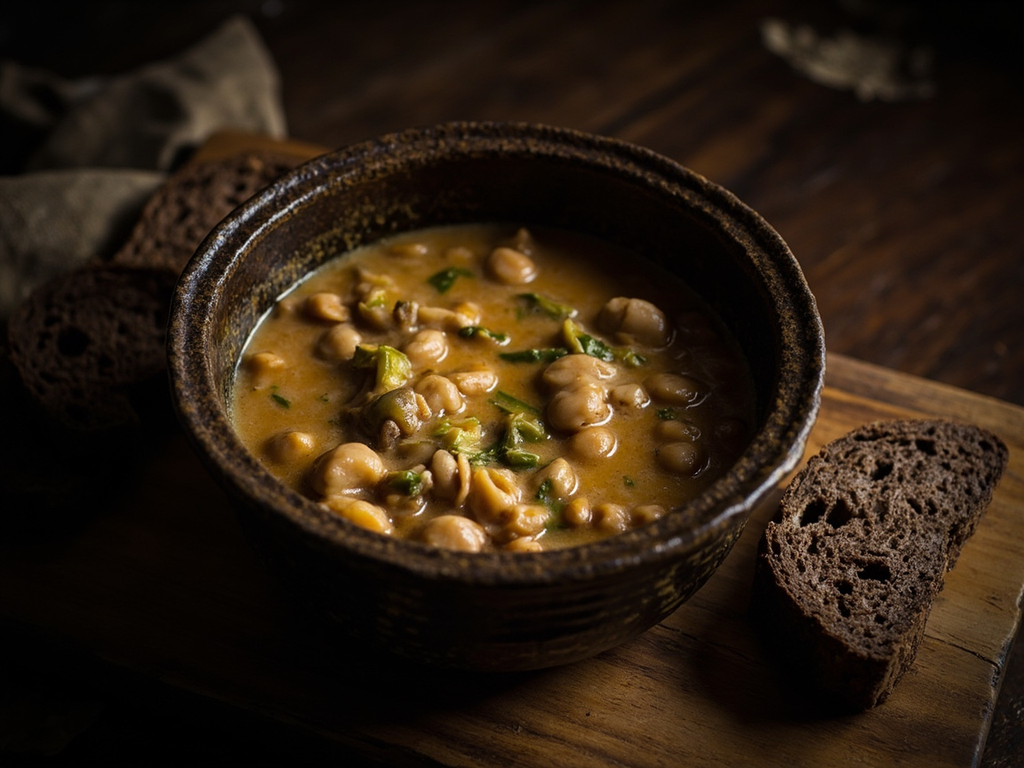
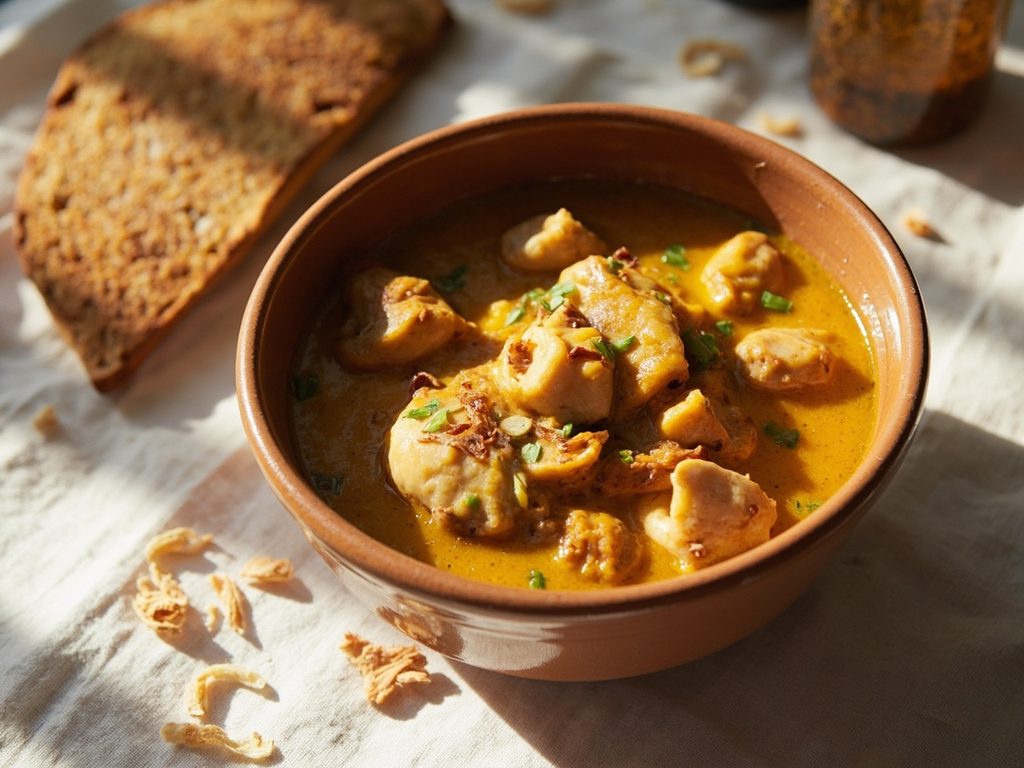
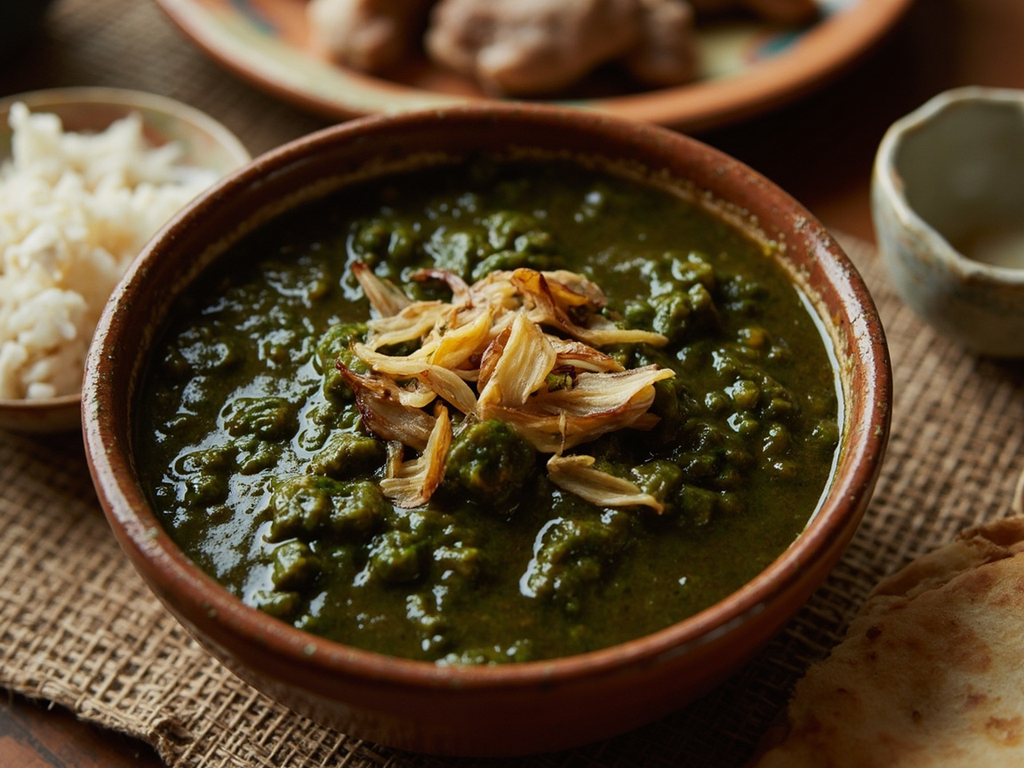
A deep green velouté of finely chopped jute mallow leaves, cooked in a rabbit broth, then awakened by a blazing hot taqliya of garlic and coriander poured over it. Eaten on rice or with bread for dipping.
Know, you who read this scroll, that I have forbidden the green mallow of the gardens to all my subjects, and no merchant dared cry its name in the alleys of Cairo. Why? Because a caliph also decides what enters his people's mouths. Yet here is how it is prepared in my Egypt: the leaves are chopped finer than dust, drowned in a rabbit broth, and over them is poured the pounded garlic that sings in butter. Many wept at my ban; that is how much they loved it.
- •Fresh jute mallow leaves (mulukhiyya) — a large basket (green base of the velouté)
- •Rabbit (or hen) — one animal (broth and meat)
- •Garlic — a good head (fragrant taqliya)
- •Fresh coriander and seeds — a handful (aromatic signature)
- •Clarified butter (samn) — a few spoonfuls (fat for the taqliya)
- •Salt, long pepper — to taste (seasoning)
Mulukhiyya with garlic and rabbit
A deep green velouté of finely chopped jute mallow leaves, cooked in a rabbit broth, then awakened by a blazing hot taqliya of garlic and coriander poured over it. Eaten on rice or with bread for dipping.
Why this dish? Mulukhiyya — a soup of jute mallow leaves bound into a silky velouté — is THE popular dish of Fatimid Egypt. Chroniclers report that Al-Hakim formally forbade it to his subjects, among other foods he deemed linked to his dynasty's adversaries. No dish better speaks to his reign: what the people loved, the caliph could erase with a decree.
Know, you who read this scroll, that I have forbidden the green mallow of the gardens to all my subjects, and no merchant dared cry its name in the alleys of Cairo. Why? Because a caliph also decides what enters his people's mouths. Yet here is how it is prepared in my Egypt: the leaves are chopped finer than dust, drowned in a rabbit broth, and over them is poured the pounded garlic that sings in butter. Many wept at my ban; that is how much they loved it.
Ingredients (period version)
- Fresh jute mallow leaves (mulukhiyya) — a large basket (green base of the velouté)
- Rabbit (or hen) — one animal (broth and meat)
- Garlic — a good head (fragrant taqliya)
- Fresh coriander and seeds — a handful (aromatic signature)
- Clarified butter (samn) — a few spoonfuls (fat for the taqliya)
- Salt, long pepper — to taste (seasoning)
Ingredients
- Fresh chopped mulukhiyya (or 100 g dried) — 500 g fresh (green base)
- Rabbit legs (or chicken thighs) — 4 pieces (meat and broth)
- Garlic — 6 cloves (taqliya)
- Coriander (ground seeds + fresh) — 1 tsp + 2 tbsp (flavor)
- Ghee or butter — 3 tbsp (fat)
- Salt, pepper — to taste (seasoning)
- White rice — for serving (accompaniment)
Method
- Poach the rabbit in 1.5 L of water with a little salt until tender; reserve the meat and strain the broth.
- Finely chop the fresh mulukhiyya (or rehydrate the dried).
- Add the leaves to the simmering broth and cook over low heat for 10 to 15 minutes without letting it boil vigorously, to keep the green color.
- Prepare the taqliya: melt the ghee, sizzle the pounded garlic with coriander seeds until golden and fragrant.
- Pour the blazing hot taqliya into the velouté — it should sizzle — season with salt and pepper.
- Serve piping hot over rice, with the rabbit meat on the side, and bread for dipping.
How it was made : In medieval Egypt, mulukhiyya was cooked in nearly every household, from peasant to palace, with whatever meat one could afford — rabbit, hen, or simply broth. The fineness of the chopping and the garlic taqliya were a cook's pride. Al-Hakim's ban remained famous precisely because it targeted an everyday dish beloved by all.
The contemporary twist : Serve it "decree-lifted style": a small bread roll tied with a thread, placed across the bowl like a marsûm that one unfolds to finally taste the forbidden dish.
Sources : Ibn Sayyâr al-Warrâq, Kitâb al-Tabîkh (10th c.) · al-Maqrîzî, al-Khitat (description of Fatimid Cairo and Al-Hakim's bans) · Lilia Zaouali, L'Islam de marché : cuisine et gastronomie en terre d'islam
Al-Hakim bi-Amr Allah · Charactorium