 flip
flipSikanjabîn, honey and vinegar syrup with mint
Sikanjabîn, honey and vinegar syrup with mint
Why this dish? Al-Hakim strictly forbade wine and all intoxicating drinks in his caliphate, having jars destroyed and vines uprooted in places. Sharâb — flavored syrups cut with fresh water — thus became the only allowed pleasure drinks. Sikanjabîn, an oxymel of honey and vinegar, quenched thirst and was thought to cool the body.
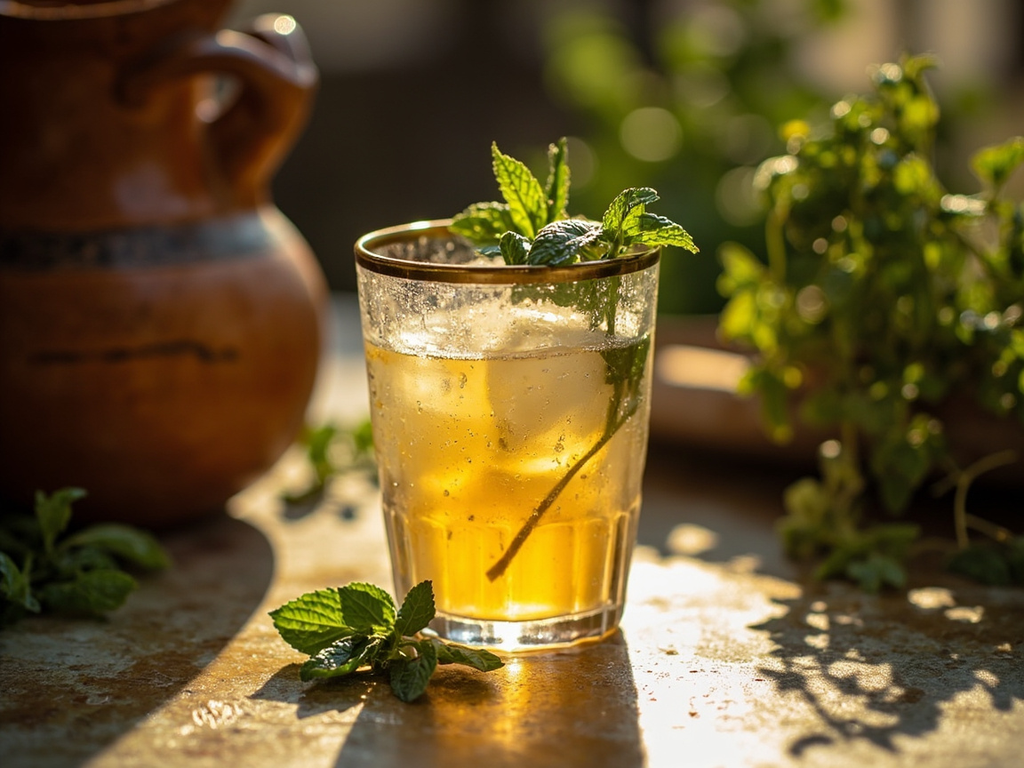
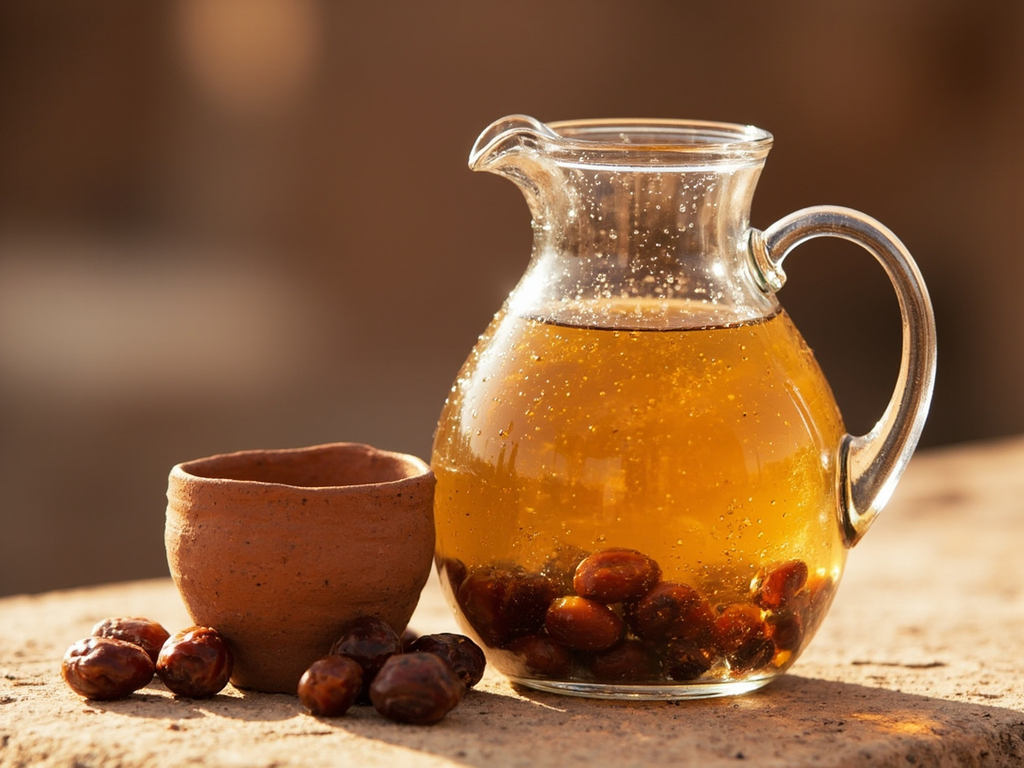
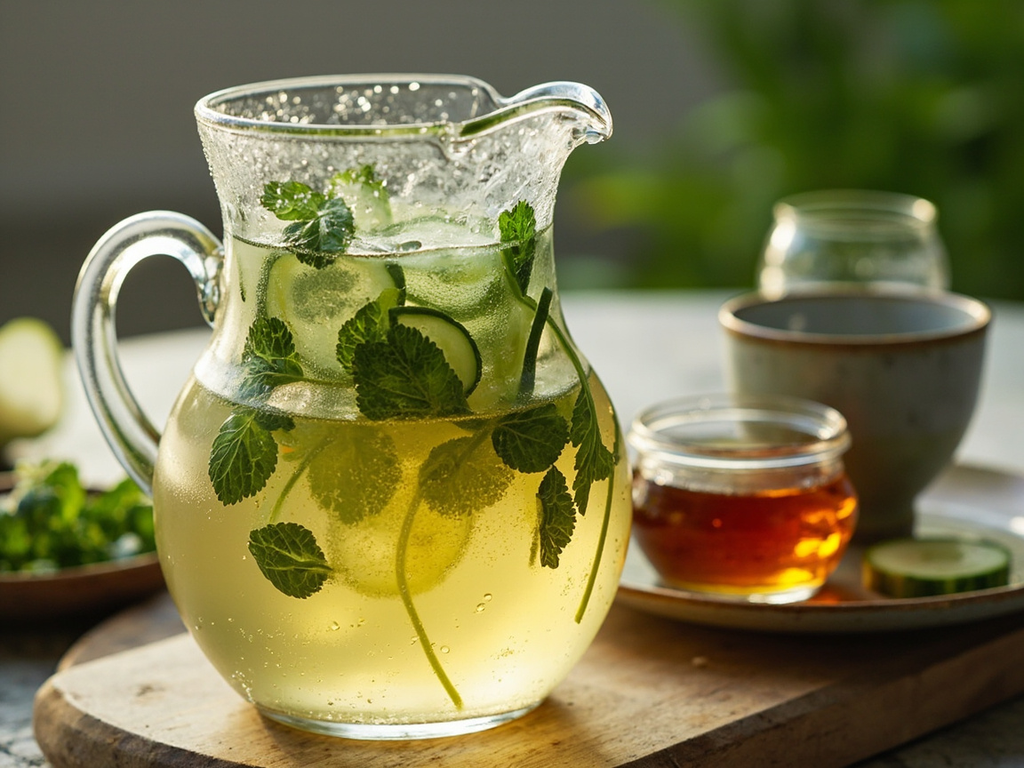
A thick syrup of honey and vinegar, perfumed with mint, kept in a flask and diluted with very cold water: a sweet-sour lemonade, sharp as a decree.
I have smashed the wine jars and poured their poison into the Nile, for no drunken man can stand upright before God. But I have not left my subjects without pleasure: here is a lawful drink, honey wedded to vinegar, sweetened with garden mint. Keep it in a flask, pour a finger's worth into cold water, and the palate is awakened. Drink it, and give thanks that sobriety too has its flavors.
- •Honey — two measures (sweetness of the syrup)
- •Wine or date vinegar — one measure (sharp acidity)
- •Fresh mint — a bunch (flavor)
- •Fresh spring water — as needed (dilution at serving)
Sikanjabîn, honey and vinegar syrup with mint
A thick syrup of honey and vinegar, perfumed with mint, kept in a flask and diluted with very cold water: a sweet-sour lemonade, sharp as a decree.
Why this dish? Al-Hakim strictly forbade wine and all intoxicating drinks in his caliphate, having jars destroyed and vines uprooted in places. Sharâb — flavored syrups cut with fresh water — thus became the only allowed pleasure drinks. Sikanjabîn, an oxymel of honey and vinegar, quenched thirst and was thought to cool the body.
I have smashed the wine jars and poured their poison into the Nile, for no drunken man can stand upright before God. But I have not left my subjects without pleasure: here is a lawful drink, honey wedded to vinegar, sweetened with garden mint. Keep it in a flask, pour a finger's worth into cold water, and the palate is awakened. Drink it, and give thanks that sobriety too has its flavors.
Ingredients (period version)
- Honey — two measures (sweetness of the syrup)
- Wine or date vinegar — one measure (sharp acidity)
- Fresh mint — a bunch (flavor)
- Fresh spring water — as needed (dilution at serving)
Ingredients
- Honey — 300 g (sweetness)
- White wine vinegar (or cider vinegar) — 150 ml (acidity)
- Fresh mint — 1 large bunch (flavor)
- Water — 100 ml for syrup + ice water for serving (cooking and dilution)
Method
- In a saucepan, mix honey and 100 ml water; bring to a simmer and skim.
- Add the vinegar and let reduce over low heat for 15 to 20 minutes until slightly syrupy.
- Off the heat, plunge the mint into the hot syrup and let steep until cool, then remove.
- Pour into a clean flask; the syrup keeps several weeks in the fridge.
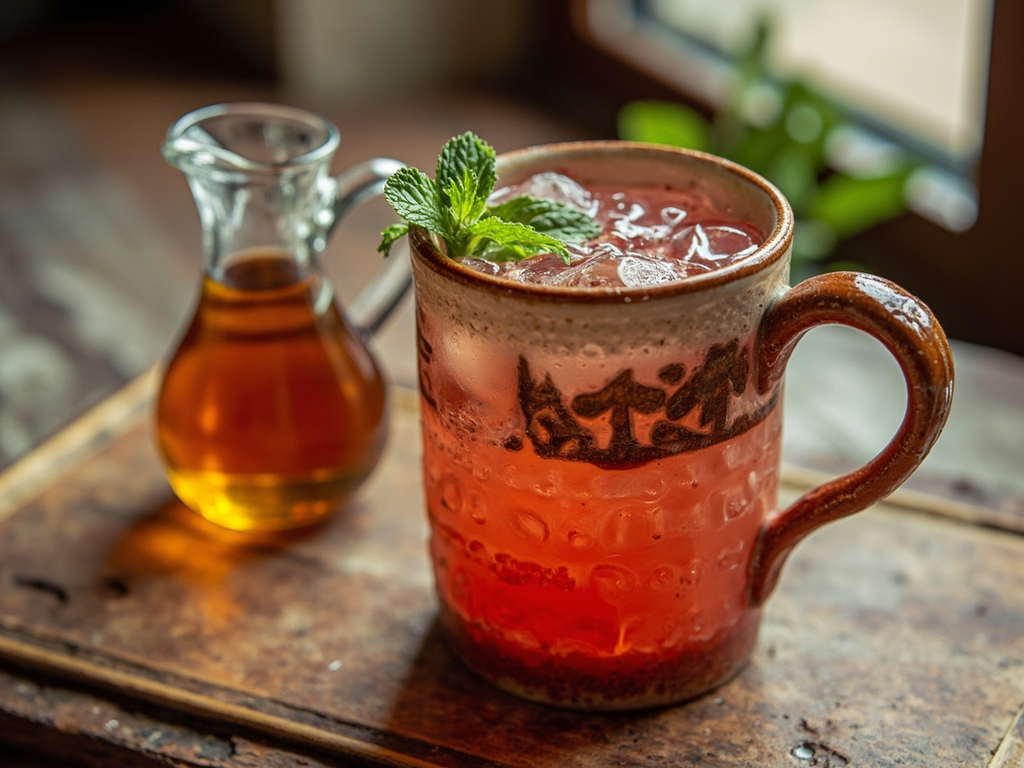
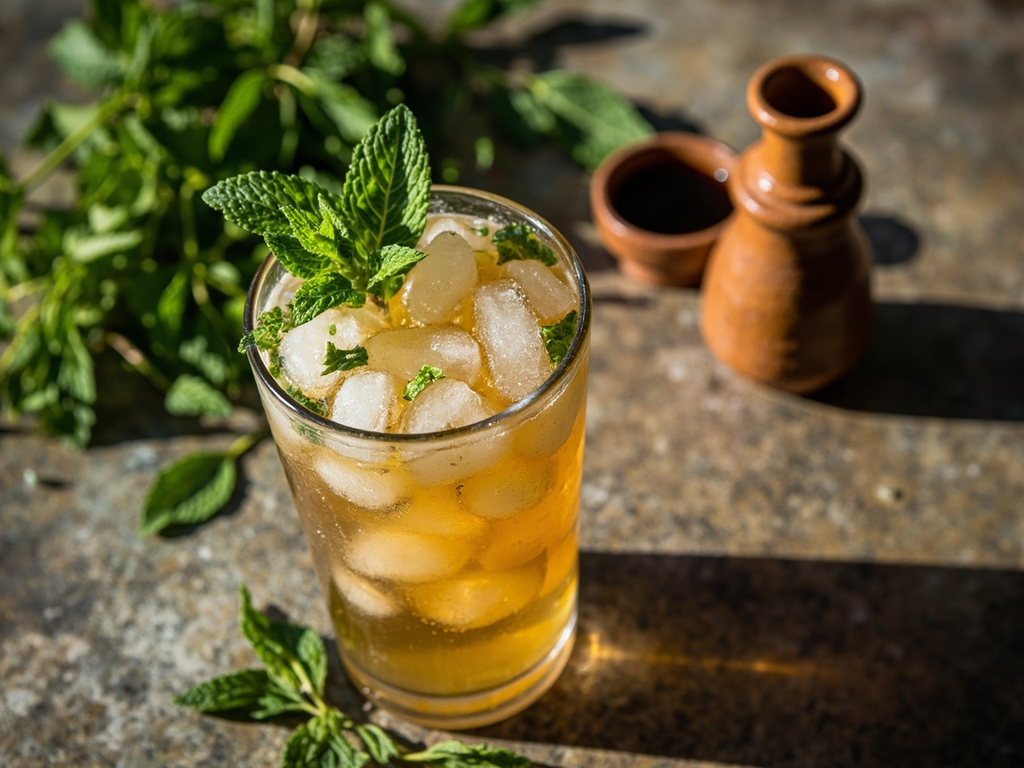
- To serve, pour 2 to 3 tablespoons of syrup into a tall glass of very cold water, stir, add a mint leaf.
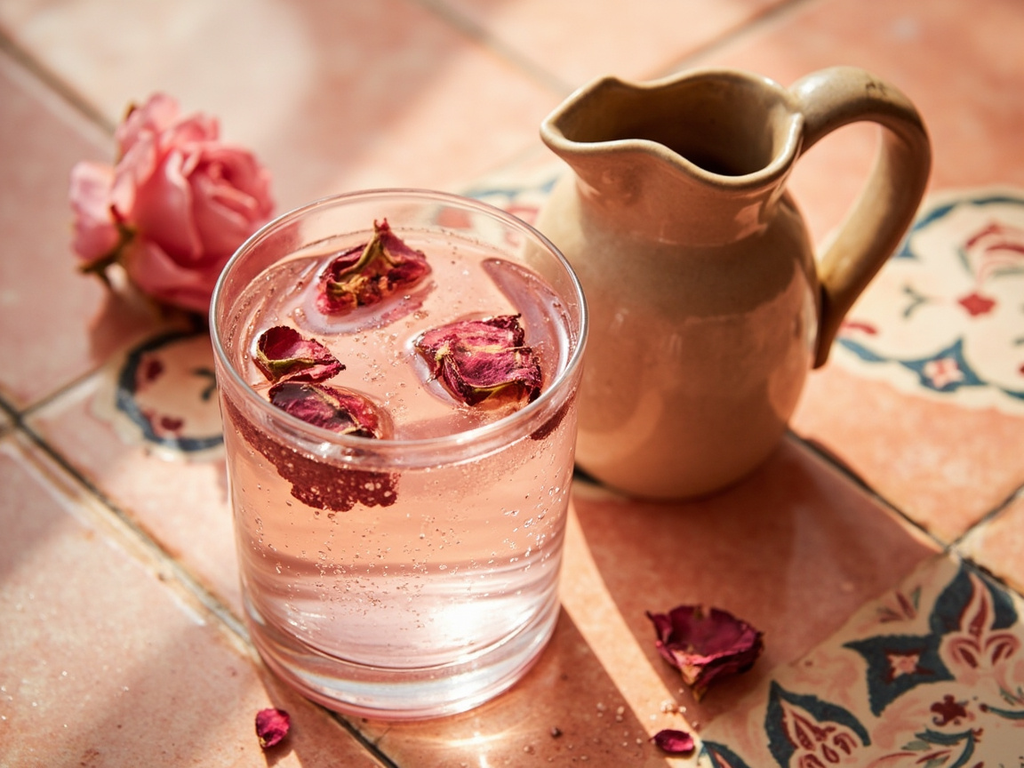
How it was made : Oxymel (sikanjabîn) appears in medieval Arabic cookery and medical treatises, where it is considered refreshing and good for digestion. It was prepared concentrated for storage, sometimes with rose petals, quince, or mint depending on the season, and diluted on demand — the direct ancestor of our fruit syrups.
The contemporary twist : Serve over crushed ice with a ribbon of lemon zest: a "caliph's lemonade" without a drop of alcohol, faithful to Al-Hakim's ban.
Sources : Ibn Sayyâr al-Warrâq, Kitâb al-Tabîkh (sharâb recipes, 10th c.) · al-Maqrîzî, al-Khitat (ban on wine under Al-Hakim) · Charles Perry (trans.), A Baghdad Cookery Book — al-Baghdâdî, Kitâb al-Tabîkh
Al-Hakim bi-Amr Allah · Charactorium