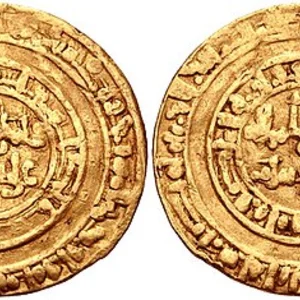

Sixth Fatimid caliph of Egypt (996–1021), Al-Hakim is a controversial figure known for his unpredictable decrees and uncompromising religious policies. He is venerated as a divine manifestation by the Druze religion, which emerged during his reign.
Frequently asked questions
Key Facts
- Became caliph at age 11 in 996 following the death of his father al-Aziz
- Founded the Dar al-Hikmah (House of Wisdom) in Cairo in 1004, a center of intellectual and religious learning
- Ordered the destruction of the Church of the Holy Sepulchre in Jerusalem in 1009
- The Druze religion emerged in 1017 centered on his person, venerating him as a divine manifestation
- Disappeared mysteriously in 1021, likely assassinated
Works & Achievements
A library and academy open to all, holding tens of thousands of manuscripts on astronomy, medicine, philosophy, and Ismaili theology. The Dar al-Ilm was one of the great intellectual centers of the medieval world, a symbolic rival to the Library of Alexandria.
Begun by his father, Al-Hakim completed this vast mosque in Cairo that bears his name. A major monument of Fatimid architecture, it served at various times as a mosque, a prison for Crusaders, a stable, a warehouse, and a museum, before being restored in the twentieth century.
Throughout his reign, Al-Hakim issued hundreds of decrees governing daily life, commerce, religion, and public morals. Though often seen as contradictory and unpredictable, they reflect a drive for total control over society and a radical vision of caliphal authority.
Though not written by Al-Hakim himself, these founding texts of the Druze religion were composed in his name by Hamza ibn Ali and his companions. They form the sacred corpus of a faith born from his reign and mysterious disappearance, still alive today with around one million followers.
Al-Hakim had an observatory built on the Muqattam hills to conduct observations of the stars. This interest in astronomy, connected to the calculation of the religious calendar and to astrology, was part of the great Ismaili scholarly tradition.
Anecdotes
Al-Hakim was in the habit of roaming the streets of Cairo at night, alone on his gray donkey, to oversee the enforcement of his decrees and dispense justice directly to the people. These nocturnal patrols earned him a reputation for omniscience that fascinated his subjects and terrified his corrupt officials.
In 1009, Al-Hakim ordered the destruction of the Church of the Holy Sepulchre in Jerusalem, one of the most venerated sanctuaries in Christendom. This radical act caused lasting trauma in Europe and was one of the justifications cited a century later for launching the First Crusade.
The caliph issued decrees of bewildering strangeness: he banned the sale of certain vegetables such as mlukhiyya, ordered cobblers to stop making women's shoes in order to confine them to the home, then revoked some of these edicts himself a few years later. Historians still debate whether this reflected rigorous religious policy or genuine mental instability.
In 1004–1005, Al-Hakim founded the Dar al-Ilm (the House of Knowledge) in Cairo, an institution open to all scholars that made tens of thousands of manuscripts in astronomy, medicine, philosophy, and Ismaili theology freely available. It was an unprecedented act of intellectual patronage that for a time rivaled the memory of the great Library of Alexandria.
In February 1021, Al-Hakim mysteriously disappeared during one of his nightly walks in the Muqattam hills. His donkey was found stained with blood, but no body was ever recovered. For his followers who went on to found the Druze religion, this disappearance is not a death: it is a divine 'occultation', and Al-Hakim will return at the end of time to establish a reign of justice.
Primary Sources
He rode his donkey through the streets and markets, by night as by day, observing the condition of his subjects, punishing the unjust and rewarding the virtuous with his own hand.
Al-Hakim ordered the destruction of the Church of the Holy Sepulchre and all the crosses found throughout his kingdom, and many churches were razed in Egypt and Syria.
Our lord, may He be glorified, is the Creator of all that exists, the First and the Last, the Manifest and the Hidden. Whoever recognizes Him in al-Hakim has attained the supreme truth.
Among the buildings he caused to be erected, the mosque known as al-Hakim, begun by his father al-Aziz and completed in the year 393 of the Hijra, remains one of the most remarkable monuments of Cairo.
Key Places
Capital of the Fatimid caliphate and the birthplace and seat of power of Al-Hakim, al-Qahira was one of the most populous cities in the world at the turn of the eleventh century. It was here that Al-Hakim ruled, founded the Dar al-Ilm, and had his great mosque completed.
Begun by his father al-Aziz and completed by Al-Hakim in 1013, this imposing mosque bears his name and dominates the al-Jammaliyya quarter. It is today one of the oldest surviving monuments of Fatimid architecture.
It was in these desert hills overlooking Cairo that Al-Hakim mysteriously disappeared in February 1021. The site of his solitary nocturnal wanderings, the Muqattam has become in Druze tradition a place of deep spiritual significance.
In 1009, Al-Hakim ordered the destruction of the Church of the Holy Sepulchre in Jerusalem, one of the most controversial acts of his reign. This city, sacred to all three Abrahamic faiths, was under Fatimid control and the scene of persistent religious tensions.
Founded by Al-Hakim in 1004–1005, the Dar al-Ilm was a library and academy open to all, housing tens of thousands of manuscripts and lecture halls. It embodied the intellectual ambition of the Fatimid caliphate and its openness to every branch of learning.
Typical Objects

Al-Hakim refused to ride a horse as rulers of his rank customarily did, preferring to travel on a simple donkey during his nightly rounds through Cairo. This humble mount stood in stark contrast to the splendor of the Fatimid palace and symbolized, in the eyes of his supporters, his contempt for worldly appearances.

Al-Hakim took a keen interest in astronomy and had an observatory built on the hills of Muqattam. The astrolabe, an instrument for measuring the positions of celestial bodies, was an essential tool for the scholars of his *Dar al-Ilm* and for his own nightly observations.

Al-Hakim ruled through official decrees known as *marsūm*, often proclaimed without warning in the marketplaces. These handwritten texts on parchment regulated everything from food prices to permitted clothing, and some were so unusual that they continue to defy rational interpretation.

During his nightly rounds through Cairo, Al-Hakim was accompanied by bearers carrying oil lanterns. The flickering light moving through the dark alleyways announced his approach and allowed residents to recognize the silhouette of the caliph on his donkey.

Unlike the richly gold-embroidered garments worn by princes of the era, Al-Hakim often wore simple, austere white linen robes. This deliberate choice of dress evoked an ascetic ideal and reinforced his image as a spiritual caliph-imam rather than a temporal one.

The library founded by Al-Hakim brought together tens of thousands of manuscripts covering astronomy, medicine, mathematics, and Ismaili theology. These codices and scrolls represented the living repository of universal knowledge that the caliph wished to make accessible to scholars of all backgrounds.
School Curriculum
Vocabulary & Tags
Key Vocabulary
Daily Life
Morning
Al-Hakim began his day with official audiences in the Great Fatimid Palace of Cairo, where officials, qadis, and petitioners came to submit their affairs and requests. These administrative sessions followed a strict protocol, yet the caliph could interrupt proceedings to settle a matter himself, sometimes in unpredictable ways.
Afternoon
The afternoon was devoted to religious studies and the reading of astronomical or philosophical manuscripts, sometimes in the company of scholars from the Dar al-Ilm. Al-Hakim also received foreign envoys and oversaw the enforcement of his decrees through reports from his market inspectors (muhtasib).
Evening
Unlike the rulers of his era who retired to their quarters at sunset, Al-Hakim went out alone or nearly so, riding his donkey through the alleyways of Cairo by lantern light. These nocturnal wanderings, the source of many legends, allowed him to observe his subjects' lives firsthand and to intervene in person.
Food
Al-Hakim was known for a sober and ascetic diet, in stark contrast to the lavish tables of medieval royal courts. He banned alcohol and imposed dietary restrictions on his subjects — decrees that, according to tradition, he also applied to his own table.
Clothing
The caliph favored simple white linen robes and unadorned fabrics, refusing the gold-embroidered garments reserved for princes. This choice of austere dress, attested by several chroniclers, was interpreted by his supporters as a sign of detachment from worldly vanities.
Housing
Al-Hakim resided in the Great Fatimid Palace of al-Qahira, a monumental complex at the heart of the imperial city that spread across several hectares with its gardens, libraries, private mosques, and apartments. Chroniclers highlight the striking contrast between the palace's magnificence and the conspicuous simplicity of its occupant.
Historical Timeline
Period Vocabulary
Liens externes & ressources
Références
Œuvres
Fondation du Dar al-Ilm (Maison du Savoir)
1004-1005
Achèvement de la mosquée al-Hakim bi-Amr Allah
1013
Corpus de décrets califaux (marsûm)
996-1021
Rasa'il al-Hikma (Épîtres de la Sagesse) — corpus druze fondé sur son règne
1017-1043
Observatoire astronomique du Muqattam
vers 1005