 flip
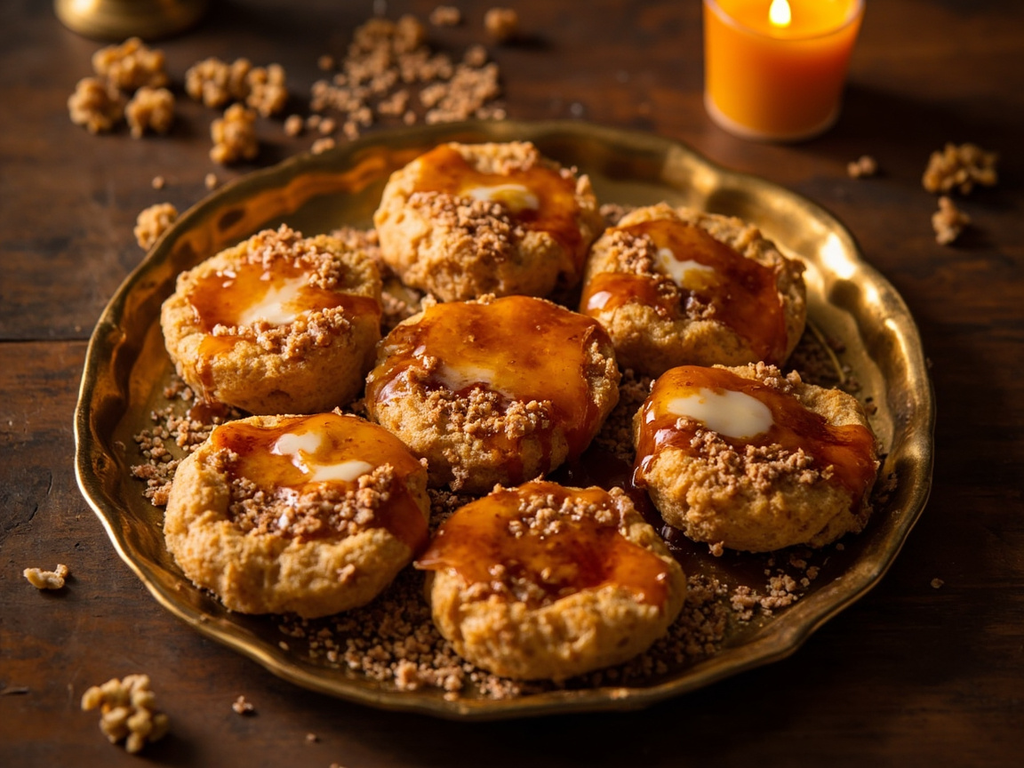
flipQatâyef stuffed with walnuts and honey
Qatâyef stuffed with walnuts and honey
Why this dish? Qatâyef — small folded stuffed pancakes, fried then soaked in syrup — were born in the Fatimid world and became the sweet emblem of Ramadan in Cairo. Under Al-Hakim, the month of fasting paced city life; these iftar sweets were sold at dusk, when the caliph, it is said, walked his streets.
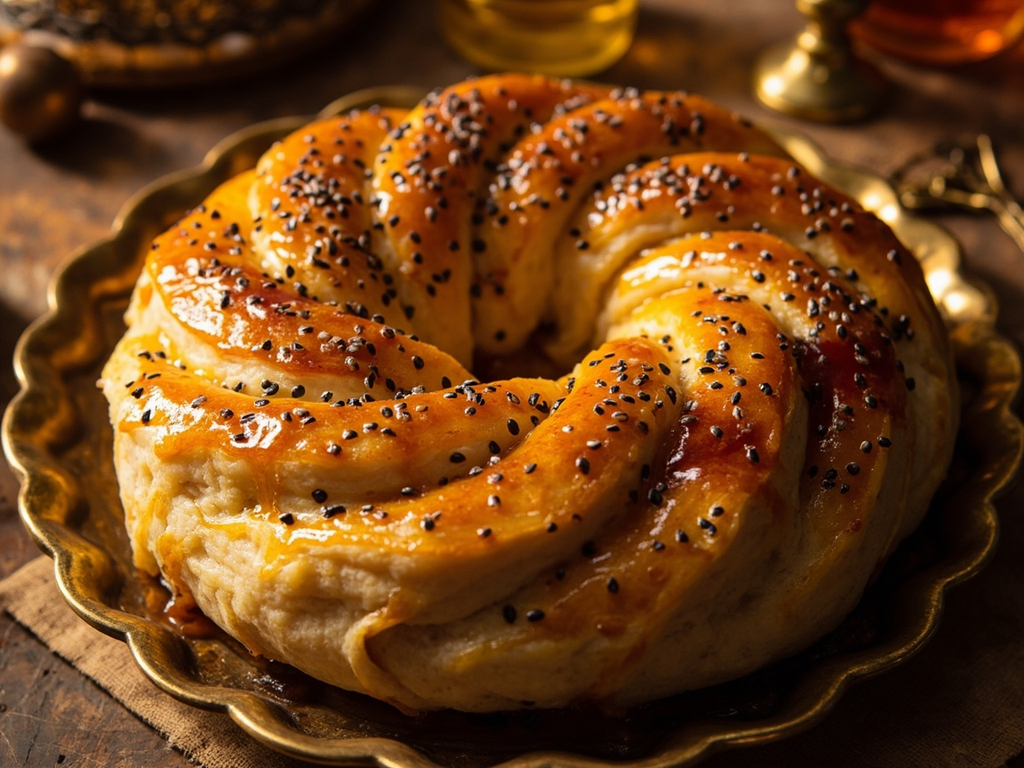
Small pancakes golden on one side, filled with cinnamon-spiced ground walnuts, folded into crescents, fried until crunchy, and dipped in rose-scented syrup.
When the fast cannon fell silent at sunset, my streets filled with the smell of hot syrup. We folded these little moons of dough around a walnut filling, threw them into oil, then into honey perfumed with rose. I who eat little and drink even less tolerated this sweetness: for breaking Allah's fast is a permitted joy. Eat them warm, and let the syrup run over your fingers.
- •Wheat flour — two measures (leavened pancake batter)
- •Sourdough starter — a little (leaven the batter)
- •Walnuts (and almonds) — a good handful (filling)
- •Cinnamon — a pinch (filling flavor)
- •Honey — a bowl (syrup)
- •Rose water — a few drops (syrup flavor)
- •Sesame or olive oil — for frying (frying)
Qatâyef stuffed with walnuts and honey
Small pancakes golden on one side, filled with cinnamon-spiced ground walnuts, folded into crescents, fried until crunchy, and dipped in rose-scented syrup.
Why this dish? Qatâyef — small folded stuffed pancakes, fried then soaked in syrup — were born in the Fatimid world and became the sweet emblem of Ramadan in Cairo. Under Al-Hakim, the month of fasting paced city life; these iftar sweets were sold at dusk, when the caliph, it is said, walked his streets.
When the fast cannon fell silent at sunset, my streets filled with the smell of hot syrup. We folded these little moons of dough around a walnut filling, threw them into oil, then into honey perfumed with rose. I who eat little and drink even less tolerated this sweetness: for breaking Allah's fast is a permitted joy. Eat them warm, and let the syrup run over your fingers.
Ingredients (period version)
- Wheat flour — two measures (leavened pancake batter)
- Sourdough starter — a little (leaven the batter)
- Walnuts (and almonds) — a good handful (filling)
- Cinnamon — a pinch (filling flavor)
- Honey — a bowl (syrup)
- Rose water — a few drops (syrup flavor)
- Sesame or olive oil — for frying (frying)
Ingredients
- Flour — 250 g (batter)
- Active dry yeast — 1 tsp (leavening)
- Warm water — 350 ml (thin the batter)
- Chopped walnuts — 150 g (filling)
- Cinnamon — 1/2 tsp (flavor)
- Sugar + honey — 200 g sugar + 2 tbsp honey (syrup)
- Rose water — 1 tsp (syrup flavor)
- Neutral oil — for frying (frying)
Method
- Mix flour, yeast, and water into a thin batter; let rise 1 hour until bubbly.
- Cook small pancakes in a lightly oiled hot pan on one side only, until the surface is pockmarked and dry; let cool slightly.
- Mix chopped walnuts and cinnamon for the filling.
- Place a spoonful of filling on each pancake, fold into a half-moon, and pinch the moist edges firmly to seal.
- Prepare the syrup: dissolve sugar, honey, and a little water; perfume with rose water; let cool slightly.
- Fry the qatâyef until golden brown, drain, then dip for a few seconds in the syrup. Serve warm.
How it was made : Fatimid pastry-making was renowned: sweets were produced in large quantities for the Isma'ili calendar festivals and for Ramadan, even in the official palace workshops (Dâr al-Fitra). In modest homes, qatâyef were made with honey rather than refined sugar, and rose or orange blossom water provided all the luxury.
The contemporary twist : Leave a few open "cut" style, with the filling visible and a sliver of green pistachio on top, as a nod to the mosaics of the Al-Hakim Mosque.
Sources : al-Maqrîzî, al-Khitat (festivals and sweets of Fatimid Cairo) · Nasir Khusraw, Safarnâma (markets and sweets of Cairo, 1047) · Lilia Zaouali, Fêtes et saveurs en terre d'islam
Al-Hakim bi-Amr Allah · Charactorium