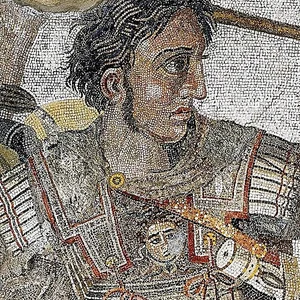

King of Macedon and legendary conqueror, Alexander built one of the largest empires of the ancient world in less than thirteen years. Tutored by the philosopher Aristotle, he conquered the Achaemenid Persian Empire and extended his dominion as far as India, spreading Greek culture across Asia.
Alexander the Great(355 av. J.-C. — 322 av. J.-C.)
Alexander the Great
royaume de Macédoine
8 min read
Frequently asked questions
Key Facts
- 336 BC: ascension to the throne of Macedon at the age of 20
- 334 BC: beginning of the Asian campaign with the crossing of the Hellespont
- 331 BC: decisive victory at Gaugamela against Darius III and final conquest of the Persian Empire
- 327–325 BC: military campaign into India and arrival at the Hyphasis River
- 323 BC: death in Babylon at the age of 32
Works & Achievements
The most famous of the many cities founded by Alexander. It became the intellectual and commercial center of the Hellenistic world, home to the famous library and the lighthouse, one of the seven wonders of the ancient world.
In four years and three major battles (Granicus, Issus, Gaugamela), Alexander overthrew the Persian Empire, the largest state in the ancient world, and proclaimed himself King of Asia.
Alexander founded around twenty cities bearing his name, from Egypt to present-day Afghanistan. These cities became centers for the spread of Greek culture and strategic points for controlling the territory.
The Susa weddings illustrate Alexander's desire to merge Greek and Persian elites. He encouraged mixed marriages, integrated Persian soldiers into his army, and adopted Eastern customs.
Alexander crossed the Hindu Kush and entered the Indian subcontinent, reaching the limits of the known world for the Greeks. This campaign opened lasting contacts between the Greek and Indian worlds.
Alexander's conquests inaugurated the Hellenistic period: the Greek language, art, philosophy, and sciences spread from the Mediterranean to Central Asia, creating a unified cultural space that would endure for centuries.
Anecdotes
At the age of twelve, Alexander tamed Bucephalus, a horse reputed to be untamable that no one at Philip II's court had managed to ride. He noticed that the animal was afraid of its own shadow and turned it to face the sun before mounting it. Philip, impressed, is said to have told him: "My son, find yourself a kingdom worthy of your ambitions, Macedonia is too small for you."
During the siege of the city of Gordium in Asia Minor (333 BC), Alexander was confronted with the famous Gordian Knot, which an oracle had promised would grant dominion over Asia to whoever untied it. Rather than patiently attempting to undo it, Alexander cut through the knot with a stroke of his sword, declaring that it did not matter how it was undone.
After the Battle of Issus in 333 BC, Alexander captured the family of Darius III, including his mother Sisygambis. She prostrated herself by mistake before Hephaestion, Alexander's companion, mistaking him for the king as he was taller. Alexander replied graciously: "You were not mistaken, mother, for he too is Alexander."
In Egypt, Alexander undertook a perilous journey across the Libyan desert to consult the oracle of the god Amun at the oasis of Siwa in 331 BC. According to ancient sources, the priest welcomed him by greeting him as "son of Amun", which Alexander interpreted as confirmation of his divine origin. This episode marked a turning point in his conception of power.
During the campaign in India, Alexander faced King Porus at the Battle of the Hydaspes in 326 BC. After his victory, he asked the defeated Porus how he wished to be treated. Porus replied: "As a king." Impressed by his dignity, Alexander restored his kingdom to him and made him an ally.
Primary Sources
Alexander was born on the sixth of the month Hecatombaeon, which the Macedonians call Loos, the same day the temple of Artemis at Ephesus was burned. This prompted Hegesias of Magnesia to make a witticism cold enough to have extinguished the fire: he said it was no wonder the temple of Artemis had burned, since the goddess was busy bringing Alexander into the world.
Alexander drew up his troops in battle order and marched against Darius and the Persians. The two armies approached each other in silence, and when they were within missile range, Alexander, at the head of the right wing, launched his cavalry at a gallop against the enemy.
Alexander founded at the mouth of the Nile a great city to which he gave his own name. Thanks to the fortunate position of its site, it became the most flourishing of all cities, and the greatest trading hub of the inhabited world.
Alexander entered Babylon as if in triumph. The crowd, eager to see the new king, pressed at the city gates. The Babylonians had strewn flowers and garlands along the road he was to travel, and set up silver altars laden with incense and perfumes.
Key Places
Capital of the Kingdom of Macedonia and birthplace of Alexander. It was here that he grew up at the court of Philip II and received his early education before studying under Aristotle.
Founded by Alexander in 331 BC on the Mediterranean coast of Egypt. It became the largest city of the Hellenistic world, famous for its lighthouse and its library.
Site of the decisive battle of 333 BC where Alexander defeated Darius III. This victory opened the way to Syria, Egypt, and the heart of the Persian Empire.
Ceremonial capital of the Achaemenid Empire, captured and burned by Alexander in 330 BC. Its destruction symbolized the definitive fall of Persian power.
Ancient capital of the Neo-Babylonian Empire where Alexander established the center of his empire. It was in the palace of Nebuchadnezzar II that he died in June 323 BC.
River in the Punjab where Alexander won his last great battle against King Porus in 326 BC. This was the easternmost point of his conquests.
Typical Objects
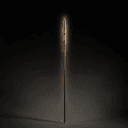
A spear five to seven meters long, the main weapon of the Macedonian phalanx. This invention of Philip II, perfected under Alexander, gave the Macedonians a decisive advantage over Greek hoplites and Persian armies.
A white fabric band tied around the head, symbol of Macedonian royalty. Alexander adopted it and gradually added Persian elements to mark his dual sovereignty.
📷 CC0 · Wikimedia Commons ↗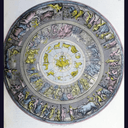
Alexander carried into battle a shield he had taken from the temple of Athena at Troy, believing it to be that of Achilles. This Homeric hero was his absolute model, from whom he claimed descent through his mother Olympias.
📷 Domaine public · Wikimedia Commons ↗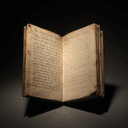
Alexander kept under his pillow a copy of Homer's Iliad annotated by his tutor Aristotle. This text accompanied him throughout his campaign in Asia, bearing witness to his attachment to Greek culture.
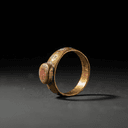
After his victory, Alexander used the signet ring of Darius III to seal documents destined for Asia, and his own seal for those destined for Europe, symbolizing his dual authority.
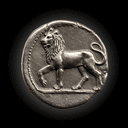
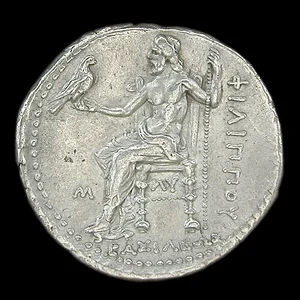
Silver coins struck with the effigy of Heracles wearing the skin of the Nemean lion. These coins became the reference currency throughout the Hellenistic world and circulated long after his death.
School Curriculum
Vocabulary & Tags
Key Vocabulary
Daily Life
Morning
Alexander rose at dawn and began the day with a sacrifice to the gods, particularly to Zeus and Heracles, from whom he claimed descent. He ate a frugal meal of bread, cheese, and fruit, then held council with his generals — the Companions (hetairoi) — to plan the day's march or military operations.
Afternoon
The afternoon was devoted to moving with the army or conducting siege maneuvers. Alexander often led his troops from the front, riding Bucephalus and charging at the head of the Companion cavalry. Between battles, he engaged in hunting, the quintessential royal activity in Macedonia, or inspected the fortifications of newly conquered cities.
Evening
In the evenings, Alexander frequently organized banquets (symposia) where wine flowed abundantly, sometimes to excess. Philosophy was debated, recitations from the Iliad and poems were heard, and musicians played the lyre and aulos. These meals were also political occasions where Alexander received ambassadors and dignitaries.
Food
Alexander's diet remained relatively modest for a king: bread, olives, figs, goat cheese, and grilled meats made up the daily fare. On campaign, he shared his soldiers' rations to maintain their morale. However, banquets could be lavish, featuring refined Persian dishes and wine in great quantities — a Macedonian custom.
Clothing
Alexander typically wore the Macedonian chlamys, a short cloak fastened at the shoulder, over a linen tunic. In battle, he donned a reinforced linen cuirass and a distinctive helmet with a double white crest. After the conquest of Persia, he adopted certain elements of Persian royal dress, such as the belt and diadem, which shocked several of his Macedonian companions.
Housing
On campaign, Alexander lived in a royal tent that served as both headquarters and audience chamber. After his conquests, he resided in the palaces of the Persian kings, notably in Babylon and Susa — monumental structures adorned with glazed bricks and carved columns, quite unlike the more austere Macedonian palaces of his childhood in Pella.
Historical Timeline
Period Vocabulary
Visual Style
Un style visuel inspiré de l'art hellénistique et de la mosaïque d'Alexandre de Pompéi, mêlant l'esthétique classique grecque aux splendeurs orientales, dans des tons dorés, pourpres et ocre évoquant conquête et grandeur.
Sound Ambience
L'univers sonore d'Alexandre mêle les bruits d'une armée en campagne — chocs de boucliers, hennissements de chevaux, ordres criés en grec — aux sons des palais orientaux conquis, avec leurs banquets et leurs chants homériques.
Liens externes & ressources
Références
Œuvres
Fondation d'Alexandrie d'Égypte
331 av. J.-C.
Conquête de l'Empire perse achéménide
334-330 av. J.-C.
Fondation de cités à travers l'Asie
330-324 av. J.-C.
Politique de fusion des cultures
324 av. J.-C.
Expédition en Inde
327-325 av. J.-C.
Diffusion de l'hellénisme
334-323 av. J.-C.