 flip
flipBlack Bread Kvass
Black Bread Kvass
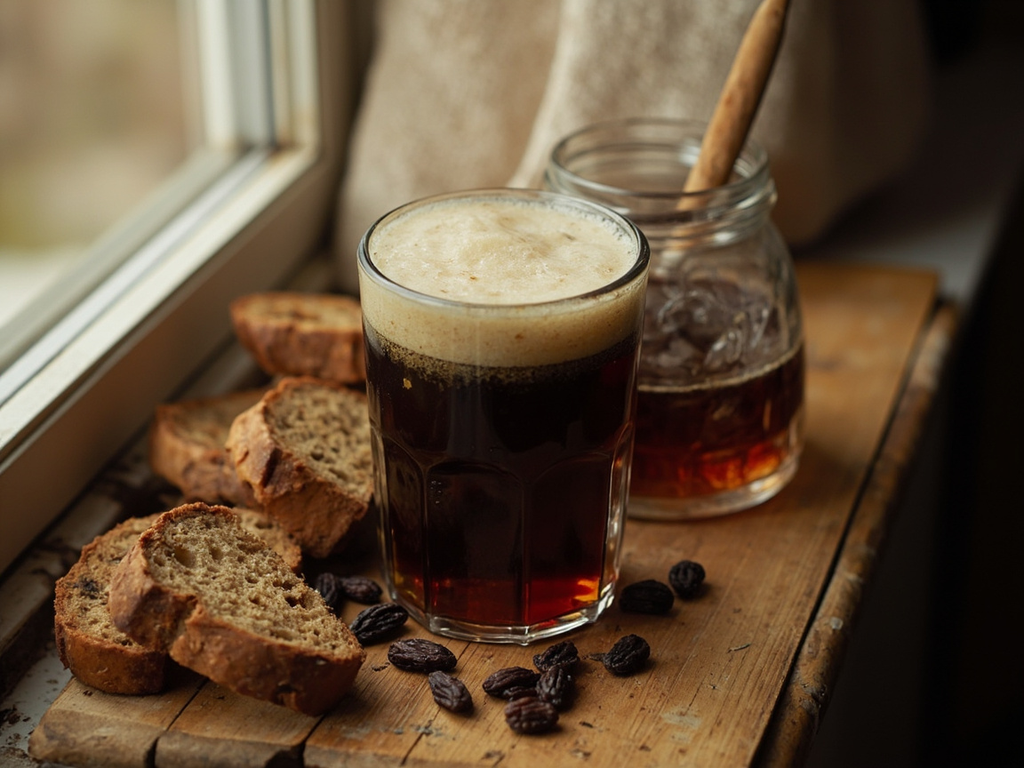
Why this dish? Kvass is made from stale rye bread: nothing is wasted, and everything returns to rye, the signature ingredient of Solzhenitsyn's life. Russia's national drink, thirst-quenching and popular, it is the beverage of the summer heat of his native Russia, where the smallest bread crumb found a second use.
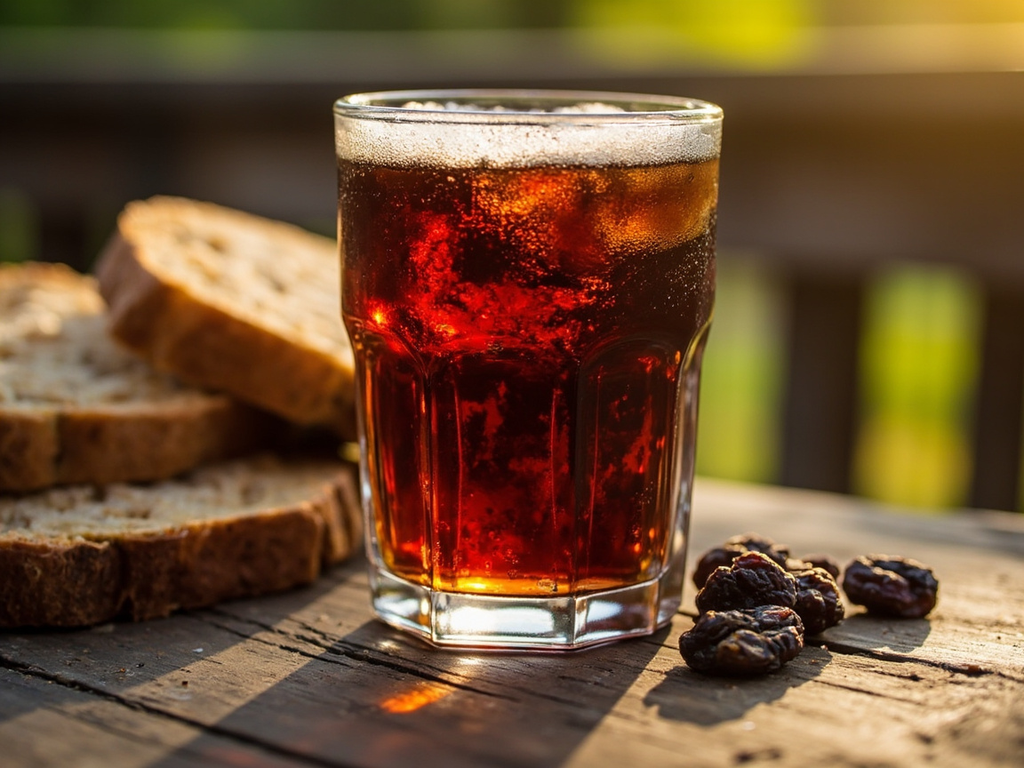
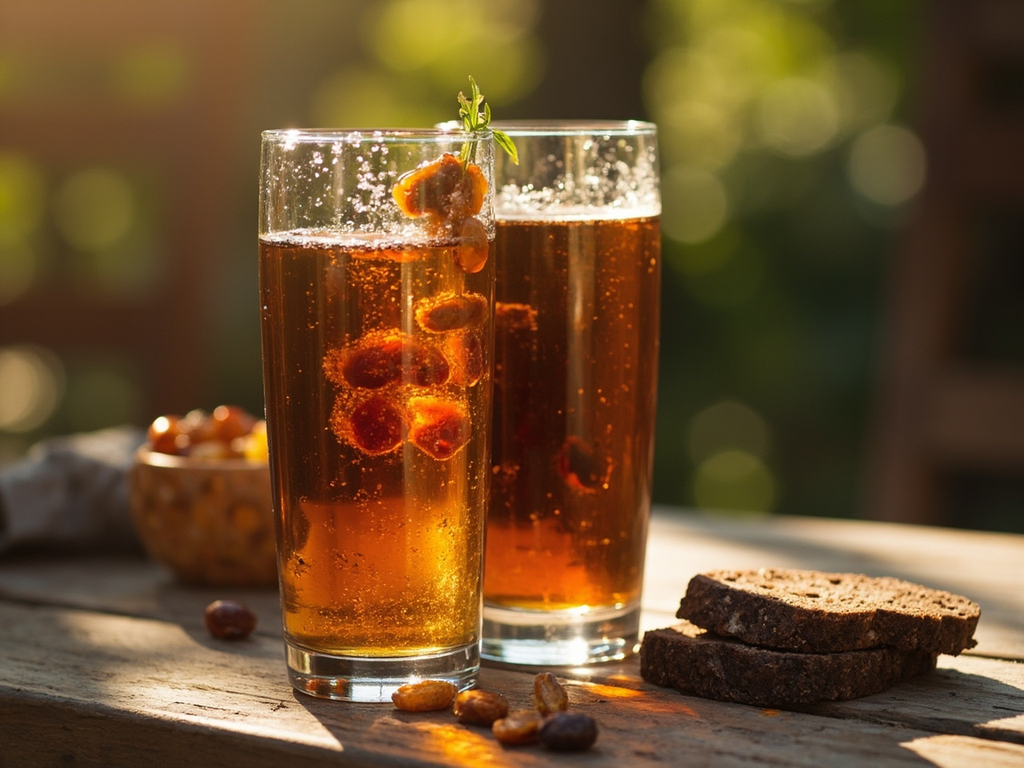
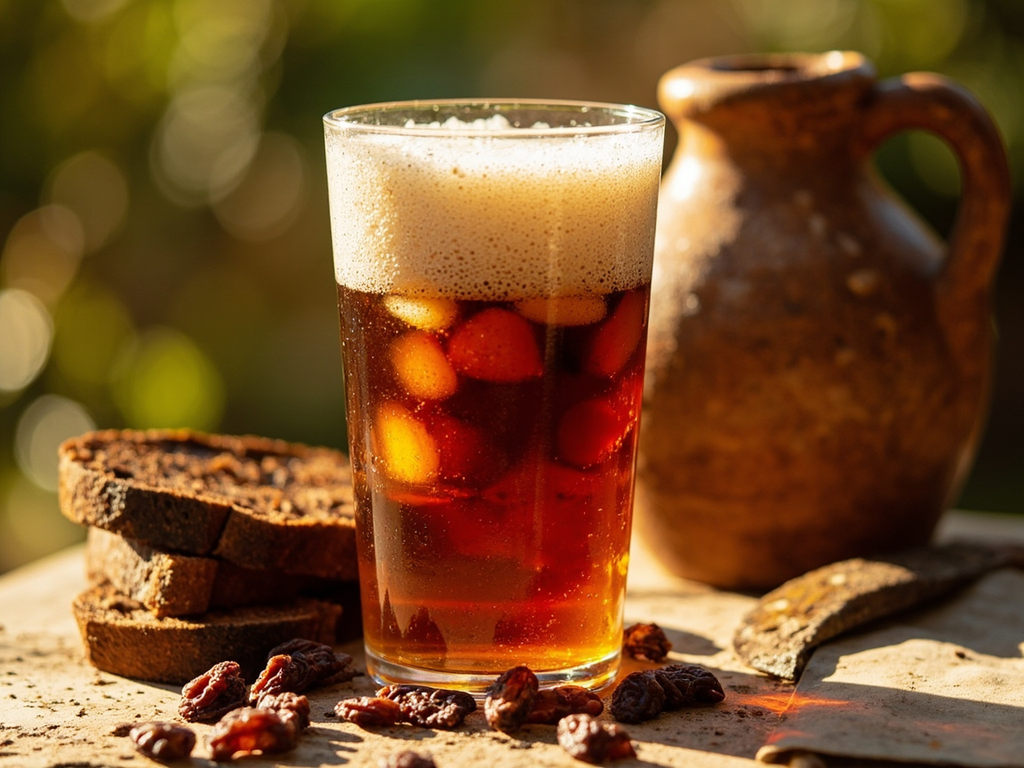
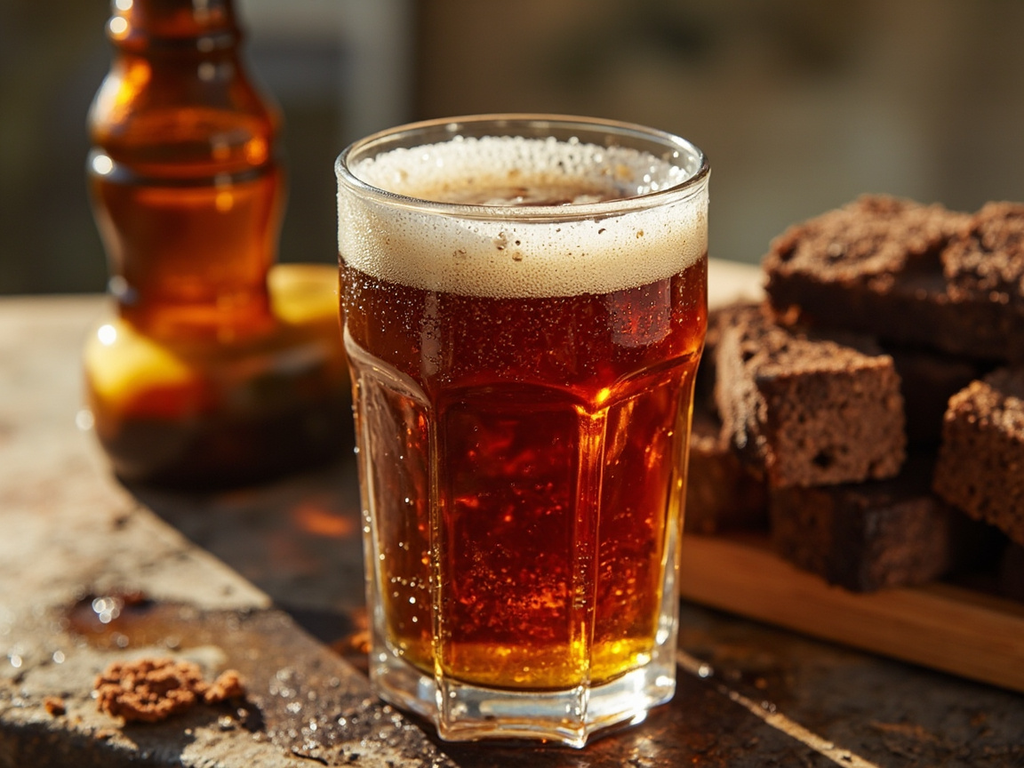
A sparkling, slightly sour, low-alcohol drink made by fermenting toasted black bread with a little sugar and yeast. Amber-brown, refreshing, it tastes of crust and cool cellar.
In our home, nothing from a loaf was thrown away — especially not. The rye bread that had hardened, we dried it in the oven, poured hot water over it, and nature did the rest: three days, and there was a living, tangy drink that sang when you opened the bottle. In the great heat, a glass of cold kvass was worth all the liqueurs of the rich. That is how it is: a little patience, a little burnt crust, and poverty itself becomes a feast.
- •Stale black rye bread — several slices (fermentable base)
- •Water — a large container (medium)
- •Honey or sugar — a few spoonfuls (fermentation sugar)
- •Sourdough starter or yeast — a little (ferment)
- •Raisins or mint leaves — a few (flavor (optional))
Black Bread Kvass
A sparkling, slightly sour, low-alcohol drink made by fermenting toasted black bread with a little sugar and yeast. Amber-brown, refreshing, it tastes of crust and cool cellar.
Why this dish? Kvass is made from stale rye bread: nothing is wasted, and everything returns to rye, the signature ingredient of Solzhenitsyn's life. Russia's national drink, thirst-quenching and popular, it is the beverage of the summer heat of his native Russia, where the smallest bread crumb found a second use.
In our home, nothing from a loaf was thrown away — especially not. The rye bread that had hardened, we dried it in the oven, poured hot water over it, and nature did the rest: three days, and there was a living, tangy drink that sang when you opened the bottle. In the great heat, a glass of cold kvass was worth all the liqueurs of the rich. That is how it is: a little patience, a little burnt crust, and poverty itself becomes a feast.
Ingredients (period version)
- Stale black rye bread — several slices (fermentable base)
- Water — a large container (medium)
- Honey or sugar — a few spoonfuls (fermentation sugar)
- Sourdough starter or yeast — a little (ferment)
- Raisins or mint leaves — a few (flavor (optional))
Ingredients
- Black rye bread — 250 g (fermentable base)
- Water — 2.5 L (medium)
- Sugar — 150 g (fermentation sugar)
- Dry baker's yeast — 1/2 tsp (ferment)
- Raisins — about ten (flavor and fizz)
- Mint or blackcurrant leaves — a few (optional) (flavor)
Method
- Cut the bread into pieces and dry/toast in the oven at 180 °C until well browned (this gives color and flavor).
- Put the bread in a large container, pour boiling water over it, cover with a cloth and let steep 6 to 8 h.
- Strain the brown liquid, press the bread, then dissolve the warm sugar in it.
- When the liquid is at room temperature, add the dissolved yeast; cover and let ferment 1 to 2 days at room temperature.
- Bottle with a few raisins, seal and let sit 1 more day for fizz, then refrigerate. Open carefully and serve very cold.
How it was made : Kvass has accompanied Russian life since the Middle Ages: it was drunk at every table, and also served as a base for summer cold soups like okroshka. Each house had its own starter and technique; natural fermentation produced a very low alcohol content, making it a drink for all, including children.
The contemporary twist : Served ice-cold in a swing-top bottle with a mint leaf, homemade kvass becomes a trendy 'terroir drink,' a Slavic cousin of kombucha.
Sources : Elena Molokhovets, A Gift to Young Housewives (1861) · William Pokhlebkin, The Art of Russian Cuisine (1978)
Aleksandr Solzhenitsyn · Charactorium