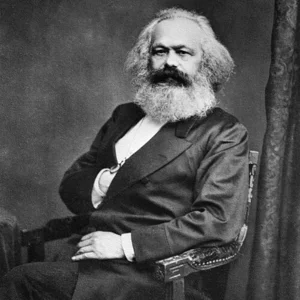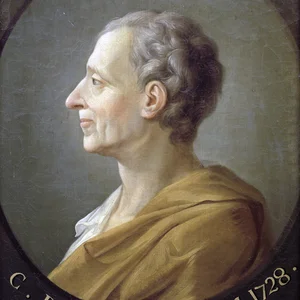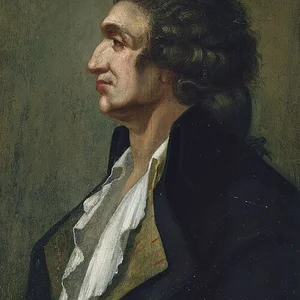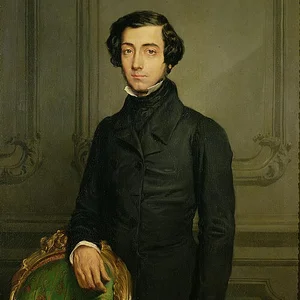

French political philosopher, historian, and statesman (1805–1859). Tocqueville is the author of 'Democracy in America', a foundational work analyzing American institutions and society. He is considered a pioneer of sociology and a major thinker of modern politics.
Alexis de Tocqueville(1805 — 1859)
Alexis de Tocqueville
France
8 min read
Frequently asked questions
Famous Quotes
« Liberty consists principally in not being enslaved to anyone else.»
« The equality of conditions is the generative fact from which all others seem to proceed.»
« Democracy amplifies the power of the majority.»
Key Facts
- 1831–1832: travels to the United States to study the American penitentiary system, which inspires him to analyze American democracy
- 1835–1840: publication in two volumes of 'Democracy in America', a founding work of comparative political analysis
- 1838: publication of 'The Old Regime and the Revolution', analyzing the causes and consequences of the French Revolution
- 1849–1851: Minister of Foreign Affairs, actively participating in French political life during the Second Empire
- 1859: dies in Cannes, leaving behind a major body of work that lastingly influences political and sociological thought
Works & Achievements
Tocqueville's masterwork analyzing American institutions, customs, and political culture. This foundational comparative study laid the groundwork for modern sociology and remains an essential reference for understanding democracy.
A major historical analysis examining the origins of the French Revolution and the continuities between the Old Regime and modern institutions. Tocqueville explores how administrative centralization was reinforced through political transformations.
Personal memoirs in which Tocqueville recounts his participation in French political life and his observations on the events of 1848. This testimony offers a critical perspective on the actors and political movements of the 19th century.
A pioneering social study in which Tocqueville analyzes the causes and consequences of poverty in an industrializing France. This report proposes innovative solutions and marks the beginning of French sociological reflection on the social question.
A collection of letters exchanged with European and American intellectuals and politicians. This correspondence illustrates Tocqueville's networks of influence and his reflections on contemporary political transformations.
Tocqueville's political interventions and contributions as a deputy during the Second Republic. He participated in drafting the Constitution of 1848 and defended his liberal and moderate convictions.
Anecdotes
In 1831, at only 26 years old, Tocqueville obtained an official mission from the French government to study the American penitentiary system. This nine-month journey led him across the United States, where he observed far more than prisons: he conducted an in-depth analysis of American democracy and its institutions. Back in France, he transformed this experience into a masterpiece, 'Democracy in America', published between 1835 and 1840, which became a worldwide reference.
Tocqueville was a Norman aristocrat who had to navigate the political turbulences of 19th-century France: he lived through the Restoration, the July Monarchy, and the Second Republic. Despite his liberal convictions and his wariness of authoritarianism, he held public office, notably as a deputy and briefly as Minister of Foreign Affairs in 1849.
Tocqueville developed a prophetic concern about 'democratic despotism', fearing that a democracy might transform into a tyranny of the majority where a centralized state would stifle individual liberties. This analysis, revolutionary for its time, profoundly influenced modern political thought and is still taught today in universities around the world.
Suffering from chronic tuberculosis from 1837 onwards, Tocqueville had to interrupt his political career on several occasions for health reasons. Despite this debilitating illness, he continued his intellectual work and political reflections until his death in 1859, demonstrating remarkable determination.
Primary Sources
The Americans have applied to political science new ideas, and have created new terms, or given a new meaning to old ones. They have instilled in each citizen a great sense of personal responsibility in public affairs.
I am convinced that democratic peoples have a natural taste for freedom; left to themselves, they seek it, they love it, and they part from it only with regret.
What characterizes the feudal regime above all is that the hierarchy, instead of stopping, as in absolute monarchies, at officers and nobles, descends all the way to the peasants and perpetuates itself there.
The French Revolution sought to destroy all vestiges of the Middle Ages, but it could not fully succeed, for there are things in our nature that survive all political changes.
Key Places
Tocqueville's native region. He was born at the Château de Verneuil in Normandy, where he grew up in an influential Norman aristocratic family.
Tocqueville undertook a 9-month journey to the United States to study the penitentiary system and American democracy. This experience would inspire his masterpiece "Democracy in America".
The political and intellectual center where Tocqueville served as magistrate, deputy, and statesman. He published his major works there and took part in the political debates of the 19th century.
Tocqueville sat here as a representative of the Manche department. He played an active role in legislative debates and the political transformations of 19th-century France.
The family estate where Tocqueville spent his final years. This place symbolizes the thinker's deep roots in his native region.
Tocqueville traveled and stayed in Algeria, then a French colony. He wrote reports on colonization that reflect his thinking on European expansion.
Typical Objects
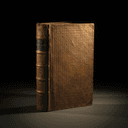
Major work published in two volumes (1835-1840) in which Tocqueville analyzes American democratic institutions. This founding work of modern political science is the result of his journey to the United States in 1831-1832.

Essential tools of the writer and thinker's craft in the 19th century. Tocqueville used them to draft his political analyses, correspondence, and philosophical reflections.
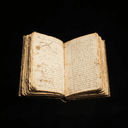
Journal in which Tocqueville recorded his observations during his stay in America (1831-1832). These notebooks constitute the preparatory documents for his major works of political thought.

Black coat, waistcoat, and cravat typical of the era, symbolizing the status of aristocratic gentleman and statesman that Tocqueville held at the French National Assembly.

Periodical publication of the 19th century through which political ideas circulated. Tocqueville contributed to these public debates as an influential thinker in French political life.
Norman aristocratic residence and family estate of Alexis de Tocqueville. This château represents his roots in the French nobility and his social standing as a major landowner.

Ocean vessel that carried Tocqueville across the Atlantic in 1831 for his study trip to the United States, a pivotal moment that gave rise to his most important reflections.
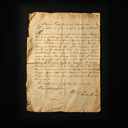
Document attesting to the magistrate position Tocqueville held in France before devoting himself to writing and politics. This role allowed him to observe the inner workings of power.
School Curriculum
Vocabulary & Tags
Key Vocabulary
Tags
Concept
Daily Life
Morning
Tocqueville rises around 7-8 o'clock in his Parisian townhouse or his Norman manor at Tocqueville. After his morning routine, he has a light breakfast of coffee, bread, and butter, then devotes himself to reading and political correspondence with his peers. He dedicates the first hours of the day to his writing and historical research.
Afternoon
The afternoon is often devoted to his political activities: meetings with colleagues at the National Assembly (of which he is a deputy from 1839 onwards), conversations with other men of letters and thinkers, or work in his archives. He also frequents Parisian salons where questions of politics and philosophy are debated. Tocqueville may also retreat to his library to continue his research.
Evening
In the evening, Tocqueville dines around 7-8 p.m., the day's most substantial meal consisting of meats, vegetables, and wine. He then spends time in the company of his wife Marie or receives friends for intellectual discussions. He often ends the day with reading before going to bed, filling pages with notes or personal correspondence.
Food
As a member of the landed nobility, Tocqueville enjoys the comfortable diet typical of 19th-century bourgeois society: quality meats, fish, cheeses, fruits, and vegetables from his Norman estates. He regularly drinks wine and coffee. His meals follow the Parisian urban rhythm, with a light breakfast and a substantial dinner.
Clothing
Tocqueville wears the formal attire of 19th-century nobility: a well-tailored dark suit, waistcoat, white shirt, and cravat. He is generally well dressed, donning a frock coat and top hat for his public outings and parliamentary sessions. His appearance reflects his status as a nobleman and respectable political figure.
Housing
Tocqueville owns a townhouse in Paris, where he resides for part of the year, and the ancestral Norman manor of Tocqueville, his family's hereditary residence. These aristocratic dwellings feature richly stocked libraries, reception rooms, and studies. His privileged living environment allows him to welcome intellectuals and maintain his political and cultural networks.
Historical Timeline
Period Vocabulary
Visual Style
Un style d'illustration ancré dans le réalisme académique du XIXe siècle, mêlant rigueur intellectuelle et atmosphère studieuse, avec un éclairage chaleureux rappelant les salons parisiens de l'époque romantique.
Sound Ambience
Une ambiance intellectuelle du XIXe siècle français mêlant les bruits d'une étude savante (plume, pages, cheminée) aux sons lointains de Paris aristocratique, créant une atmosphère de réflexion philosophique et de débat politique raffiné.
Liens externes & ressources
Références
Œuvres
De la Démocratie en Amérique
1835-1840
L'Ancien Régime et la Révolution
1856
Souvenirs
1893 (posthume)
Rapport sur le paupérisme
1835
Correspondances politiques et intellectuelles
1861 (édition)
Travaux législatifs à l'Assemblée nationale
1848-1851