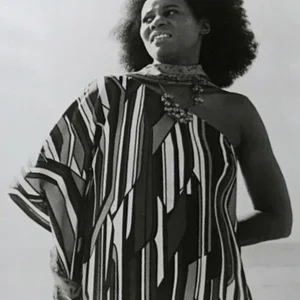

American jazz pianist, harpist, organist and composer, a major figure of spiritual jazz. The wife of John Coltrane, she pursued a body of work blending modal jazz, Indian music and a mystical quest.
Alice Coltrane(1937 — 2007)
Alice Coltrane
États-Unis
6 min read
Frequently asked questions
Key Facts
- Born in 1937 in Detroit, she trained in classical piano and gospel before turning to jazz.
- She married John Coltrane in 1965 and joined his quartet as pianist in 1966.
- After John Coltrane's death in 1967, she recorded major albums such as “Journey in Satchidananda” (1970).
- She adopted the harp as her central instrument, a rarity in jazz, to express her spiritual quest.
- She founded an ashram in California and became a figure of devotional jazz until her death in 2007.
Works & Achievements
Her first album under her own name, recorded shortly after the death of John Coltrane and dedicated to his memory.
A landmark album on which she plays both piano and harp, surrounded by horn players such as Pharoah Sanders and Joe Henderson.
Her masterpiece, a fusion of modal jazz, harp, and Indian drones that became a classic of spiritual jazz.
A bold album blending orchestral strings and free improvisation, reflecting her quest for transcendence.
An ambitious work with a string orchestra, marking the peak of her most experimental period.
An orchestral and mystical album that closes her great cycle for the Impulse! label.
A book in which she describes her spiritual experiences, a testament to her dual calling as both musician and religious guide.
Her comeback album, produced by her son Ravi Coltrane, after years devoted to the spiritual life.
Anecdotes
Before his death in 1967, John Coltrane gave a harp to his wife Alice. The instrument arrived at her home after the saxophonist's passing, and Alice, already an accomplished pianist, taught herself to play it. She thus became one of the very few harpists in the history of jazz, making this fragile, celestial instrument her signature sound.
In the late 1950s, the young Alice McLeod went to Paris to study piano, where she honed her craft under Bud Powell, one of the greatest masters of bebop. This European stay shaped her ear and her virtuosity before she ever met John Coltrane.
In 1966, Alice Coltrane replaced pianist McCoy Tyner in her own husband's band. On stage, she thus found herself musically directed by her spouse, taking part in the most daring sonic explorations of the free jazz of the time.
After John's death, Alice turned toward Indian spirituality and Vedanta. She took the Sanskrit name Turiyasangitananda, founded an ashram in California, and recorded devotional chants there, released on simple cassette tapes, far from the commercial circuits of jazz.
She passed her musical legacy on to her children: her son Ravi Coltrane, named in tribute to the sitar player Ravi Shankar, went on to become a jazz saxophonist recognized the world over.
Primary Sources
In it, Alice Coltrane describes her spiritual experiences and the inner transformation that guided her music after John's death, presenting musical creation as a form of meditation and devotion.
The album is dedicated to the spiritual teacher Swami Satchidananda, whose teaching inspires its title and the meditative spirit of the music.
She recounts that John had ordered a harp for her and that she received the instrument after his death, later teaching herself to play it in order to weave it into her language of spiritual jazz.
Key Places
Birthplace of Alice McLeod, a major industrial and musical hub where she grew up in a music-loving family.
She studied piano here in the late 1950s, honing her skills under bebop pianist Bud Powell.
Family home she shared with John Coltrane; the setting of their life together and their musical explorations.
Site of the Sai Anantam ashram she founded, where she taught spirituality and recorded her devotional chants.
Area where she spent her final years and where she passed away in 2007.
Typical Objects

A celestial instrument given to her by John Coltrane, which Alice taught herself to play; she made it the unique signature of her spiritual jazz.

Her training instrument, inherited from bebop; on it she developed a flowing, cascading style marked by glissandos.

An electric organ she used to create soaring, meditative washes of sound on her albums of the 1970s.
An Indian stringed instrument producing a continuous drone, which she incorporated to give her music a meditative, Eastern color.
A small bellows-driven instrument used in Indian devotional songs; she used it at the ashram to accompany the bhajans.
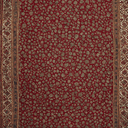
A traditional Indian garment she adopted after her spiritual conversion, as a religious leader named Turiyasangitananda.
School Curriculum
Vocabulary & Tags
Key Vocabulary
Tags
Daily Life
Morning
During her ashram years, Alice Coltrane began the day with meditation and prayer at daybreak. She often accompanied the morning chants on the harmonium or the organ, in the calm of the sanctuary.
Afternoon
The afternoon was devoted to composition and rehearsal, on both the piano and the harp. She also led the spiritual teaching of her community's members and the organization of their collective life.
Evening
In the evening, the faithful gathered for devotional chants and improvised music sessions. During her concert years, evenings were instead dedicated to performances on stage, sometimes late into the night.
Food
A follower of Hindu spirituality, she kept a vegetarian diet, in keeping with the principles of nonviolence of *vedanta*. The community's meals were simple, shared, and prepared collectively.
Clothing
As a young musician, she wore the elegant outfits of the 1960s jazz clubs. After her spiritual conversion, she adopted loose, Indian-inspired garments, such as the *sari*, as a sign of her role as a religious guide.
Housing
She first lived in the family home on **Long Island** with **John Coltrane** and their children. Later, in **California**, she settled in the ashram she had founded, a place of communal living surrounded by nature.