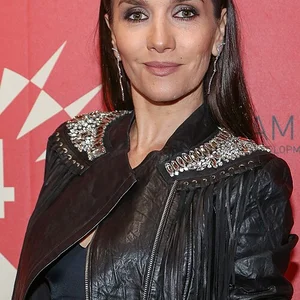

Natalia Oreiro is a Uruguayan actress and singer born in 1977 in Montevideo. She gained international fame through Argentine telenovelas of the 1990s and 2000s, and a music career that made her especially popular in Eastern Europe.
Natalia Oreiro(1977 — ?)
Natalia Oreiro
Espagne, Uruguay, Russie
7 min read
Frequently asked questions
Key Facts
- Born on May 19, 1977, in Montevideo, Uruguay
- Breakthrough with the telenovela 'Muñeca Brava' (1998–1999), broadcast in over 70 countries
- Her album 'Turmalina' (2000) was a massive hit in Russia and Eastern Europe
- Named an honorary citizen of Russia in 2021 by President Vladimir Putin
- Serves as a UNICEF Goodwill Ambassador for Uruguay
Works & Achievements
Argentine telenovela in which Natalia Oreiro plays Milagros, a rebellious and endearing character. Broadcast in more than 40 countries, it launched her international fame, particularly in Russia and Eastern Europe.
Natalia Oreiro's debut music album, featuring the hit 'Cambio dolor', which became an anthem for a generation in Russia and Ukraine and marked the beginning of her dual career as an actress and singer.
Argentine telenovela in which Natalia Oreiro plays the lead role, confirming her lasting place in the Latin American audiovisual industry following her success in the 1990s.
A major musical hit that cemented her popularity across Latin America and Eastern Europe, illustrating the ability of Latin artists to connect with culturally very different audiences.
An album that established Natalia Oreiro as a recording artist in her own right, beyond her image as a telenovela actress, with strong sales in both Russia and Argentina.
A long-term commitment as a UNICEF Goodwill Ambassador, leading awareness campaigns for children's rights across Latin America and using her international profile for humanitarian causes.
Anecdotes
Natalia Oreiro recorded her song 'Cambio dolor' in 1998, which became a massive cultural phenomenon in Russia and several Eastern European countries, to the point where she is considered a national star there. This unexpected success led her to film commercials for Russian brands and embark on triumphant tours performing for tens of thousands of fans in Moscow.
In 2018, the Russian government granted her Russian citizenship by presidential decree signed by Vladimir Putin, in recognition of her deep cultural ties to the country. Natalia Oreiro thus became a citizen of two nations, highlighting the lasting impact of Latin American culture in post-Soviet Russia.
During the broadcast of the telenovela 'Muñeca Brava' in Argentina in the late 1990s, Natalia Oreiro received thousands of fan letters every week. The series was exported to more than 40 countries, illustrating the global reach of Argentine telenovelas during the cultural globalization of the 1990s.
Natalia Oreiro was appointed UNICEF Goodwill Ambassador for Uruguay, using her international celebrity in service of children's rights in Latin America. This commitment allowed her to move beyond her image as an entertainment star and become an engaged public figure on the international stage.
Primary Sources
By decree of the President of the Russian Federation, Russian citizenship is granted to Natalia Oreiro in recognition of her contribution to strengthening cultural ties between Russia and Latin America.
I never would have imagined that my music would touch so many people in Russia. For me, it's proof that culture has no borders.
Natalia Oreiro accepted the role of UNICEF Goodwill Ambassador for Uruguay, committing to promote children's rights and education in Latin America.
Working on Muñeca Brava was a life-changing experience. This character allowed me to touch the hearts of people all around the world.
Key Places
Natalia Oreiro's birthplace and Uruguay's cultural and economic capital, where she grew up before leaving to pursue her career in Argentina.
Her adopted city, where Natalia Oreiro built her career as an actress and singer at the heart of the Latin American telenovela industry during the 1990s and 2000s.
A symbol of her unexpected success in Eastern Europe, where she performed to sold-out crowds and where her popularity remains a cultural phenomenon that scholars continue to study.
The main filming location for the Argentine telenovelas that brought Natalia Oreiro international fame, and an icon of Argentina's audiovisual industry.