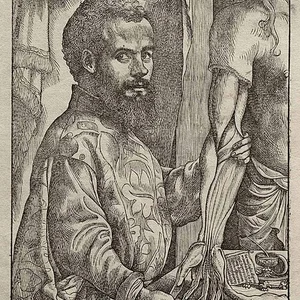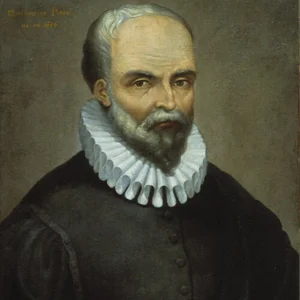

French surgeon and anatomist (1510-1590) who revolutionized Renaissance surgery by abandoning brutal medieval practices. He laid the foundations of modern surgery through his anatomical innovations and more humane techniques.
Ambroise Paré(1510 — 1590)
Ambroise Paré
royaume de France
8 min read
Frequently asked questions
Key Facts
- 1536: Takes part in military campaigns where he discovers that brandy and rose oil are more effective than cauterization for treating wounds
- 1545: Publishes his first surgical work 'The Method of Treating Wounds Made by Arquebus'
- 1552: Becomes surgeon to King Henry II and establishes his reputation at the royal court
- 1575: Publishes his major work 'The Works of Ambroise Paré', compiling his surgical innovations
- 1590: His practice and teachings lay the foundations of modern surgery, transforming a formerly artisanal discipline into both an art and a science
Works & Achievements
A foundational work in which Paré describes the treatment of firearm wounds without the use of boiling oil, thereby revolutionizing military surgical practice. This treatise established the foundations of modern surgery by advocating empirical observation and humanity.
A major innovation consisting of replacing cauterization and boiling oil with simple dressings respectful of the body's physiology. This revolutionary approach considerably increased patient survival rates.
A masterful compilation of his surgical discoveries and techniques, presenting the ligation of blood vessels and amputation without cauterization. This collection became the European reference in practical and theoretical surgery.
Systematic work on dissection and anatomical documentation accompanied by precise illustrations, contributing to the advancement of knowledge on the structure of the human body and to the training of surgeons.
A reference work regulating and rationalizing the practice of bloodletting, a method still commonly used in the 16th century. Paré established scientific principles and precise contraindications for this practice.
A work combining medical observations and natural curiosities, reflecting the Renaissance interest in human anatomy and bodily variations. This treatise remains important for the history of medical teratology.
Paré developed and refined prostheses and orthopedic devices for amputees, significantly improving their quality of life. These innovations mark the beginnings of reconstructive surgery and patient rehabilitation.
Anecdotes
Ambroise Paré accidentally discovered a revolutionary technique in 1537 during the Siege of Turin. Running out of boiling oil to cauterize the wounds of the injured, he applied a mixture of egg yolk, rose, and turpentine instead. Surprised to find that his patients healed better with this gentle dressing than with the burn of boiling oil, he abandoned this cruel medieval practice forever.
Paré was the first to systematically use the ligation of blood vessels to stop hemorrhages during amputations, instead of cauterizing them with a red-hot iron. This humanitarian innovation saved countless lives by considerably reducing pain and post-operative infections.
Although a simple barber-surgeon with no university degree, Ambroise Paré established himself as a master of surgery and treated four successive kings of France (Henry II, Francis II, Charles IX, and Henry III), demonstrating how talent and innovation can overcome social barriers.
Paré challenged the authority of ancient medicine by asserting that wounds were not caused by poisons from weapons, but by infections. His practical observations and anatomical dissections allowed him to prove truths that scholars refused to acknowledge.
At over 80 years of age, Paré continued to innovate by developing sophisticated artificial prosthetics for amputees, including an articulated mechanical hand that allowed patients to partially regain the use of their lost limbs.
Primary Sources
I will not use cauteries, nor fire to stop the bleeding, but I will make use of ligatures, which are much gentler and less painful than other methods.
I thought that fire should be the principal remedy for wounds made by firearms, but I have experienced the contrary, and found that rose oil with theriac is far better.
Anatomy is the base and foundation of surgery, and without knowledge of the human body, one cannot be a good surgeon.
I have seen and considered the monsters and prodigious things that are born contrary to the order of Nature, which it is good to know for the advancement of medical science.
Key Places
Ambroise Paré's birthplace in Mayenne. It is here that he was born in 1510 and began his apprenticeship before becoming one of the greatest surgeons of his time.
The main centre of his professional activity, where Paré practiced as a surgeon, notably at the Hôtel-Dieu and at the royal court. There he developed his surgical innovations and taught his methods.
The institution where Paré acquired his anatomical knowledge and where he contributed to spreading his revolutionary ideas on modern surgery and anatomy.
The main Parisian hospital where Paré worked as a surgeon and was able to apply and refine his innovative surgical care techniques.
Paré was appointed surgeon to Kings Henry II, Francis II, Charles IX, and Henry III, where he played a crucial role in the evolution of royal and military medicine.
Paré accompanied the French army as a military surgeon, where he revolutionised the treatment of war wounds by abandoning cauterisation with a hot iron in favour of more humane dressings.
Typical Objects
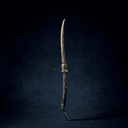
A precision instrument used by Ambroise Paré in his surgical procedures. This scalpel represents his shift toward more refined and controlled techniques, replacing the brutal practices of the Middle Ages.
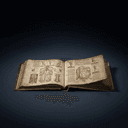
A work containing detailed anatomical plates, symbolizing Ambroise Paré's research into the knowledge of the human body. These illustrations mark the scientific renewal of the Renaissance.
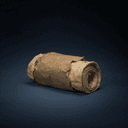
Innovative care materials promoted by Paré, who developed more humane and effective wound-dressing techniques. They represent his less painful approach to medicine.
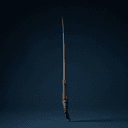
A thin, elongated instrument used to explore wounds and body cavities. Paré used it to examine and treat injuries with greater precision than his predecessors.
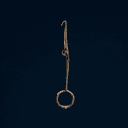
A surgical tool used to control hemorrhaging by clamping blood vessels. This innovation by Paré greatly improved the safety of surgical procedures.
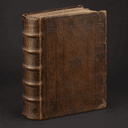
A compilation of Ambroise Paré's treatises and observations, published multiple times during his lifetime. This work spread his revolutionary methods throughout medical Europe.
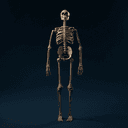
A pedagogical model of the human skeleton used during the Renaissance to teach anatomy. Paré used it to illustrate his discoveries and instruct his students.

A personal notebook in which Ambroise Paré recorded his clinical observations and experiences. This tool symbolizes his empirical and modern approach to evidence-based medicine.
School Curriculum
Vocabulary & Tags
Key Vocabulary
Tags
Époque
Daily Life
Morning
Ambroise Paré rises before dawn, as most men of his era do. He begins his day with prayers, then prepares to receive patients or travel to the royal court where he serves as the king's surgeon. He reviews his notes and anatomical drawings made during dissections.
Afternoon
The afternoon is devoted to surgical procedures: amputations, treatment of war wounds, extraction of projectiles, and wound care. Paré experiments with his innovative techniques for anesthesia and healing, far removed from the brutal practice of cauterization with boiling oil. He carefully observes results and documents his findings.
Evening
In the evening, Paré writes up his medical and anatomical observations, which form the foundation of his future works. He consults the ancient texts of Galen and Hippocrates while questioning their teachings. After dinner, he may exchange ideas with other scholars or physicians at court before retiring for the night.
Food
As a prosperous Renaissance man of high standing, Paré consumes meat (poultry, mutton, fish), white bread, and seasonal fruits and vegetables. He drinks wine diluted with water, a common beverage considered safer than water alone. His diet reflects his elevated social status, in contrast to peasants who subsist mainly on grains.
Clothing
Paré wears the typical dress of a gentleman of the 16th century: a fitted doublet, hose, a long coat of good cloth, and a cap. As royal surgeon, he dresses respectably but without excess luxury, sometimes wearing a work apron during procedures. His neat appearance reflects his recognized professional standing.
Housing
Toward the end of his life, Paré resides in Paris near the royal court, in comfortable lodgings befitting his status as the king's surgeon. His home includes a workspace where he receives patients and students, as well as a personal library rich in medical and anatomical texts. He also has a dedicated space for his dissections and anatomical experiments.
Historical Timeline
Period Vocabulary
Visual Style
Un style visuel inspiré des illustrations anatomiques de la Renaissance, mariant la précision scientifique à une atmosphère chaleureuse et humaniste. L'esthétique évoque les carnets d'étude du XVIe siècle avec des techniques de peinture à l'huile, une lumière douce de chandelle et des tonalités dorées et sépia, reflétant la révolution chirurgicale bienveillante d'Ambroise Paré.
Sound Ambience
Une ambiance immersive évoquant le cabinet de travail d'Ambroise Paré au XVIe siècle : sons d'instruments chirurgicaux délicats, froissement de vêtements d'époque, crépitement du feu et rumeurs urbaines lointaines, créant une atmosphère de sérénité studieuse et de progrès médical.
Liens externes & ressources
Références
Œuvres
Traité de la plaie d'arquebuse
1545
Méthode du pansement des plaies
1550-1560
Œuvres complètes de chirurgie
1575
Études anatomiques et illustrations
1545-1580
Introduction à la pratique de la saignée
1570
Traité des monstres et des prodiges
1573
Invention de la prothèse et de membres artificiels
1560-1580