Character Catalog

Historical Library

CollectionGalaxy
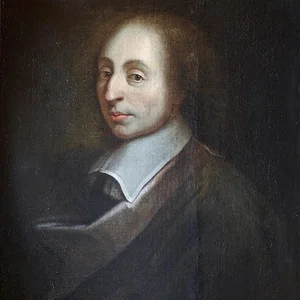
Portrait de Blaise Pascal

Blaise Pascal

Blaise Pascal

1623 — 1662

royaume de France

PhilosophySciencesMathématicien(ne)PhilosopheScientifiqueEarly Modern17th century (Baroque period and the dawn of modern science)

French mathematician, physicist, philosopher and writer (1623–1662), Blaise Pascal revolutionized mathematics by founding probability theory and left a lasting mark on Christian philosophy through his exploration of doubt and faith. A major figure of the 17th century, he combined scientific rigor with metaphysical inquiry.

Émotions disponibles (6)

N

Neutre

par défaut

I

Inspiré

P

Pensif

S

Surpris

T

Triste

F

Fier

Famous Quotes

« The heart has its reasons which reason knows nothing of. »
« Man is but a reed, the most feeble thing in nature; but he is a thinking reed. »
« All of humanity's problems stem from man's inability to sit quietly in a room alone. »

Key Facts

  • 1642: Invention of the Pascaline, the first mechanical calculator
  • 1648: Experiments on vacuum and atmospheric pressure (barometry)
  • 1654: Foundation of probability theory alongside Fermat
  • 1657–1662: Writing of the PensĂ©es, a posthumous philosophical work
  • Development of Pascal's triangle (binomial theorem)

Works & Achievements

Essay on Conics (1640)

A treatise written at age 16, presenting the theorem of the mystic hexagram. This precocious text impressed Parisian mathematicians.

The Pascaline (1642-1645)

A mechanical calculating machine capable of additions and subtractions, one of the first in history, designed to assist his father with his tax calculations.

New Experiments Concerning the Vacuum (1647)

A publication describing Pascal's experiments on the vacuum, challenging Aristotelian physics and asserting the existence of the vacuum in nature.

Treatise on the Arithmetical Triangle (1654 (published in 1665))

A foundational work presenting the properties of Pascal's triangle and its applications to combinations and probability theory.

The Provincial Letters (1656-1657)

A series of eighteen satirical letters defending the Jansenists against the Jesuits. A masterpiece of polemical prose that durably influenced French literary style.

Pensées (1670 (posthumous publication))

Fragments of an unfinished apology for the Christian religion. A major work of French philosophy and literature, containing Pascal's famous wager.

Treatises on the Equilibrium of Liquids and the Weight of the Mass of Air (1663 (posthumous publication))

An exposition of the laws of hydrostatics and atmospheric pressure, laying the foundations of modern fluid mechanics.

Anecdotes

At just 16 years old, Blaise Pascal wrote a treatise on conic sections that impressed the greatest mathematicians of his time, including Descartes, who initially refused to believe that such a young man could be its author.

To help his father, a superintendent responsible for tax calculations in Normandy, Pascal invented the Pascaline at age 19, one of the very first mechanical calculating machines. He had around fifty of them built, but the high cost prevented its commercial adoption.

In 1646, Pascal reproduced Torricelli's experiment on the vacuum, and in 1648 organized the famous Puy-de-Dôme experiment, carried out by his brother-in-law Florin Périer, proving that atmospheric pressure decreases with altitude. This demonstration put an end to the Aristotelian theory of nature's abhorrence of a vacuum.

On the night of November 23, 1654, Pascal experienced an intense mystical revelation that he recorded on a piece of parchment known as the 'Memorial', sewn into the lining of his doublet. This text was only discovered after his death.

It was during a correspondence with Pierre de Fermat in 1654, concerning a dice game problem posed by the Chevalier de Méré, that Pascal and Fermat together laid the foundations of probability theory.

Primary Sources

Pensées (1670 (posthumous publication))
The heart has its reasons, which reason does not know. We feel it in a thousand things. It is the heart which perceives God, and not the reason. This is what faith is: God felt by the heart, not by reason.
The Provincial Letters (Letter V) (1656)
I have made this letter longer than usual, because I lacked the time to make it shorter.
Treatises on the Equilibrium of Liquids and the Weight of the Mass of Air (1663 (posthumous publication))
Nature has no repugnance for the vacuum; all the effects attributed to this horror arise from the weight and pressure of the air.
Pensées — fragment on the thinking reed (1670 (posthumous publication))
Man is but a reed, the most feeble thing in nature; but he is a thinking reed. The entire universe need not arm itself to crush him: a vapor, a drop of water suffices to kill him.

Key Places

Clermont-Ferrand

Birthplace of Blaise Pascal, born on June 19, 1623. It is also nearby, at the summit of the Puy-de-DĂ´me, that his famous experiment on atmospheric pressure was carried out.

Port-Royal-des-Champs

Jansenist abbey near Chevreuse, a central place in Pascal's spiritual and intellectual life. His sister Jacqueline was a nun there, and he stayed frequently after his conversion.

Paris — Latin Quarter

Pascal spent much of his life in Paris, where he frequented scholarly circles, published his works, and conducted his experiments on the vacuum.

Rouen

The city where the Pascal family settled in 1640 when his father Étienne was appointed tax commissioner. It was in Rouen that Blaise conceived and had the first Pascalines built.

Puy-de-DĂ´me

Auvergne summit where Florin Périer carried out in 1648, at Pascal's request, the experiment proving the variation of atmospheric pressure with altitude.

Typical Objects

The Pascaline

Mechanical calculating machine invented by Pascal around 1642, composed of toothed wheels and drums allowing additions and subtractions to be performed automatically.

Torricelli's mercury tube

Glass instrument filled with mercury used by Pascal in his experiments on atmospheric pressure and vacuum.

Quill pen and inkwell

Pascal's everyday writing instruments, with which he composed his vast scientific correspondence, his Pensées and the Provinciales.

The Memorial

Small parchment sewn into the lining of Pascal's doublet, recounting his mystical experience on the night of 23 November 1654.

Arithmetic triangle

Numerical table arranged in a triangle, known as Pascal's triangle, used for combinations and the expansion of binomials.

Piston syringe

Experimental instrument used by Pascal in his demonstrations on vacuum and fluid pressure.

School Curriculum

LycéePhilosophie
LycéeMathématiques
LycéePhilosophie — Le pari de Pascal et la question de l'existence de Dieu
LycéePhilosophie — La foi et la raison : l'opposition cœur/raison
LycéePhilosophie — Les origines de la méthode scientifique moderne
LycéePhilosophie — Les fondements des probabilités et du calcul statistique
LycéePhilosophie — La condition humaine et l'existence
LycéePhilosophie — La controverse autour du vide et les débuts de la physique moderne

Vocabulary & Tags

Key Vocabulary

wagerprobabilityvacuumreasonfaithJansenismrecreationtranscendence

Tags

Concept

Blaise Pascalrevolution-scientifiqueRévolution scientifiquepariprobabilitévidefoijansénismerécréationtranscendanceXVIIe siècle (période baroque et des débuts des sciences modernes)

Daily Life

Morning

Pascal rises early despite fragile health, suffering from chronic headaches and abdominal pain. He dedicates his first hours to prayer and meditation, practices reinforced after his 1654 conversion. He takes a frugal meal before turning to intellectual work.

Afternoon

The afternoon is devoted to mathematical research, physics experiments, or writing. Pascal receives learned visitors or attends Parisian salons to discuss ideas with other intellectuals. He also regularly visits Port-Royal for theological exchanges.

Evening

In the evening, Pascal reads, writes his reflections on scraps of paper — future material for the Pensées — or continues his correspondence with Fermat, Huygens, and other scholars. His pain often worsening at night, he sleeps little and restlessly.

Food

Pascal's diet is simple and austere, especially after his conversion. He eats bread, soups, vegetables, and occasionally boiled meat. He frequently practices fasting and penance, voluntarily restricting his food to the point of worrying those around him.

Clothing

Pascal wears the sober attire of a 17th-century gentleman: black doublet, breeches, silk stockings, and buckled shoes. After his conversion, he adopts an even more austere dress, refusing all ornament and wearing a hair shirt beneath his clothes as a sign of penance.

Housing

Pascal lives primarily in Paris, in houses on the Left Bank. His lodgings are modestly furnished, with a study filled with books, scientific instruments, and his Pascaline. After his conversion, he gradually divests himself of his possessions and lives in an almost monastic state of austerity.

Historical Timeline

1618-1648Guerre de Trente Ans en Europe, conflit majeur qui ravage le continent et redessine la carte politique européenne.
1623Naissance de Blaise Pascal Ă  Clermont-Ferrand, dans une famille de petite noblesse de robe.
1635Fondation de l'Académie française par Richelieu, marquant l'institutionnalisation de la culture et de la langue.
1637Descartes publie le Discours de la méthode, posant les fondements du rationalisme moderne.
1642Mort de Richelieu et début de la régence de Mazarin. Pascal achève son premier prototype de machine à calculer.
1643Torricelli réalise l'expérience du tube à mercure, ouvrant le débat sur l'existence du vide.
1648Expérience du Puy-de-Dôme organisée par Pascal. Début de la Fronde à Paris.
1649-1653La Fronde secoue le royaume de France, opposant noblesse et Parlement au pouvoir royal.
1654Correspondance Pascal-Fermat fondant le calcul des probabilités. Nuit mystique du Mémorial en novembre.
1656Publication des Provinciales, pamphlets défendant les jansénistes de Port-Royal contre les jésuites.
1657Condamnation par Rome des cinq propositions attribuées à Jansénius, intensifiant la querelle janséniste.
1660Restauration de Charles II en Angleterre. La santé de Pascal décline gravement.
1662Mort de Blaise Pascal à Paris le 19 août, à l'âge de 39 ans. Il lance peu avant le premier service de transport en commun parisien, les carrosses à cinq sols.

Period Vocabulary

Honnête homme — Social ideal of the 17th century referring to a cultivated, measured man who knows how to please in society without pedantry, equally versed in the sciences and the arts of conversation.
Libertinage — In the 17th century, this term referred above all to philosophical and religious free-thinking, the rejection of dogma. The 'libertins' were sceptical minds whom Pascal sought to convince in his Pensées.
Jansenism — A Catholic theological movement inspired by Jansenius, emphasizing divine grace and predestination. Pascal became one of its ardent defenders, notably through the Provinciales.
Casuistry — The Jesuit method of moral reasoning, analyzing cases of conscience on a case-by-case basis. Pascal attacks it sharply in the Provinciales as a means of justifying any action.
Horror vacui — Aristotelian principle according to which nature does not tolerate a vacuum. Pascal's experiments demonstrate that a vacuum does indeed exist and that the effects attributed to this horror are explained by air pressure.
Divertissement — In Pascal's thought, this word refers to any activity through which man seeks to escape the anguish of his mortal condition: games, work, conversation, hunting. It is a central concept of the Pensées.
Doublet — A men's garment covering the torso, worn over the shirt and under the coat. Close-fitting and buttoned at the front, it was the principal item of men's dress in the 17th century.
Cabal — A secret intrigue conducted by a group of people. In the 17th century, the term was frequently used to describe political or religious manoeuvring at court and within institutions.
Concupiscence — A theological term denoting man's inclination toward sin, inherited from original sin. A central concept in Jansenist and Augustinian thought that Pascal develops at length.
Efficacious grace — A theological concept at the heart of the Jansenist debate: the grace given by God that infallibly produces its effect, as opposed to the Jesuits' sufficient grace, which Pascal considers ineffective without divine will.

Gallery


French:  Portrait d'Isaac-Louis Le Maître de Sacy (1613-1684) ou d'Antoine Le Maître (1608-1658) Portrait of Isaac-Louis Le Maître de Sacy (1613-1684) or Antoine Le Maître (1608-1658)title QS:P1476,f

French: Portrait d'Isaac-Louis Le Maître de Sacy (1613-1684) ou d'Antoine Le Maître (1608-1658) Portrait of Isaac-Louis Le Maître de Sacy (1613-1684) or Antoine Le Maître (1608-1658)title QS:P1476,f


French:  Portrait de Blaise Pascal (Portrait Silvestre)label QS:Lfr,"Portrait de Blaise Pascal (Portrait Silvestre)"

French: Portrait de Blaise Pascal (Portrait Silvestre)label QS:Lfr,"Portrait de Blaise Pascal (Portrait Silvestre)"


French:  Portrait de Blaise Pascal Portrait de Blaise Pascaltitle QS:P1476,fr:"Portrait de Blaise Pascal "label QS:Lfr,"Portrait de Blaise Pascal "label QS:Len,"Portrait de Blaise Pascal"label QS:Lde

French: Portrait de Blaise Pascal Portrait de Blaise Pascaltitle QS:P1476,fr:"Portrait de Blaise Pascal "label QS:Lfr,"Portrait de Blaise Pascal "label QS:Len,"Portrait de Blaise Pascal"label QS:Lde


French:  Portrait d'Isaac-Louis Le Maître de Sacy (1613-1684) ou d'Antoine Le Maître (1608-1658) Portrait of Isaac-Louis Le Maître de Sacy (1613-1684) or Antoine Le Maître (1608-1658)title QS:P1476,f

French: Portrait d'Isaac-Louis Le Maître de Sacy (1613-1684) ou d'Antoine Le Maître (1608-1658) Portrait of Isaac-Louis Le Maître de Sacy (1613-1684) or Antoine Le Maître (1608-1658)title QS:P1476,f

Portrait de Blaise Pascal (MARQ 623)

Portrait de Blaise Pascal (MARQ 623)

Blaise Pascal Bust Saint Etienne du Mont a

Blaise Pascal Bust Saint Etienne du Mont a

Gipsmodellen voor beeldhouwwerken op het Palais du Louvre links La Fontaine door Jean Louis Nicolas Jaleyen en rechts Pascal door François Lanno, RP-F-1999-142-25

Gipsmodellen voor beeldhouwwerken op het Palais du Louvre links La Fontaine door Jean Louis Nicolas Jaleyen en rechts Pascal door François Lanno, RP-F-1999-142-25

Bibliothèque de Massillon 1905 ou avant

Bibliothèque de Massillon 1905 ou avant

Clermont-Ferrand - Square Blaise Pascal - Statue de Blaise Pascal (Eugène Guillaume)

Clermont-Ferrand - Square Blaise Pascal - Statue de Blaise Pascal (Eugène Guillaume)

Image of the opening

Image of the opening

Visual Style

Style baroque français inspiré de Philippe de Champaigne, avec un clair-obscur prononcé, des tons sombres et chauds évoquant l'atmosphère studieuse et spirituelle du Grand Siècle.

#1A1209
#4A3728
#8B6914
#C4A35A
#E8DCC8
AI Prompt
17th-century French Baroque style portrait with chiaroscuro lighting inspired by Philippe de Champaigne. Deep shadows contrasting with warm candlelight illumination. Rich dark background with subtle velvet curtain texture. Subject wearing a black doublet with white linen collar. Scholarly atmosphere with mathematical instruments, brass gears of a calculating machine, and leather-bound books visible. Muted color palette dominated by deep browns, blacks, and warm ochres, punctuated by crisp whites. Oil painting texture with visible brushstrokes. Serious, contemplative mood reflecting both scientific rigor and spiritual introspection.

Sound Ambience

L'atmosphère feutrée d'un cabinet d'étude parisien du XVIIe siècle, entre cliquetis de mécanismes, grattement de plume et cloches d'église lointaines.

AI Prompt
A quiet 17th-century Parisian study room. The rhythmic scratching of a quill pen on parchment. Occasional clicking and whirring of brass gears from a mechanical calculator being tested. Church bells tolling in the distance from a nearby parish. Muffled street sounds of horse-drawn carriages on cobblestones. The gentle crackling of a fireplace. Pages of a heavy leather-bound book being turned slowly. A candle flame flickering in a draft. Faint murmur of Latin prayers drifting through the walls. The soft ticking of a pendulum clock. Raindrops tapping against leaded glass windows on a grey Parisian afternoon.

Portrait Source

Wikimedia Commons — CC BY 3.0 — unknown; a copy of the painting of François II Quesnel, which was made for — 1690