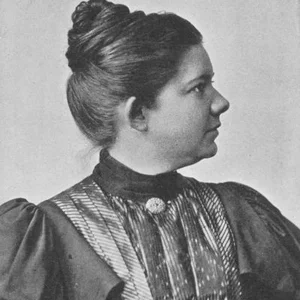

Amy Beach (1867-1944) was the first American female composer to have a symphony performed by a major professional orchestra. A pioneering figure in American classical music, she composed more than 150 works, including the celebrated Gaelic Symphony (1896).
Amy Beach(1867 — 1944)
Amy Beach
États-Unis
8 min read
Frequently asked questions
Famous Quotes
« I am an American composer, and I am proud of it.»
Key Facts
- 1867: born in Henniker, New Hampshire
- 1896: premiere of the Gaelic Symphony by the Boston Symphony Orchestra — the first symphony by an American female composer performed by a major orchestra
- 1900: composition of the Piano Concerto in C-sharp minor
- 1910-1914: concert tour of Europe to great acclaim
- 1944: death in New York
Works & Achievements
A monumental choral work premiered by the Handel and Haydn Society of Boston. It was one of Amy Beach's first major compositions to be performed publicly, earning her immediate recognition in American musical circles.
The first symphony composed and published by an American woman, premiered by the Boston Symphony Orchestra under the direction of Emil Paur. Beach weaves Celtic and Irish melodic themes throughout to forge a distinctly American musical identity.
A highly admired chamber work that showcases Beach's mastery of sonata form. Performed throughout North America and Europe, it helped establish her international reputation.
A virtuosic concerto premiered by Amy Beach herself as soloist with the Boston Symphony Orchestra. It is considered one of the most ambitious piano concertos composed by an American musician of the era.
A major chamber work regarded as one of her most fully realized compositions. The quintet reflects the influence of late German Romanticism while asserting a distinctly personal voice.
One of Amy Beach's most popular vocal songs during her lifetime, performed by leading singers of the day. It showcases her command of the cultivated parlor song, a genre highly prized in American musical society.
Anecdotes
Amy Beach was a stunning child prodigy: at just one year old, she could already sing some forty melodies from memory with perfect pitch, and by age four she was improvising countermelodies over the tunes her mother played on the piano. These extraordinary abilities convinced her family to provide her with serious musical training in Boston starting at age seven.
When she married Dr. Henry Harris Aubrey Beach in 1885 at the age of eighteen, her husband — a respected Boston physician — forbade her from giving paid public concerts more than once or twice a year, considering it unsuitable for a woman of her standing. For twenty-five years, Amy channeled all her energy into composition, producing large-scale works despite the social constraints imposed by Victorian society.
The premiere of the Gaelic Symphony by the Boston Symphony Orchestra on October 30, 1896, was a landmark event: it was the first time a symphony composed by an American woman had been performed by a major professional orchestra. Critics, taken aback by the work's technical mastery, noted that it stood fully equal to the compositions of male composers of the era.
Amy Beach was largely self-taught in composition: she never had an official teacher and learned primarily by analyzing the scores of the great masters. She translated German treatises on harmony and counterpoint herself — notably those of Adolph Bernhard Marx — despite not knowing German. This singular approach forged a personal style and an intellectual rigor that were exceptionally rare.
After her husband's death in 1910, Amy Beach embarked on a lengthy European tour (1911–1914), performing as a pianist in Germany and Austria to great acclaim. The outbreak of World War I forced her to return to the United States, where she became an indispensable figure in American musical life until the very end of her days.
Primary Sources
Mrs. H.H.A. Beach has achieved a remarkable success with her Gaelic Symphony. The work shows a command of orchestral resources and a mastery of form that would do credit to any composer of either sex.
I have always composed at the piano, working out my ideas at the keyboard and then committing them to paper. Harmony and counterpoint I learned largely from the study of scores, translating the German treatises myself.
Symphony in E minor ('Gaelic'), Op. 32, composed by Mrs. H.H.A. Beach. World premiere performance under the direction of Emil Paur.
Mrs. Beach's concerto is a work of remarkable scope and ambition. As both composer and soloist, she demonstrated a command of the orchestra that places her among the foremost musicians this country has produced.
Key Places
A small New England town where Amy Beach was born on September 5, 1867. This rural New England setting shaped her childhood and witnessed the blossoming of her exceptional musical talent.
The center of Amy Beach's musical and intellectual life for more than twenty-five years. It was here that most of her major works received their premieres, performed by the Boston Symphony Orchestra and the Handel and Haydn Society.
An artists' retreat where Amy Beach regularly stayed from the 1930s onward, composing in a stimulating creative environment. There she mingled with other leading American artists of her era.
The city where Amy Beach performed to great acclaim during her European tour (1911–1914). Her concerts were enthusiastically received by critics there, earning her an unexpected international reputation.
The city where Amy Beach spent the final years of her life and where she died on December 27, 1944. She remained active in American musical life until her very last days.
Typical Objects

Amy Beach composed and rehearsed daily on a Steinway grand piano, the hallmark instrument of professional musicians in the Victorian era. She practiced for several hours each morning and regarded the piano as the natural extension of her musical thought.

Beach composed by hand on music paper, covering her manuscripts with corrections and meticulous annotations. Her original scores are today held in the library of the University of New Hampshire.

To train herself in composition, Amy Beach relied on German-language treatises on harmony and counterpoint, notably those of Adolph Bernhard Marx, which she translated herself. These volumes served as her true personal university.

To compose her Gaelic Symphony, Beach studied collections of Irish and Celtic folk melodies. These traditional tunes, symbols of a strong cultural identity, fueled her search for an authentic, rooted American music.

For her recitals, Amy Beach wore the formal attire expected of Boston's upper-middle class during the Gilded Age. A woman musician's stage dress had to conform to codes of propriety while still allowing her to play the piano with ease.

The programs for her concerts systematically listed her name as "Mrs. H.H.A. Beach," a Victorian social convention that identified a married woman by her husband's initials, partially erasing her own identity.
School Curriculum
Vocabulary & Tags
Key Vocabulary
Tags
Daily Life
Morning
Amy Beach devoted her mornings to composition, working at her grand piano in the parlor of her Back Bay apartment in Boston. She typically composed between nine o'clock and noon, in quiet, before social and domestic obligations claimed the rest of her day.
Afternoon
Afternoons were often reserved for revising scores, giving private lessons to a handful of selected pupils, and corresponding with other musicians. She also frequented the cultural salons of Boston's upper bourgeoisie, a milieu in which her standing opened every door.
Evening
Evenings were devoted to concerts of the Boston Symphony Orchestra, musical receptions, and the intense social life of a great cultural metropolis. Amy Beach herself received musicians and music lovers at her home, presiding over a celebrated salon.
Food
As a member of Boston's upper bourgeoisie, Amy Beach followed a diet typical of affluent New England families: elaborate meals served by domestic staff, featuring roasted meats, seasonal vegetables, homemade bread, and desserts. Society dinners were occasions for lavish multi-course affairs.
Clothing
Amy Beach wore the fashions of the American upper bourgeoisie of the Victorian and then Edwardian era: long dresses with boned bodices, lace-trimmed bodices, gloves, and an elaborate hat when going out. For her recitals, she favored elegant yet restrained evening gowns, in keeping with the expectations of her social station.
Housing
The Beach household occupied a well-appointed apartment in Boston's Back Bay neighborhood, one of the most elegant quarters of the city. The apartment was furnished in the Victorian manner — heavy drapes, a bookcase lined with musical treatises, framed portraits — with a grand piano holding pride of place at the center of the parlor.