The Achaemenid Royal Feast (The Great Dish and then the Procession of Sweets)
At the table of Median and Persian kings, the meal was not divided into starter-main-dessert. Herodotus (Histories, I, 133) marvels: the Persians serve few main dishes at once, but then parade, course after course, a multitude of small sweets, fruits, and delicacies — to the point that they find the Greeks ridiculous for leaving the table still hungry. The meal opens with a great roasted dish or a cereal pottage, shared according to rank, then extends into a long procession of sweets, dates, nuts, and honeyed drinks. Daily, the household lives on barley, lentils, and flatbread; on feast days, roasted meat and Babylonian wine honor the guests.
Signature : The Pistachio of Anatolia and Persia
The pistachio tree is native to the Persian plateau: its green fruits, roasted over fire, are a local treasure that the Greeks would discover much later. Along with pomegranate and saffron, the pistachio marks Achaemenid court cuisine — a plant-based luxury that colors and perfumes both roasts and sweets.
Amytis at the table
559 av. J.-C. — 600 av. J.-C.
5 period recipes
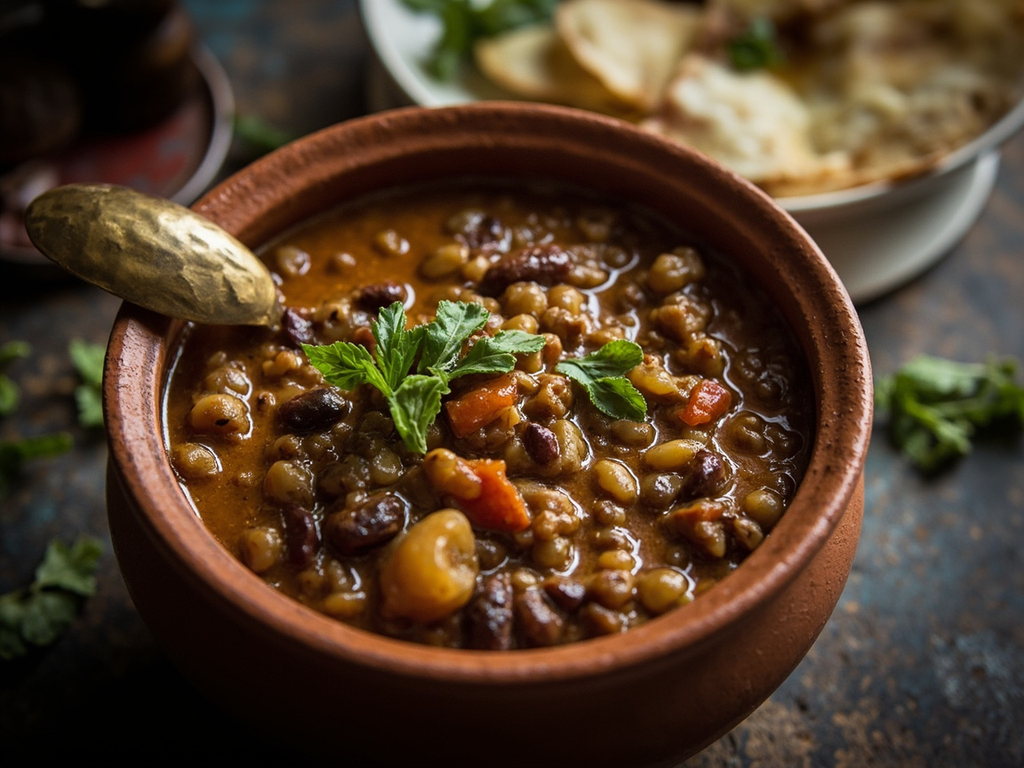 Everyday
Barley and Lentil Pottage with Mint and Cumin
The Daily Staple Dish (before the Procession of Sweets)
🧂 🍄· 1 h
View the recipe
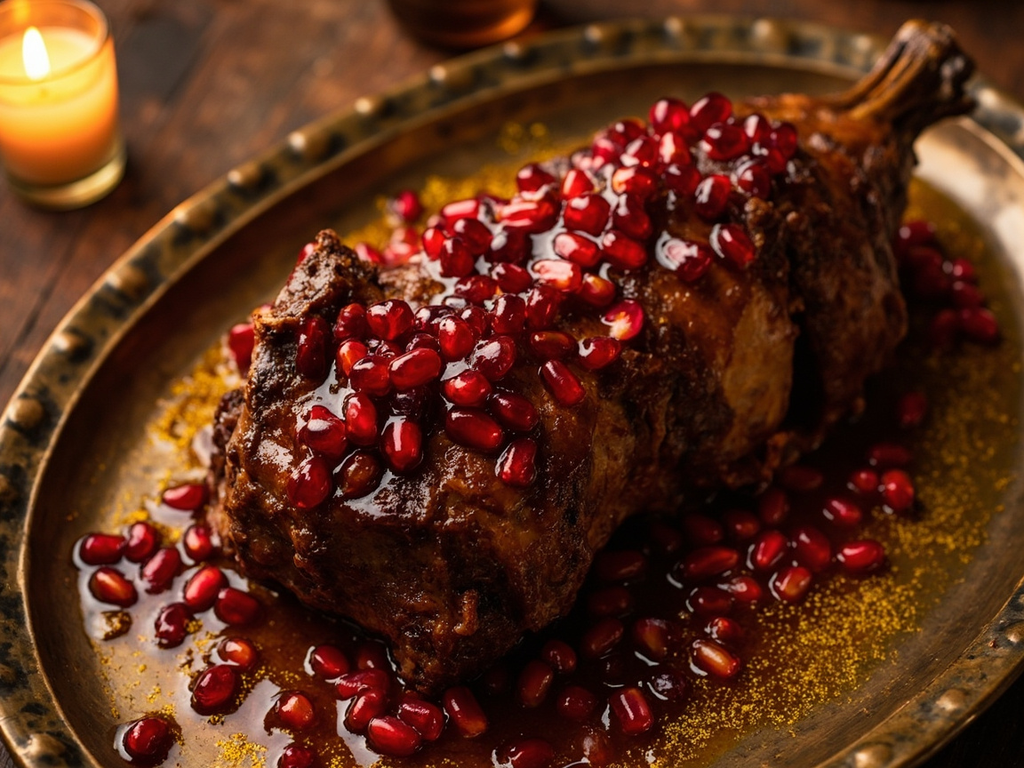 Festive
Saffron-Roasted Lamb with Pomegranate Glaze
The Great Opening Roast of the Feast
🧂 🍋 🍄· 4 h
View the recipe
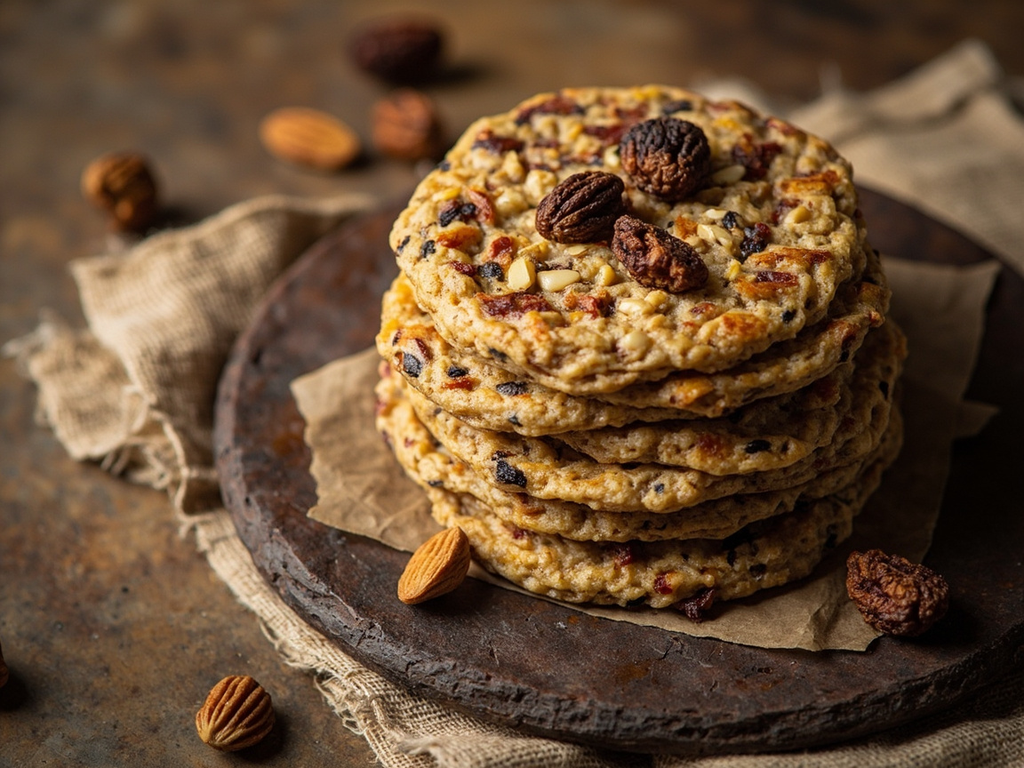 Travel
Barley Flatbreads with Figs and Almonds for the Royal Road
Travel Provisions of the Itinerant Court
🍯 🧂· 40 min
View the recipe
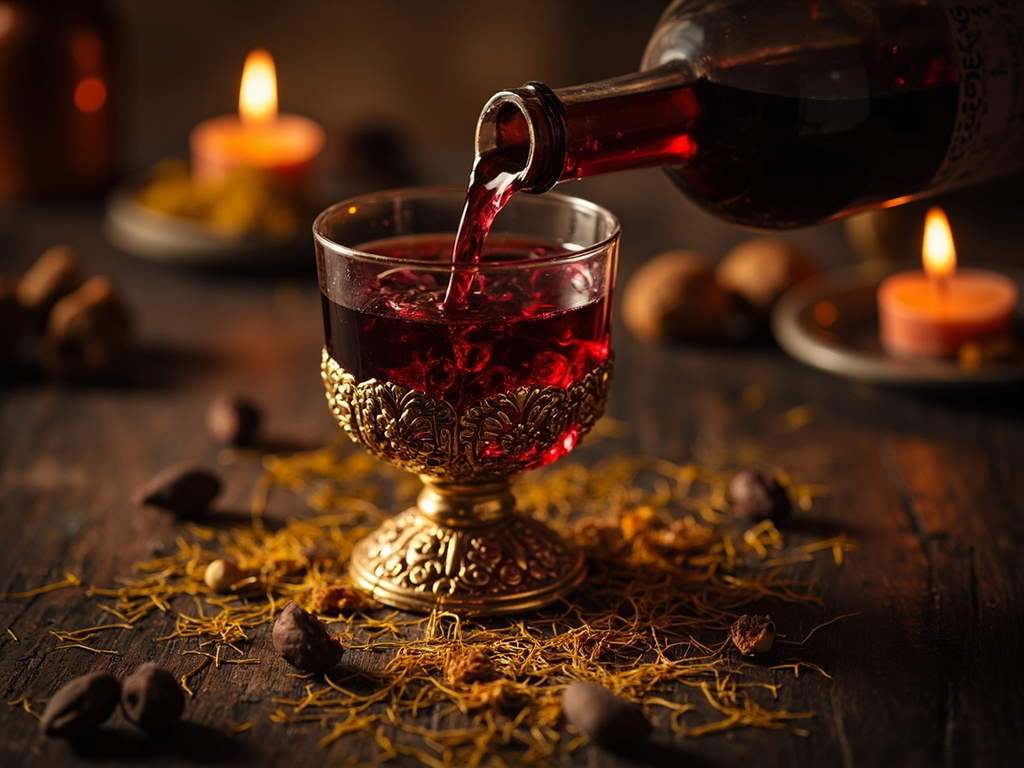 Drink
DrinkBabylonian Wine Warmed with Honey and Spices
The Honorary Drink of the Procession of Sweets
🍯 🫙· 15 min
View the recipe
 Festive
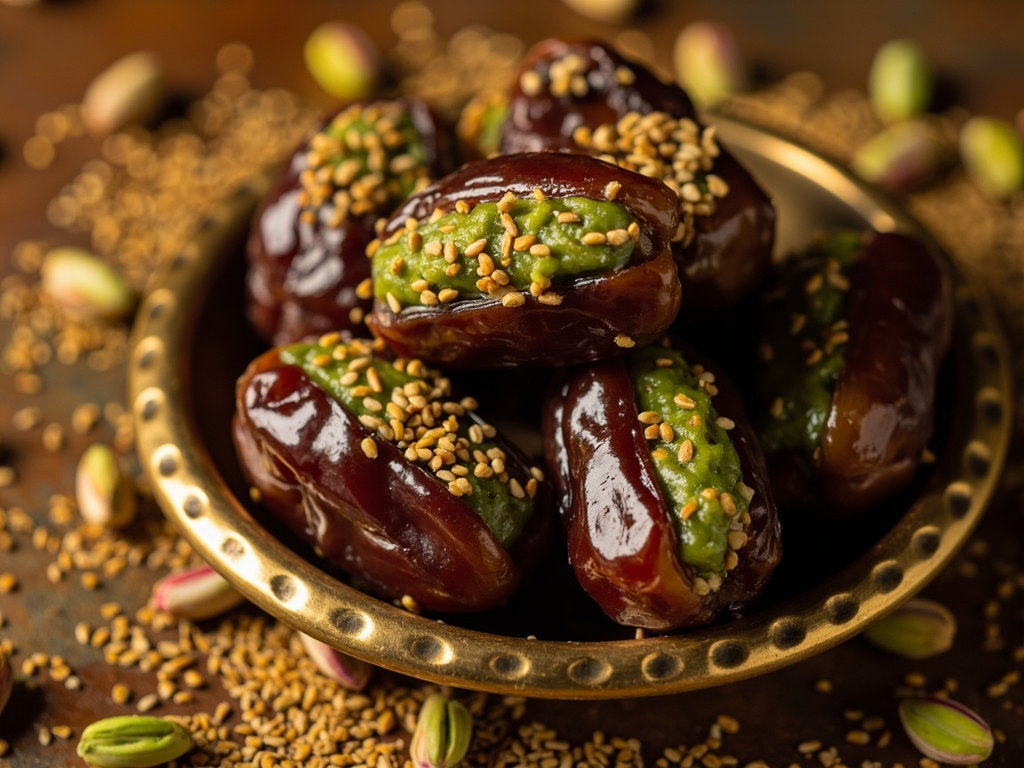
Royal Dates Stuffed with Pistachios and Honey, Rolled in Sesame
The Sweets of the Final Procession of the Feast
🍯· 25 min
View the recipe