 flip
flipBarley Flatbreads with Figs and Almonds for the Royal Road
Barley Flatbreads with Figs and Almonds for the Royal Road
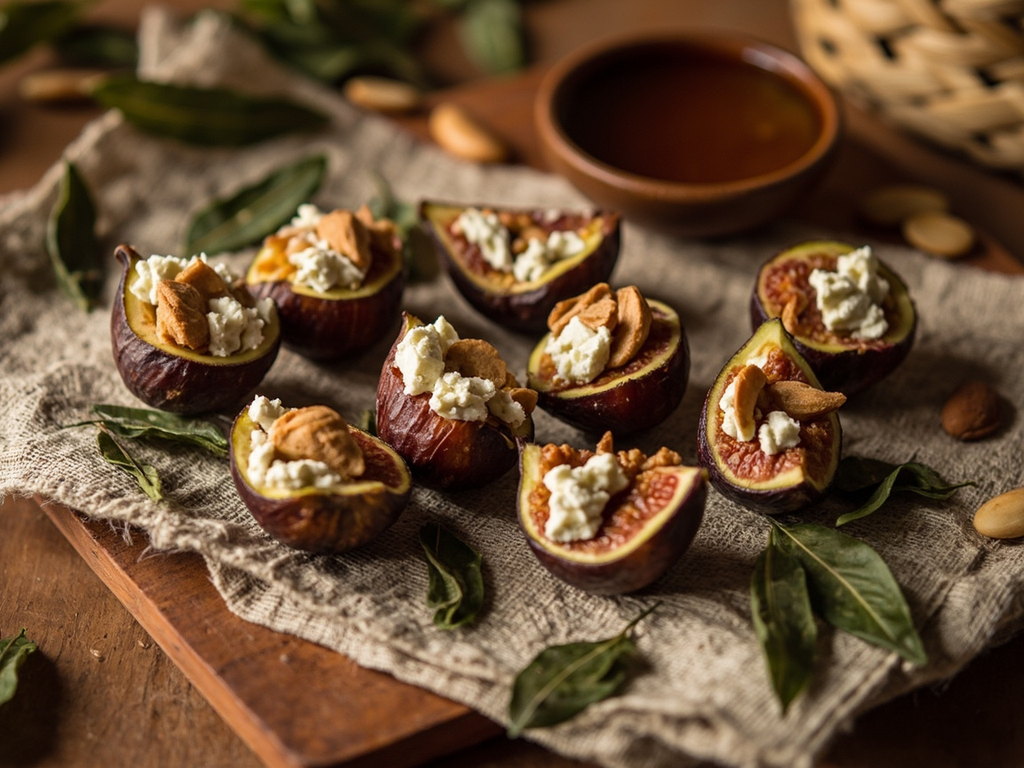
Why this dish? The Achaemenid court was nomadic: they moved from Ecbatana to Pasargadae, from Anshan to Babylon according to the seasons. For these long rides across the plateaus, they carried dense barley flatbreads, sweetened with dried figs and enriched with almonds — a travel bread that kept for days without going stale.
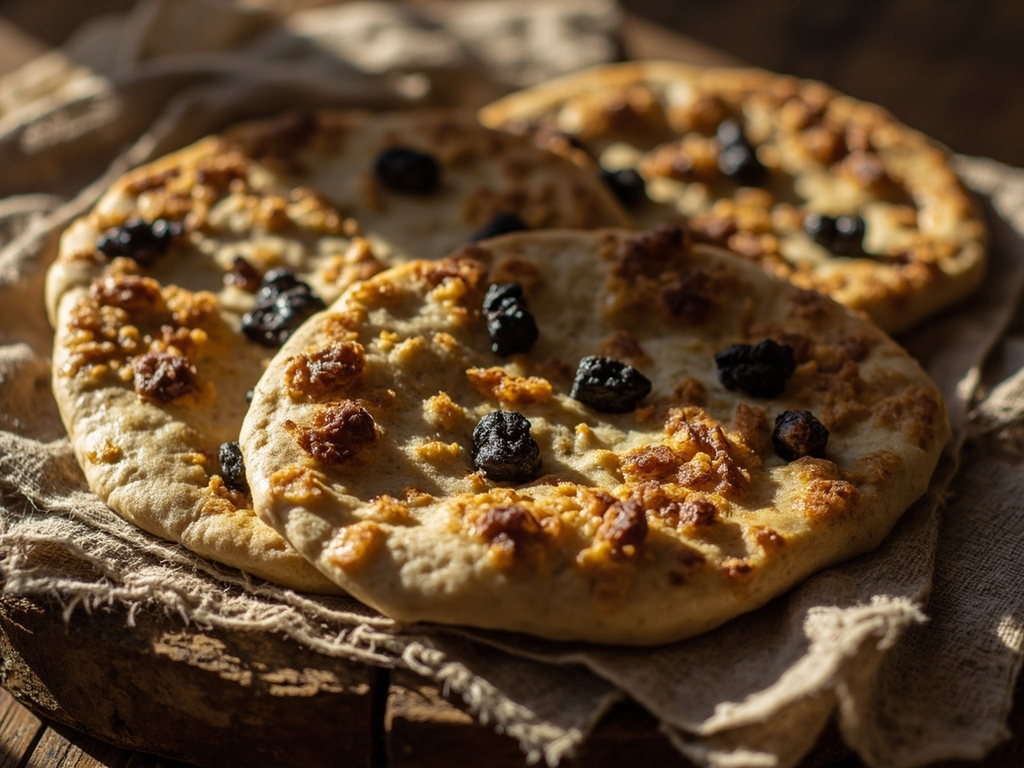
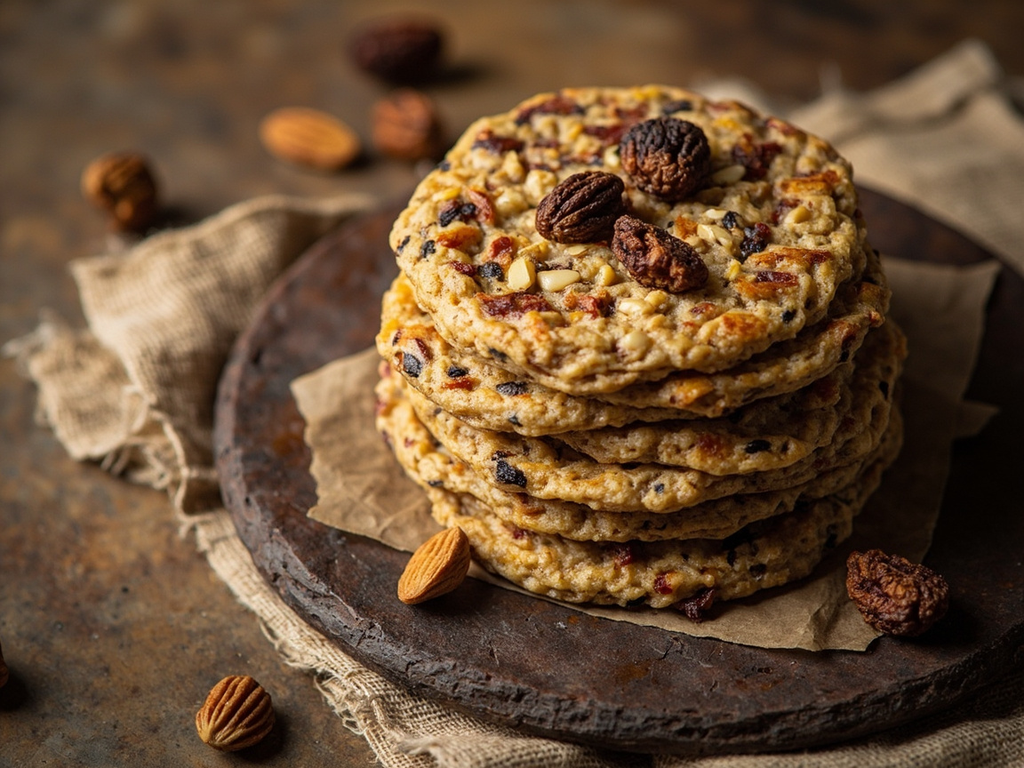
Flat, nourishing barley flatbreads kneaded with chopped dried figs and crushed almonds, cooked on a hot stone. Compact, sweet-savory, made to fit in a rider's saddlebag.
A queen does not sit on a single throne: I go from Ecbatana to Pasargadae when the cold comes, and the road is long through the passes. So my women knead barley with figs from the orchard dried in the sun and broken almonds, and bake these flatbreads on the hot stone. Slip some into your saddlebag, traveler: they do not sour, and a single one holds your stomach until evening. Bread that travels well is worth, on the road, more than all the gold of Babylon.
- •Barley flour — several handfuls (base)
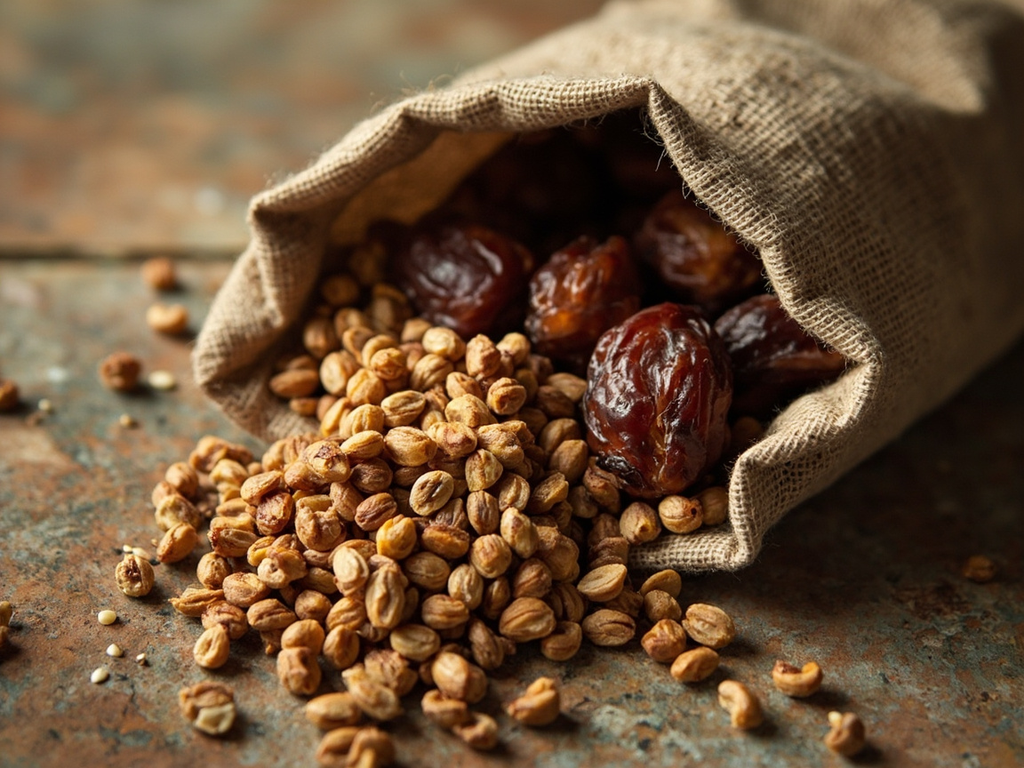
- •Dried figs — a handful, chopped (sweet fruit)
- •Almonds — a handful, crushed (nut)
- •Honey — one spoonful (sweet binder)
- •Sesame oil — a drizzle (fat)
- •Salt — a pinch (seasoning)
- •Water — as needed (binder)
Barley Flatbreads with Figs and Almonds for the Royal Road
Flat, nourishing barley flatbreads kneaded with chopped dried figs and crushed almonds, cooked on a hot stone. Compact, sweet-savory, made to fit in a rider's saddlebag.
Why this dish? The Achaemenid court was nomadic: they moved from Ecbatana to Pasargadae, from Anshan to Babylon according to the seasons. For these long rides across the plateaus, they carried dense barley flatbreads, sweetened with dried figs and enriched with almonds — a travel bread that kept for days without going stale.
A queen does not sit on a single throne: I go from Ecbatana to Pasargadae when the cold comes, and the road is long through the passes. So my women knead barley with figs from the orchard dried in the sun and broken almonds, and bake these flatbreads on the hot stone. Slip some into your saddlebag, traveler: they do not sour, and a single one holds your stomach until evening. Bread that travels well is worth, on the road, more than all the gold of Babylon.
Ingredients (period version)
- Barley flour — several handfuls (base)
- Dried figs — a handful, chopped (sweet fruit)
- Almonds — a handful, crushed (nut)
- Honey — one spoonful (sweet binder)
- Sesame oil — a drizzle (fat)
- Salt — a pinch (seasoning)
- Water — as needed (binder)
Ingredients
- Barley flour — 250 g (+ a little wheat flour for structure) (base)
- Dried figs — 100 g, chopped (sweet fruit)
- Almonds — 60 g, crushed (nut)
- Honey — 1 tbsp (sweet binder)
- Sesame oil — 2 tbsp (fat)
- Salt — 1/2 tsp (seasoning)
- Warm water — 120 to 150 ml (binder)
Method
- Mix the flours, salt, chopped figs, and crushed almonds in a bowl.
- Add the honey, sesame oil, then warm water little by little, and knead until you obtain a firm, homogeneous dough.
- Divide into balls and flatten into flatbreads about 1 cm thick.
- Cook on a hot stone or cast-iron pan, without fat, for 4 to 5 minutes on each side until golden and firm.
- Let cool completely: they keep for several days in a cloth.
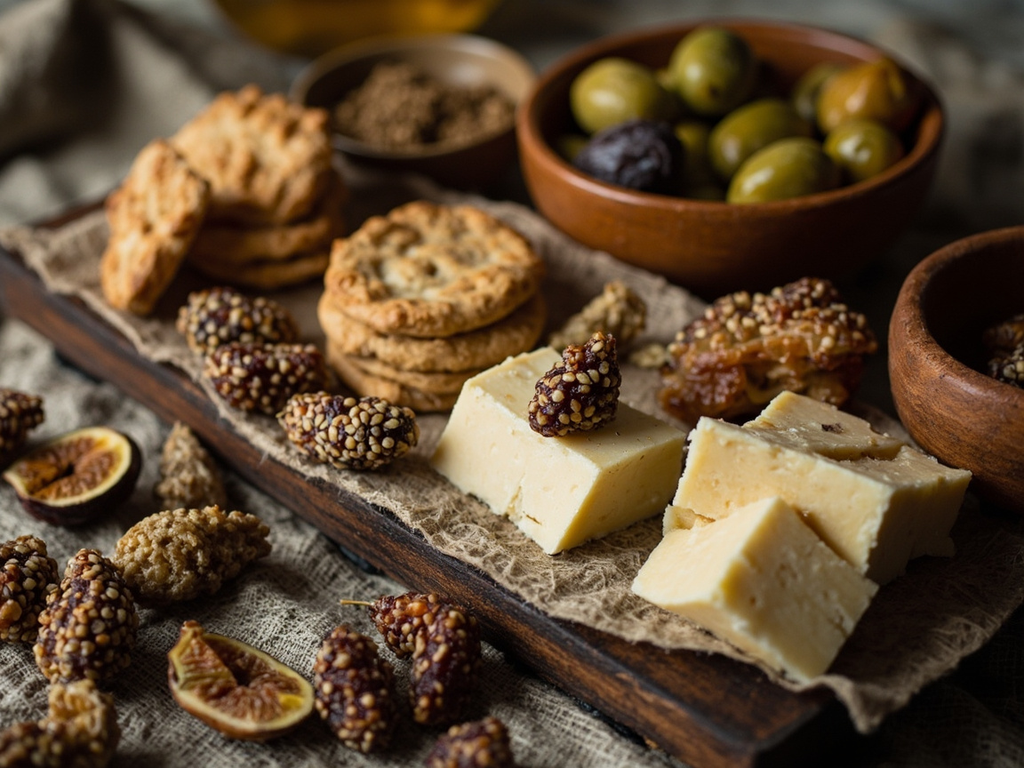
How it was made : Barley flour, more rustic than wheat, produced a dense, slightly leavened bread ideal for preservation. Figs, dates, and raisins dried in the sun were the sweet reserve of the ancient East, and almonds (originating precisely from these regions) added fat and protein. Cooked on a flat stone or the walls of a clay oven (tannur), these flatbreads were the rations of armies and traveling courts.
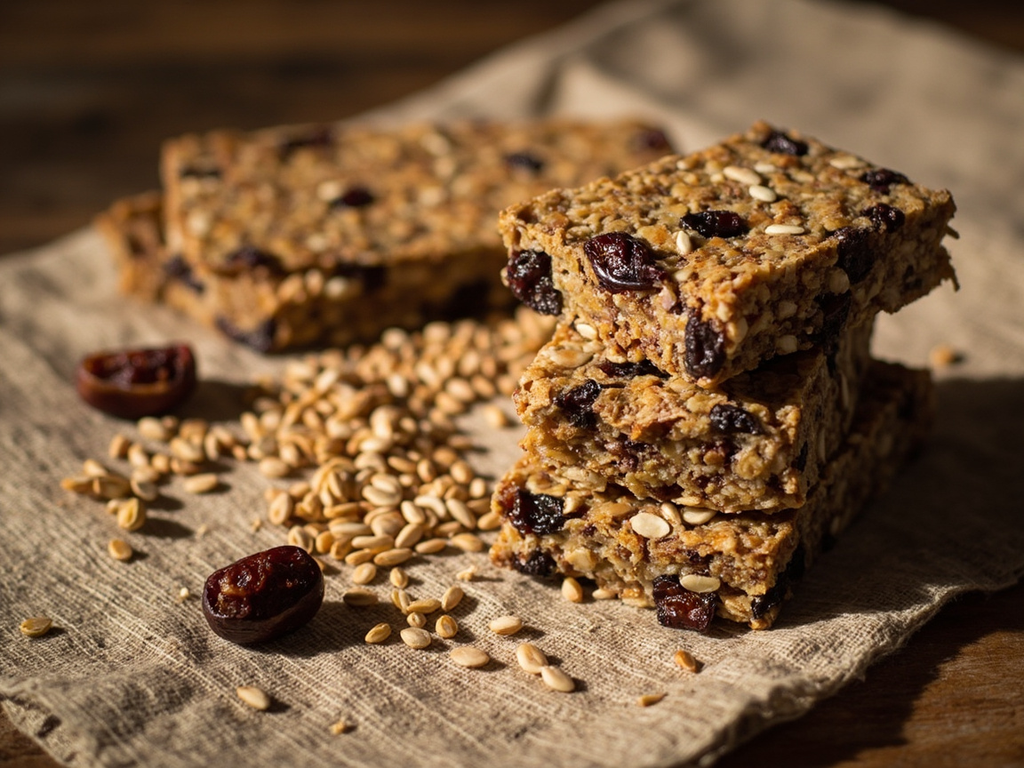
The contemporary twist : A mini "Ecbatana energy bar" version for hiking: same dough, shaped into bars and baked for 12 minutes.
Amytis · Charactorium