 flip
flipBabylonian Wine Warmed with Honey and Spices
Babylonian Wine Warmed with Honey and Spices
Why this dish? Cyrus took Babylon, and the court wintered there: its renowned wines flowed at Persian royal tables. Herodotus reports that the Persians readily deliberated their affairs while drinking. For a queen from the cold plateaus, a wine warmed with honey and spices was the comfort of long palace evenings.
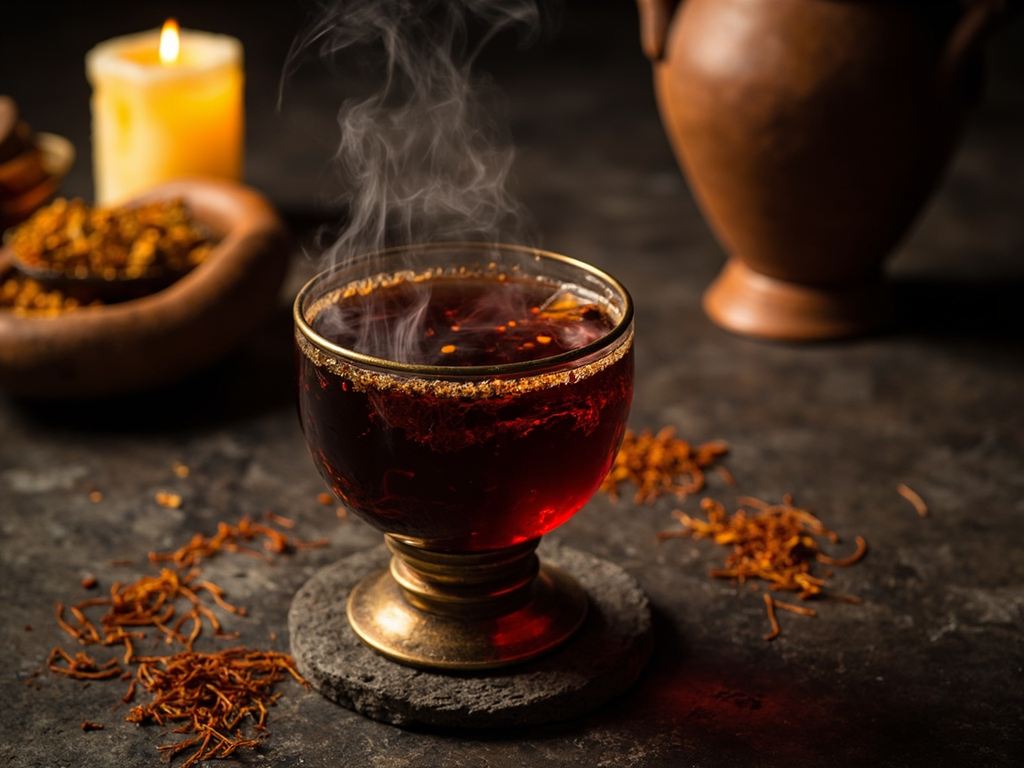
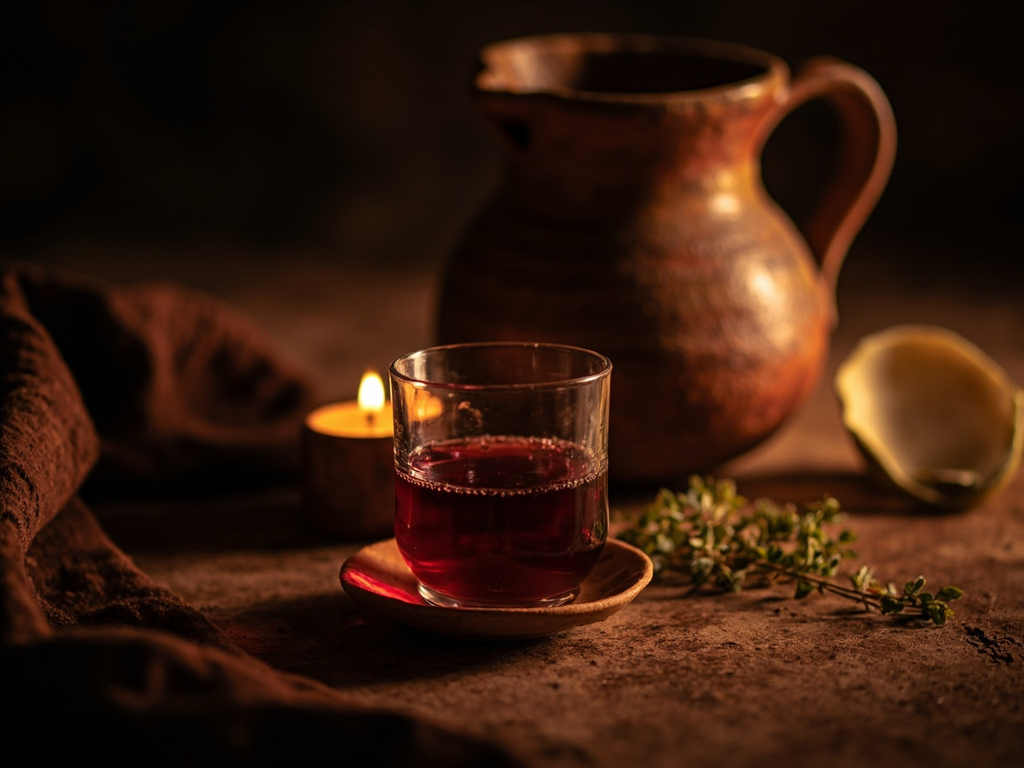
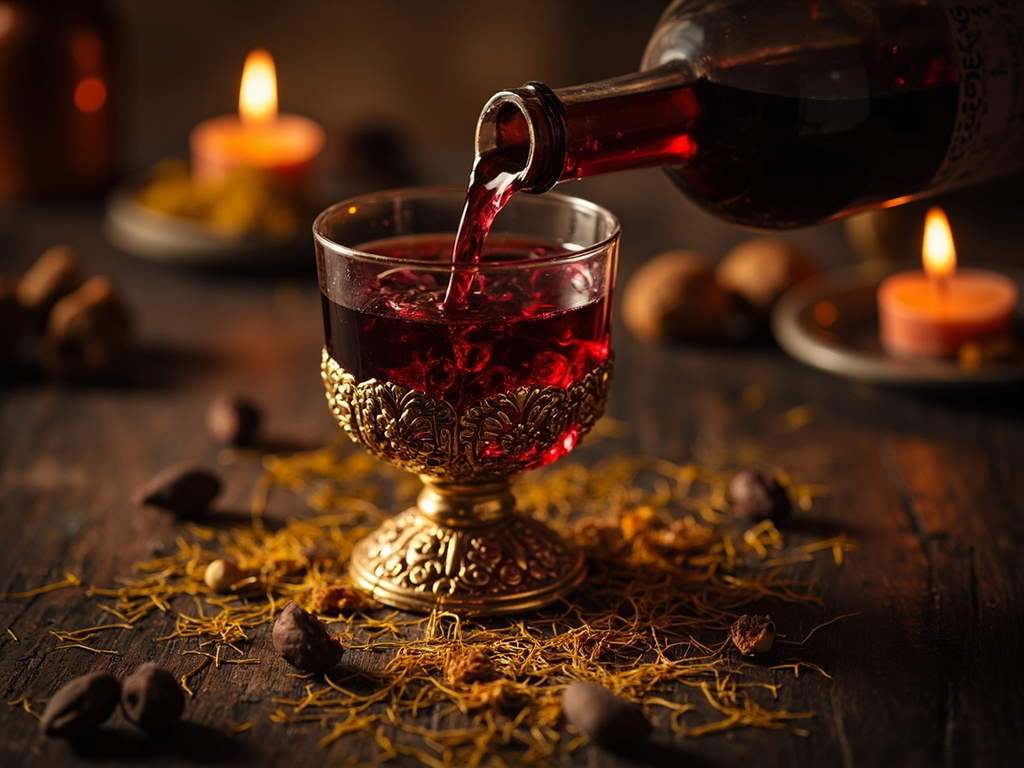
Red wine gently heated, sweetened with honey, and scented with coriander seeds, cardamom, and a hint of saffron. A warming drink served in the golden rhyton at the end of the feast. (Alcohol-free version possible with grape juice.)
In Babylon in winter, night falls on the palace and the wind comes from the rivers. Then pour the red wine into the golden rhyton, warm it gently — let it never boil! — and marry it with honey, crushed coriander, and a single thread of my saffron. We Persians love to deliberate cup in hand, then take our decisions sober again to test them. Drink slowly, stranger: this wine warms the blood of one who ruled over two peoples.
- •Babylonian red wine — a jug (fermented base)
- •Honey — to taste (sweetener)
- •Coriander seeds — a pinch (spice)
- •Cardamom — a few pods (aromatic spice)
- •Saffron — one thread (color and fragrance)
Babylonian Wine Warmed with Honey and Spices
Red wine gently heated, sweetened with honey, and scented with coriander seeds, cardamom, and a hint of saffron. A warming drink served in the golden rhyton at the end of the feast. (Alcohol-free version possible with grape juice.)
Why this dish? Cyrus took Babylon, and the court wintered there: its renowned wines flowed at Persian royal tables. Herodotus reports that the Persians readily deliberated their affairs while drinking. For a queen from the cold plateaus, a wine warmed with honey and spices was the comfort of long palace evenings.
In Babylon in winter, night falls on the palace and the wind comes from the rivers. Then pour the red wine into the golden rhyton, warm it gently — let it never boil! — and marry it with honey, crushed coriander, and a single thread of my saffron. We Persians love to deliberate cup in hand, then take our decisions sober again to test them. Drink slowly, stranger: this wine warms the blood of one who ruled over two peoples.
Ingredients (period version)
- Babylonian red wine — a jug (fermented base)
- Honey — to taste (sweetener)
- Coriander seeds — a pinch (spice)
- Cardamom — a few pods (aromatic spice)
- Saffron — one thread (color and fragrance)
Ingredients
- Fruity red wine (or red grape juice for alcohol-free version) — 75 cl (base)
- Honey — 3 to 4 tbsp (sweetener)
- Coriander seeds — 1 tsp, crushed (spice)
- Green cardamom — 4 pods, crushed (aromatic spice)
- Saffron — 2 to 3 threads (color and fragrance)
Method
- Pour the wine (or grape juice) into a saucepan with the honey.
- Add the crushed coriander and cardamom seeds and the saffron threads.
- Heat very gently without ever boiling, about 10 minutes, to infuse the spices.
- Strain to remove the spices and serve warm in cups or drinking horns.
- For children and schools: use only red grape juice, same process.
How it was made : The wines of Mesopotamia and the Persian Empire were often blended with honey and spices, both for flavor and to mask imperfect preservation. The Persians drank from rhytons — ceremonial horns or vessels of precious metal ending in an animal head. Distillation of rose water did not yet exist, so they perfumed with saffron, coriander, and honey. Herodotus (I, 133) notes the Persian habit of drinking heavily during deliberations.
The contemporary twist : Serve the grape juice version in a small golden cup shaped like a rhyton for school workshops: the drink of kings without a drop of alcohol.
Amytis · Charactorium