 flip
flipRoyal Dates Stuffed with Pistachios and Honey, Rolled in Sesame
Royal Dates Stuffed with Pistachios and Honey, Rolled in Sesame
Why this dish? Herodotus recounts that the Persians were fond of desserts and paraded sweets at the end of the meal. Dates, honey, and pistachios (native to the Persian plateau) made up the queen's confection at a court like Amytis's: sweetness as the ultimate sign of royal abundance.
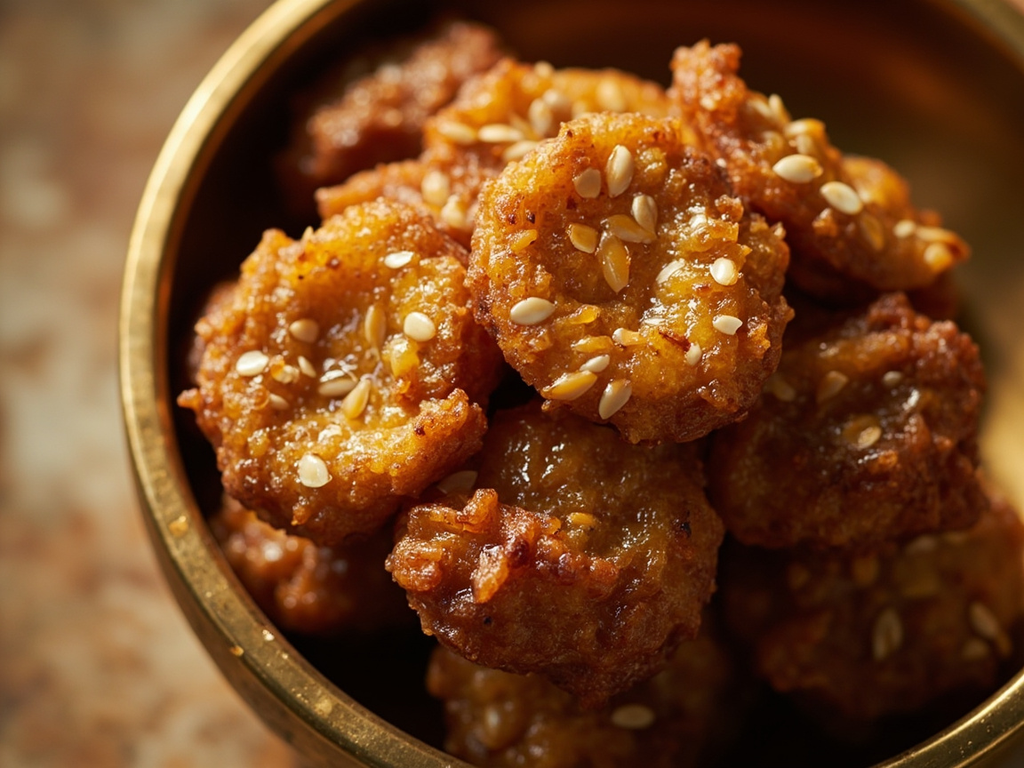
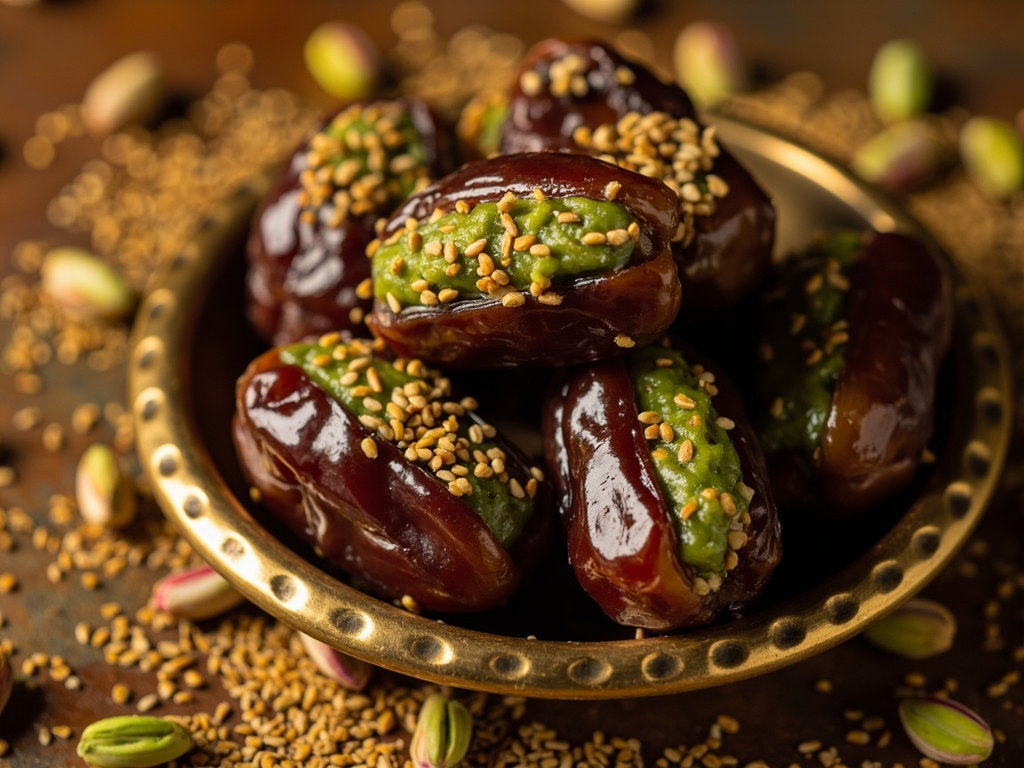
Soft dates opened and filled with a pistachio-honey paste, then rolled in toasted sesame seeds. A melting, fragrant bite, the sweet jewel at the end of the feast.
They say, among the Greeks, that we leave the table poorly because we eat too many sweets. Let them talk! Rather see: I open the ripe date, I slip in the green pistachio from our hills pounded with honey, and I roll it in sesame golden from the fire. Each bite is a little throne of sugar. At my table, the feast does not end with meat but with this procession of sweets — for a people that knows how to offer honey to its guests shows that it lacks nothing.
- •Fresh pitted dates — a bowl (sweet shell)
- •Pistachios — a handful, pounded (filling)
- •Honey — a spoonful (binder)
- •Sesame seeds — a handful, toasted (coating)
Royal Dates Stuffed with Pistachios and Honey, Rolled in Sesame
Soft dates opened and filled with a pistachio-honey paste, then rolled in toasted sesame seeds. A melting, fragrant bite, the sweet jewel at the end of the feast.
Why this dish? Herodotus recounts that the Persians were fond of desserts and paraded sweets at the end of the meal. Dates, honey, and pistachios (native to the Persian plateau) made up the queen's confection at a court like Amytis's: sweetness as the ultimate sign of royal abundance.
They say, among the Greeks, that we leave the table poorly because we eat too many sweets. Let them talk! Rather see: I open the ripe date, I slip in the green pistachio from our hills pounded with honey, and I roll it in sesame golden from the fire. Each bite is a little throne of sugar. At my table, the feast does not end with meat but with this procession of sweets — for a people that knows how to offer honey to its guests shows that it lacks nothing.
Ingredients (period version)
- Fresh pitted dates — a bowl (sweet shell)
- Pistachios — a handful, pounded (filling)
- Honey — a spoonful (binder)
- Sesame seeds — a handful, toasted (coating)
Ingredients
- Medjool dates, pitted — 16 pieces (sweet shell)
- Unsalted pistachios — 80 g, finely pounded (filling)
- Honey — 1 to 2 tbsp (binder)
- Sesame seeds — 4 tbsp, toasted (coating)
- Crushed pistachios — 1 tbsp (decoration) (garnish)
Method
- Toast the sesame seeds in a dry pan for a few minutes until golden; set aside.
- Pound the pistachios and mix with honey to form a soft paste.
- Open each date lengthwise without separating, remove the pit, and fill with a little pistachio paste.
- Lightly close, then roll each date in the toasted sesame seeds.
- Arrange on a plate, sprinkle with crushed pistachios, and serve at room temperature.
How it was made : The date was the king of sugars throughout the Near East (cane and beet did not exist as common sugars), and honey was the other great sweetener. Pistachio trees, native to Iran and Central Asia, provided a prestige treat. Sesame, cultivated in Mesopotamia, yielded oil and seeds for coating sweets. These small sweet bites prefigure the entire later tradition of Persian confectionery.
The contemporary twist : A touch of modern orange blossom water in the pistachio paste, and a pistachio sliver planted on top: the date becomes a little display jewel, a "Pasargadae treasure" style.
Amytis · Charactorium