 flip
flipBarley and Lentil Pottage with Mint and Cumin
Barley and Lentil Pottage with Mint and Cumin
Why this dish? Even in a palace like Ecbatana, the everyday staple remained cereal and legume porridge, the food of both servants and queens on ordinary days. Amytis, daughter of Astyages, grew up on these Median plateaus where barley and lentil were the bread of every household.
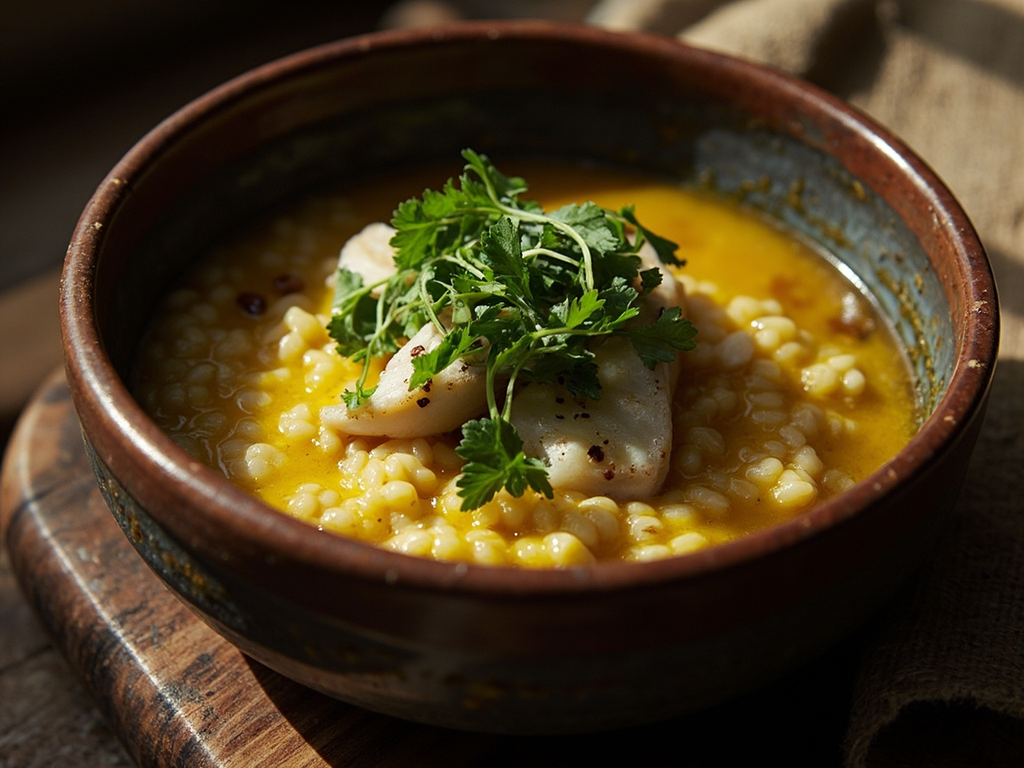
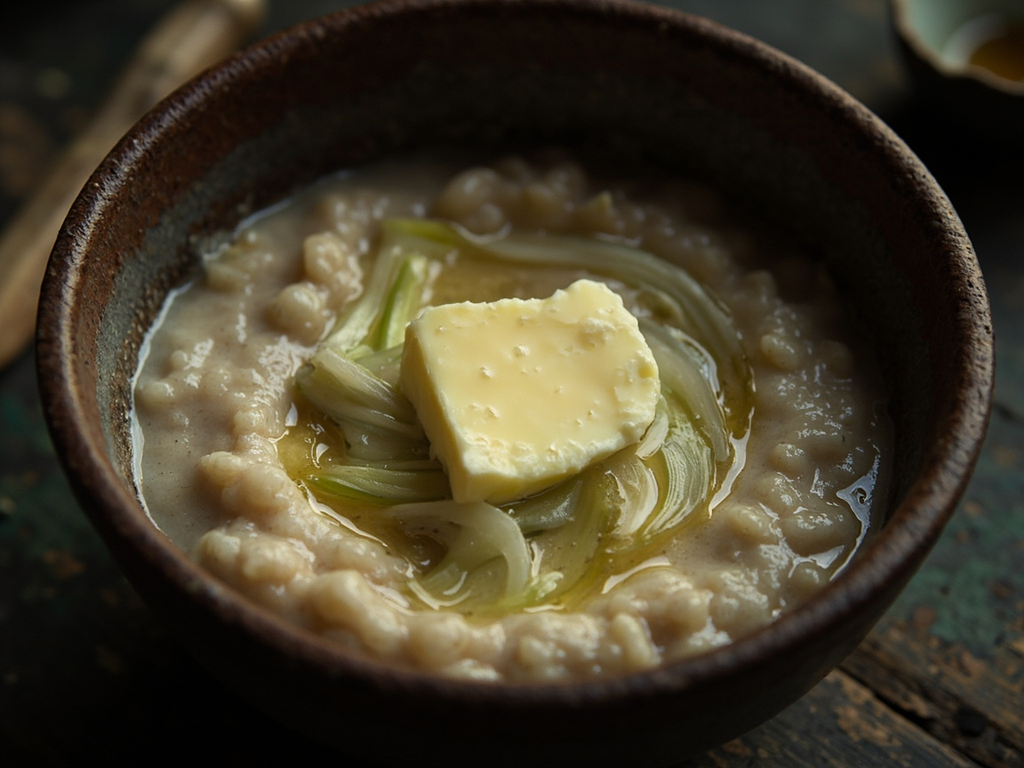
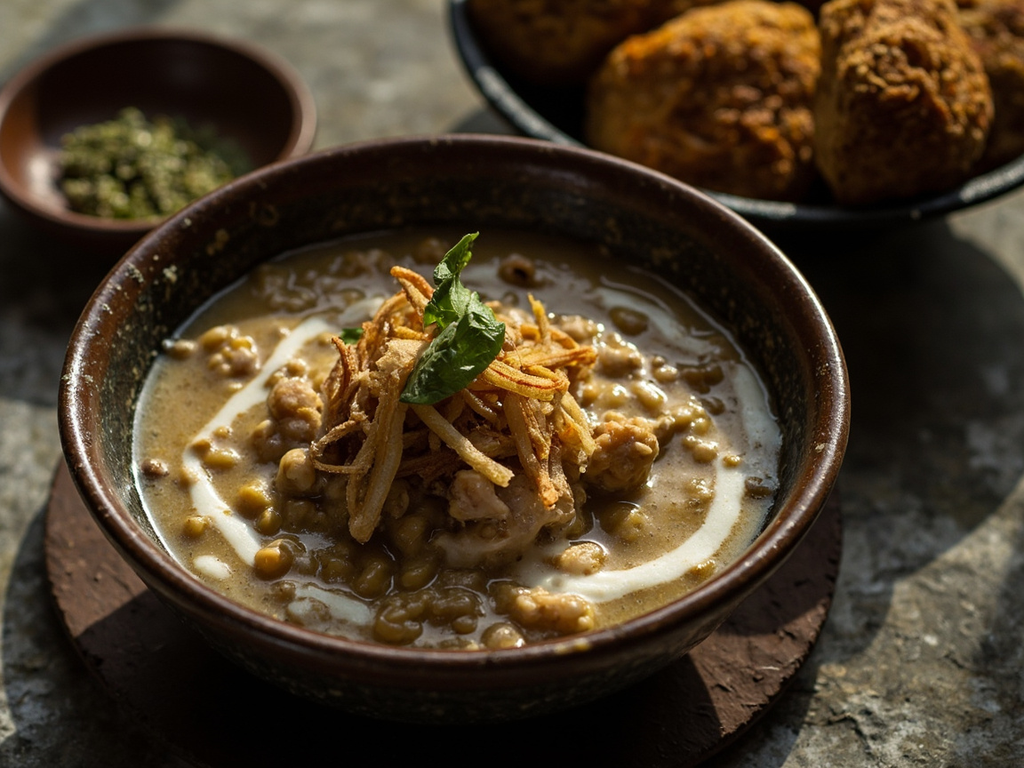
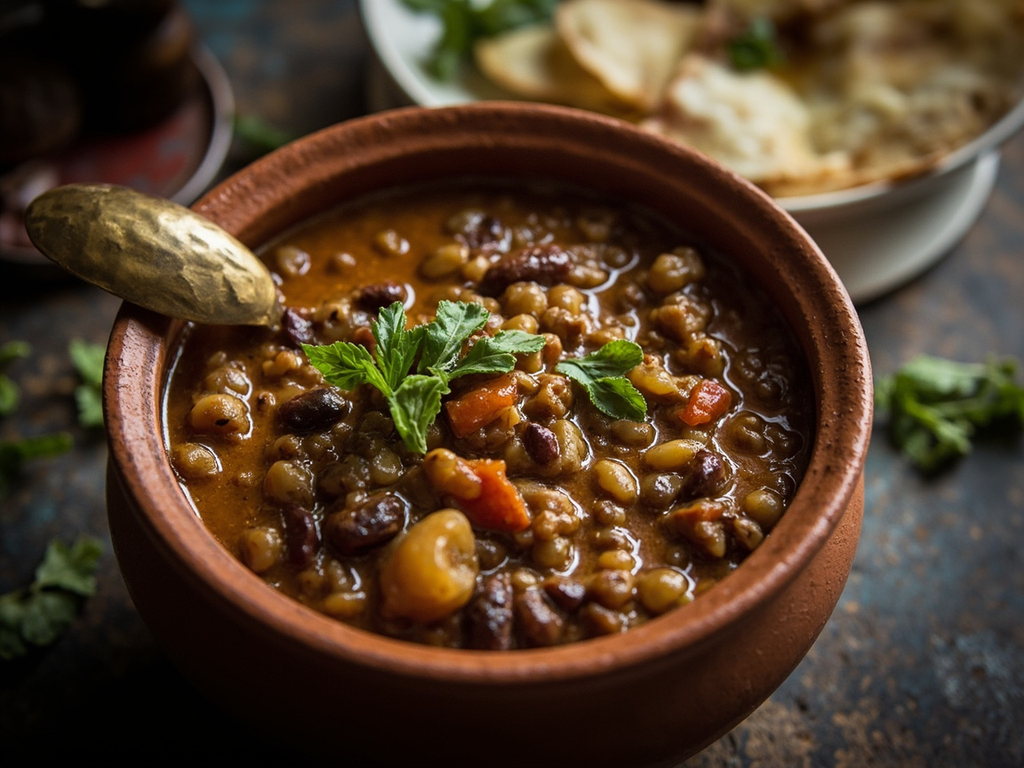
A thick and comforting pottage of hulled barley and lentils, scented with golden onion, toasted cumin, and fresh mint. The humble dish that sustained the court when it was not a feast day.
Do not think that the daughter of Astyages disdains the pot of the humble. Under my father's roof in Ecbatana, we would let the barley and lentils swell over a slow fire from dawn, and we would throw in mint from the garden and cumin that we had made sing in the clay pan. Taste: this is the liquid bread of my Median people, the one that keeps a horseman standing from sunrise to sunset. I ate it as a child; I still have it served on days without feast, for a palace that forgets the taste of grain forgets where its strength comes from.
- •Hulled barley — two handfuls (staple grain)
- •Brown lentils — two handfuls (legume)
- •Onion — one, sliced (aromatic base)
- •Cumin seeds — a generous pinch (spice)
- •Fresh mint — one bunch (fresh herb)
- •Sesame oil or mutton fat — a drizzle (fat)
- •Salt — to taste (seasoning)
Barley and Lentil Pottage with Mint and Cumin
A thick and comforting pottage of hulled barley and lentils, scented with golden onion, toasted cumin, and fresh mint. The humble dish that sustained the court when it was not a feast day.
Why this dish? Even in a palace like Ecbatana, the everyday staple remained cereal and legume porridge, the food of both servants and queens on ordinary days. Amytis, daughter of Astyages, grew up on these Median plateaus where barley and lentil were the bread of every household.
Do not think that the daughter of Astyages disdains the pot of the humble. Under my father's roof in Ecbatana, we would let the barley and lentils swell over a slow fire from dawn, and we would throw in mint from the garden and cumin that we had made sing in the clay pan. Taste: this is the liquid bread of my Median people, the one that keeps a horseman standing from sunrise to sunset. I ate it as a child; I still have it served on days without feast, for a palace that forgets the taste of grain forgets where its strength comes from.
Ingredients (period version)
- Hulled barley — two handfuls (staple grain)
- Brown lentils — two handfuls (legume)
- Onion — one, sliced (aromatic base)
- Cumin seeds — a generous pinch (spice)
- Fresh mint — one bunch (fresh herb)
- Sesame oil or mutton fat — a drizzle (fat)
- Salt — to taste (seasoning)
Ingredients
- Pearl barley — 120 g (staple grain)
- Brown or green lentils — 150 g (legume)
- Onion — 1 large, sliced (aromatic base)
- Cumin seeds — 1 tsp (spice)
- Fresh mint — 1 small bunch, chopped (fresh herb)
- Sesame oil — 2 tbsp (fat)
- Water — 1.2 L (cooking liquid)
- Salt — 1 to 1.5 tsp (seasoning)
Method
- Fry the onion in sesame oil over low heat until golden.
- Dry-toast the cumin seeds for one minute until fragrant, then roughly crush them.
- Add the barley, lentils, cumin, and water; bring to a simmer.
- Cover and cook over low heat for 45 to 50 minutes, until the barley is tender and the pottage is thick; salt at the end of cooking.
- Off the heat, stir in half the chopped mint; serve hot, sprinkled with the remaining mint.
How it was made : Hulled barley (cooked in water as a porridge) was the staple food of the entire ancient Near East, long before rice arrived in Persia. Lentils and chickpeas completed the protein intake. They were cooked slowly in clay pots placed on embers, and garden herbs — mint, coriander — enlivened an otherwise simple dish.
The contemporary twist : A drizzle of toasted sesame oil and a few fresh pomegranate petals at serving: Achaemenid luxury in two gestures.
Amytis · Charactorium